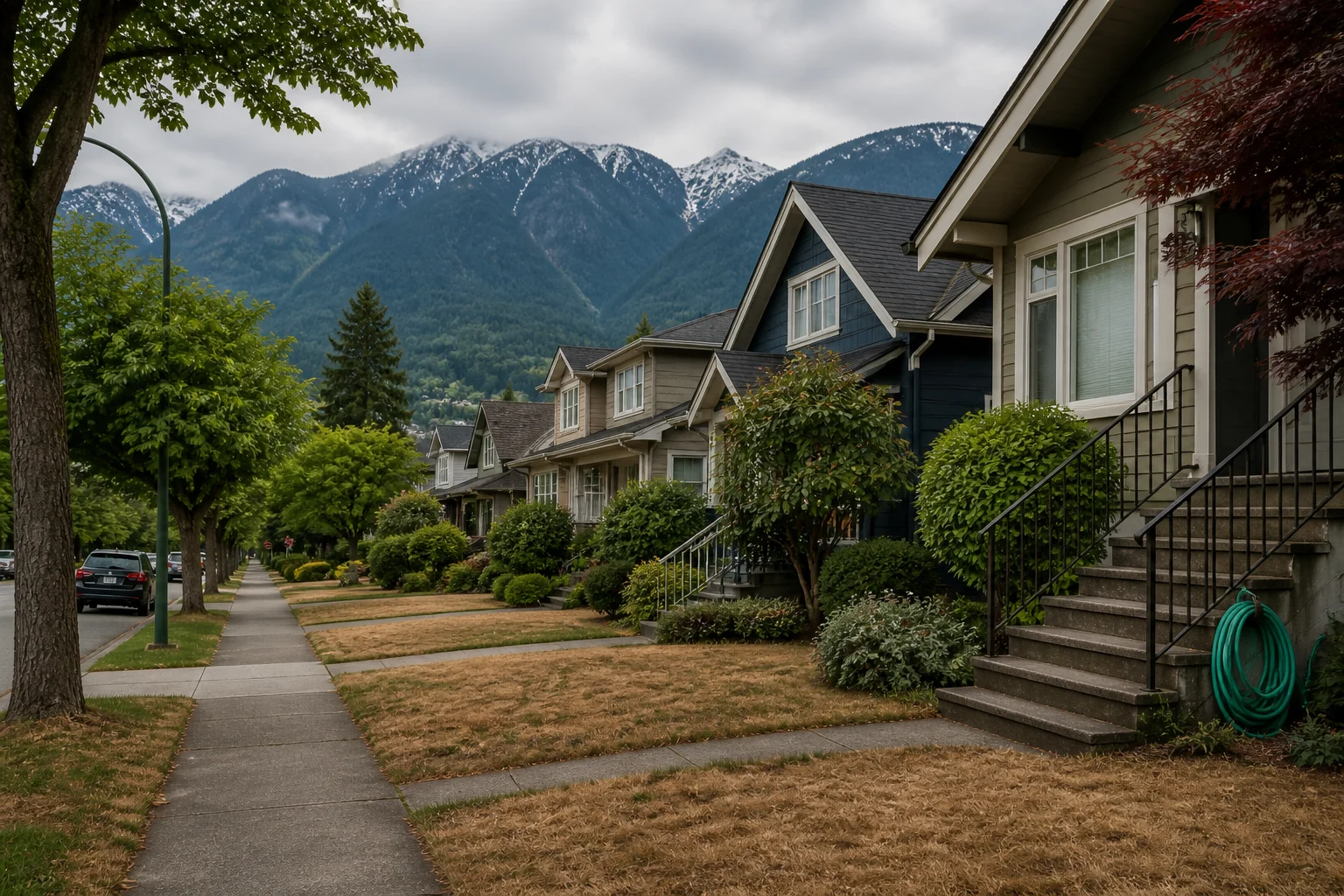
Vancouver Bans All Lawn Watering — Why BC Skipped Straight to Stage 2
Metro Vancouver banned all residential and non-residential lawn watering effective May 1, 2026 — the first time in the region's history that water restrictions have started at Stage 2 rather than Stage 1. The decision affects roughly three million residents across 21 member jurisdictions. Fines start at $500 per infraction with no warning period. Stage 3 — which would extend the ban to ornamental trees and shrubs — is expected in early June.
What's banned, what's allowed
Stage 2 prohibits all lawn watering by any method. Automatic sprinklers, hose-end sprinklers, and hand watering of turf are all banned every day, all hours, in every Metro Vancouver member municipality. Filling water features, topping up swimming pools, and washing vehicles on driveways are also prohibited. Pressure washing is restricted to pre-paint surface preparation and emergency safety or sanitation work; aesthetic pressure washing is banned.
Trees, shrubs, and flowers may still be watered. Sprinkler use is permitted any day from 5:00 AM to 9:00 AM. Hand watering with an automatic shut-off nozzle is permitted at any time, as is drip irrigation and soaker-hose irrigation. Vegetable gardens are exempt from time-of-day restrictions and may be watered any time by any method, including by sprinkler. Hoses connected to municipal supply must have automatic shut-off nozzles. Metro Vancouver is not issuing exemption permits for new sod or new lawn installations under Stage 2 — that includes Stage 3 and Stage 4 if they activate later in the season.
Why Metro Vancouver skipped Stage 1
Two factors compounded to force the unprecedented decision. The first is snowpack. Provincial snowpack across southern BC measured approximately 50% of normal at the April-to-May spring peak, one of the lowest readings since the BC River Forecast Centre began publishing standardised data. The South Coast region — which feeds the Capilano, Seymour, and Coquitlam reservoirs — tracked at 53% of normal. Heavy spring rain has not closed the gap; without underlying snow to extend the runoff curve, rainfall flushes through the system rather than building reservoir storage.
The second factor is infrastructure. The First Narrows Crossing — a major water-supply pipe between the North Shore reservoirs and downtown Vancouver — has been out of service since fall 2025 because of the Stanley Park Water Supply Tunnel construction project. With one of the system's main arteries offline, summer-peak delivery capacity is materially reduced. Metro Vancouver uses approximately one billion litres per day in shoulder seasons, surging to roughly 1.5 billion litres per day in summer. Lawn watering drives most of that summer increase.
Engineers concluded that Stage 1 — which limits lawn watering to morning hours on assigned days but does not ban it — would not have produced the demand reduction needed to keep storage on track through summer. Skipping straight to Stage 2 takes lawn watering out of the demand picture entirely, leaving the supply system to manage the 1 billion-litre-per-day baseline plus essential commercial and industrial use.
Stage 3 is coming — what to expect
Metro Vancouver has signalled publicly that Stage 3 is anticipated in early June 2026 if conditions follow current projections. Stage 3 bans all automatic irrigation, including for trees, shrubs, and flowers. Filling pools and washing vehicles are completely prohibited. Washing impermeable surfaces — driveways, walkways, exterior building surfaces — is banned outright. Only hand watering of non-lawn plants with an automatic shut-off nozzle would remain permitted, along with drip irrigation for trees and food crops.
Stage 3, if declared in June, would be the most restrictive water regime in Vancouver's history. The region has reached Stage 3 only twice in recent decades — in 2003 and 2015 — and both times not until late summer. A June Stage 3 would be unprecedented and would likely persist into autumn unless the Pacific Ocean produces an unusually wet July or August, which is climatologically rare on the BC South Coast.
How to keep your garden alive
The first thing to understand is that a brown lawn is not a dead lawn. Cool-season grasses common in Vancouver — Perennial Ryegrass, Fine Fescue, Tall Fescue, and Kentucky Bluegrass — survive 4 to 6 weeks of summer drought by going dormant. The crown stays alive underground while the blades brown. When autumn rain returns, dormant turf greens up within two to three weeks. The biggest mistake homeowners make is panic-fertilising or panic-watering the parts of the lawn they can still legally reach with a hand-held hose; both stress the grass further and can convert a dormant lawn into a dead one.
Focus your allowed water on trees and high-value shrubs. Mature trees take 20 to 40 years to replace; a brown lawn recovers in three weeks. Use the 5 AM to 9 AM sprinkler window for trees and shrubs in beds, or hand-water them any time with a shut-off nozzle. Mulch landscape beds with 50 to 75 millimetres of bark or compost to retain soil moisture. Vegetable gardens are exempt from time restrictions — water them any time, by any method, but consider drip or soaker hoses to use the water you have efficiently.
Rain barrels are unrestricted at every stage. Captured rainwater from your downspouts is your own water; you can use it any time on anything, including the lawn. If you do not have a rain barrel, several Metro Vancouver member municipalities offer rebates. The Surrey, Burnaby, and City of Vancouver programmes can be checked through their respective websites. BC strata corporations cannot fine residents for brown or dormant lawns during active regional water restrictions — strata bylaws that conflict with a Metro Vancouver stage are unenforceable under the BC Strata Property Act.
The bigger BC picture
Vancouver is not alone. West Kelowna has been at Stage 2 since summer 2025 and the restrictions were never lifted because of continued dry conditions through autumn and winter. Okanagan reservoirs did not refill. Lake Country activated a modified Stage 2 on May 4. The Capital Regional District (Greater Victoria) started its annual Stage 1 schedule on May 1, with mandatory odd-even watering across the Sooke Lake supply system.
Across the Rockies, Calgary City Council approved a permanent mandatory year-round watering schedule on April 29, 2026 — a structural shift driven by the Bearspaw South Feeder Main reliability crisis and long-term demand concerns rather than a single drought year. The pattern across western Canada is a regional drought combined with infrastructure stress that is forcing earlier, deeper, and more permanent restrictions than the region has used in the past.
For Vancouver homeowners, the practical implication is that the next few months will be harder than the city has experienced in living memory. Letting the lawn go dormant, watering trees in the morning, and treating rainwater as a resource are the three moves that get a household through this kind of summer. The lawn will be back. The water restrictions, very probably, will too.
Related water restrictions
Community Reports & Questions
Share an update, ask a question, or report a change in your local restrictions.
No community reports yet
Be the first to share a local update, ask a question, or report a change in your area's restrictions.
More news
Florida Escalates to Phase III Extreme - SJRWMD Tightens Rules Across 18 Counties
May 13, 2026
Coastal Bend Water Crisis Spreads - Aransas Pass and Beeville Declare Disasters as Corpus Christi Hits 7.8%
May 12, 2026
UK Braces for Summer 2026 Drought as Key Reservoir 'Will Not Fully Recover'
May 2, 2026
Boise Forced Into Early Stage 2 Water Restrictions as Snake River Hits Record Lows
May 2, 2026
Charlotte Metro Hits Stage 2 Water Restrictions — First 'Exceptional Drought' Since 2008
May 2, 2026
Neighbors Turn 'Water Police': Community Reporting of Violations Rises
May 2, 2026
Water Companies Proactively Restrict Customer Usage Across Drought-Affected Regions
May 2, 2026
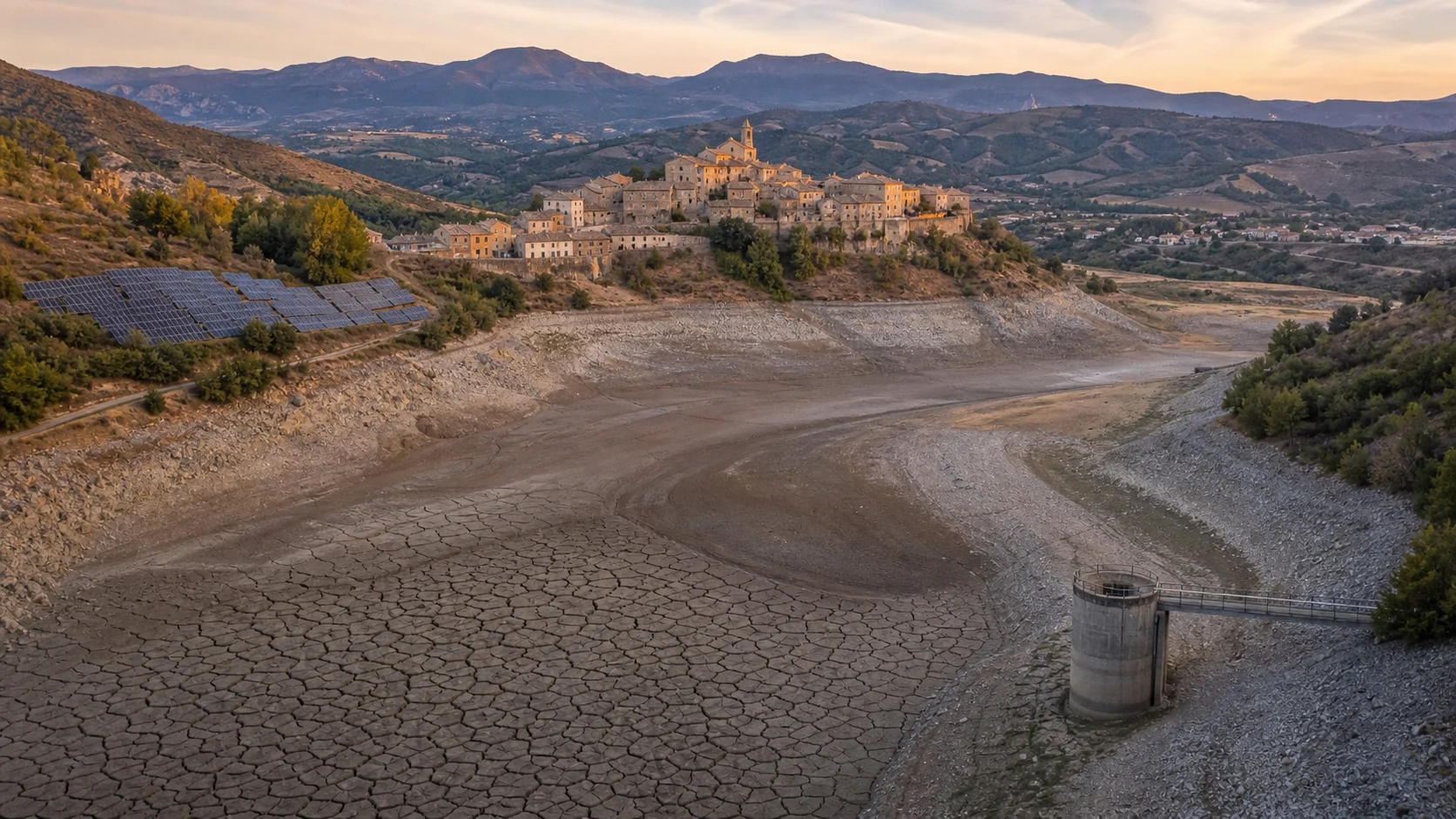
Europe's Water Crisis Worsens: Continental Aquifer Depletion Accelerates
May 2, 2026
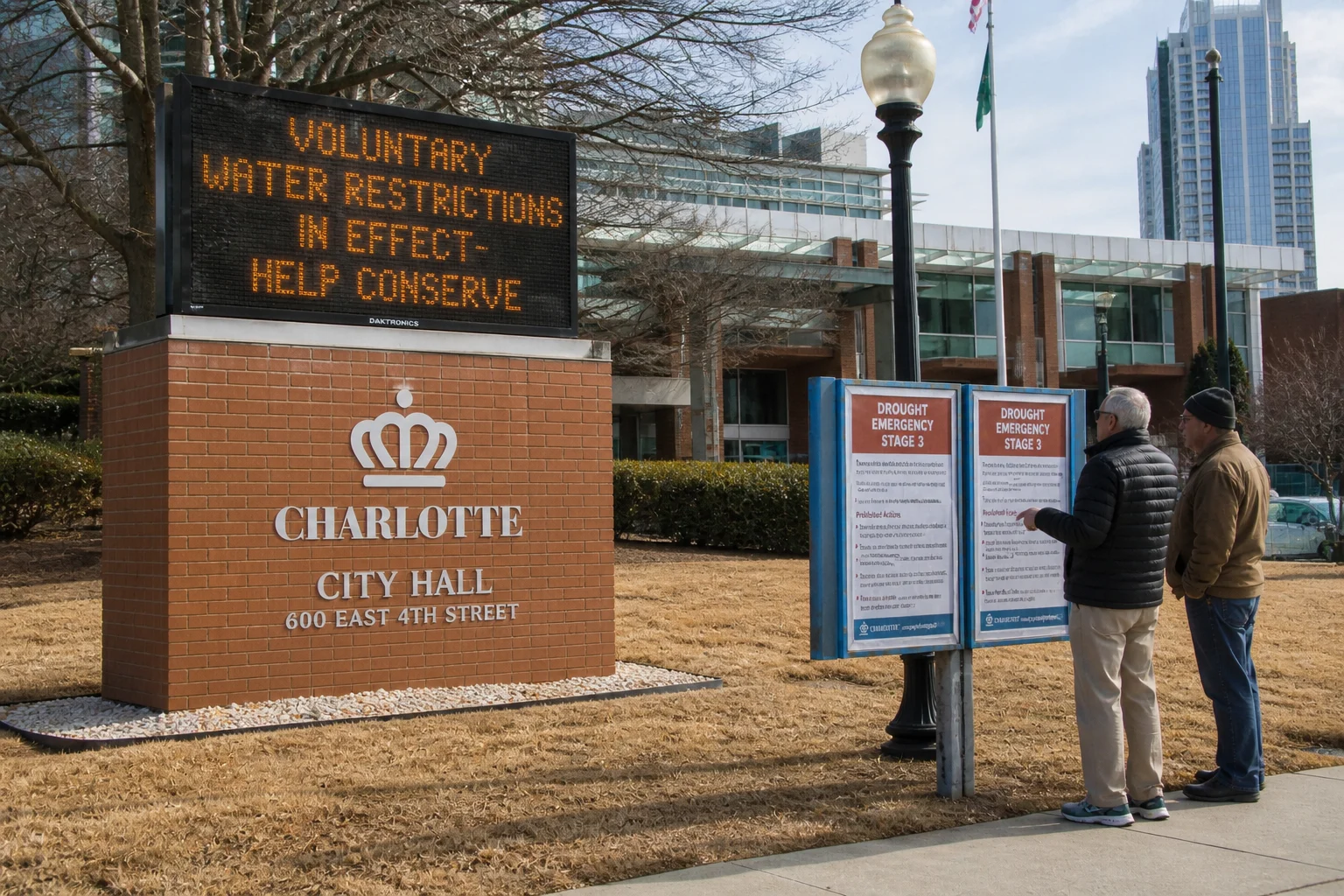
Charlotte Issues Voluntary Water Restrictions and Burn Ban Amid Ongoing Drought
May 2, 2026
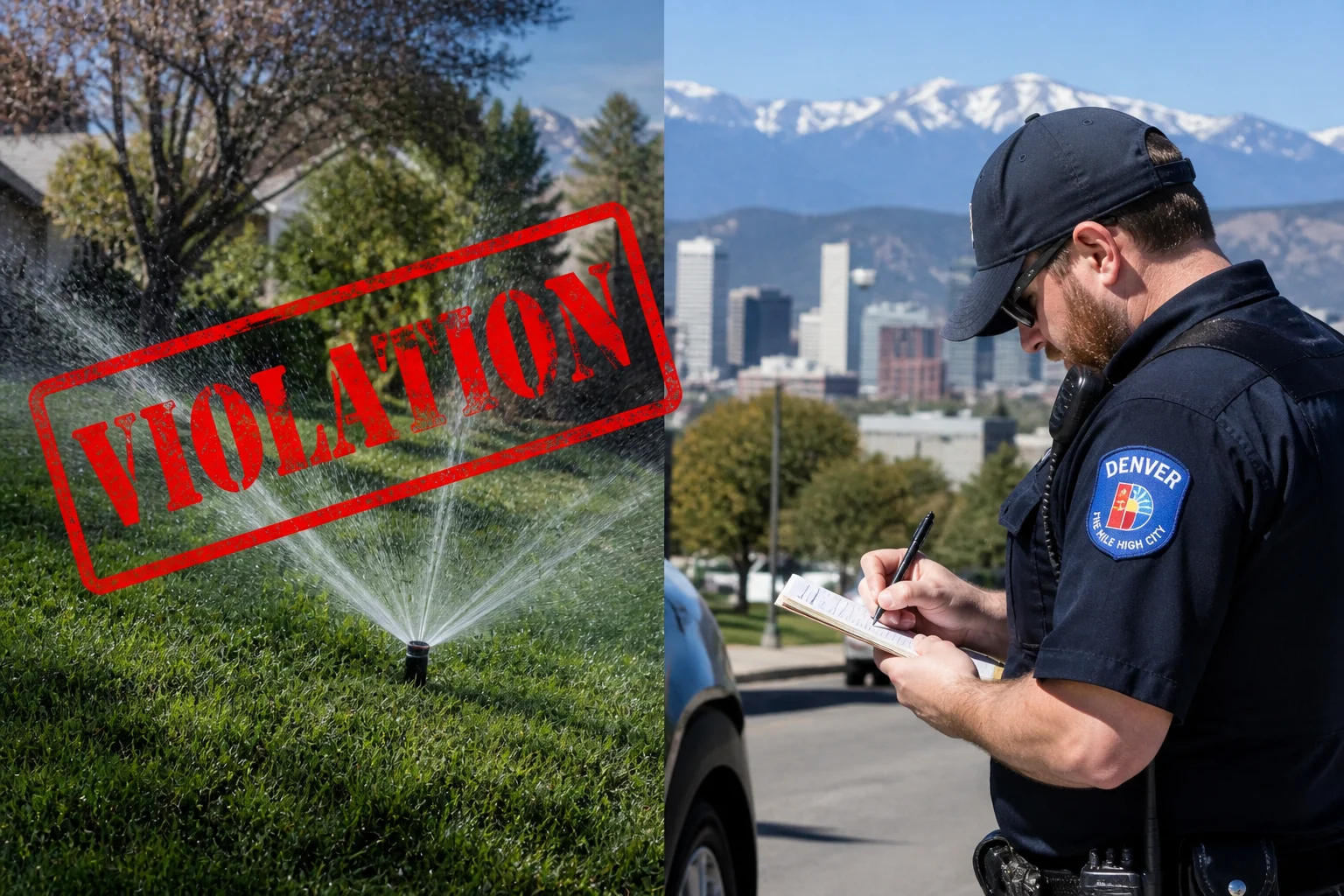
Denver Implements Mandatory Water Restrictions with 'Hundreds of Dollars' in Fines
May 2, 2026
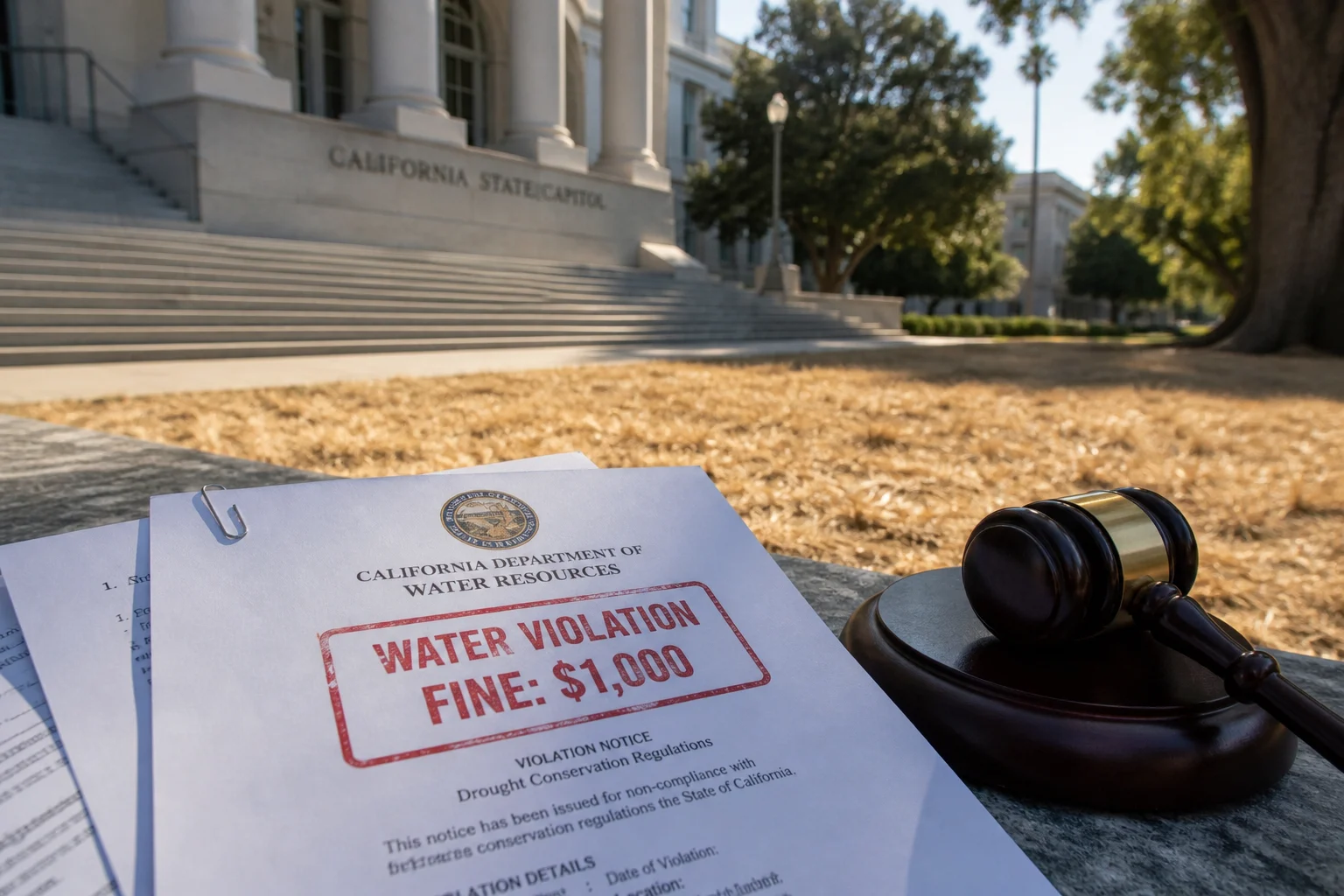
California Water Violation Fines Set to Increase 20-Fold Under New Legislation
May 2, 2026
Alberta Orders Provincial Investigation Into Calgary's Recurring Water Main Breaks
May 2, 2026
Raleigh Activates Stage 1 Water Restrictions as Falls Lake Drops to 84% Capacity
May 2, 2026
Auburn, Alabama Enacts Mandatory Water Restrictions and Drought Surcharges
May 1, 2026
Charlotte Imposes First Mandatory Water Restrictions Since 2007 — What Homeowners Need to Know
May 1, 2026
Corpus Christi Could Become the First American City to Run Out of Water
May 1, 2026