
Coastal Bend Water Crisis Spreads - Aransas Pass and Beeville Declare Disasters as Corpus Christi Hits 7.8%
Eleven days ago, Corpus Christi looked like one city's water emergency. As of May 12, 2026, it is a regional one. Combined storage at Lake Corpus Christi and Choke Canyon Reservoir sits at roughly 7.8 per cent. Aransas Pass, Ingleside, Beeville, and Nueces County have all issued local disaster declarations. Three Rivers has been told its Choke Canyon supply ends sooner than projected. A Level 1 Water Emergency, which would cap residential customers at 5,250 gallons per month, could be declared as early as September.
The numbers
Lake Corpus Christi was at 11.2 per cent of capacity on May 11, 2026. Combined storage with Choke Canyon Reservoir stood at roughly 7.8 per cent, near record lows for the system. Choke Canyon alone has fallen from 47 per cent in October 2021 to under 8 per cent today, a roughly four-year decline driven by below-average rainfall every year. The Nueces River basin is in its fifth consecutive year of drought, and year-to-date rainfall is running under 60 per cent of normal.
Corpus Christi Water serves roughly 500,000 residents across seven counties through wholesale agreements with Alice, Aransas Pass, Beeville, Mathis, Three Rivers, the San Patricio Municipal Water District, and the South Texas Water Authority. Corpus Christi is also the nation's top crude-oil export hub, and roughly twenty large refineries and petrochemical facilities consume up to 60 per cent of the system's water. The 2001 TCEQ Agreed Order triggers Stage 3 automatically when combined storage falls below 30 per cent. The system is now deep into Stage 3 territory, with no return path under current hydrology.
A crisis that broke out of one city
On April 22, 2026, Aransas Pass Mayor Jason Knight signed a 7-day emergency disaster declaration in response to the water crisis. The order, since extended, cites severe drought, declining reservoir levels, and projections that available supply may not meet demand later this year. Ingleside issued a parallel declaration the same day. Together the two San Patricio cities cover roughly 19,000 residents and roughly the southwest perimeter of the Coastal Bend.
Beeville's disaster declaration goes further. The city's intake infrastructure draws from Lake Corpus Christi, and the interim city manager has stated that roughly 4.5 to 5 feet of water remain above the intake before the pumps would begin cavitating. The Beeville declaration cites this as an 'imminent threat' to sanitation and firefighting if the system cannot pump water. The city has approved 35 million dollars in municipal debt to rehab two existing groundwater wells, drill two new ones, and install a reverse-osmosis treatment system, with a target completion date of July 2026.
Three Rivers, 55 miles northwest of Corpus Christi, sits at the confluence of the Nueces, Frio, and Atascosa rivers, directly adjacent to Choke Canyon Reservoir. On March 23, 2026, the city issued a public notice stating Corpus Christi had informed it that earlier projections for Choke Canyon water access were inaccurate and access would end sooner than expected. Three Rivers said it had been told as recently as January that Choke Canyon water would remain available through April and May of 2027. Corpus Christi's response stated no operational changes had been made and the projections remain accurate. The dispute compressed Three Rivers' planning timeline from months to weeks. Nueces County itself has issued a local disaster declaration for watershed-wide exceptional drought.
Industry vs residents and the 25 per cent cut debate
On April 28, 2026, Corpus Christi City Council unanimously postponed the vote on a 25 per cent across-the-board curtailment plan presented by Nick Winkelmann, the COO of Corpus Christi Water. The plan would cap residential customers at 5,250 gallons per month under a Level 1 Water Emergency and require all customers, residential and commercial and industrial, to cut use by 25 per cent. Roughly 30 per cent of residential customers currently exceed 5,250 gallons per month. Susan Gonzalez, a resident speaking at the meeting, said her household of four would find the cap difficult to meet. Mayor Paulette Guajardo said the postponement would give the water department time to return with a 'more holistic' plan.
The 25 per cent plan does not, in its current form, cleanly include the largest industrial customers. Eight industrial companies, including Valero, Citgo, and Flint Hills Resources, are permanently exempt from drought surcharges because they enrolled years ago in a voluntary 'insurance' conservation program at 31 cents per 1,000 gallons. The program was designed to reward early action. In an active emergency it now functions as a shield for the largest single user category in the system. The petrochemical sector is described by city officials as 'the lifeblood of the community,' which makes the political arithmetic on industrial cuts unusually difficult. Class C misdemeanor enforcement, with 500 dollar fines and second-offence water cut-off, applies to residential customers if Level 1 is declared.
Why Aransas Pass and Beeville declared disasters
Smaller cities further down the wholesale chain are the first to hit mechanical failure when reservoirs drop. Aransas Pass and Beeville are both significantly smaller than Corpus Christi and depend on intake infrastructure that was designed around wetter-decade reservoir levels. Aransas Pass faces a supply shortfall during peak summer tourism season; Beeville faces the more acute risk that pumps could cavitate if Lake Corpus Christi falls another four to five feet. A local disaster declaration unlocks state emergency funding and bypasses normal procurement rules, allowing both cities to drill emergency wells, contract engineering services, and issue municipal debt on accelerated timelines.
What this also signals is that the political model of waiting for Corpus Christi to declare a system-wide emergency does not work for the satellite cities. By the time the system hits Level 1, smaller cities downstream may already be without water at the tap. The April and October Beeville declarations and the April 22 Aransas Pass declaration are essentially saying so publicly. Mathis, on the literal shore of Lake Corpus Christi, has additionally turned off non-essential water at all city facilities and parks: an early operational signal rather than a formal disaster order.
The desalination scramble
On May 5, 2026, the Corpus Christi City Council voted 6-2 to begin contract negotiations with AXE H2O, a Houston-based company proposing a 150 MGD private desalination plant at roughly 6.50 dollars per 1,000 gallons. The vote came seven months after the city axed its own 1.3 billion dollar Inner Harbor seawater desalination project in September 2025. Council members Roland Barrera and Sylvia Campos voted against starting negotiations; Barrera flagged the AXE H2O proposal as premature given the company is two months old and has no announced site for the plant. The earliest realistic desalination capacity online is 2028.
Alice, 45 miles west of Corpus Christi, has been the most proactive Coastal Bend wholesale customer. The city commissioned Texas's first public-private brackish-water reverse-osmosis desalination plant with Seven Seas Water Group on July 29, 2025. The plant has an initial capacity of 2.7 million gallons per day and is designed to eventually meet roughly 90 per cent of Alice's daily water needs. Beyond AXE H2O and Alice, emergency groundwater drilling is underway across the region under Governor Greg Abbott's April 2026 emergency directives, which suspend procurement rules for impacted cities. Lake Texana, 100 miles away and a backup source, is at 55 per cent capacity but could fall to 30 per cent through summer.
The solution timeline is years. The crisis timeline is months. That gap is what every Coastal Bend mayor is trying to bridge through declarations, emergency wells, and private-sector partnerships in the next 90 days.
What this means for residents across South Texas
Stage 3 mandatory restrictions have been in effect across the Corpus Christi Water service area since December 2024. All residential lawn irrigation is banned. Vehicle washing at home is banned. Pool filling is banned (top-offs only). Outdoor decorative fountains without aquatic life are banned. Power washing for aesthetic purposes is banned. Handheld hose with a shut-off nozzle, drip irrigation, and soaker hoses remain permitted before 10 a.m. or after 6 p.m. for trees, shrubs, gardens, and food crops. Lawn turf is not exempt: dormant brown turf is the expected state through the drought.
Wholesale-customer cities (Alice, Aransas Pass, Beeville, Mathis, Three Rivers, San Patricio MWD, South Texas Water Authority) operate their own local restrictions on top of the Corpus Christi Water framework. Where a city has its own disaster declaration (Aransas Pass, Beeville, Ingleside, Nueces County), additional emergency enforcement authority applies. If a Level 1 Water Emergency is declared system-wide, residential customers in all wholesale-customer cities would be capped at 5,250 gallons per month under the proposed framework, with Class C misdemeanor enforcement and 500 dollar fines for violations.
The bigger picture
The Texas Observer recently framed the Corpus Christi crisis as 'not exceptional, early.' What is happening in the Coastal Bend is structurally consistent with the climate-driven aridification that the Texas Water Development Board and the National Weather Service Climate Prediction Center have flagged in their long-term outlooks: reservoirs designed for 20th-century hydrology operating in a 21st-century rainfall regime, with industrial demand that grew faster than supply during the wetter decades and population growth that has not slowed. Corpus Christi is the city that ran out of room first.
Governor Abbott is pressing a 1 billion dollar state water strategy that involves new desalination capacity, new pipelines, and accelerated groundwater development. The federal layer is moving too: on May 7, 2026, the seven Colorado River basin states announced a bridge deal that signals broader Western water-management stress is being acknowledged at the inter-state level. For the Coastal Bend, none of those programs deliver water this summer. The decisions that matter for September 2026 are the ones being made in Corpus Christi City Hall, in Beeville council chambers, in Aransas Pass emergency operations, and in five other small-town mayors' offices across San Patricio, Bee, Jim Wells, Live Oak, Aransas, and Nueces counties.
For homeowners, the practical message is the one Corpus Christi residents have been living for 18 months and that Aransas Pass, Beeville, Alice, Three Rivers, and Mathis residents are now living too: lawns can survive on far less water than most people assume, drought-tolerant landscaping pays for itself in a single dry summer, and rain barrels are the only unrestricted source under Stage 3. The May 5 desalination vote, the April 28 cut postponement, and the April 22 disaster declarations are the first acts of a story that will dominate Texas headlines through summer.
Related water restrictions
Community Reports & Questions
Share an update, ask a question, or report a change in your local restrictions.
No community reports yet
Be the first to share a local update, ask a question, or report a change in your area's restrictions.
More news
Florida Escalates to Phase III Extreme - SJRWMD Tightens Rules Across 18 Counties
May 13, 2026
UK Braces for Summer 2026 Drought as Key Reservoir 'Will Not Fully Recover'
May 2, 2026
Boise Forced Into Early Stage 2 Water Restrictions as Snake River Hits Record Lows
May 2, 2026
Charlotte Metro Hits Stage 2 Water Restrictions — First 'Exceptional Drought' Since 2008
May 2, 2026

Neighbors Turn 'Water Police': Community Reporting of Violations Rises
May 2, 2026

Water Companies Proactively Restrict Customer Usage Across Drought-Affected Regions
May 2, 2026

Europe's Water Crisis Worsens: Continental Aquifer Depletion Accelerates
May 2, 2026
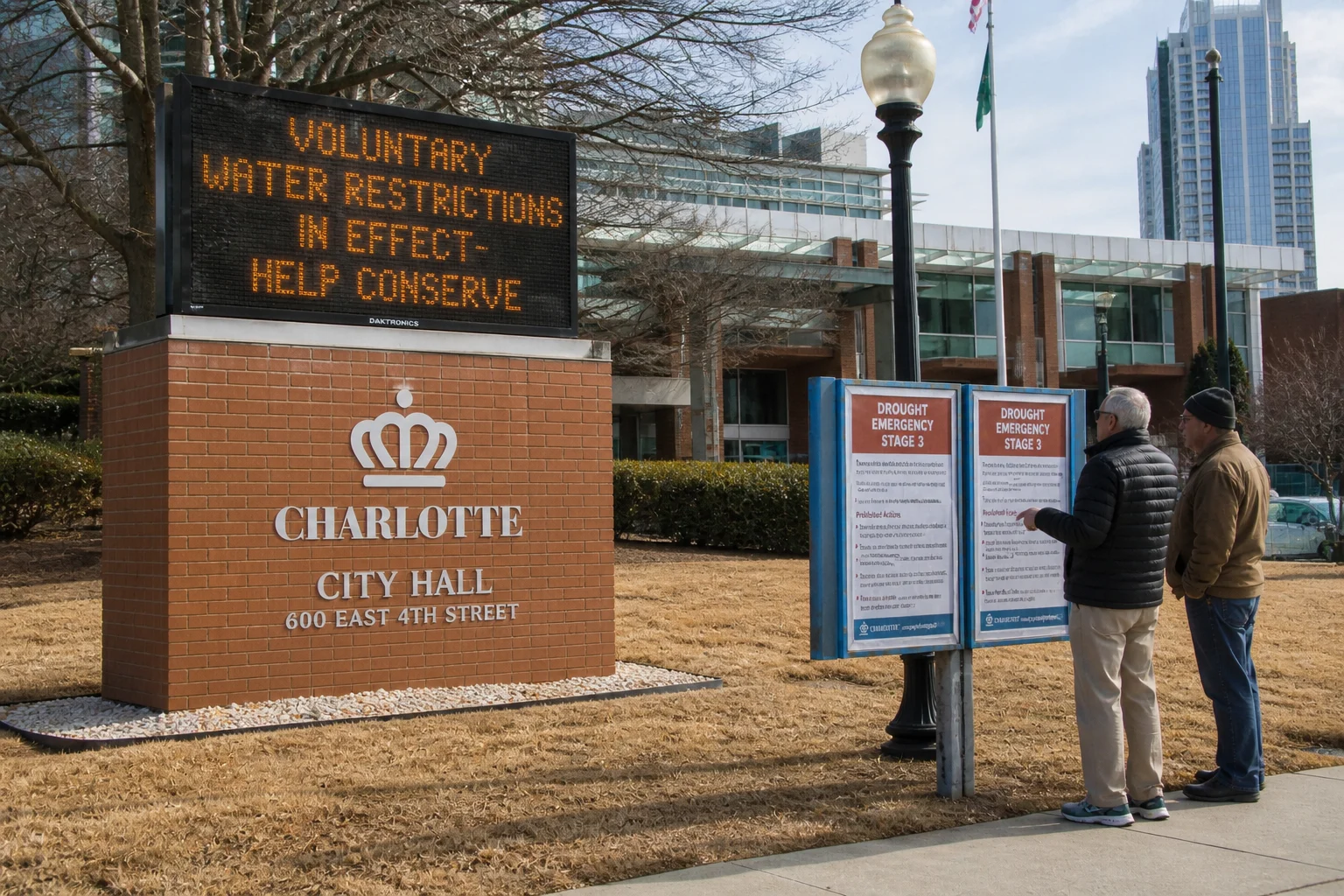
Charlotte Issues Voluntary Water Restrictions and Burn Ban Amid Ongoing Drought
May 2, 2026
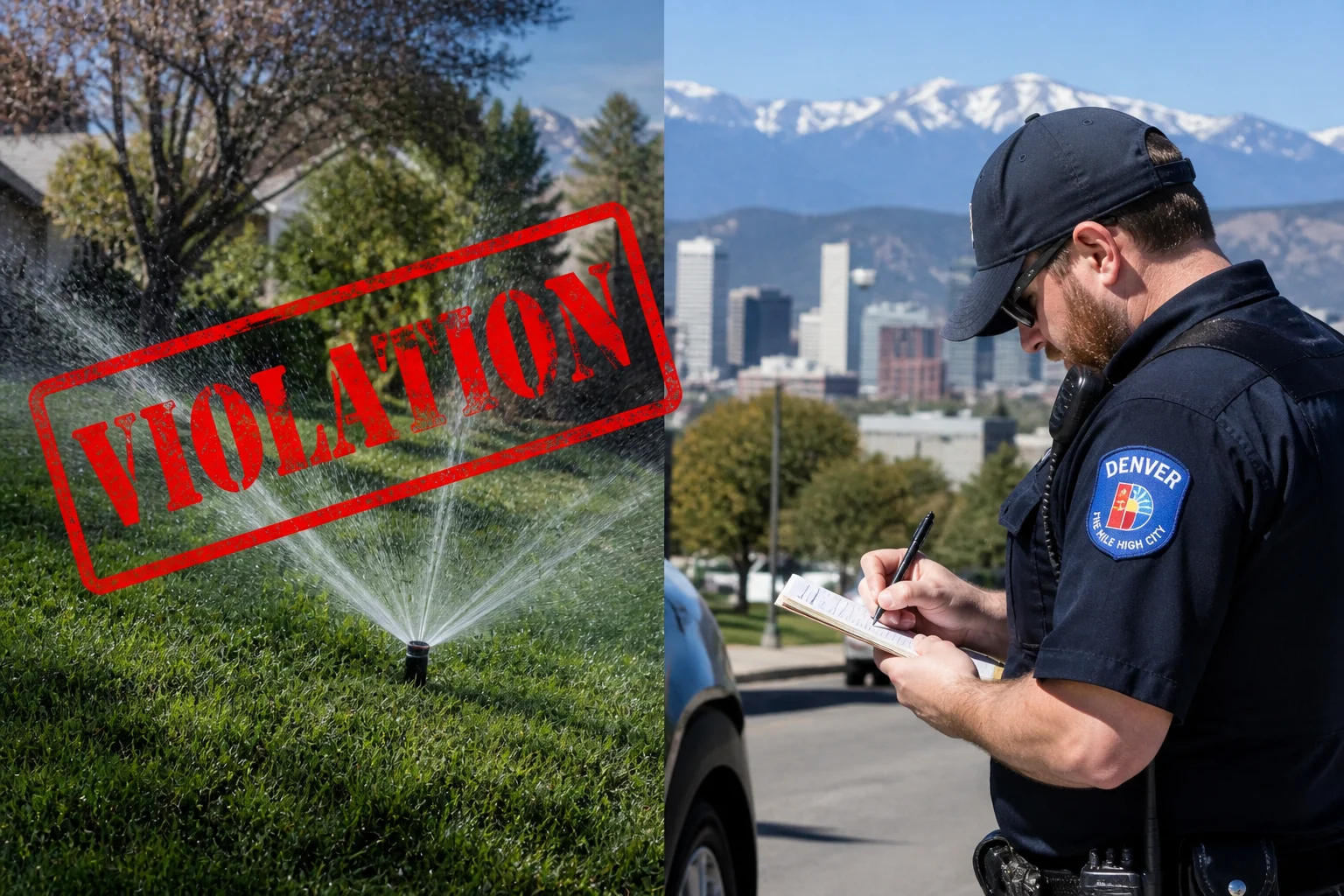
Denver Implements Mandatory Water Restrictions with 'Hundreds of Dollars' in Fines
May 2, 2026
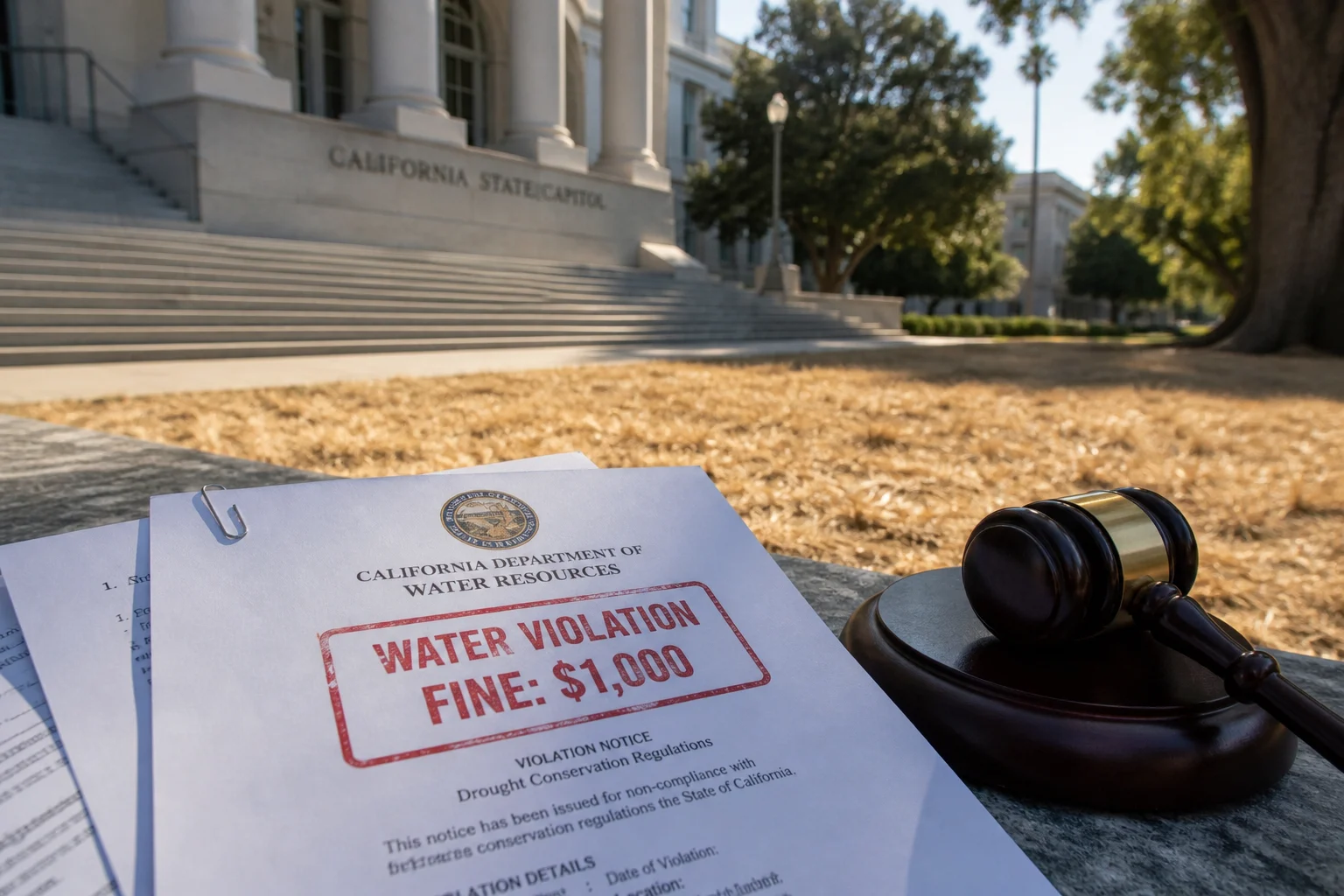
California Water Violation Fines Set to Increase 20-Fold Under New Legislation
May 2, 2026

Alberta Orders Provincial Investigation Into Calgary's Recurring Water Main Breaks
May 2, 2026
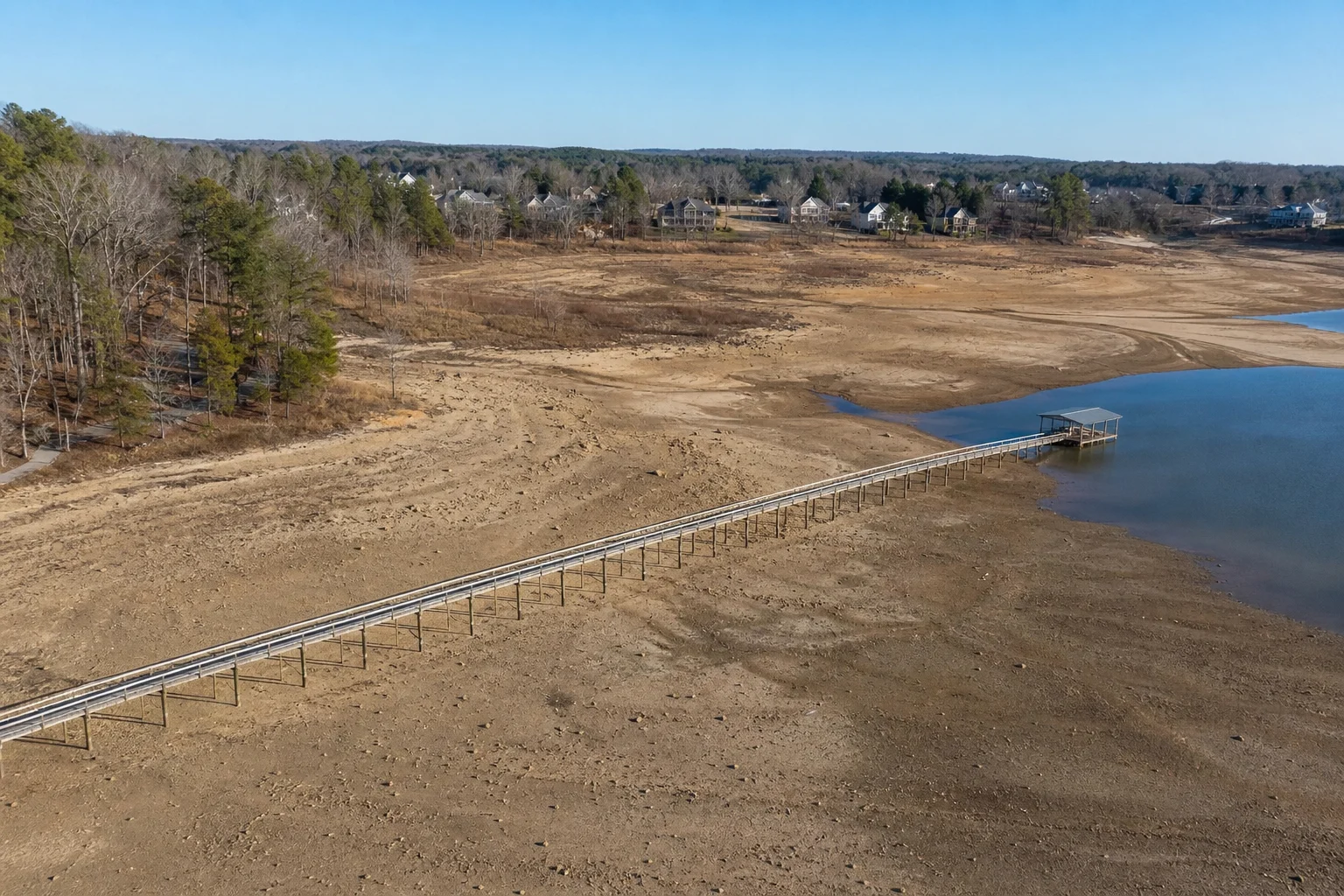
Raleigh Activates Stage 1 Water Restrictions as Falls Lake Drops to 84% Capacity
May 2, 2026
Auburn, Alabama Enacts Mandatory Water Restrictions and Drought Surcharges
May 1, 2026
Vancouver Bans All Lawn Watering — Why BC Skipped Straight to Stage 2
May 1, 2026
Charlotte Imposes First Mandatory Water Restrictions Since 2007 — What Homeowners Need to Know
May 1, 2026
Corpus Christi Could Become the First American City to Run Out of Water
May 1, 2026