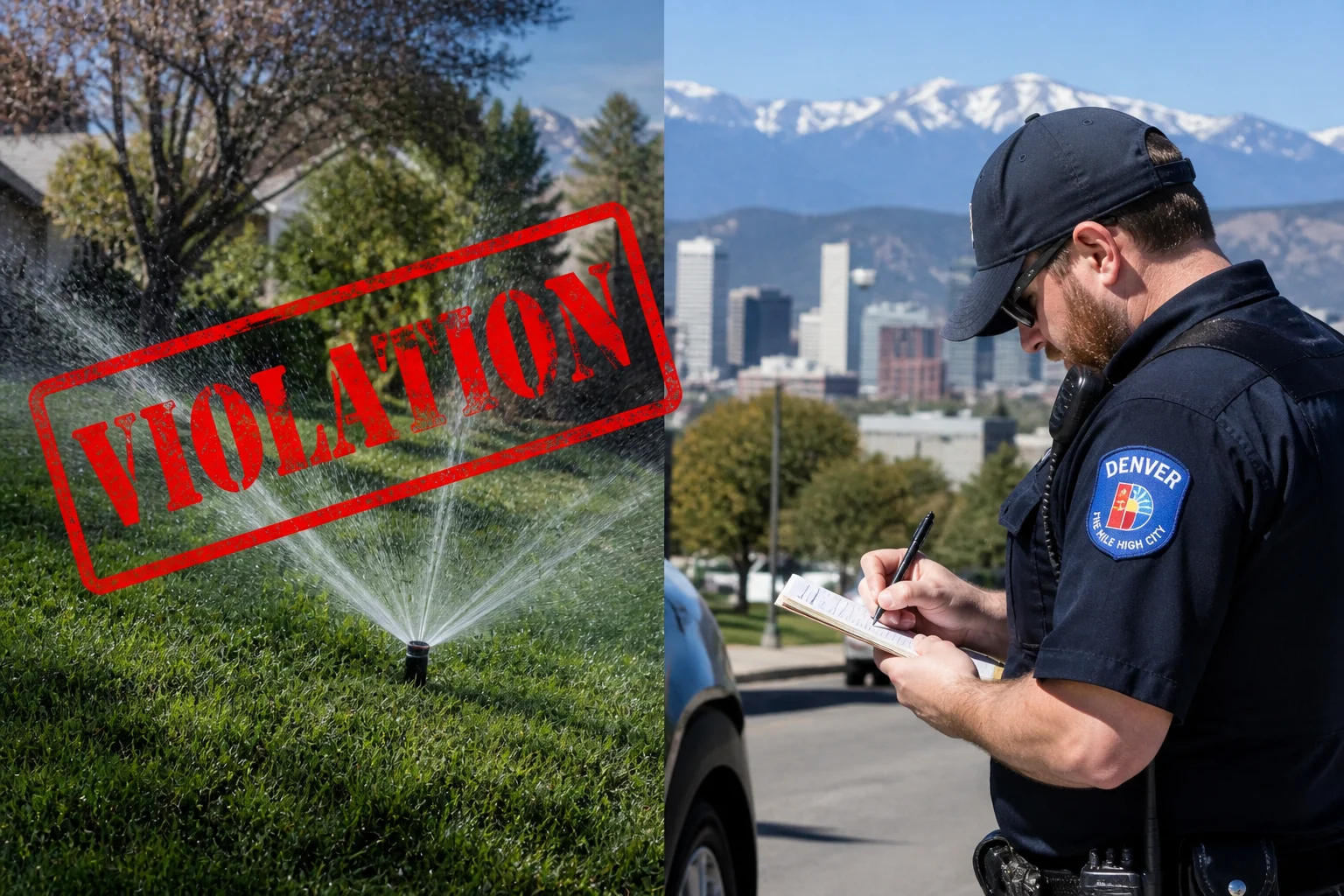
Denver Implements Mandatory Water Restrictions with 'Hundreds of Dollars' in Fines
Denver Water's mandatory Stage 1 drought restrictions, in effect since mid-March 2026, are producing the steepest per-capita demand reduction the utility has measured in its 100-year history. Per-capita use across the Denver Water service area — covering 1.5 million people — has dropped from 168 gallons per person per day at the start of March to 134 gallons by late April. That is a 21% reduction, exceeding the utility's 20% goal a full month ahead of schedule. Off-schedule watering can attract fines of 'hundreds of dollars,' KDVR-Denver reported in late April.
What Stage 1 requires
Denver Water Stage 1 limits residential outdoor watering to two days per week based on address parity. Even-numbered addresses water Sundays and Thursdays. Odd-numbered addresses water Wednesdays and Saturdays. Multi-family complexes and HOA common areas water Tuesdays and Fridays. No watering is permitted between 10 AM and 6 PM on any day. Watering is also banned within 48 hours of measurable rainfall, defined as 0.10 inches or more recorded at the nearest National Weather Service station.
Several activities are restricted beyond the watering schedule. New Kentucky Bluegrass installations are banned for the duration of Stage 1; new turf must use approved drought-tolerant alternatives. Pool filling requires a permit. Decorative water features that do not support aquatic life must be turned off. Vehicle washing at home is permitted only on the customer's assigned watering day with a shut-off nozzle; commercial car washes are unrestricted. Hand watering with a shut-off hose remains unrestricted at all times, as does drip irrigation for landscape beds.
The enforcement strategy
Denver Water's enforcement model under Stage 1 is built around a layered escalation. First-offence violations attract a written warning explaining the rule. Second offences carry a $50 fine. Third offences escalate to $250 per occurrence. Fourth-and-subsequent offences reach $500 per occurrence. The utility has stated publicly that fines will accumulate per occurrence rather than per inspection — meaning a property with multiple sprinkler zones running off-schedule on the same day can attract multiple per-zone violations.
KDVR-Denver's investigative reporting in late April confirmed that the utility has so far issued 41 warning letters and 6 second-offence fines in the first six weeks of Stage 1. The figures are deliberately modest. Denver Water spokesperson Travis Thompson told KDVR the utility's strategy is 'compliance through communication, not citations' and that aggressive ticketing is reserved for repeat or egregious violations. The utility has assigned eight field inspectors to Stage 1 enforcement, supplemented by 311-system citizen complaint routing.
The cumulative cost of repeat violations adds up faster than the per-occurrence schedule suggests. A homeowner whose automated sprinkler runs off-schedule three times per week across a 12-week period — a common pattern when controllers are not reprogrammed for Stage 1 — can theoretically accumulate $6,000 in violations before the utility intervenes more aggressively through service-shutoff procedures. The threat is not theoretical. Aurora Water, operating an independent enforcement system in parallel with Denver Water, has already initiated service-shutoff proceedings against 2 commercial properties for repeat Stage 1 violations.
Why per-capita use dropped so fast
Denver Water's projected six-week glide path called for per-capita use to fall from 168 gallons per person per day at baseline to roughly 140 by the end of April. The actual number — 134 — exceeded the target by 6 gallons per person per day. Multiplied across 1.5 million customers, that is an additional 9 million gallons per day of saved water beyond what the utility planned for. The savings are equivalent to roughly 40% of the daily withdrawal from Gross Reservoir, one of Denver Water's three major source reservoirs.
Three factors explain the over-performance. First, Denver Water's customer-communication push was aggressive and well-targeted. The utility issued bilingual materials through paid social media, neighbourhood association partnerships, and a Spanish-language community radio campaign in the most-affected service-area postcodes. Second, the per-capita baseline against which reductions are measured is itself a soft number: many customers were already conserving voluntarily before mandatory Stage 1, so the apparent reduction includes some pre-existing behaviour change being formalised under the new rules. Third, the cool, wet April that the Front Range has experienced — measurable rainfall on 11 days at Denver International Airport, well above normal — has structurally suppressed irrigation demand independent of the restrictions.
Front Range coordination
Denver Water Stage 1 is one of several parallel restriction frameworks in effect across the Front Range. Aurora Water, which operates independently of Denver Water but draws from overlapping watersheds, activated its own Stage 1 on the same date with similar but slightly different rules — Aurora's odd-day watering is Wednesday and Saturday for odd addresses, identical to Denver, but Aurora additionally bans new lawn installations and pool filling under Stage 1 conditions Denver Water has not yet activated. Westminster, Centennial, Greenwood Village, Littleton, and Wheat Ridge all follow Denver Water's schedule for water received under wholesale agreements.
Boulder, which operates an independent water system not connected to Denver Water, remains in Drought Watch — the city's pre-mandatory voluntary tier. The May 1 evaluation of Boulder's Projected Storage Index supported holding at Drought Watch rather than escalating, partly because Boulder's Colorado-Big Thompson allocation came in at 80% (above the standard 70% baseline). Boulder's next reservoir-level review point is in early June. Erie, on the eastern Front Range, is at Stage 4 — the most severe restriction tier currently active in Colorado — with all residential automated irrigation prohibited until further notice.
The drought pricing surcharge
Denver Water's drought-pricing surcharge took effect alongside Stage 1: $1.10 per 1,000 gallons added to bills for outdoor usage during the drought period. The surcharge applies to all Denver Water service-area customers including Lakewood, Littleton, Centennial, Wheat Ridge, Greenwood Village, Sheridan, Glendale, and Edgewater. For a typical residential customer using 8,000 gallons of outdoor water in a summer month, the surcharge adds about $9 to the monthly bill — small in absolute terms but designed as a behavioural signal more than a revenue mechanism. The utility has committed to reinvesting all surcharge revenue in conservation programmes and turf-replacement rebates.
The financial arithmetic for high-volume users is more pointed. A customer using 25,000 gallons of outdoor water in a month — the kind of consumption pattern that comes from large lawns watered on traditional schedules — sees the surcharge add roughly $28 per month to the bill. Combined with the underlying tiered rate structure, which itself escalates above 8,000 gallons per month, the total effective rate for the highest-tier outdoor use during Stage 1 reaches roughly $14 per 1,000 gallons. That is comparable to commercial rates in many California cities and is by far the highest residential outdoor rate Denver Water has ever charged.
What's next
Denver Water has not announced when Stage 1 might be lifted. The utility's standard practice is to maintain mandatory restrictions until reservoir storage recovers to seasonal targets, which historically has required two consecutive winters of normal-or-better snowpack. The 2025–26 winter delivered snowpack at 55% of normal across Denver Water's source basins. Any lift of Stage 1 before late summer 2027 is unlikely. The more pressing question is whether continued storage drawdown forces escalation to Stage 2 — which would tighten the schedule to one watering day per week and add commercial-property restrictions — at some point during the summer of 2026.
For Denver-area homeowners, the practical message is unchanged from the start of Stage 1: programme the controller, follow the schedule, and accept that the lawn may go semi-dormant in late summer. Kentucky Bluegrass — the dominant Denver lawn grass — survives 4 to 6 weeks of summer drought by browning and recovering reliably with autumn rain. The crown stays alive. The blades come back. Hand watering with a shut-off hose remains unrestricted at all times. The cumulative six-week reduction across the service area is the strongest validation Denver Water has ever had that its customer base will respond to credible communication paired with credible enforcement.
Related water restrictions
Community Reports & Questions
Share an update, ask a question, or report a change in your local restrictions.
No community reports yet
Be the first to share a local update, ask a question, or report a change in your area's restrictions.
More news
Florida Escalates to Phase III Extreme - SJRWMD Tightens Rules Across 18 Counties
May 13, 2026

Coastal Bend Water Crisis Spreads - Aransas Pass and Beeville Declare Disasters as Corpus Christi Hits 7.8%
May 12, 2026
UK Braces for Summer 2026 Drought as Key Reservoir 'Will Not Fully Recover'
May 2, 2026
Boise Forced Into Early Stage 2 Water Restrictions as Snake River Hits Record Lows
May 2, 2026
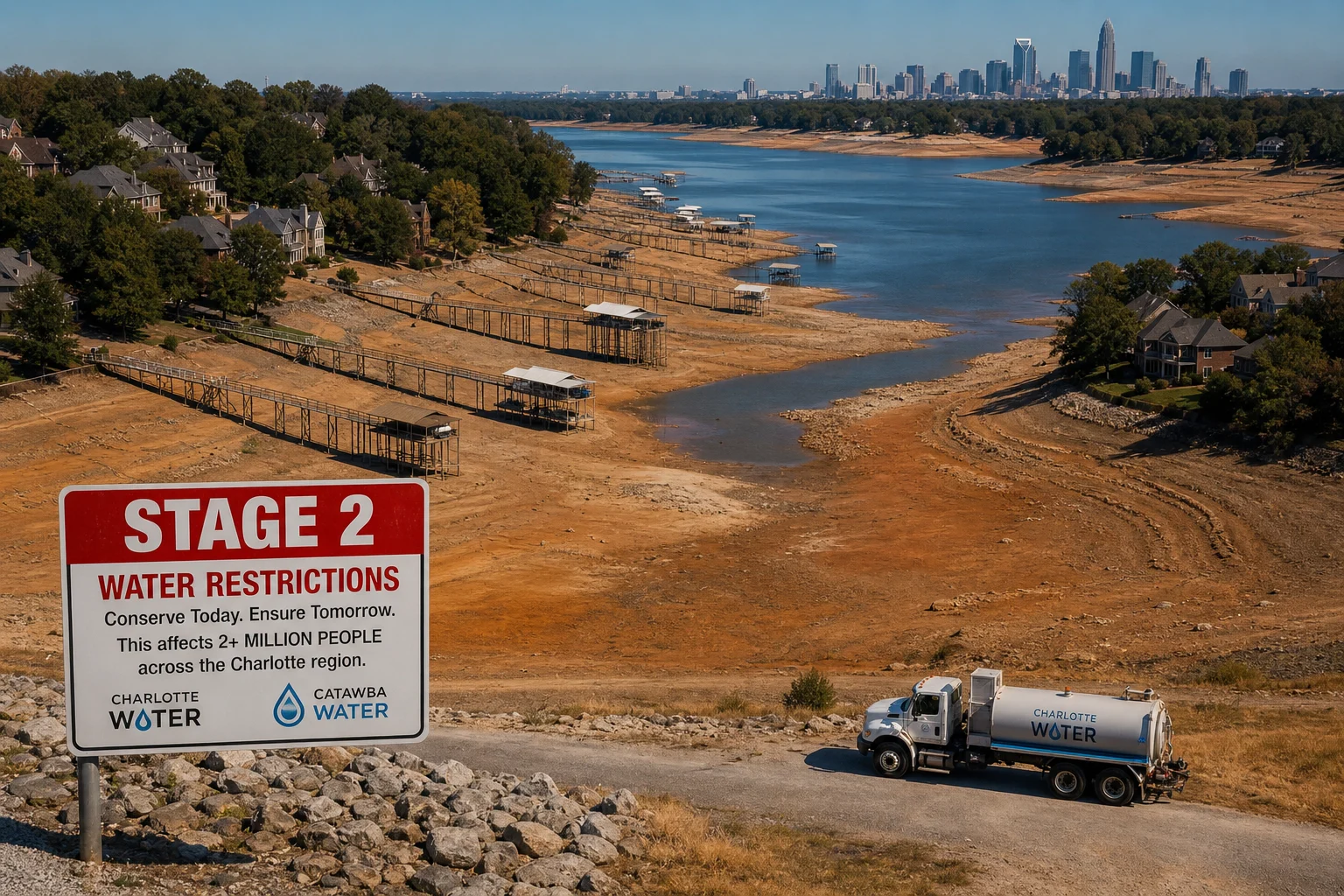
Charlotte Metro Hits Stage 2 Water Restrictions — First 'Exceptional Drought' Since 2008
May 2, 2026
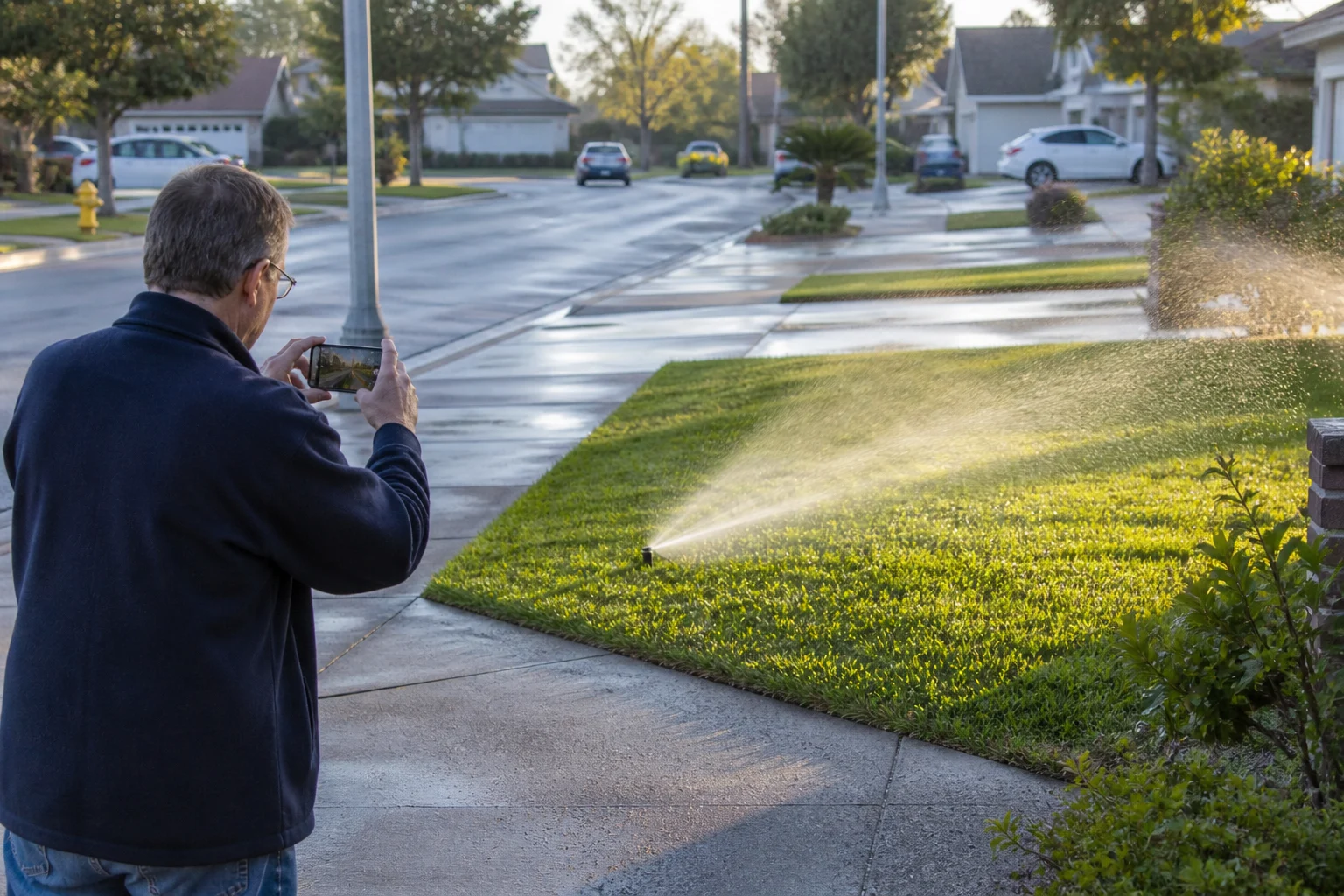
Neighbors Turn 'Water Police': Community Reporting of Violations Rises
May 2, 2026

Water Companies Proactively Restrict Customer Usage Across Drought-Affected Regions
May 2, 2026

Europe's Water Crisis Worsens: Continental Aquifer Depletion Accelerates
May 2, 2026
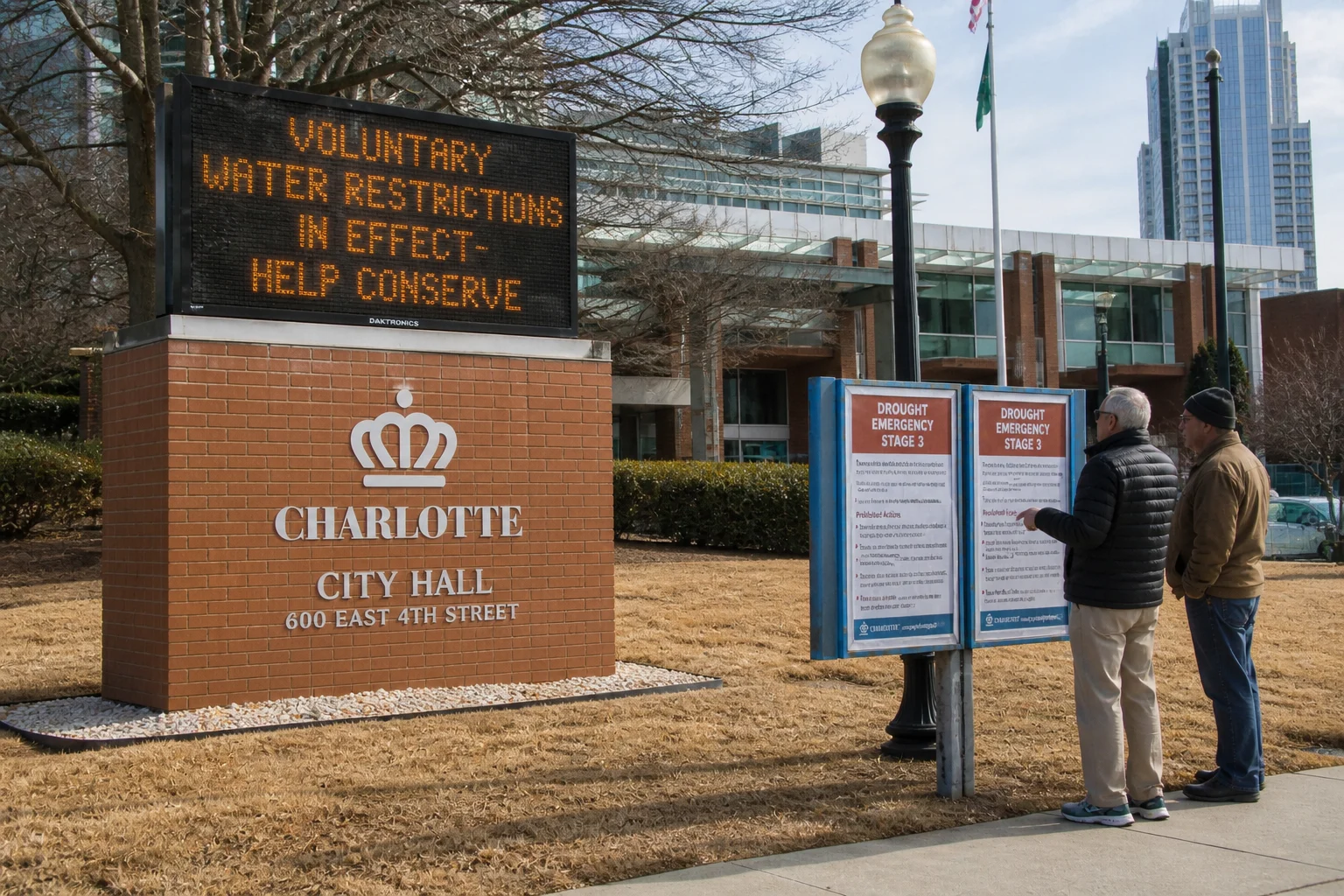
Charlotte Issues Voluntary Water Restrictions and Burn Ban Amid Ongoing Drought
May 2, 2026
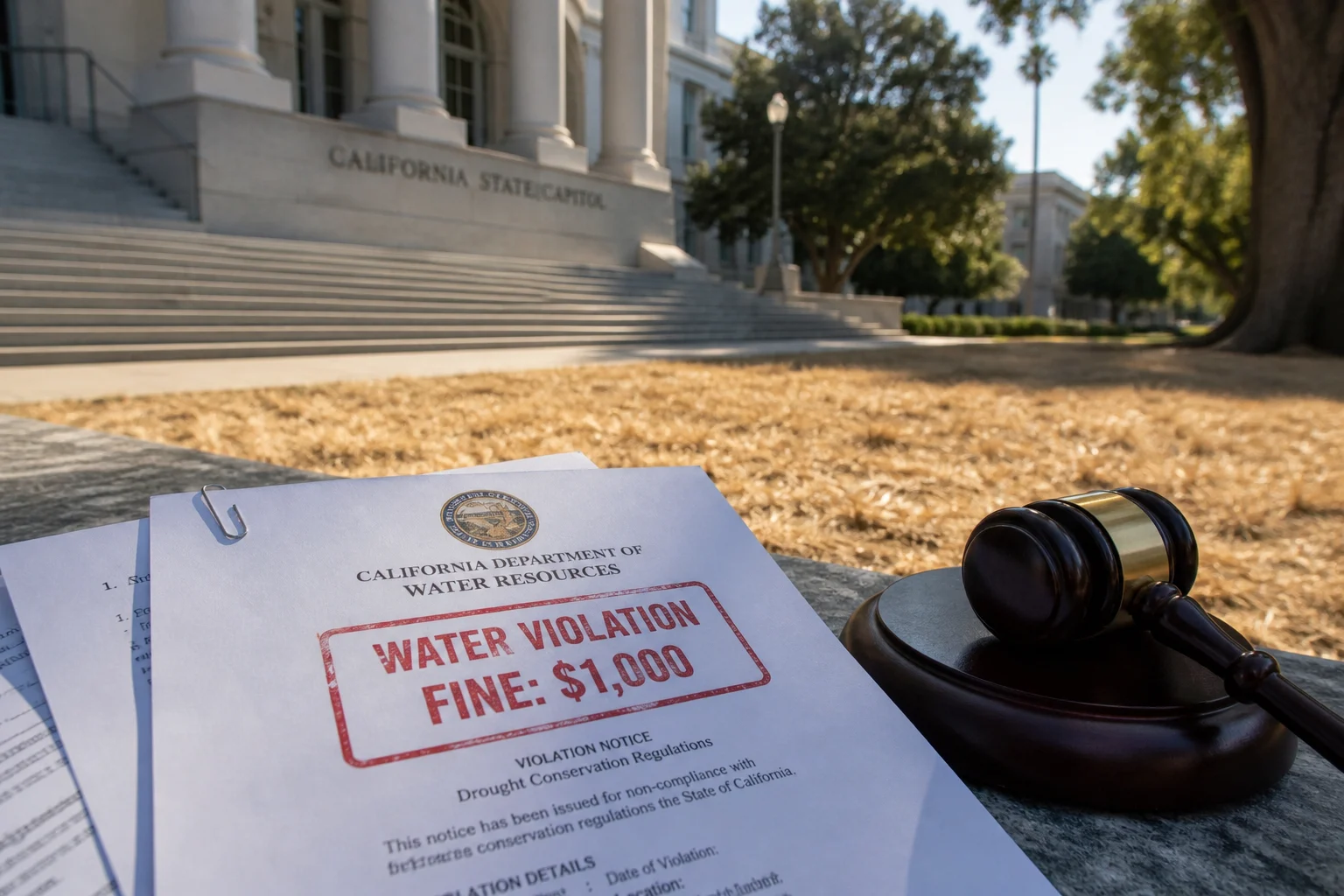
California Water Violation Fines Set to Increase 20-Fold Under New Legislation
May 2, 2026

Alberta Orders Provincial Investigation Into Calgary's Recurring Water Main Breaks
May 2, 2026
Raleigh Activates Stage 1 Water Restrictions as Falls Lake Drops to 84% Capacity
May 2, 2026
Auburn, Alabama Enacts Mandatory Water Restrictions and Drought Surcharges
May 1, 2026
Vancouver Bans All Lawn Watering — Why BC Skipped Straight to Stage 2
May 1, 2026
Charlotte Imposes First Mandatory Water Restrictions Since 2007 — What Homeowners Need to Know
May 1, 2026
Corpus Christi Could Become the First American City to Run Out of Water
May 1, 2026