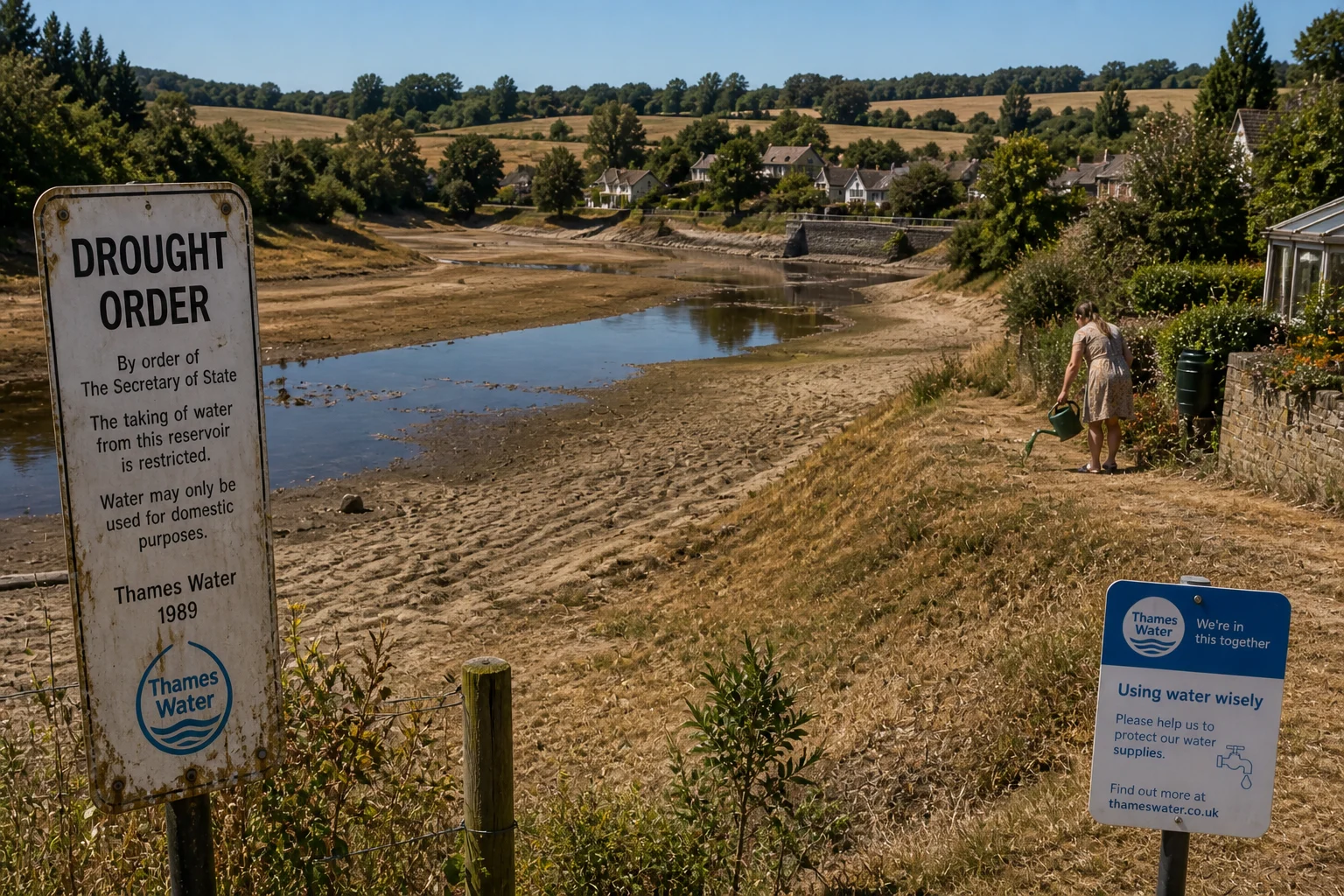
UK Braces for Summer 2026 Drought as Key Reservoir 'Will Not Fully Recover'
South East Water has formally warned that Ardingly Reservoir, the company's primary surface-water source for parts of West Sussex, Surrey, and Kent, 'will not fully recover' before the summer 2026 demand peak. The warning, included in the company's May Drought Plan update published on April 30, 2026, raises the prospect that the South East may face the first major hosepipe-ban summer since 2002. Fourteen UK water companies remain in formal drought status as of early May, more than three months after the last of the 2025 hosepipe bans were lifted on February 5, 2026. The Environment Agency's May drought outlook classifies the South East and East Anglia at 'High' summer 2026 drought risk — the highest classification on the national framework.
Ardingly Reservoir and what 'will not recover' means
Ardingly Reservoir, completed in 1978 in the Sussex Weald, has a total storage capacity of approximately 4.7 million cubic metres. The reservoir supplies treated drinking water to roughly 280,000 South East Water customers across Mid Sussex, Crawley, parts of East Grinstead, and adjoining areas of Surrey and Kent. Ardingly entered May 2026 at approximately 64% of full capacity — well below the seasonal normal of 92% and below the 70% threshold at which South East Water's drought plan begins to consider Temporary Use Bans (TUBs, the formal name for hosepipe bans in England and Wales).
South East Water's warning that the reservoir 'will not fully recover' refers specifically to the gap between current storage and the late-summer demand curve. Ardingly's normal recharge season runs October through March, when winter rainfall fills the reservoir to its peak before summer demand draws it down. The 2025–26 recharge season delivered well below average rainfall across the Sussex Weald, leaving Ardingly to enter spring at a deficit that the small May rainfall typically cannot close. The company's hydraulic model projects that without significantly above-average May–June rainfall, the reservoir will be unable to support normal summer demand without TUB activation.
Fourteen water companies in drought status
The Environment Agency's monthly water-situation report for April 2026 lists 14 of England's 17 regional water companies as remaining in formal drought status — meaning their drought plans have triggered preparatory measures even where no TUB is currently active. The list includes Thames Water, South East Water, Southern Water, Affinity Water, Anglian Water, Severn Trent Water, Yorkshire Water, Wessex Water, Bristol Water, Cambridge Water, Essex and Suffolk Water, Portsmouth Water, South Staffs Water, and Sutton and East Surrey Water. Only United Utilities (North West), Northumbrian Water (North East), and Welsh Water (Wales) are not in formal drought status.
The geographic split tracks the long-term pattern of southern English aquifer stress versus northern surface-water resilience. The Environment Agency's regional drought-risk classification places the South East and East Anglia at 'High' risk, the Thames region at 'Elevated' risk, the South West and Midlands at 'Moderate' risk, and the North West, North East, and Wales at 'Low' risk. The split is not driven by 2026 weather alone — it reflects structural differences in how each region's water supply is sourced, with southern England's heavier dependence on chalk aquifers and small surface reservoirs producing materially more drought sensitivity than northern England's reliance on large upland reservoirs and Welsh sources.
Temporary Use Bans — what they cover and how they're triggered
A Temporary Use Ban under the Water Industry Act 1991 (as amended by the Flood and Water Management Act 2010) prohibits specified non-essential water uses across a defined geographic area. The standard list of prohibited activities includes watering a garden using a hosepipe, cleaning a private motor vehicle using a hosepipe, watering plants on domestic or other non-commercial premises using a hosepipe, cleaning private leisure boats using a hosepipe, filling or maintaining a domestic swimming or paddling pool, drawing water using a hosepipe to fill or maintain a domestic pond or ornamental fountain, filling or maintaining a domestic hot tub, and cleaning walls or windows of domestic premises using a hosepipe.
TUBs are activated by the relevant water company under its drought plan, with notification to the Department for Environment, Food and Rural Affairs (Defra) and a 14-day public consultation window before the ban takes legal effect. Penalties for breach can reach £1,000 per occurrence, though water companies typically use education-first enforcement during the early period of any TUB. The 2022 hosepipe-ban summer affected approximately 19 million UK residents at peak; the 2025 bans were lifted between October 2025 and February 5, 2026 as winter rainfall recovered groundwater and surface storage in some basins but not others.
Historical context — 2002 to 2026
The current drought-risk profile is the highest in southern England since 2002, when the most severe modern UK drought triggered hosepipe bans across most of the south for an extended summer period. The 2002 event led directly to the policy reforms underpinning the modern Drought Plan framework and the strengthened Temporary Use Ban authority. Subsequent significant drought years — 2006, 2011–12, 2018, 2022, and 2025 — have each tested the framework but none have approached the 2002 severity baseline.
The 2026 outlook is unusual in that it is being signalled before any actual summer drought has materialised. Most prior hosepipe-ban summers were declared in late June or July after spring conditions had already deteriorated; the May 2026 'High' risk classification, combined with South East Water's explicit Ardingly warning, represents the earliest formal summer-drought signal in the post-2002 framework era. The early signal reflects both improved monitoring (the Environment Agency's drought outlook has been published monthly since 2023, against quarterly previously) and a structural acknowledgement that southern England now operates with thinner supply margins than it did 20 years ago.
Government response and the new reservoir programme
The UK Government's 2025 Water Restoration Programme committed £8 billion in new water-infrastructure investment through 2034, with explicit allocation toward new reservoir construction. The programme — the most significant UK reservoir-building commitment since the 1970s — funds nine new reservoir projects across southern and eastern England, including the Abingdon Reservoir in Oxfordshire (Thames Water), the Lincolnshire Reservoir (Anglian Water), the South Lincolnshire Reservoir (Anglian Water), and several smaller projects in the South East. None of the new reservoirs will be operational before 2032 at earliest; the programme explicitly addresses the 2030s and 2040s rather than the 2026 immediate situation.
Water UK, the trade body representing England and Wales water companies, has called publicly for accelerated planning permissions and reduced regulatory friction on the new reservoir programme. The Environment Agency has signalled openness to expedited environmental assessment for the highest-priority projects, but several of the proposed reservoirs face active local opposition that is likely to extend planning timelines beyond the original schedule. The political question Water UK is implicitly raising is whether the UK can build new water infrastructure fast enough to keep pace with climate-driven supply uncertainty in the south.
What UK households should do
For households across southern and eastern England, the practical implications of the elevated 2026 drought risk are immediate even where no TUB has yet been declared. Water companies are encouraging voluntary conservation now — running washing machines and dishwashers only when full, fixing dripping taps, replacing inefficient toilets and showerheads — to extend reservoir storage into summer. Hosepipe use for garden irrigation should be assumed to face restriction at some point during summer 2026 in the highest-risk regions, and homeowners with extensive ornamental gardens should consider mulching, drip irrigation, and shifting to drought-tolerant planting now rather than waiting for a TUB to take effect.
For lawn care specifically, the typical UK lawn mix of Perennial Ryegrass and Fine Fescue is moderately drought-tolerant and recovers reliably from short-term dormancy. Letting the lawn brown in late summer is acceptable; the crown stays alive and the blades recover with autumn rain. The biggest mistake UK homeowners make during drought is overcompensating with intensive watering during the early-summer period, which creates shallow-rooted turf that fails dramatically in late summer. Mulched landscape beds need a fraction of the water bare soil does; a 50–75 mm bark or compost layer is the highest-leverage move a homeowner can make this week, regardless of whether a TUB ultimately takes effect in their region.
The broader question summer 2026 will help answer is whether the UK's post-2002 drought-management framework can absorb a high-severity summer without the political and infrastructure stress that the 2002 event produced. The early signalling, the 14 water companies in drought status, and the explicit Ardingly warning all suggest the answer will become visible by July. For now, the practical message from the Environment Agency and Water UK is consistent: assume hosepipe restrictions are coming for the South East, prepare gardens accordingly, and watch the next monthly water-situation report for updates.
Related water restrictions
Community Reports & Questions
Share an update, ask a question, or report a change in your local restrictions.
No community reports yet
Be the first to share a local update, ask a question, or report a change in your area's restrictions.
More news
Florida Escalates to Phase III Extreme - SJRWMD Tightens Rules Across 18 Counties
May 13, 2026
Coastal Bend Water Crisis Spreads - Aransas Pass and Beeville Declare Disasters as Corpus Christi Hits 7.8%
May 12, 2026
Boise Forced Into Early Stage 2 Water Restrictions as Snake River Hits Record Lows
May 2, 2026
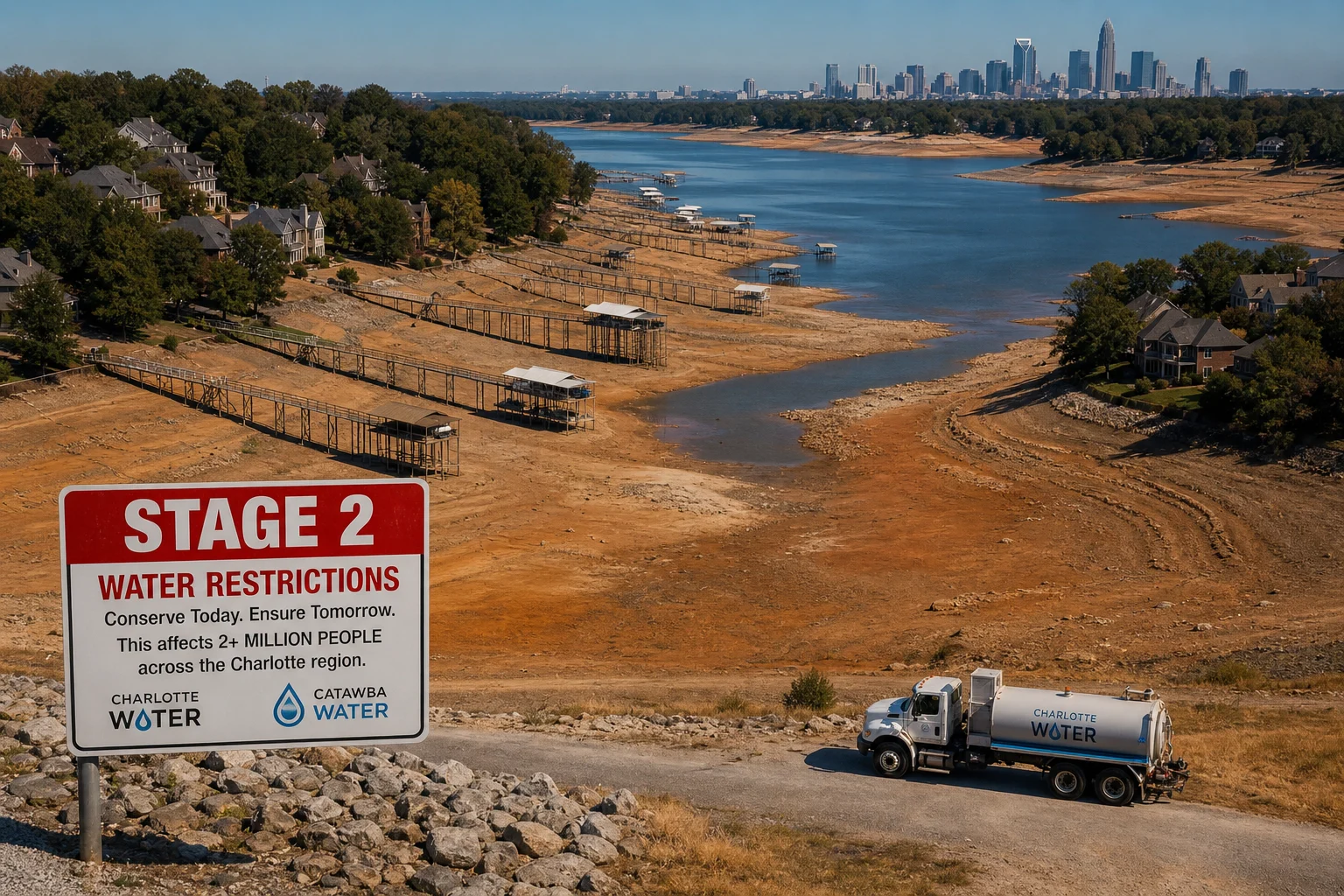
Charlotte Metro Hits Stage 2 Water Restrictions — First 'Exceptional Drought' Since 2008
May 2, 2026
Neighbors Turn 'Water Police': Community Reporting of Violations Rises
May 2, 2026
Water Companies Proactively Restrict Customer Usage Across Drought-Affected Regions
May 2, 2026
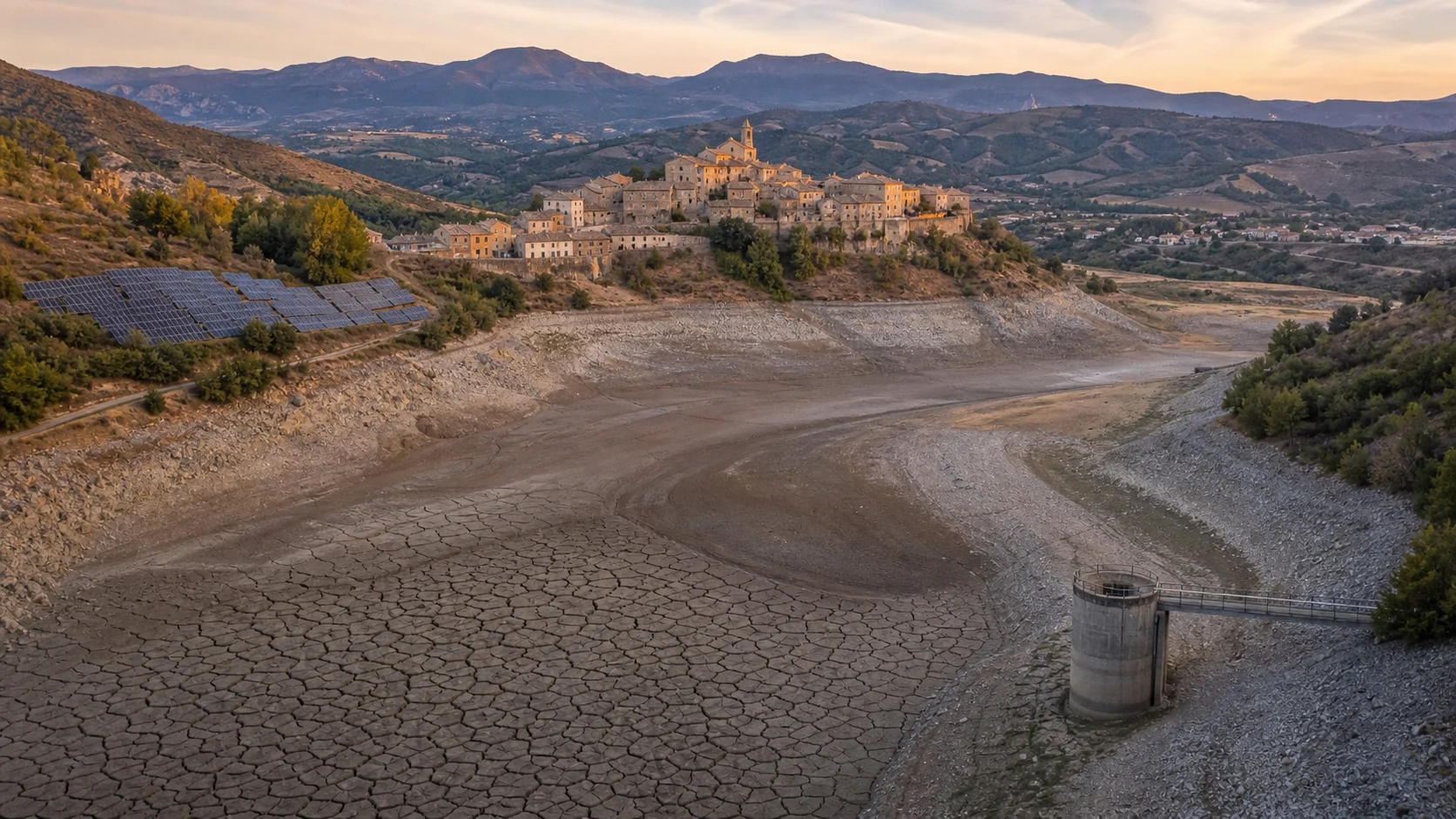
Europe's Water Crisis Worsens: Continental Aquifer Depletion Accelerates
May 2, 2026
Charlotte Issues Voluntary Water Restrictions and Burn Ban Amid Ongoing Drought
May 2, 2026
Denver Implements Mandatory Water Restrictions with 'Hundreds of Dollars' in Fines
May 2, 2026
California Water Violation Fines Set to Increase 20-Fold Under New Legislation
May 2, 2026
Alberta Orders Provincial Investigation Into Calgary's Recurring Water Main Breaks
May 2, 2026
Raleigh Activates Stage 1 Water Restrictions as Falls Lake Drops to 84% Capacity
May 2, 2026
Auburn, Alabama Enacts Mandatory Water Restrictions and Drought Surcharges
May 1, 2026
Vancouver Bans All Lawn Watering — Why BC Skipped Straight to Stage 2
May 1, 2026
Charlotte Imposes First Mandatory Water Restrictions Since 2007 — What Homeowners Need to Know
May 1, 2026
Corpus Christi Could Become the First American City to Run Out of Water
May 1, 2026