Alberta Orders Provincial Investigation Into Calgary's Recurring Water Main Breaks
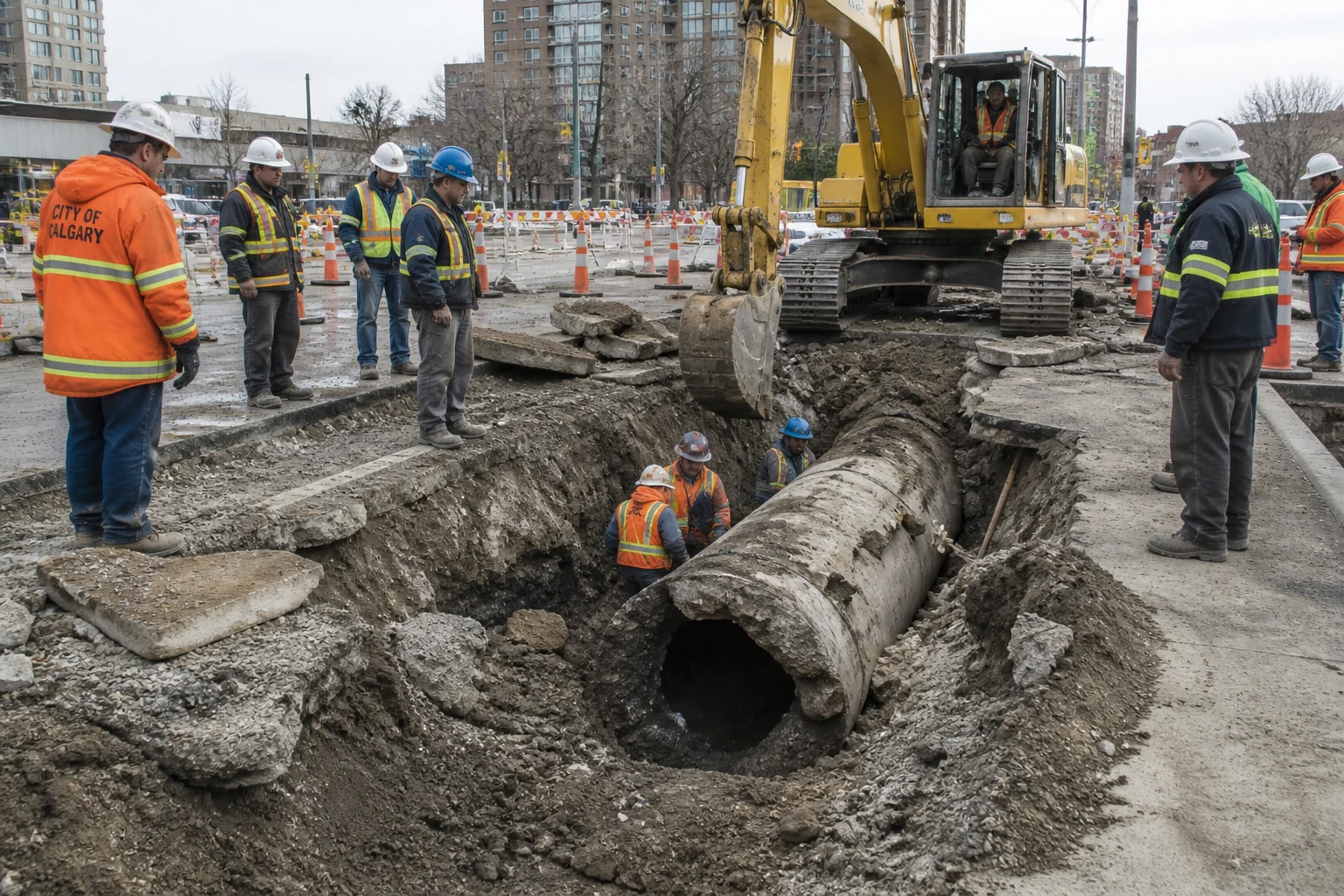
Alberta Minister of Municipal Affairs Dan Williams announced on May 1 that the Government of Alberta is ordering a provincial investigation into Calgary's recurring water-main failures, including three emergency shutdowns of the Bearspaw South Feeder Main in the past two years. Williams appointed David Goldie, a 35-year civil engineer with prior experience as Edmonton's chief utilities engineer, to lead the review. The investigation is expected to deliver an interim report by July and a final set of recommendations by November 2026.
What the province is investigating
The terms of reference for the Goldie review focus on three pressure points: procurement and contracting practices for Calgary's water-distribution infrastructure, asset-management practices including condition assessment and predictive maintenance, and capital-renewal funding adequacy. The province has explicitly framed the review as 'collaborative not punitive' — a signal that Calgary's leadership is not the target. The target is structural: Alberta wants to understand whether the failures reflect city-specific decisions, broader sector practices, or province-wide infrastructure underinvestment.
Goldie's appointment carries weight in Alberta utility circles. A registered Professional Engineer in Alberta and a Fellow of the Canadian Society for Civil Engineering, he led Edmonton's water-utilities engineering through the city's 2014 Bremner Pipeline rehabilitation — a project that addressed similar large-diameter feeder reliability concerns and is now used as a regional case study in proactive renewal. Before Edmonton, Goldie spent twelve years at AECOM consulting on municipal water infrastructure across western Canada, including condition assessments for Saskatoon, Regina, and several smaller Prairie cities. Goldie has full access to City of Calgary procurement records, internal asset-condition reports, and council briefing materials going back ten years. The city has committed to full cooperation, including making operational staff available for interviews under provincial authority. Alberta's last comparable municipal water investigation was the 2010 Lethbridge probe into chronic boil-water advisories, which produced a $42 million CAD provincial-funding response.
The Bearspaw feeder main and what keeps breaking
The Bearspaw South Feeder Main is the primary transmission pipe carrying treated water from the Bearspaw Water Treatment Plant in northwest Calgary into the city's distribution grid. The main is approximately 1.2 metres in diameter, prestressed concrete cylinder pipe (PCCP) construction, installed in segments between 1972 and 1985. PCCP was the dominant material for large-diameter water mains in North America during that period; it is also now widely understood to be more failure-prone than ductile iron or modern fibre-reinforced alternatives, particularly as it ages past 40 years.
The most consequential failure occurred in June 2024, when a 5-metre section of the main ruptured beneath 16 Avenue NW, flooding the road, knocking out service to multiple neighbourhoods, and forcing Calgary into emergency outdoor watering bans for several weeks. The repair required an unprecedented coordination effort with multiple contractors operating in parallel — the city was publicly characterised as having narrowly avoided a multi-day potable-water emergency. A second major break in December 2025 affected a different segment of the same main; a third failure on a separate but adjacent main occurred in February 2026, prompting the province's involvement.
Calgary water main breaks across the entire distribution system have risen each year since 2020, from 38 reported breaks in 2020 to 91 in 2025, with 34 already recorded year-to-date in 2026. Most breaks are in smaller-diameter distribution mains and do not produce service interruptions, but they reflect a system-wide aging trend. Asset-renewal spending has not kept pace; the city's most recent water-utility budget allocates roughly $354 million over four years to leak detection and pipe renewal — a meaningful number, but one that several civil engineers consulted by the Calgary Herald have called 'about half what is needed for steady-state replacement.'
Economic impact and the May 1 mandatory schedule
Each Bearspaw shutdown forces Calgary into emergency outdoor-watering restrictions while the system runs on parallel feeder capacity. The 2024 event drove the Calgary Chamber of Commerce to publish an estimated $329 million CAD in regional economic impact over the three-week emergency. Landscaping and construction sectors took the largest direct hits — landscapers lost roughly $99 million CAD in summer revenue, and construction projects requiring water for dust control and concrete work were delayed across multiple sites.
The recurring failures helped drive the political case for Calgary's permanent year-round watering schedule, approved by City Council on April 29, 2026 by a 10–5 vote. The new bylaw — Water Utility Bylaw 40M2006 — limits residential sprinkler watering to three days per week (45 hours per week total) within the 7 PM to 10 AM window. Mayor Jyoti Gondek framed the new bylaw not as drought response but as infrastructure resilience: by structurally reducing peak summer demand by 20% over 15 years, the city buys margin against the next Bearspaw event without requiring emergency bans.
What Goldie is likely to find
Sector observers consulted by the Globe and Mail and the Calgary Herald expect the Goldie review to surface three structural findings. First, Calgary's PCCP feeder mains are at end of design life and need accelerated replacement — likely $1 billion CAD or more in capital spending over the next decade beyond what is currently budgeted. Second, the city's condition-assessment programme has been under-resourced relative to peer Canadian utilities, leaving aging infrastructure undermonitored. Third, the historical division between operating and capital budgets in municipal water utilities has incentivised deferred maintenance — the financial structure rewards short-term operating efficiency at the cost of long-term renewal.
What the province does with those findings is the open question. Alberta has limited direct authority over municipal water-utility budgets, but it controls the Municipal Sustainability Initiative grant flow and several other infrastructure-funding mechanisms. A finding that Calgary needs accelerated capital for water-main renewal could trigger a redirection of provincial infrastructure dollars — or it could trigger a recommendation that municipalities raise water rates more aggressively to fund renewal internally. Calgary water rates are already higher than Edmonton's for comparable usage; the political appetite for further increases is low.
Why this matters beyond Calgary
Calgary is not the only large Canadian city facing aging water-infrastructure challenges. Toronto, Montreal, Edmonton, Winnipeg, and Vancouver all operate distribution systems with substantial PCCP or cast-iron components installed in the 1960s and 1970s. The Federation of Canadian Municipalities estimates the national water-infrastructure deficit at roughly $130 billion CAD — meaning the cumulative gap between current condition and acceptable condition across Canadian municipal water systems would cost that much to close. Calgary's experience is the most acute manifestation of a national trend, not an isolated event.
The Goldie review is therefore being watched closely outside Alberta. If the province's findings drive a meaningful capital-funding increase tied to renewal commitments, other Canadian provinces are likely to face pressure to follow. If the review concludes that the failures reflect Calgary-specific procurement decisions rather than sector-wide underinvestment, the political case for federal or provincial infrastructure-renewal money becomes harder. The November final report will be one of the most consequential Canadian utility-policy documents of 2026.
For Calgary residents, the immediate practical implication is simpler: the new mandatory year-round watering schedule starts now. Even-numbered addresses water Tuesdays, Thursdays, and Saturdays. Odd-numbered addresses water Wednesdays, Fridays, and Sundays. Sprinkler use is permitted only between 7 PM and 10 AM. Education-first enforcement applies through summer 2026; fines escalate from there. The longer-term picture — whether Calgary can build durable water security against an aging feeder network — depends on what Goldie writes in November.
Related water restrictions
Community Reports & Questions
Share an update, ask a question, or report a change in your local restrictions.
No community reports yet
Be the first to share a local update, ask a question, or report a change in your area's restrictions.
More news
Florida Escalates to Phase III Extreme - SJRWMD Tightens Rules Across 18 Counties
May 13, 2026
Coastal Bend Water Crisis Spreads - Aransas Pass and Beeville Declare Disasters as Corpus Christi Hits 7.8%
May 12, 2026
UK Braces for Summer 2026 Drought as Key Reservoir 'Will Not Fully Recover'
May 2, 2026
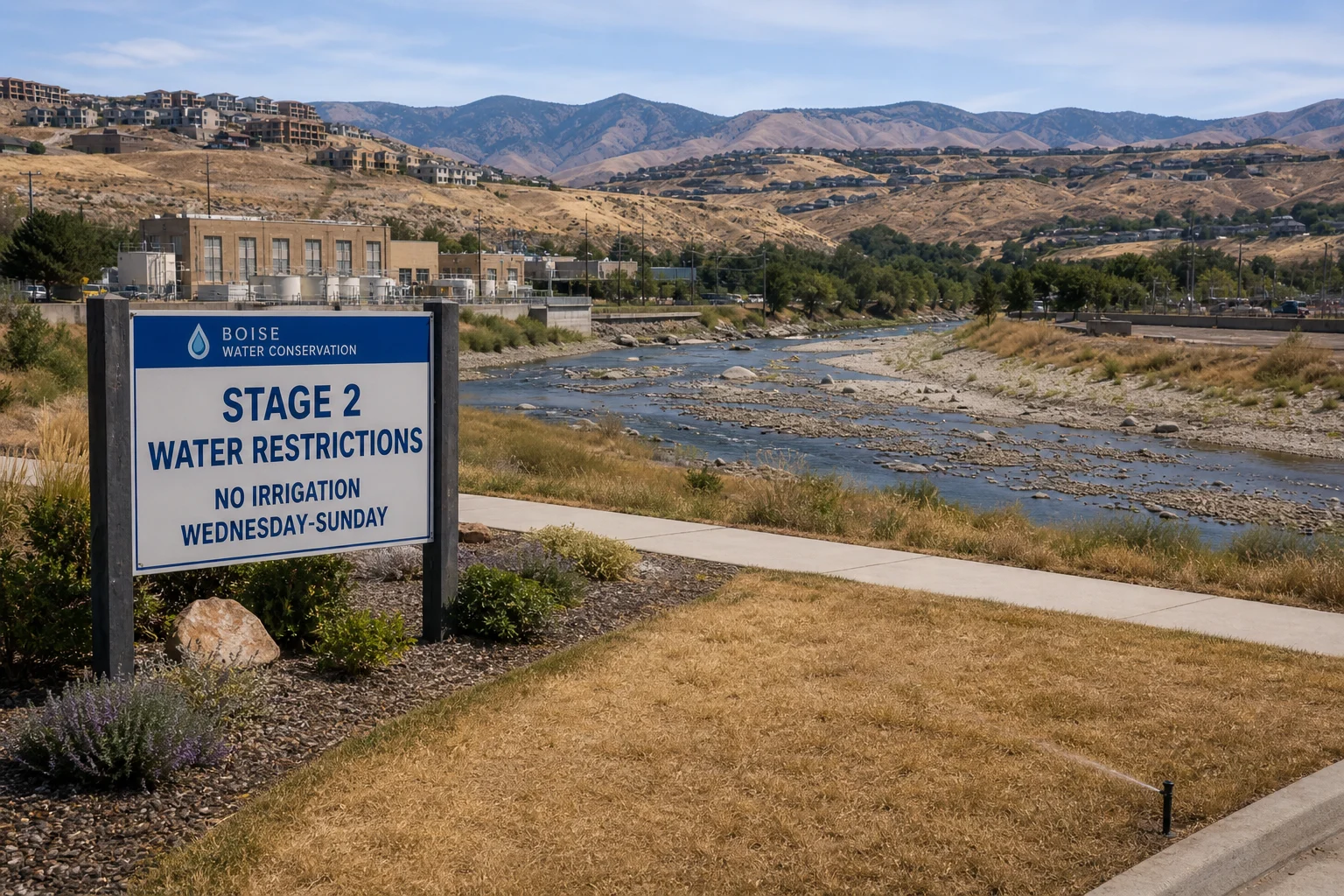
Boise Forced Into Early Stage 2 Water Restrictions as Snake River Hits Record Lows
May 2, 2026
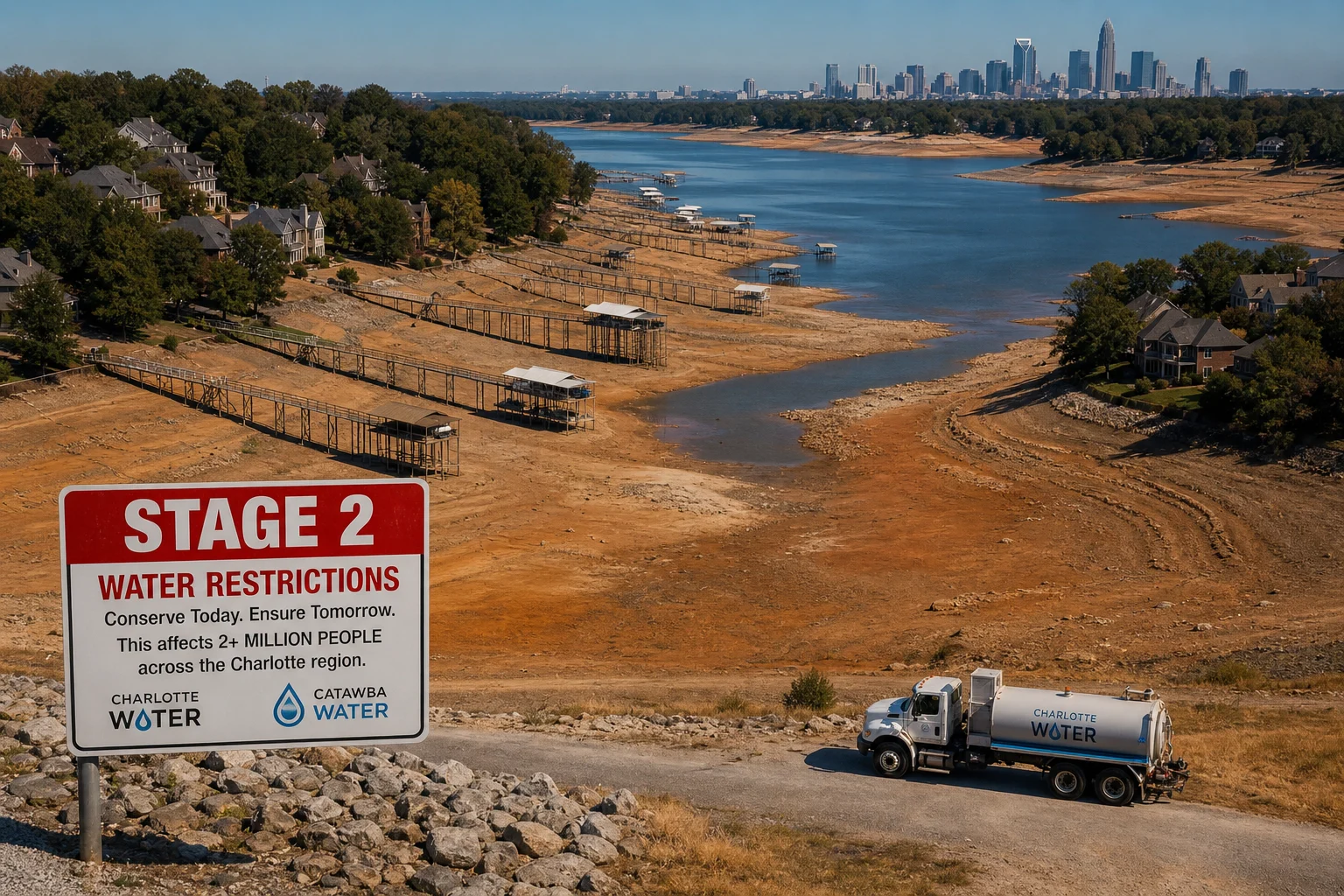
Charlotte Metro Hits Stage 2 Water Restrictions — First 'Exceptional Drought' Since 2008
May 2, 2026
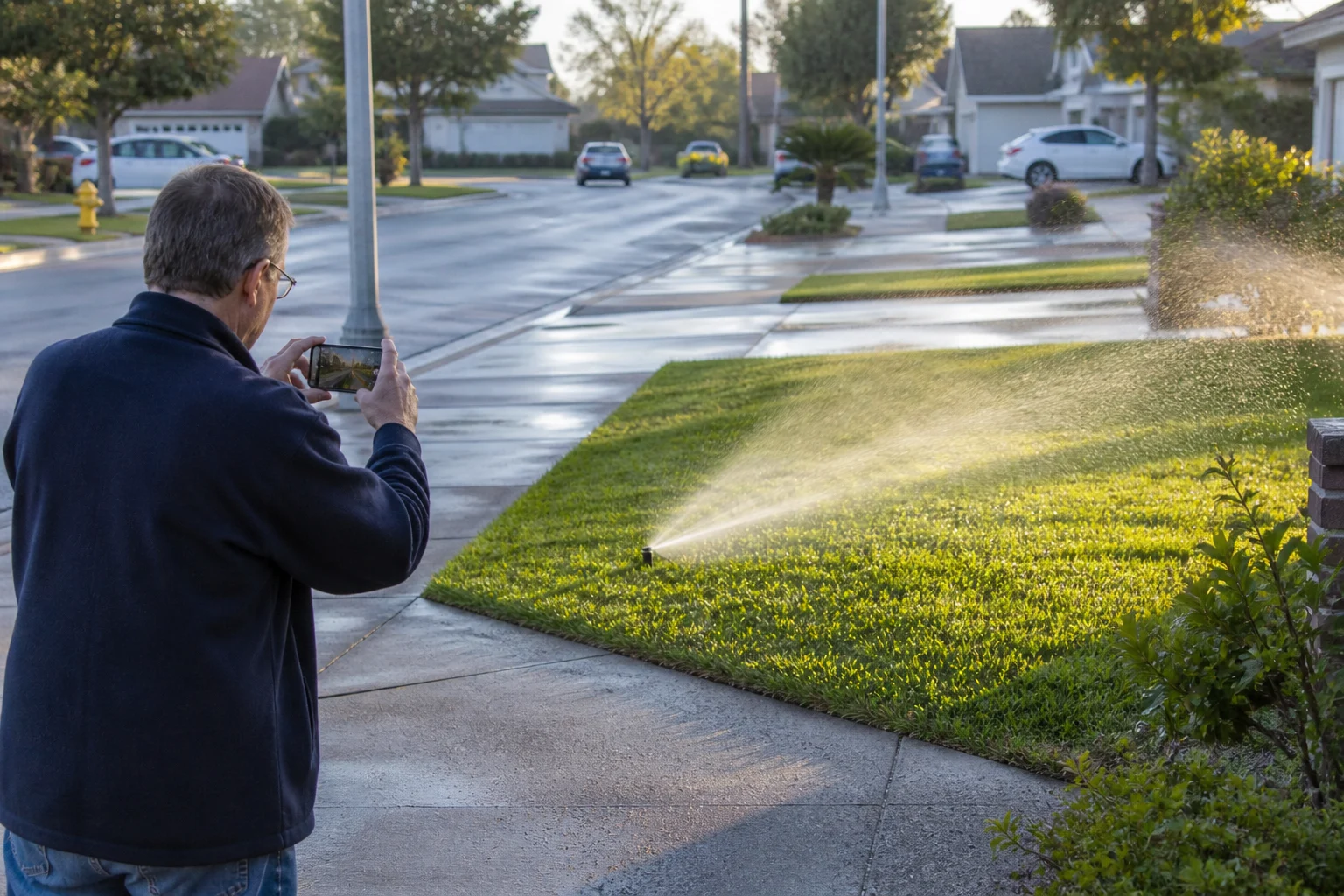
Neighbors Turn 'Water Police': Community Reporting of Violations Rises
May 2, 2026

Water Companies Proactively Restrict Customer Usage Across Drought-Affected Regions
May 2, 2026
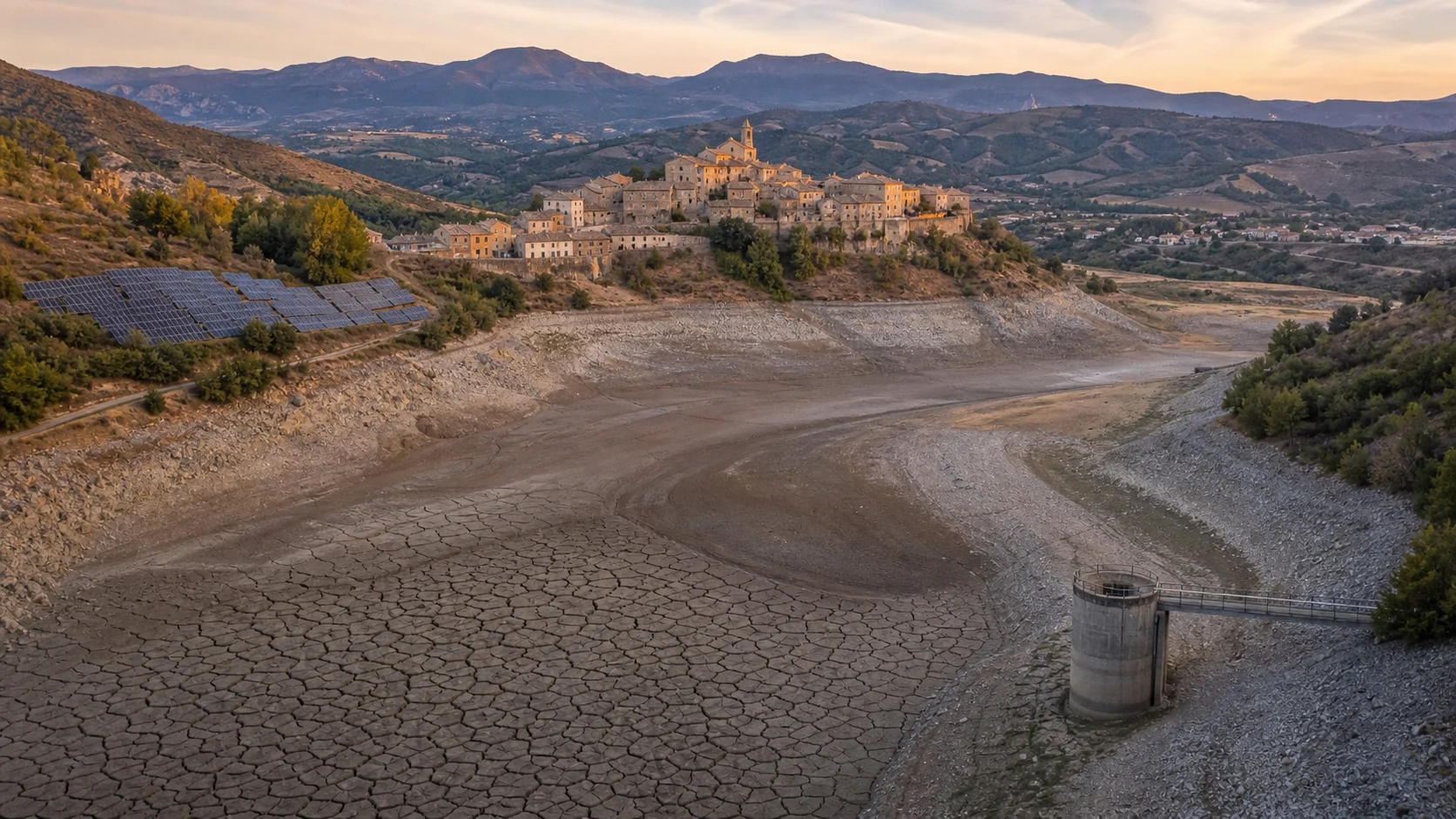
Europe's Water Crisis Worsens: Continental Aquifer Depletion Accelerates
May 2, 2026
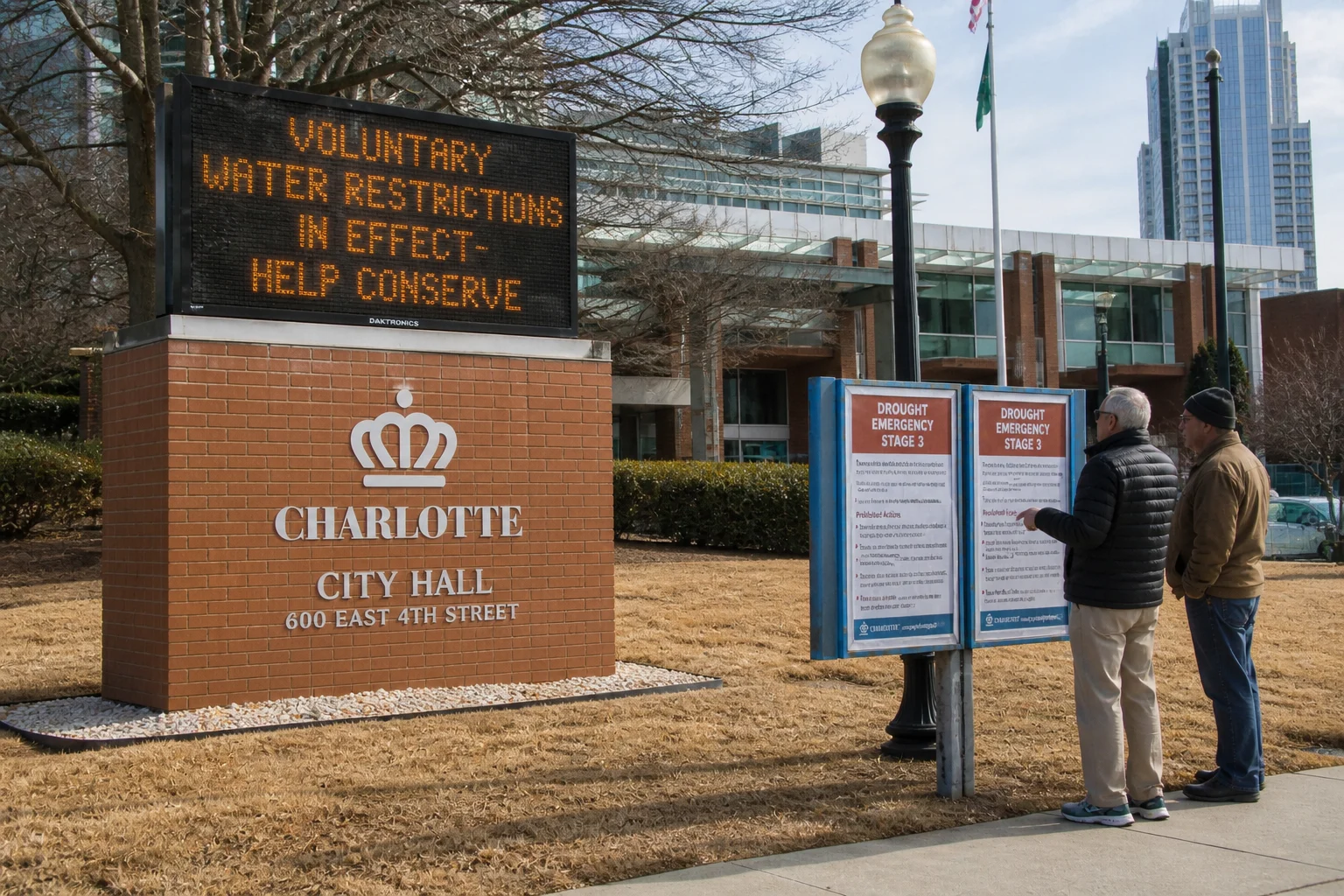
Charlotte Issues Voluntary Water Restrictions and Burn Ban Amid Ongoing Drought
May 2, 2026
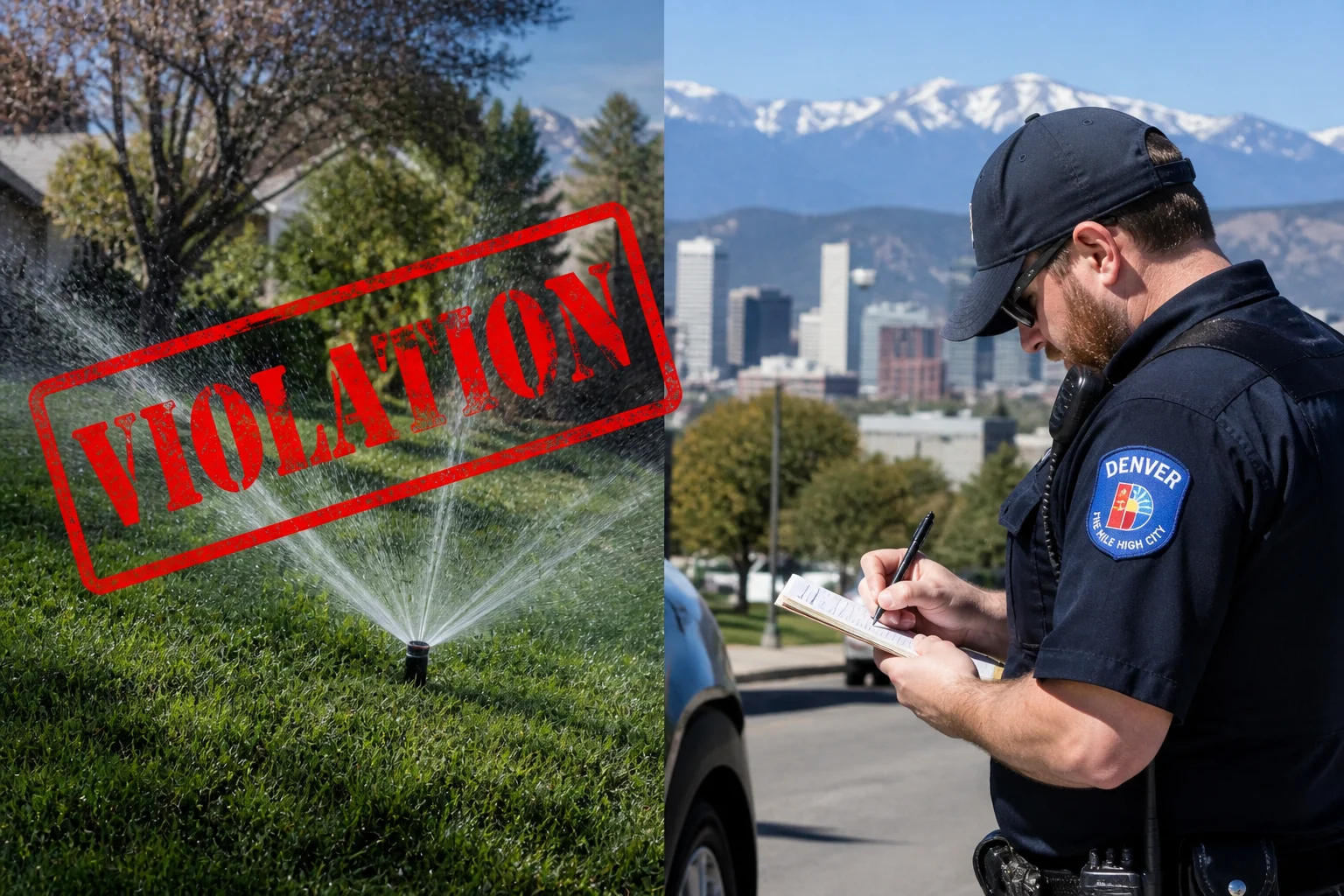
Denver Implements Mandatory Water Restrictions with 'Hundreds of Dollars' in Fines
May 2, 2026
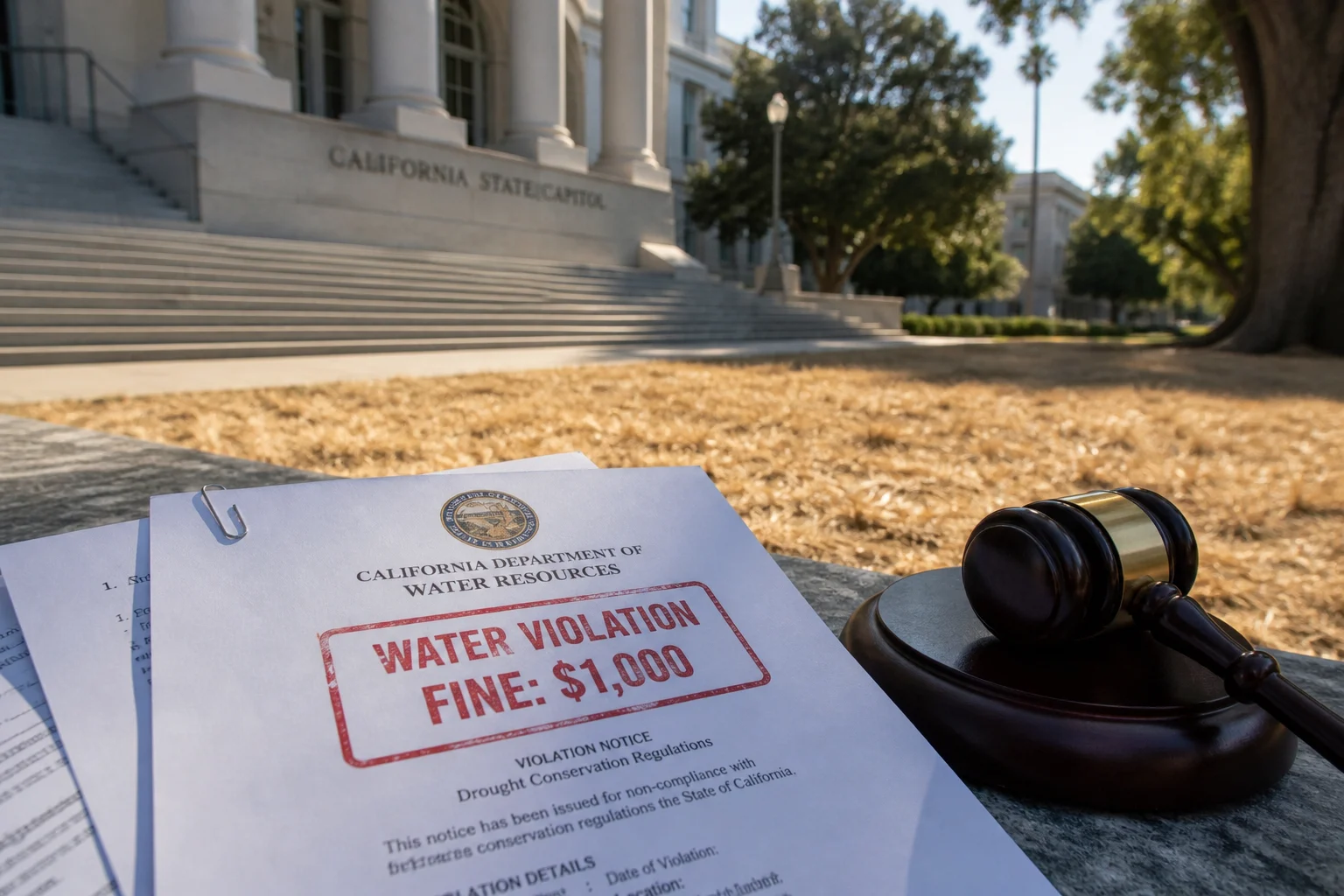
California Water Violation Fines Set to Increase 20-Fold Under New Legislation
May 2, 2026
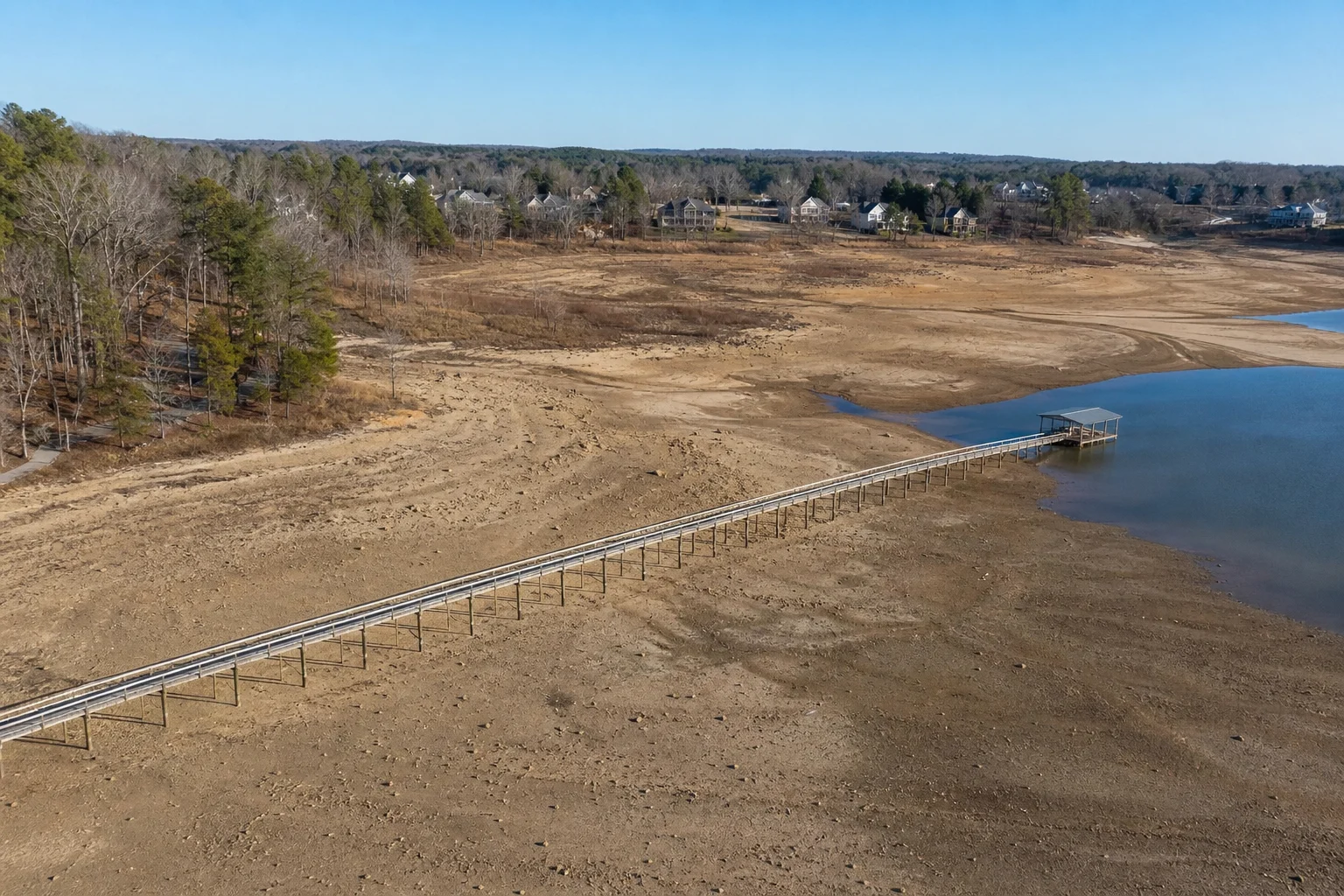
Raleigh Activates Stage 1 Water Restrictions as Falls Lake Drops to 84% Capacity
May 2, 2026
Auburn, Alabama Enacts Mandatory Water Restrictions and Drought Surcharges
May 1, 2026
Vancouver Bans All Lawn Watering — Why BC Skipped Straight to Stage 2
May 1, 2026
Charlotte Imposes First Mandatory Water Restrictions Since 2007 — What Homeowners Need to Know
May 1, 2026
Corpus Christi Could Become the First American City to Run Out of Water
May 1, 2026