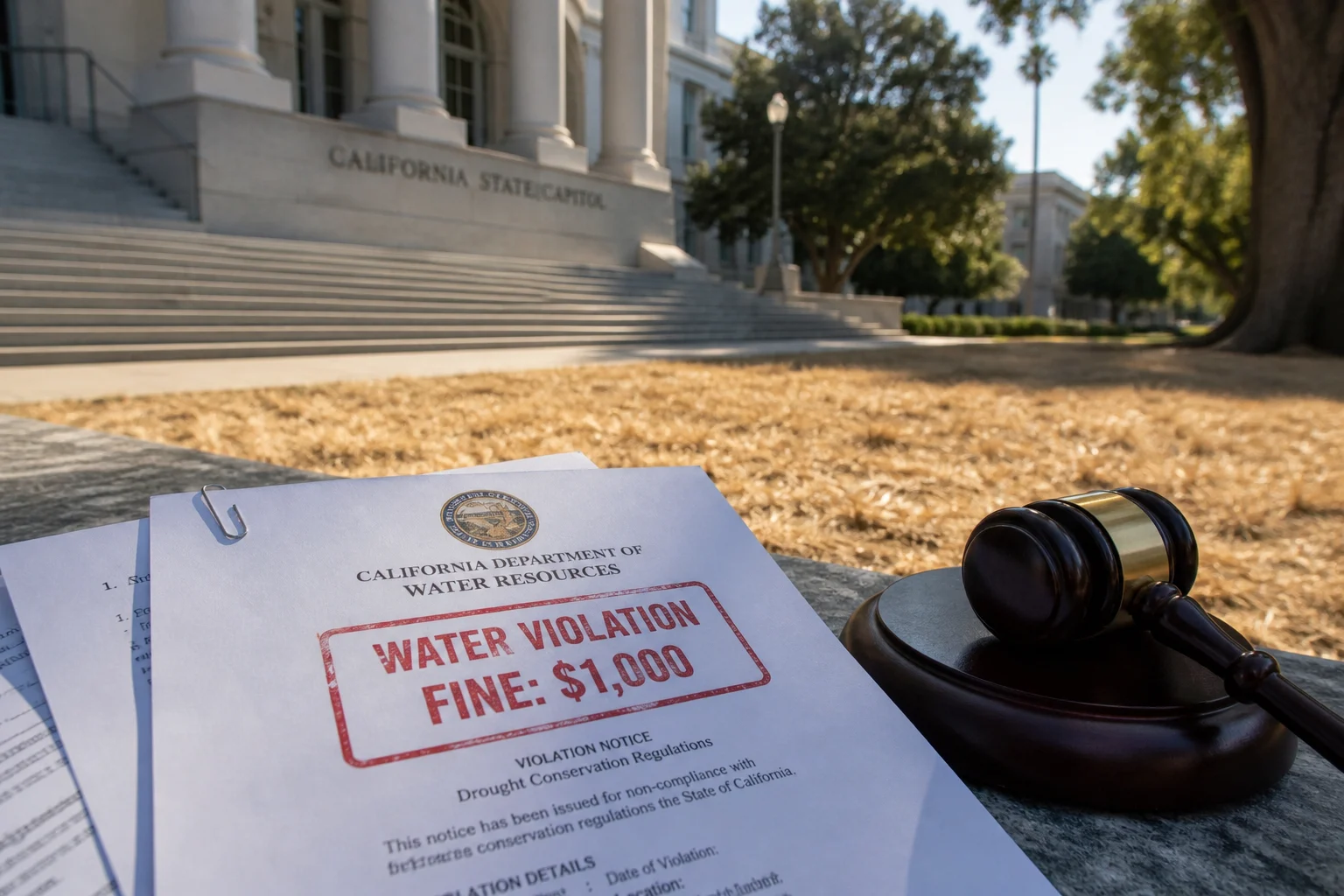
California Water Violation Fines Set to Increase 20-Fold Under New Legislation
California Senator María Elena Durazo introduced SB 614 in late April 2026, proposing the largest single increase in water-violation penalties in the state's history. The bill would raise the maximum daily fine for the most serious classes of violation from $1,000 — set in 1976 and not meaningfully updated since — to $20,000. For the most common residential violations, the maximum would rise from $50 to $1,000. The State Water Resources Control Board, the California Farm Bureau, and several environmental coalitions have all weighed in publicly within days of introduction.
Why California's current fines do not work
California's current water-violation fine structure was largely set in the 1976 Water Code. The original $50 maximum for a residential violation was meaningful in 1976 dollars; in 2026 dollars it is roughly equivalent to the cost of a tank of petrol. For agricultural users — particularly large farms and ranches diverting water without permit during a curtailment order — the existing $1,000 maximum is small enough that several large operators have publicly characterised the fines as a 'cost of doing business' during the 2020–2022 drought enforcement push.
The 2014 emergency drought regulations attempted to work around the statutory ceiling by adding administrative civil penalties separate from the standard fine schedule. Those penalties produced settlements in some high-profile cases — the Byron-Bethany Irrigation District agreed to a $1.5 million settlement in 2017 for unauthorised diversions during the previous drought — but the process is slow, lawyer-intensive, and difficult to apply to small repeat offenders. SB 614 is the first attempt to update the underlying fine schedule itself.
What the bill changes
SB 614 establishes five graduated tiers. Tier 1 (residential off-schedule watering) maxes at $1,000 per day, up from $50. Tier 2 (failure to report agricultural diversion) maxes at $2,500 per day, up from $100. Tier 3 (wasteful or unreasonable use during a state-declared drought) maxes at $5,000 per day, up from $100. Tier 4 (curtailment-order violations) maxes at $10,000 per day, up from $500. Tier 5 (repeat egregious or wilful violations resulting in environmental damage) maxes at $20,000 per day, up from $1,000.
The bill also includes two structural reforms beyond the fine schedule. First, it gives the State Water Resources Control Board explicit statutory authority to issue administrative penalties without requiring a court hearing for amounts under $50,000 per case. Second, it establishes a 'persistent violator' designation that triggers automatic Tier 5 fines for any operator with three substantiated violations in the prior five years, regardless of which tier those violations originally fell under. The persistent-violator provision is modelled on similar mechanisms in Australian and Israeli water-law statutes.
How California compares to other states
If SB 614 passes, California's $20,000 per-day Tier 5 ceiling would become the highest in the United States, exceeding Nevada and Texas (both at $5,000 per occurrence) and well above Florida ($500) and North Carolina ($200). The proposed Tier 1 ceiling of $1,000 for residential violations would also become the highest in the US for routine off-schedule watering. The agricultural-tier increases bring California into line with European Union water-violation penalties and exceed most Australian state schedules.
The comparison is more complicated than the headline numbers suggest. California already issues a higher proportion of its water-violation enforcement actions through administrative civil penalties (separate from fines) than most peer states — meaning the practical 'cost of being caught' in California has been higher than the fine schedule alone would imply. SB 614 mostly reduces friction in the existing process; it does not invent new categories of violation or expand the enforcement footprint. Whether the higher fines change behaviour depends largely on whether the state increases inspection capacity to match.
Agricultural impact
The California Farm Bureau Federation has signalled cautious opposition to the bill in its current form. The bureau's primary concern is not the rate-card itself but the Tier 4 mechanism for curtailment-order violations. Curtailment orders are issued during drought to suspend water rights below a specified seniority threshold; junior-rights holders are required to stop diverting water until the order is lifted. Several farm-bureau-aligned operators have argued that curtailment orders themselves are sometimes legally questionable — California's water-rights system is an unsettled area of law — and that fining junior rights holders $10,000 per day for diversions that may ultimately be ruled lawful in court is a significant due-process concern.
Environmental coalitions argue the opposite: that the inability of the state to credibly enforce curtailment during the 2014–2022 drought sequence accelerated environmental decline in several California river systems and that without serious deterrent fines, future drought response is structurally hollow. The Pacific Institute and the Natural Resources Defense Council have both endorsed SB 614 in its current form. The California Association of Mutual Water Companies — representing about 1,200 small water systems statewide — has endorsed the bill with proposed amendments to the persistent-violator provision.
The legislative process and the politics
SB 614 has been referred to the Senate Natural Resources and Water Committee for hearing in mid-May. Durazo's office indicates negotiations with the Farm Bureau on Tier 4 due-process language are ongoing. The bill has 12 Senate co-sponsors so far, all Democratic, drawn primarily from urban Southern California and the Bay Area. No Republican Senate sponsors have signed on; the political coalition behind the bill mirrors the broader urban-rural water-policy split that has shaped California legislation for decades.
Governor Newsom has not publicly taken a position. Bill-tracking analysts at CalMatters give SB 614 roughly a 60% probability of clearing committee with material amendments, and roughly a 35% probability of passing both chambers and reaching the Governor's desk before the legislative session ends in September. The most likely amendments are a downward adjustment of Tier 4 to $5,000 per day, a softening of the persistent-violator automatic-tier mechanism, and additional procedural protections for due-process challenges to curtailment orders. None of those amendments would change the headline framing: California is moving toward the highest water-violation fine schedule in the country.
What this means for residents and operators
For residential customers, the practical effect of SB 614 — if passed in something close to its current form — is that off-schedule watering becomes a meaningful financial risk for the first time. A homeowner running an automated sprinkler system through a watering-restriction window currently faces a $50 maximum fine per offence; under SB 614 that becomes $1,000. A reprogrammed controller pays for itself the first time it prevents a citation. Local agencies — most of which set their own fines under broader state authority — will likely follow the state lead and update their own ordinances upward.
For agricultural operators, the implications are larger. Tier 4 curtailment fines at $10,000 per day are sufficient to make a multi-week unauthorised diversion materially more expensive than buying short-term water on the spot market — exactly the calculus the bill's authors intend. The Tier 5 ceiling of $20,000 per day combined with the persistent-violator designation creates a credible threat against repeat offenders that the existing schedule does not. The Farm Bureau is likely to negotiate hard on the procedural details, but the headline message — California will treat water violations more seriously — is unlikely to be reversed even after amendment.
Related water restrictions
Community Reports & Questions
Share an update, ask a question, or report a change in your local restrictions.
No community reports yet
Be the first to share a local update, ask a question, or report a change in your area's restrictions.
More news
Florida Escalates to Phase III Extreme - SJRWMD Tightens Rules Across 18 Counties
May 13, 2026
Coastal Bend Water Crisis Spreads - Aransas Pass and Beeville Declare Disasters as Corpus Christi Hits 7.8%
May 12, 2026
UK Braces for Summer 2026 Drought as Key Reservoir 'Will Not Fully Recover'
May 2, 2026
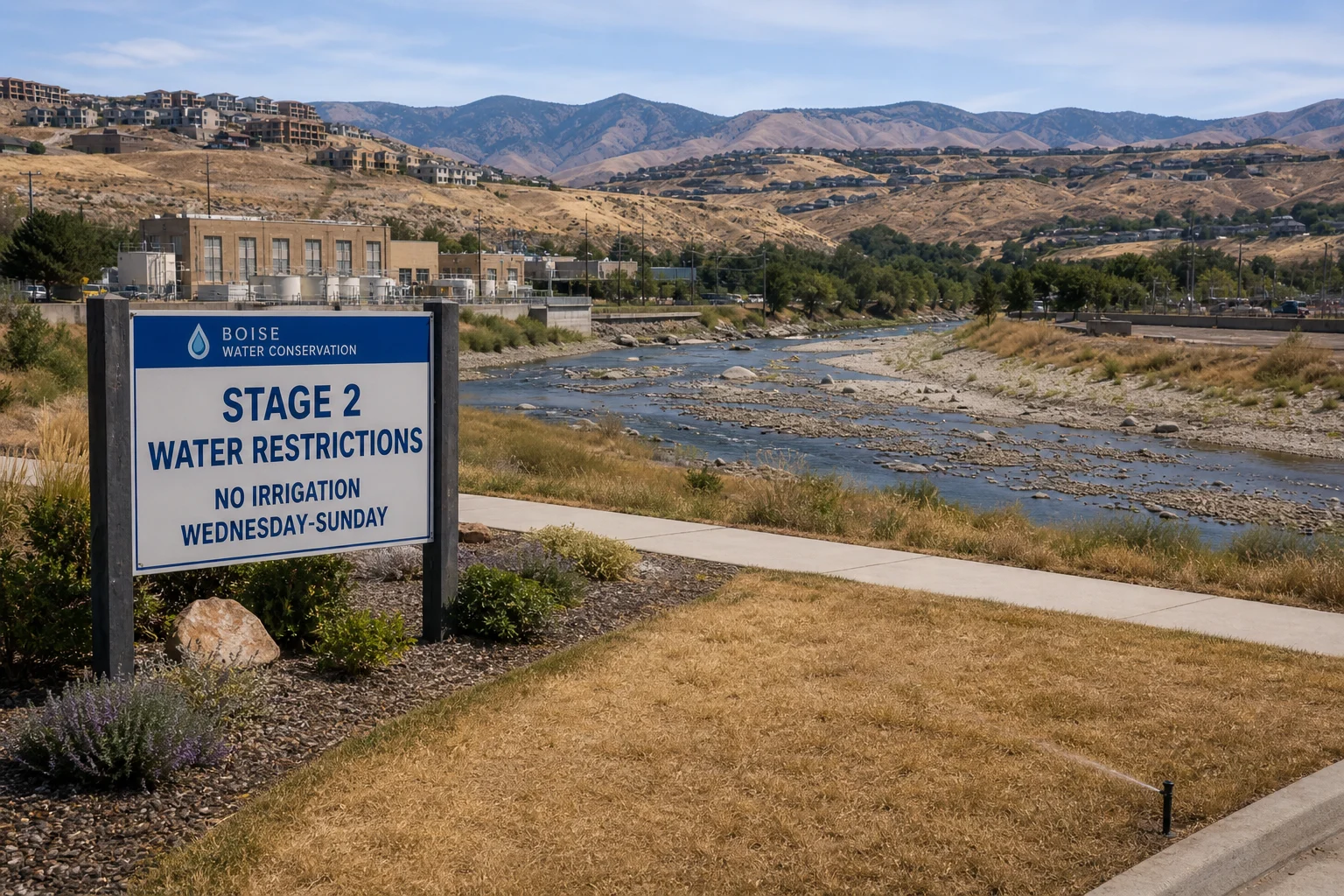
Boise Forced Into Early Stage 2 Water Restrictions as Snake River Hits Record Lows
May 2, 2026
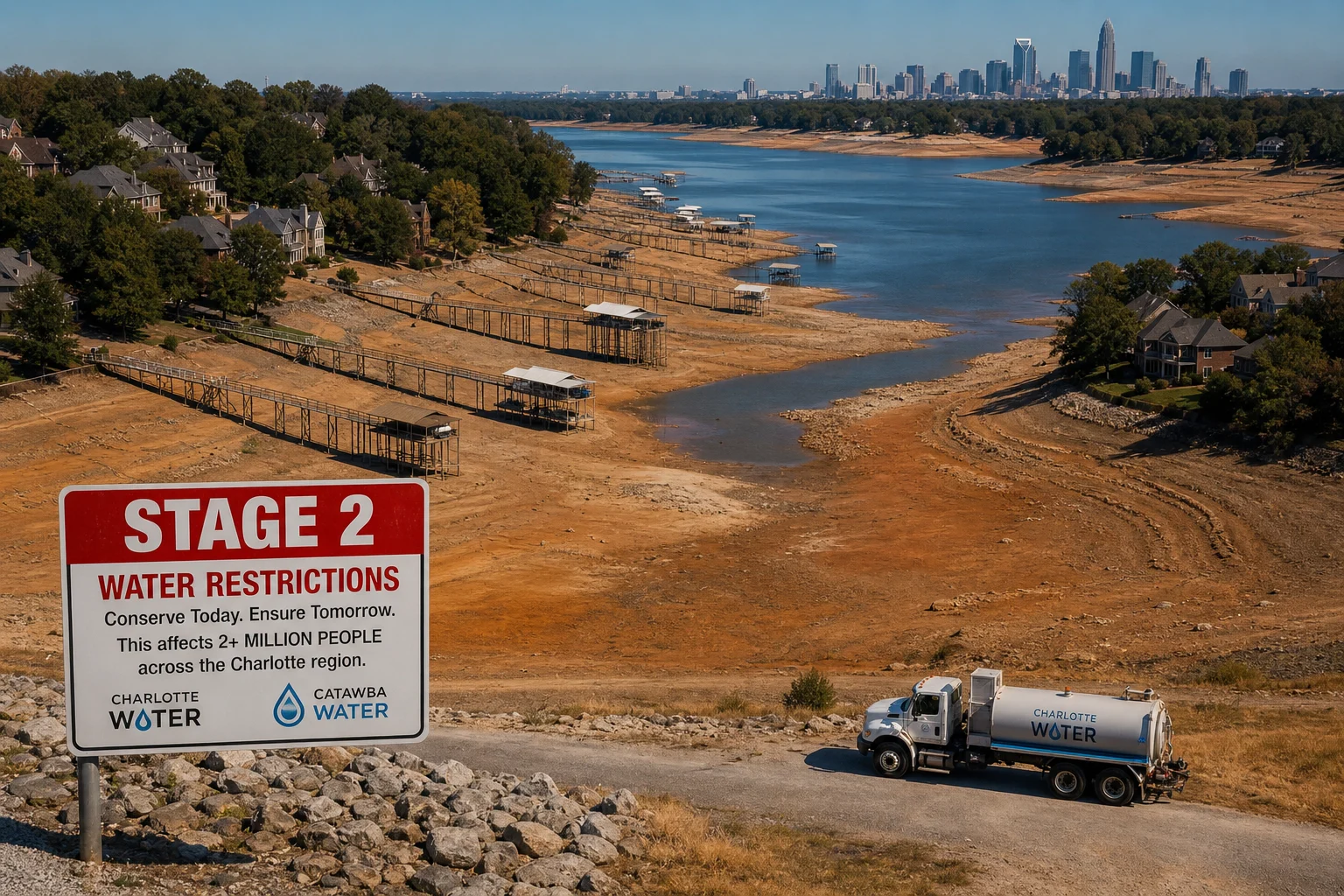
Charlotte Metro Hits Stage 2 Water Restrictions — First 'Exceptional Drought' Since 2008
May 2, 2026
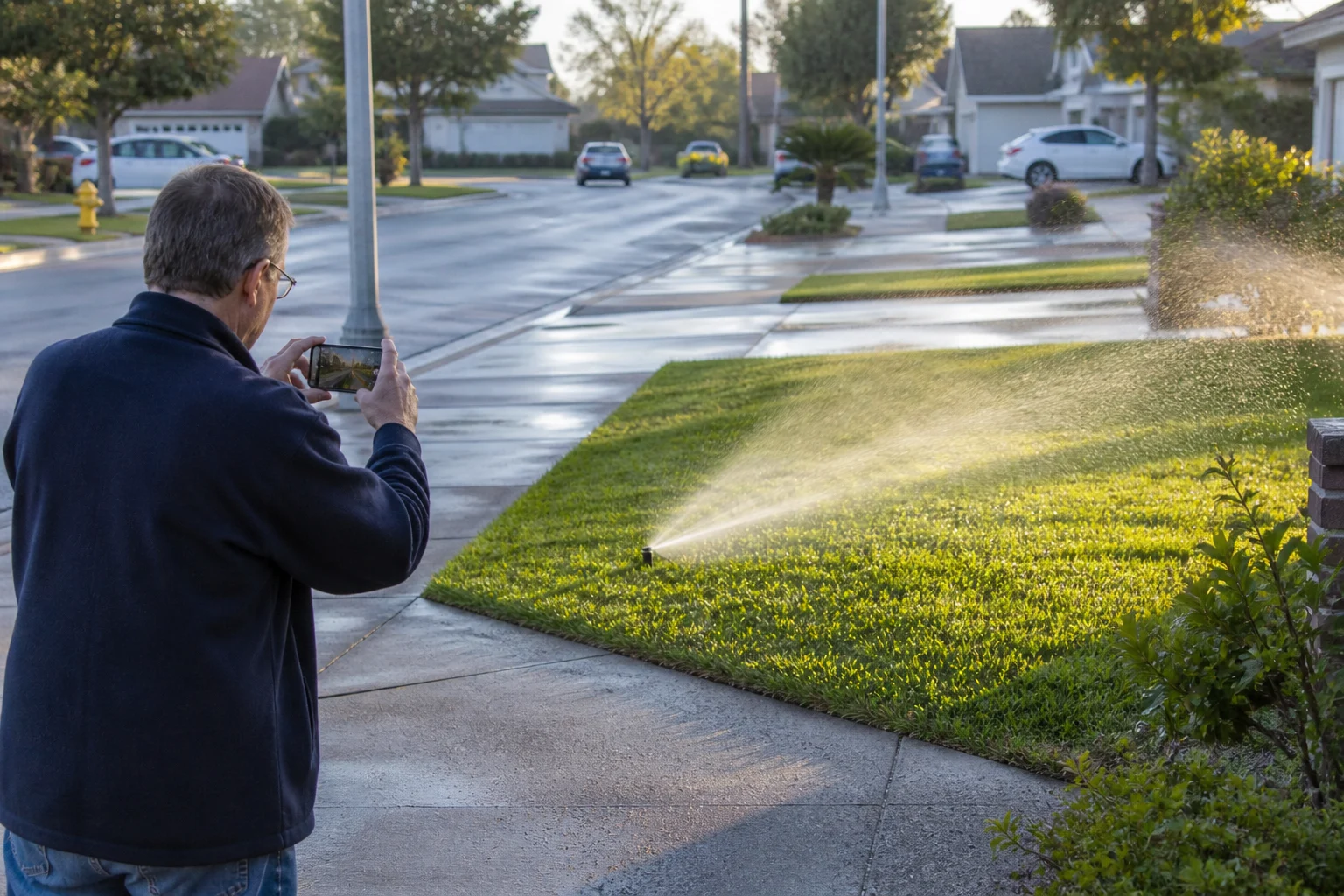
Neighbors Turn 'Water Police': Community Reporting of Violations Rises
May 2, 2026
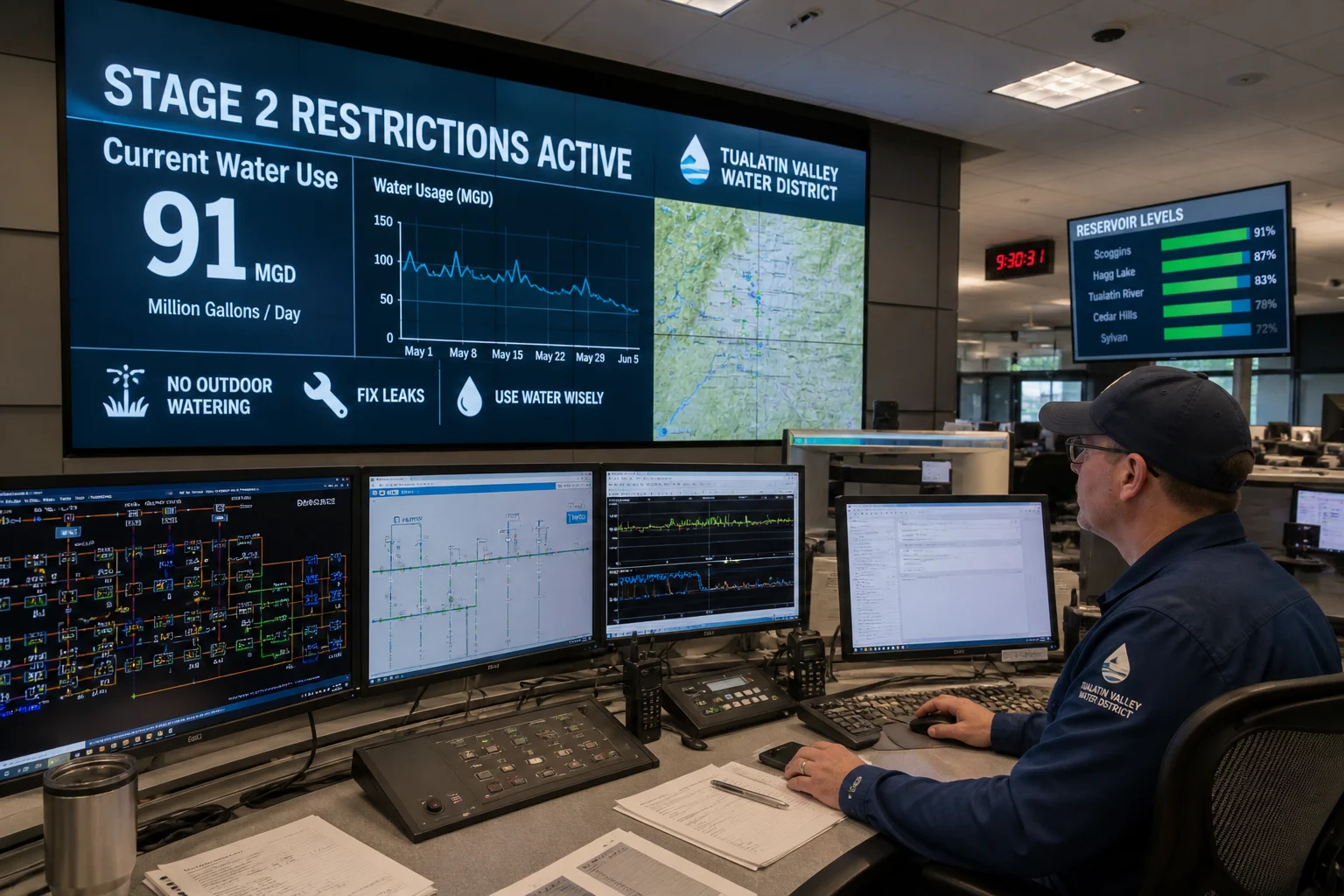
Water Companies Proactively Restrict Customer Usage Across Drought-Affected Regions
May 2, 2026
Europe's Water Crisis Worsens: Continental Aquifer Depletion Accelerates
May 2, 2026
Charlotte Issues Voluntary Water Restrictions and Burn Ban Amid Ongoing Drought
May 2, 2026
Denver Implements Mandatory Water Restrictions with 'Hundreds of Dollars' in Fines
May 2, 2026
Alberta Orders Provincial Investigation Into Calgary's Recurring Water Main Breaks
May 2, 2026
Raleigh Activates Stage 1 Water Restrictions as Falls Lake Drops to 84% Capacity
May 2, 2026
Auburn, Alabama Enacts Mandatory Water Restrictions and Drought Surcharges
May 1, 2026
Vancouver Bans All Lawn Watering — Why BC Skipped Straight to Stage 2
May 1, 2026
Charlotte Imposes First Mandatory Water Restrictions Since 2007 — What Homeowners Need to Know
May 1, 2026
Corpus Christi Could Become the First American City to Run Out of Water
May 1, 2026