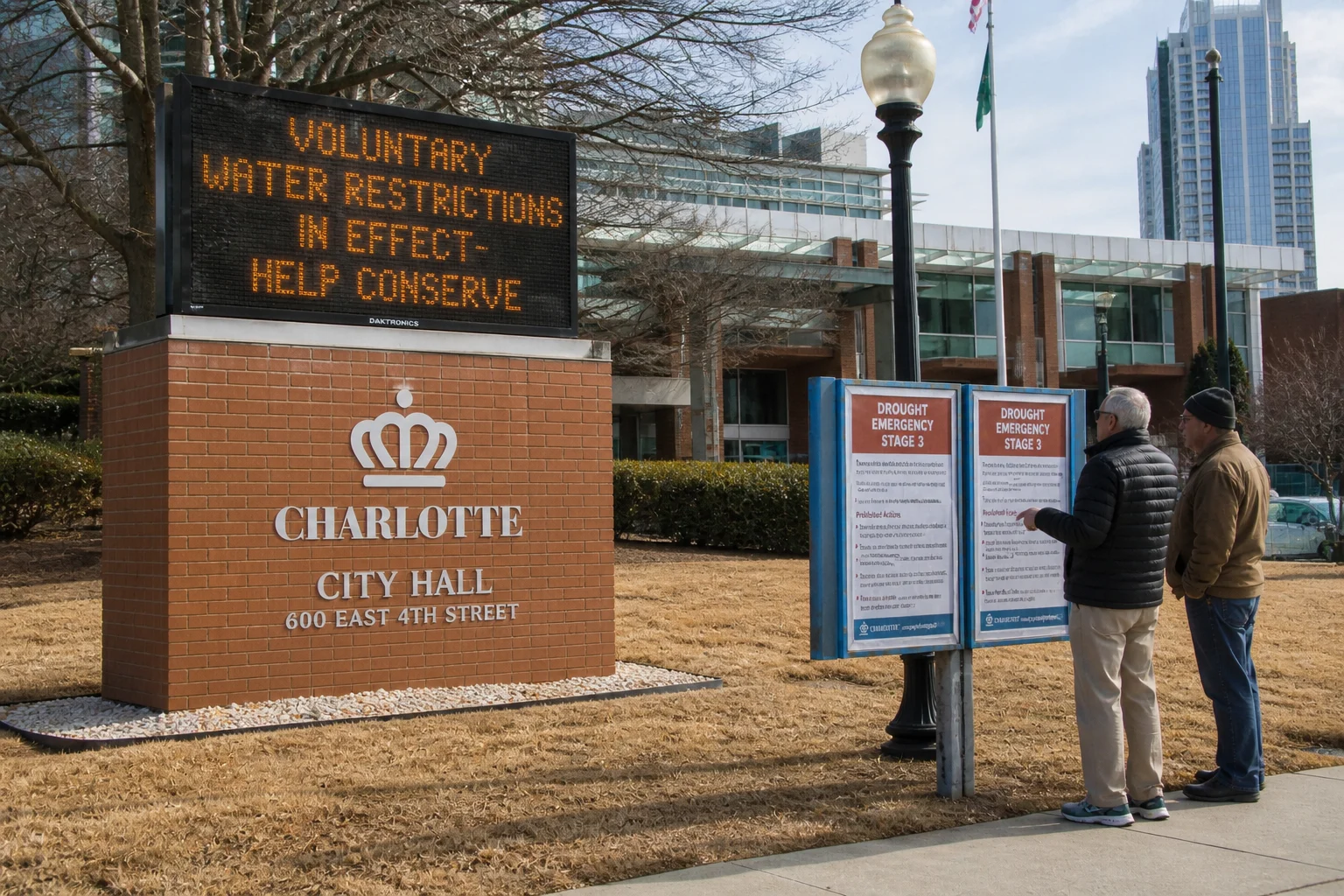
Charlotte Issues Voluntary Water Restrictions and Burn Ban Amid Ongoing Drought
Charlotte Water issued voluntary Stage 1 water restrictions in mid-April 2026, alongside a Mecklenburg County burn ban that took effect April 22. The voluntary measures were the city's first formal drought response in the current cycle and were intended to produce sufficient demand reduction to avoid escalation to mandatory Stage 2 restrictions. By late April, Charlotte Water's customer-survey data showed 76% household participation in voluntary conservation — below the 80% threshold the utility had set as a marker for whether voluntary measures would be sufficient.
What the voluntary measures asked for
Voluntary Stage 1 in Charlotte requested — but did not require — that residential customers reduce outdoor watering to two days per week, ideally early morning before 9 AM. The recommended schedule mirrored the eventual mandatory Stage 2 framework: odd addresses Tuesday and Saturday, even addresses Wednesday and Sunday. Customers were asked to forgo non-essential outdoor water uses entirely — vehicle washing at home, pool top-ups, decorative fountains, pressure washing for aesthetics. Hand watering of trees, shrubs, and food gardens was always permitted with no schedule constraints.
The Mecklenburg County burn ban, issued by the County Manager's office in coordination with the Charlotte Fire Department on April 22, prohibits all outdoor open burning including campfires, brush piles, and recreational fire pits. The burn ban applies to all unincorporated areas of Mecklenburg County and to the City of Charlotte by parallel municipal order. Violations carry fines of up to $1,000 under North Carolina General Statute 14-141.1. The fire department has reported responding to 14 brush-fire calls in the two weeks following the burn ban — three of which were caused by ignored burn-ban violations and resulted in fines.
Why 80% mattered
Charlotte Water set a quiet internal benchmark when issuing the voluntary Stage 1 request: 80% household participation in voluntary conservation would produce sufficient aggregate demand reduction to avoid escalation to mandatory Stage 2. The threshold was not arbitrary. The utility's hydraulic model of the Catawba-Wateree Lake Norman supply system projected that an 80% participation rate corresponded to a roughly 8% reduction in total system demand — enough, when combined with cooler-than-normal April weather, to keep the basin's combined storage on the right side of the Stage 2 trigger curve through the May 1 reservoir review.
Customer-survey data through late April showed participation climbing steadily but plateauing in the mid-70s. Week one (April 13–19) registered 41% participation. Week two reached 58%. Week three crossed 64%. Week four — the week ending April 27 — recorded 71%. Week five, ending May 4, will land at roughly 76% based on partial data. The trend was positive but the trajectory was not steep enough to reach 80% before the Drought Management Advisory Group's May 1 reservoir-level review. That review concluded escalation to mandatory Stage 2 was warranted, with the new schedule effective May 15.
Voluntary versus mandatory — what actually changes
The transition from voluntary Stage 1 to mandatory Stage 2 changes three things. First, the recommended two-days-per-week schedule becomes legally binding under Charlotte's water-conservation ordinance, with $100 fines for first off-schedule offences and escalating penalties for repeat violations. Second, the request for restrictions on non-essential uses becomes a prohibition: vehicle washing at home is banned, pool filling requires a permit, decorative fountains must be turned off. Third, the voluntary morning-watering preference becomes a mandatory overnight-only window: 6 PM to 6 AM, with daytime sprinkling explicitly prohibited.
Charlotte Water's internal modelling suggests the mandatory framework will produce roughly 12–14% system-wide demand reduction once it takes effect — meaningfully more than the 8% voluntary target. The additional reduction comes from two sources: customers who were not voluntarily participating now have a financial reason to comply, and the overnight-only window structurally cuts evaporation losses by roughly 25% compared to the voluntary preference for morning watering. The mandatory schedule is also designed to be unambiguous in a way that voluntary requests are not — there is no interpretation involved in 'water Tuesdays and Saturdays only.'
Regional drought context
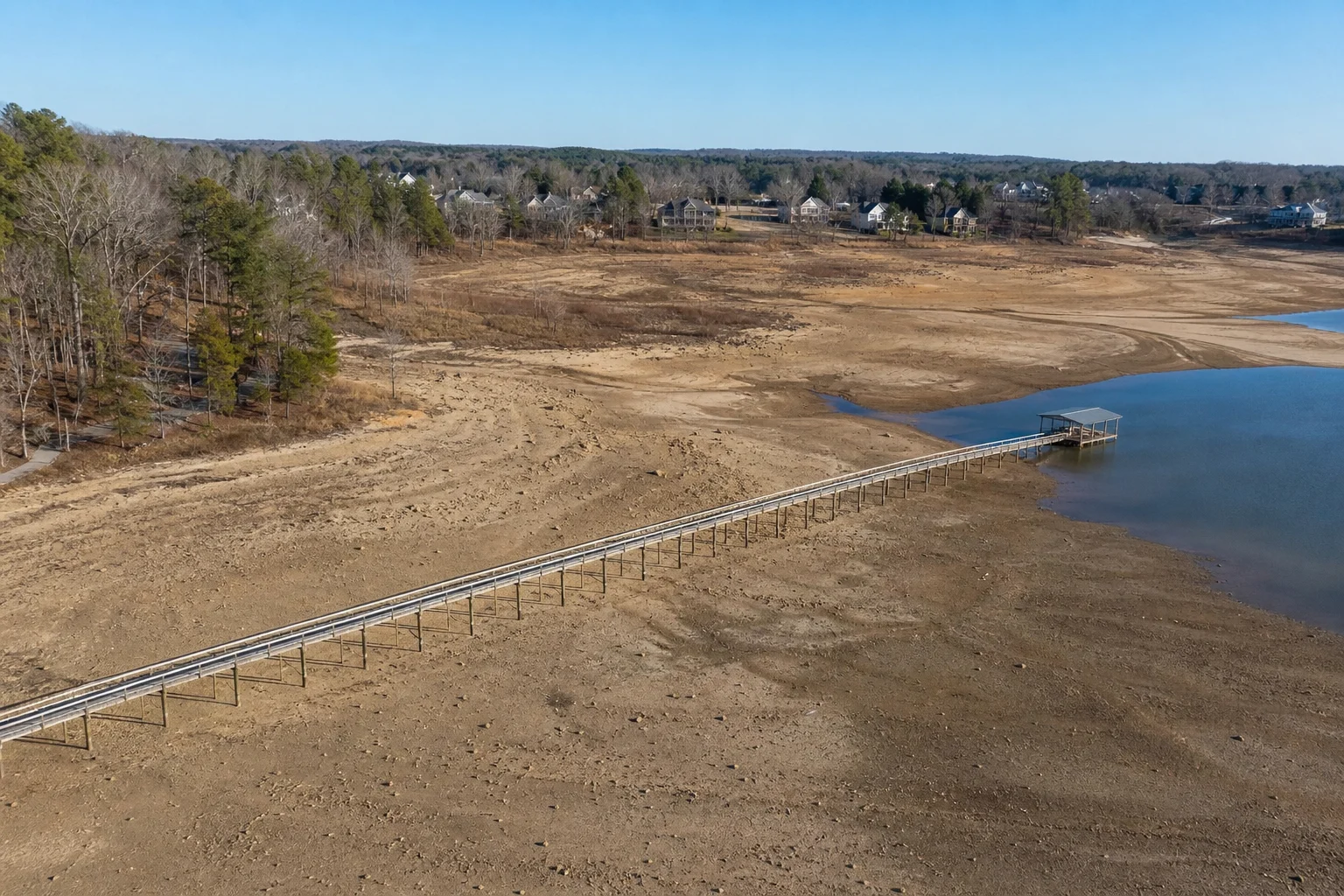
The Catawba-Wateree River Basin — which supplies drinking water to roughly 2 million people across 24 counties in North and South Carolina — entered Stage 2 of the Low Inflow Protocol on May 1, 2026, the same day Charlotte Water announced its mandatory escalation. The basin had its driest October-to-March recharge period since the early 1970s. Lake Norman, the largest reservoir on the system, is showing visibly low water; boat ramps in several access areas no longer reach open water. The Drought Management Advisory Group, which coordinates response across the basin's 11 member utilities, will reconvene in mid-June to evaluate further escalation.
NC DEQ classified Mecklenburg, Cabarrus, Stanly, and Union Counties as D4 Exceptional Drought on April 30 — the worst category on the US Drought Monitor and the first D4 declaration in the Charlotte region since 2008. Wake County, in the Triangle region, sits at D3 Extreme Drought. The county-level classifications drive separate restriction frameworks: Charlotte and Mecklenburg follow Charlotte Water mandatory Stage 2 starting May 15; Raleigh and Wake County have been under their own mandatory Stage 1 since April 20. The two regional frameworks are independent but parallel.
The fire-risk dimension
The Mecklenburg burn ban reflects fire-risk concerns that drought conditions have made acute. The North Carolina Forest Service has issued 'High' or 'Very High' fire-danger ratings for the western Piedmont every day in April since the 14th. Soil moisture readings at the NC Climate Office's Mecklenburg County stations are at the lowest May-1 levels in the 25-year monitoring record. The combination of dry vegetation, low humidity, and elevated wind speeds during the late-April period created textbook conditions for rapid wildfire spread in any unattended outdoor fire.
The 2007 drought — the most recent benchmark for the current event — produced more than 1,200 wildfires across North Carolina between January and June 2008, with several severe events in the western Piedmont and the foothills. The state's coordinated wildfire-response framework has been substantially strengthened since 2007, but the underlying fire-load arithmetic — dry vegetation plus an ignition source plus wind — has not changed. The burn ban removes the most controllable variable in that equation.
What homeowners should do before May 15
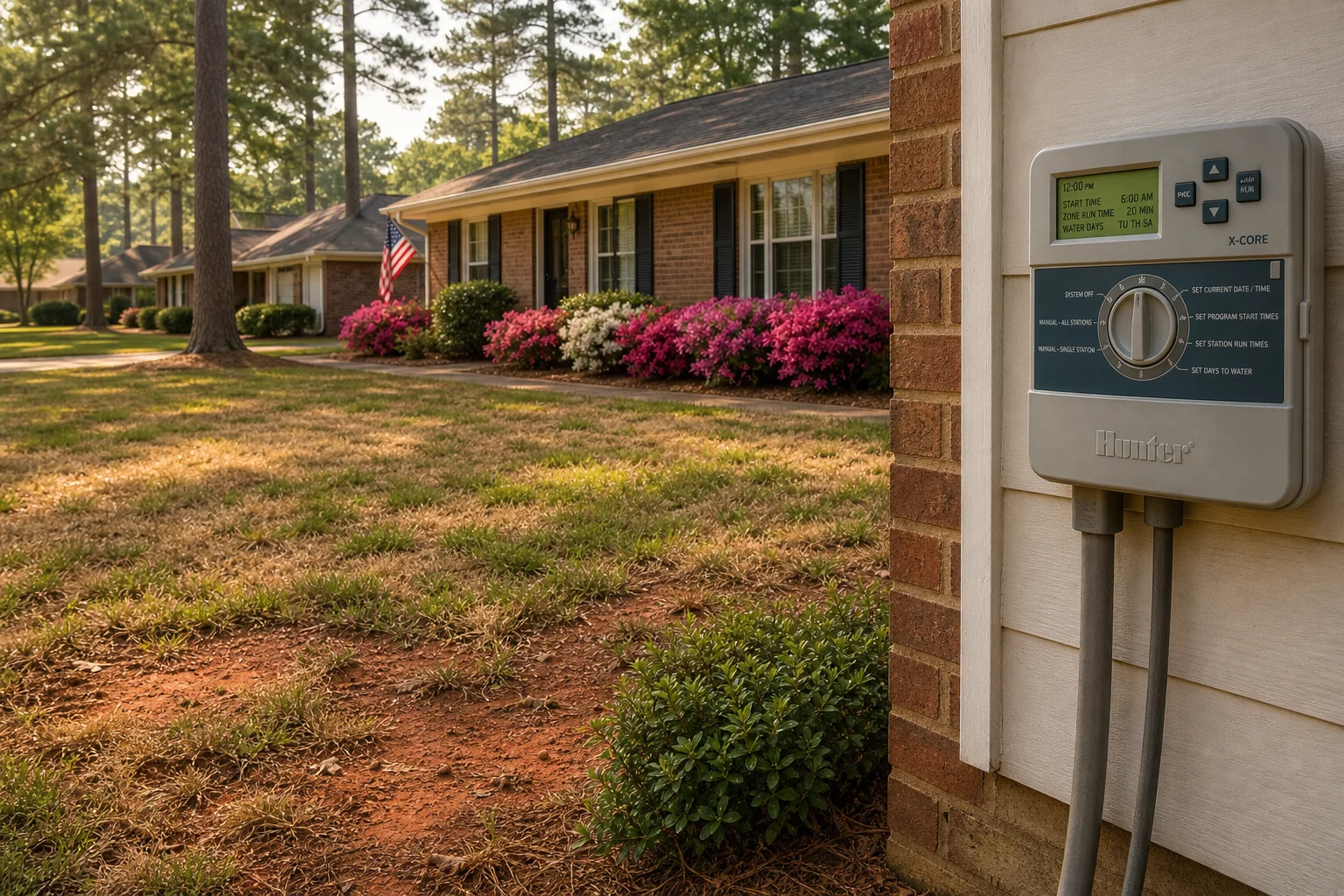
The two-week gap between Charlotte Water's mandatory Stage 2 announcement on May 1 and the rules taking effect on May 15 is deliberately designed to give residential customers time to update sprinkler controllers, complete any outdoor washing tasks that will become prohibited, and adjust water-intensive outdoor projects. Homeowners with automated irrigation systems should reprogram now. Many controllers were last touched in October when systems were winterised; a controller still set on the 2025 summer schedule will quickly attract a $100 fine after May 15 unless updated.
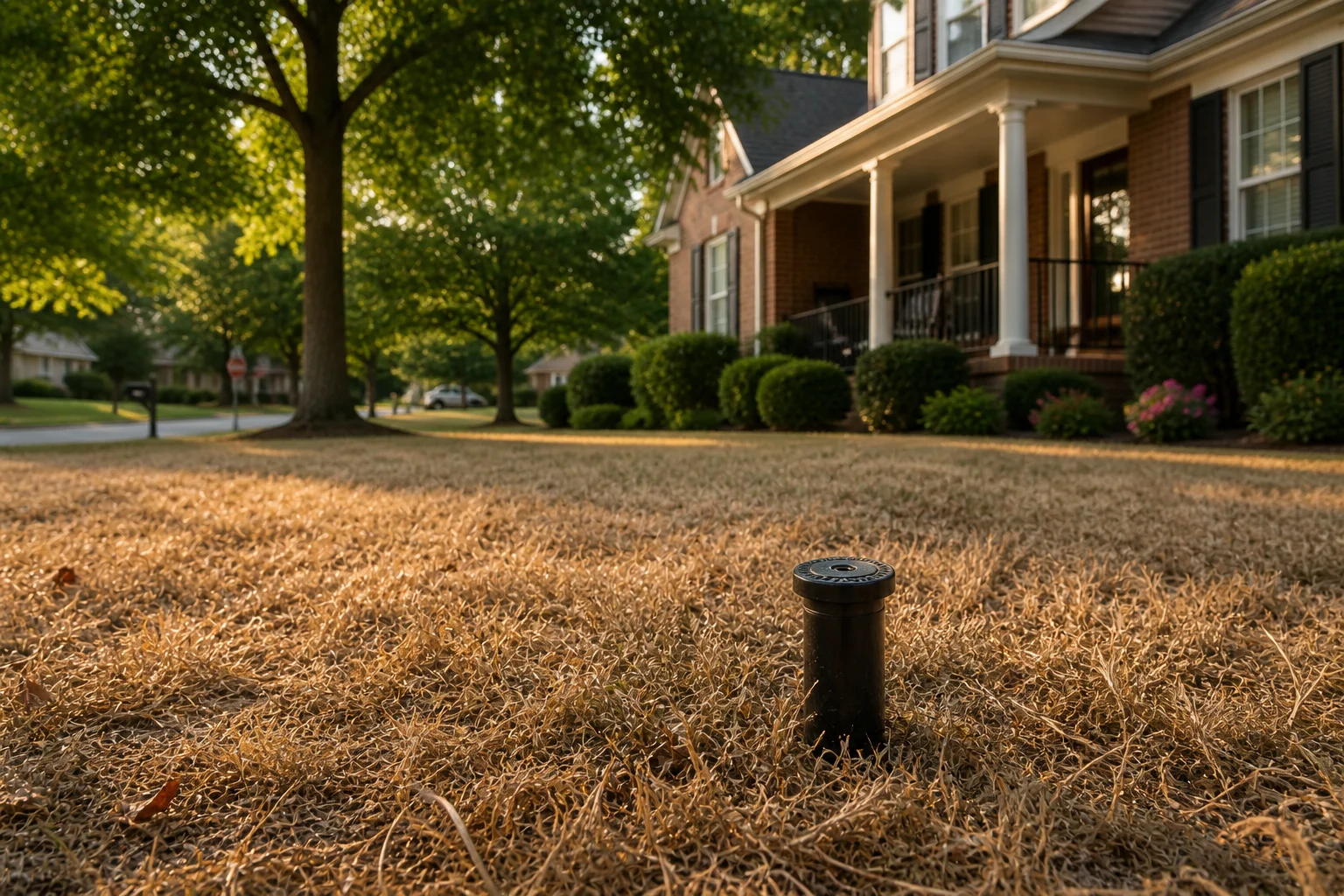
For homeowners willing to accept some lawn browning, the simplest path through Stage 2 is to skip irrigation entirely and let warm-season grasses go semi-dormant. Bermuda and Zoysia, the dominant Charlotte lawn grasses, both handle short-term dormancy well and recover reliably with autumn rain. Tall Fescue — common in shaded yards — is more vulnerable but still survives 4 to 6 weeks of drought if mowed high (3.5 to 4 inches) and not fertilised. Mulched landscape beds need a fraction of the water bare soil does; a 50–75 mm bark or compost layer is the highest-leverage move a homeowner can make this week.
The bigger question Charlotte is asking — and what the May 15 mandatory escalation will help answer — is whether the city can produce the durable conservation behaviour change that the 2007 drought eventually catalysed. The 2007–2008 event lasted more than 460 days and reached Stage 3 with severe mandatory cutbacks. Conservation behaviour persisted for years afterward; per-capita use across the Charlotte service area was meaningfully lower in 2012 than in 2005, even outside formal restrictions. If Stage 2 produces a similar long-tail effect this time, the city will be structurally better-positioned for the next drought even if the current one is short-lived.
Related water restrictions
Community Reports & Questions
Share an update, ask a question, or report a change in your local restrictions.
No community reports yet
Be the first to share a local update, ask a question, or report a change in your area's restrictions.
More news
Florida Escalates to Phase III Extreme - SJRWMD Tightens Rules Across 18 Counties
May 13, 2026

Coastal Bend Water Crisis Spreads - Aransas Pass and Beeville Declare Disasters as Corpus Christi Hits 7.8%
May 12, 2026
UK Braces for Summer 2026 Drought as Key Reservoir 'Will Not Fully Recover'
May 2, 2026
Boise Forced Into Early Stage 2 Water Restrictions as Snake River Hits Record Lows
May 2, 2026
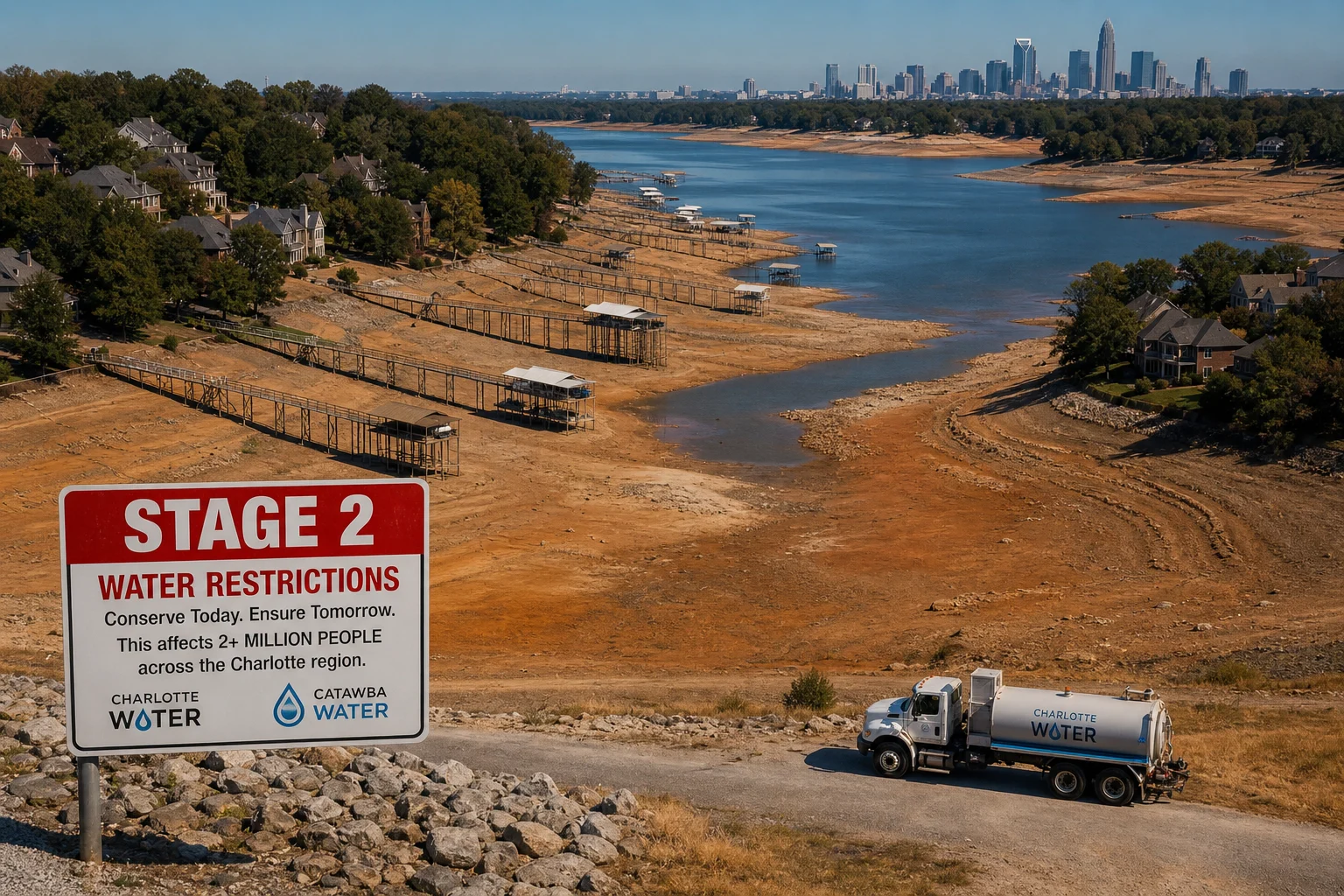
Charlotte Metro Hits Stage 2 Water Restrictions — First 'Exceptional Drought' Since 2008
May 2, 2026
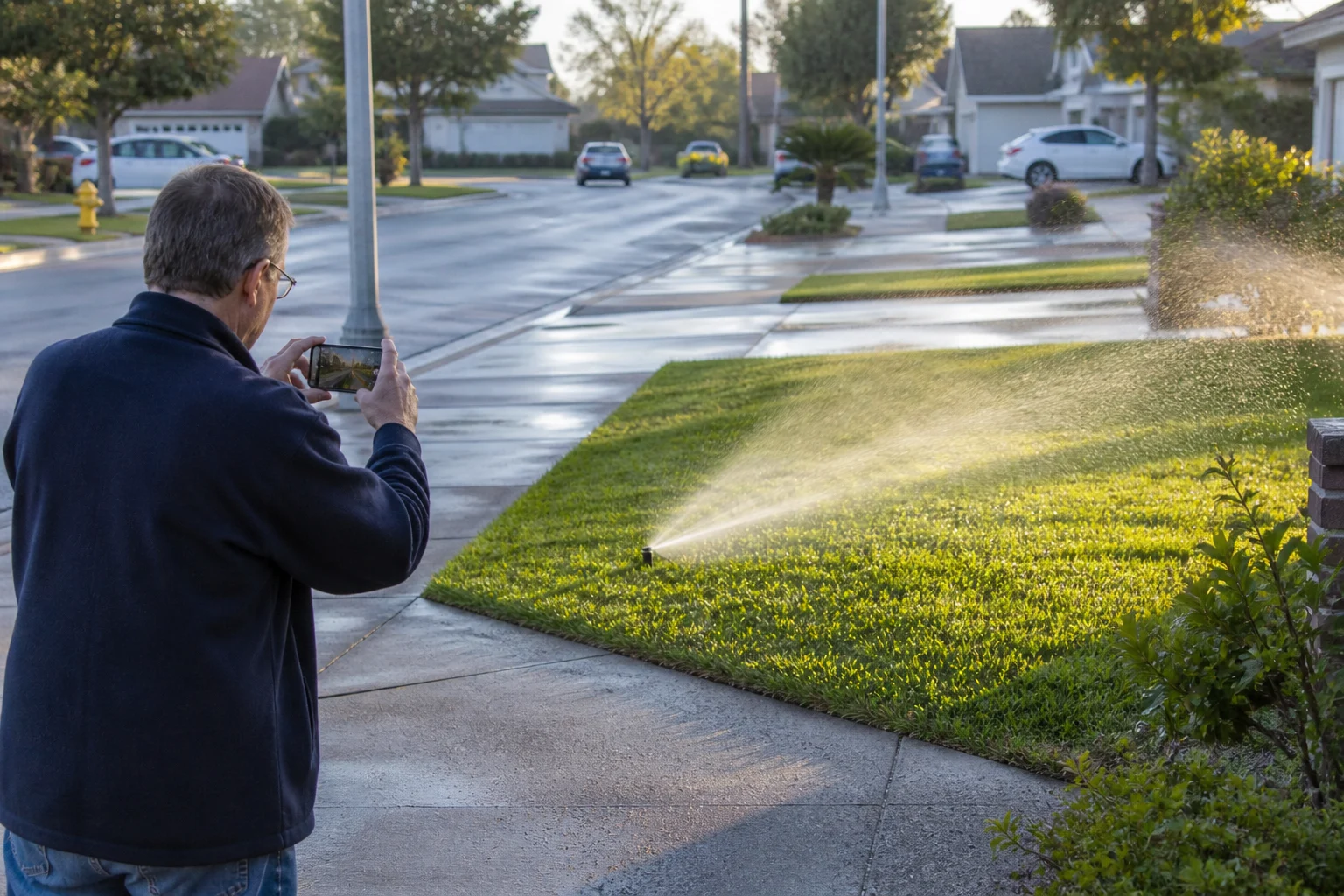
Neighbors Turn 'Water Police': Community Reporting of Violations Rises
May 2, 2026

Water Companies Proactively Restrict Customer Usage Across Drought-Affected Regions
May 2, 2026

Europe's Water Crisis Worsens: Continental Aquifer Depletion Accelerates
May 2, 2026
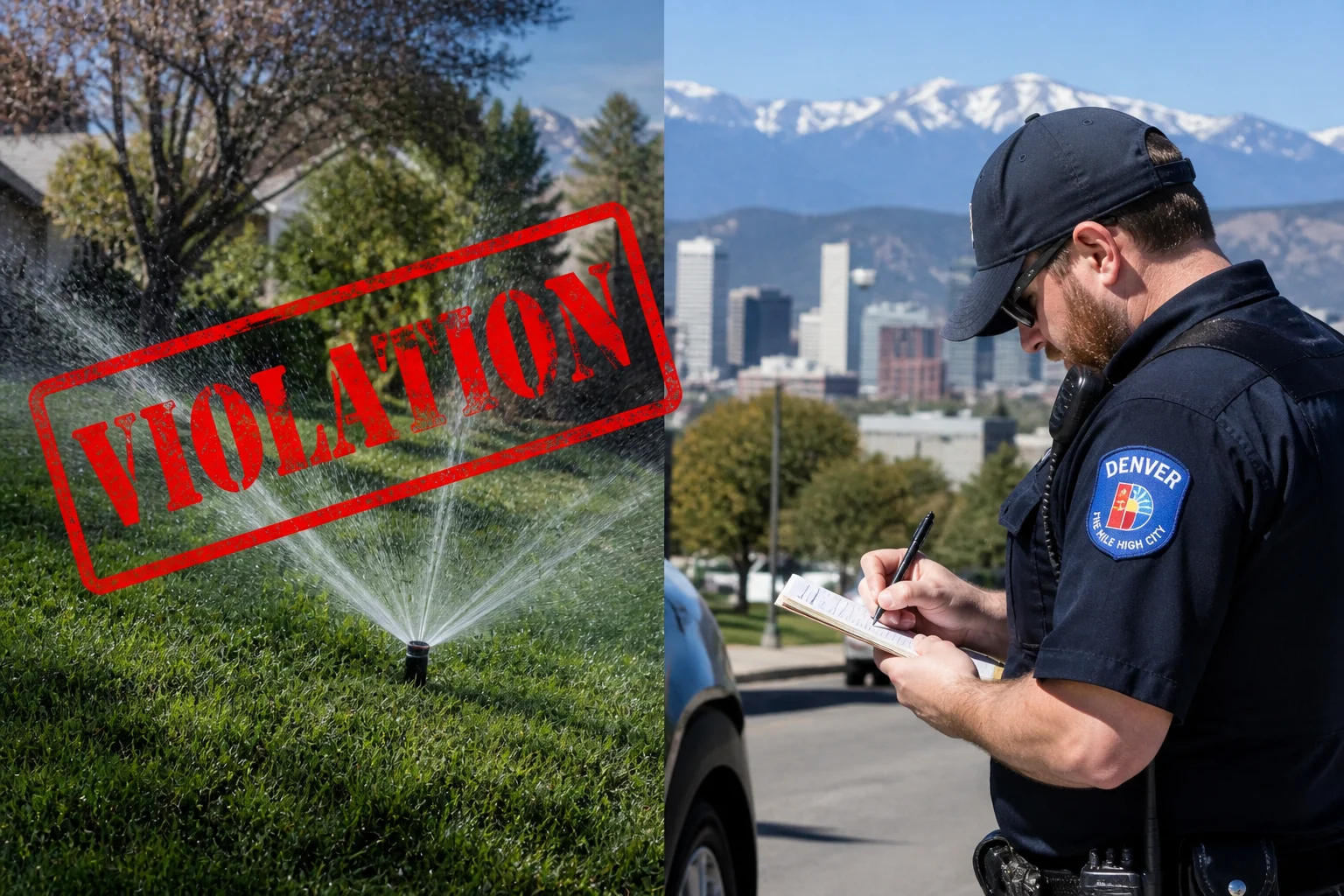
Denver Implements Mandatory Water Restrictions with 'Hundreds of Dollars' in Fines
May 2, 2026
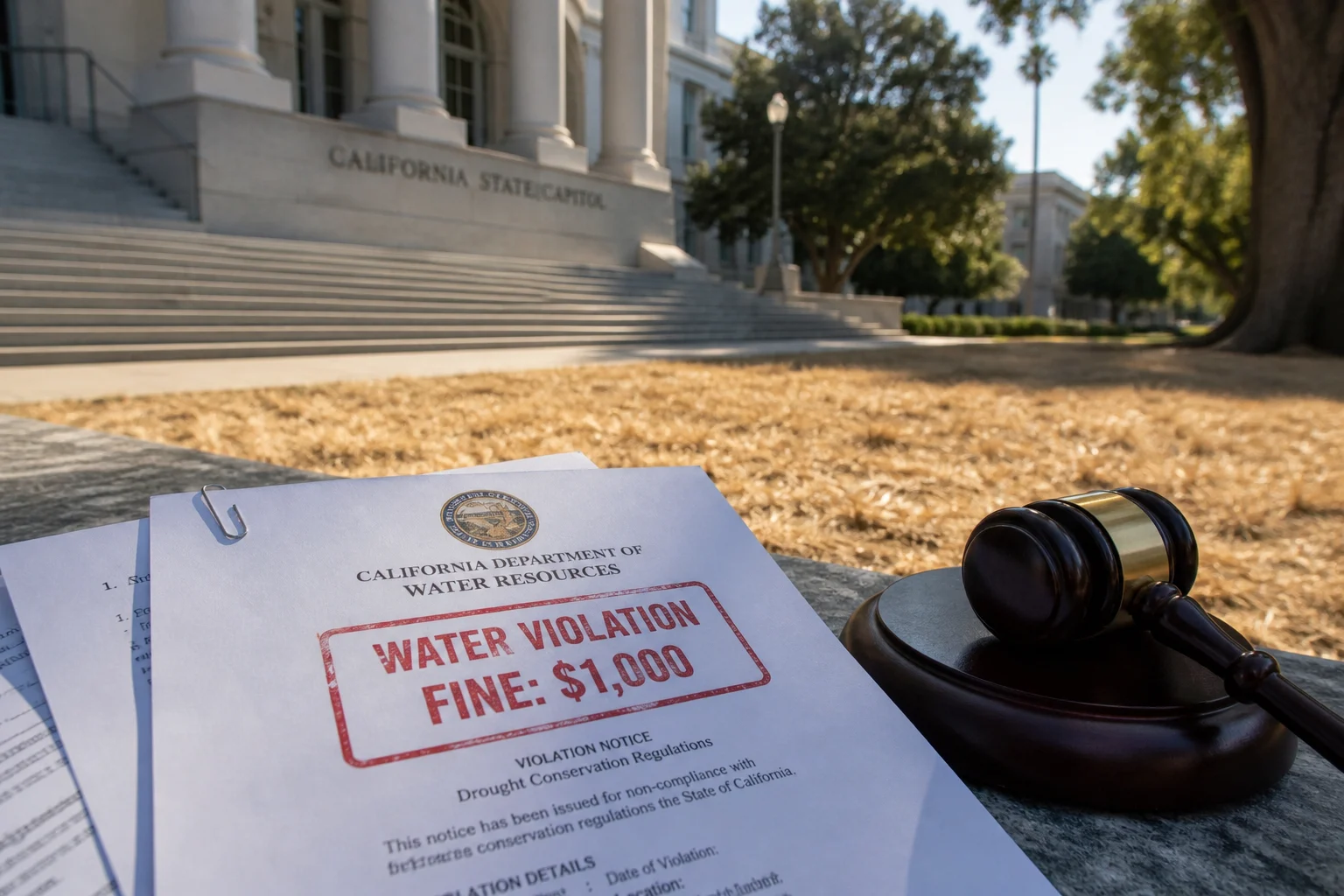
California Water Violation Fines Set to Increase 20-Fold Under New Legislation
May 2, 2026

Alberta Orders Provincial Investigation Into Calgary's Recurring Water Main Breaks
May 2, 2026
Raleigh Activates Stage 1 Water Restrictions as Falls Lake Drops to 84% Capacity
May 2, 2026
Auburn, Alabama Enacts Mandatory Water Restrictions and Drought Surcharges
May 1, 2026
Vancouver Bans All Lawn Watering — Why BC Skipped Straight to Stage 2
May 1, 2026
Charlotte Imposes First Mandatory Water Restrictions Since 2007 — What Homeowners Need to Know
May 1, 2026
Corpus Christi Could Become the First American City to Run Out of Water
May 1, 2026