Corpus Christi Could Become the First American City to Run Out of Water
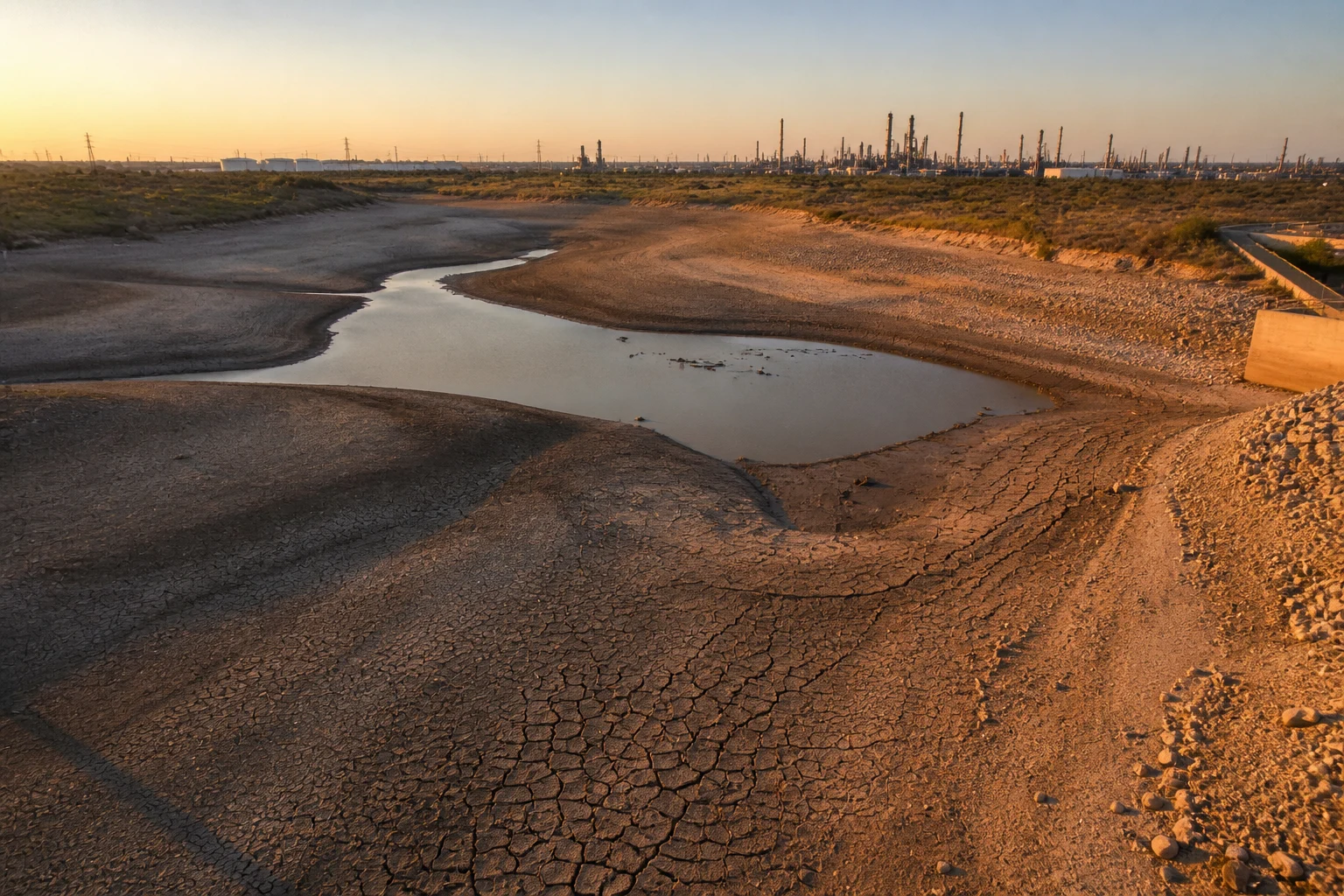
Corpus Christi may become the first modern American city to run out of water. Combined storage at the city's two main reservoirs has fallen to 7.8% of capacity. Engineers project that Corpus Christi will hit the 180-day supply threshold that triggers a Level 1 Water Emergency by September 2026 if significant rainfall does not arrive. The city is already at Stage 3 mandatory restrictions; residential lawn watering has been banned since 2023.
The numbers
Choke Canyon Reservoir and Lake Corpus Christi together hold about three-quarters of the city's drinking water supply. Combined storage stood at 7.8% of capacity on May 1, 2026, near record lows for the system. Choke Canyon alone has fallen from 47% in October 2021 to under 8% today — a roughly four-year decline driven by below-average rainfall every year. The Nueces River basin is now in its fifth consecutive year of drought.
Year-to-date rainfall is running under 60% of normal for the basin. The National Weather Service's Climate Prediction Center maintains a drought outlook of persistence or intensification through summer. Without a significant rainfall event — measured in tens of inches across the basin, not the city itself — reservoir storage will continue to fall through the hottest months of the year. The Texas Water Development Board projects the 180-day threshold could be reached in September.
Industry vs residents
The elephant in the room is industrial water use. Roughly twenty large refineries and petrochemical facilities consume up to 60% of Corpus Christi's water. A single Exxon-SABIC plastics plant uses about 13 million gallons per day — enough to supply tens of thousands of households. Meanwhile, 70% of Corpus Christi homes already use less water than the proposed mandatory cuts would require. Residents have not been allowed to water lawns since 2023, and many gardens have already been converted to drought-tolerant landscaping.
The proposed 25% curtailment plan, which City Council was scheduled to vote on April 29, would apply to all customers — residential, commercial, and industrial. But about ten of the largest industrial customers are permanently exempt from drought surcharges because they enrolled years ago in a voluntary conservation program that locked in their rates. The program was designed to reward early action; in a true emergency, it now functions as a shield for the largest users.
City Council unanimously delayed the vote on April 29. Mayor Guajardo said the delay would give the water department time to present a 'more holistic' plan. The next vote is scheduled for May 5 at 11:30 AM. The plan would require all customers to cut water use by 25% during a Level 1 emergency. Without that mechanism in place, the city has no enforceable lever to force consumption reductions on the industrial side when the emergency arrives.
The scramble for water
Everyone is drilling. The City of Corpus Christi has filed permits for emergency groundwater wells. Both major hospital districts — Christus Spohn and Driscoll Children's — are pursuing wells to ensure surgical and inpatient operations can continue if municipal supply is interrupted. Corpus Christi Independent School District is seeking permits for three wells to keep schools open. Refineries are drilling on their own properties; Exxon-SABIC has tested wells near its plant but reported they hit salt water.
The proposed emergency groundwater pumping rates are roughly fourteen times the long-term sustainable yield of the Gulf Coast aquifer beneath the city. That arithmetic does not work over years; it works for months in a true emergency. Beyond local groundwater, the city is exploring water transfers from eastern Texas reservoirs and accelerating long-discussed pipeline expansions, but neither option produces water this summer.
Financial markets have noticed. Fitch downgraded Corpus Christi's outlook from 'stable' to 'negative' on April 8, 2026. Moody's downgraded the city in December 2025. Both agencies cited drought-driven supply risk and the unfunded cost of emergency mitigation. The cancelled $1.3 billion seawater desalination plant — first proposed years ago, then shelved over cost — is back on the table. But even an accelerated procurement could not deliver desalinated water before 2028.
What this means for residents
Stage 3 restrictions are already in force across the Corpus Christi service area. Residential lawn watering is banned. Vehicle washing at home is banned. Pool filling is restricted. Outdoor decorative water features must be turned off. Hand watering of food crops with a shut-off nozzle remains permitted, as does drip irrigation for ornamentals. The full schedule, fines, and exemption rules are detailed on the lawnbyseason Corpus Christi page.
If a Level 1 Water Emergency is declared in September, the rules tighten further. Residential customers would be capped at 5,250 gallons per month. A $4 surcharge would apply to every 1,000 gallons used above 7,000 gallons. Fines would escalate to $500 per violation. The school district has stated publicly that it will not switch to virtual instruction even if restrictions are activated — wells, water-recycling plumbing, and bottled water are part of the contingency plan. Hospitals are taking similar precautions.
The bigger picture
What is happening in Corpus Christi is not an isolated event. The Texas Water Development Board estimates that severe drought, by mid-century, could cost the Texas economy $153 billion in annual damages by 2070 if water-supply infrastructure is not significantly expanded. South Texas in particular is experiencing what climate scientists describe as aridification — a multi-decadal drying that is structurally different from the cyclical droughts of the 20th century.
The Texas Observer recently framed the Corpus Christi crisis as 'not exceptional — early.' Cities across the Southwest and South Texas — Laredo, McAllen, Victoria — face similar arithmetic on slightly longer timelines. The combination of population growth, industrial expansion, and below-average rainfall is closing the supply-demand gap from both sides. Corpus Christi is the city that ran out of room first. It is unlikely to be the last.
For homeowners across South Texas, the practical message is the same one Corpus Christi residents have been living for two years: lawns can survive on far less water than most people assume, drought-tolerant landscaping pays for itself in a single dry summer, and infrastructure decisions made in the next 24 months will determine which cities make it through the 2030s without rationing. The May 5 vote in Corpus Christi is one of those decisions.
Related water restrictions
Community Reports & Questions
Share an update, ask a question, or report a change in your local restrictions.
No community reports yet
Be the first to share a local update, ask a question, or report a change in your area's restrictions.
More news
Florida Escalates to Phase III Extreme - SJRWMD Tightens Rules Across 18 Counties
May 13, 2026

Coastal Bend Water Crisis Spreads - Aransas Pass and Beeville Declare Disasters as Corpus Christi Hits 7.8%
May 12, 2026
UK Braces for Summer 2026 Drought as Key Reservoir 'Will Not Fully Recover'
May 2, 2026
Boise Forced Into Early Stage 2 Water Restrictions as Snake River Hits Record Lows
May 2, 2026
Charlotte Metro Hits Stage 2 Water Restrictions — First 'Exceptional Drought' Since 2008
May 2, 2026

Neighbors Turn 'Water Police': Community Reporting of Violations Rises
May 2, 2026

Water Companies Proactively Restrict Customer Usage Across Drought-Affected Regions
May 2, 2026

Europe's Water Crisis Worsens: Continental Aquifer Depletion Accelerates
May 2, 2026
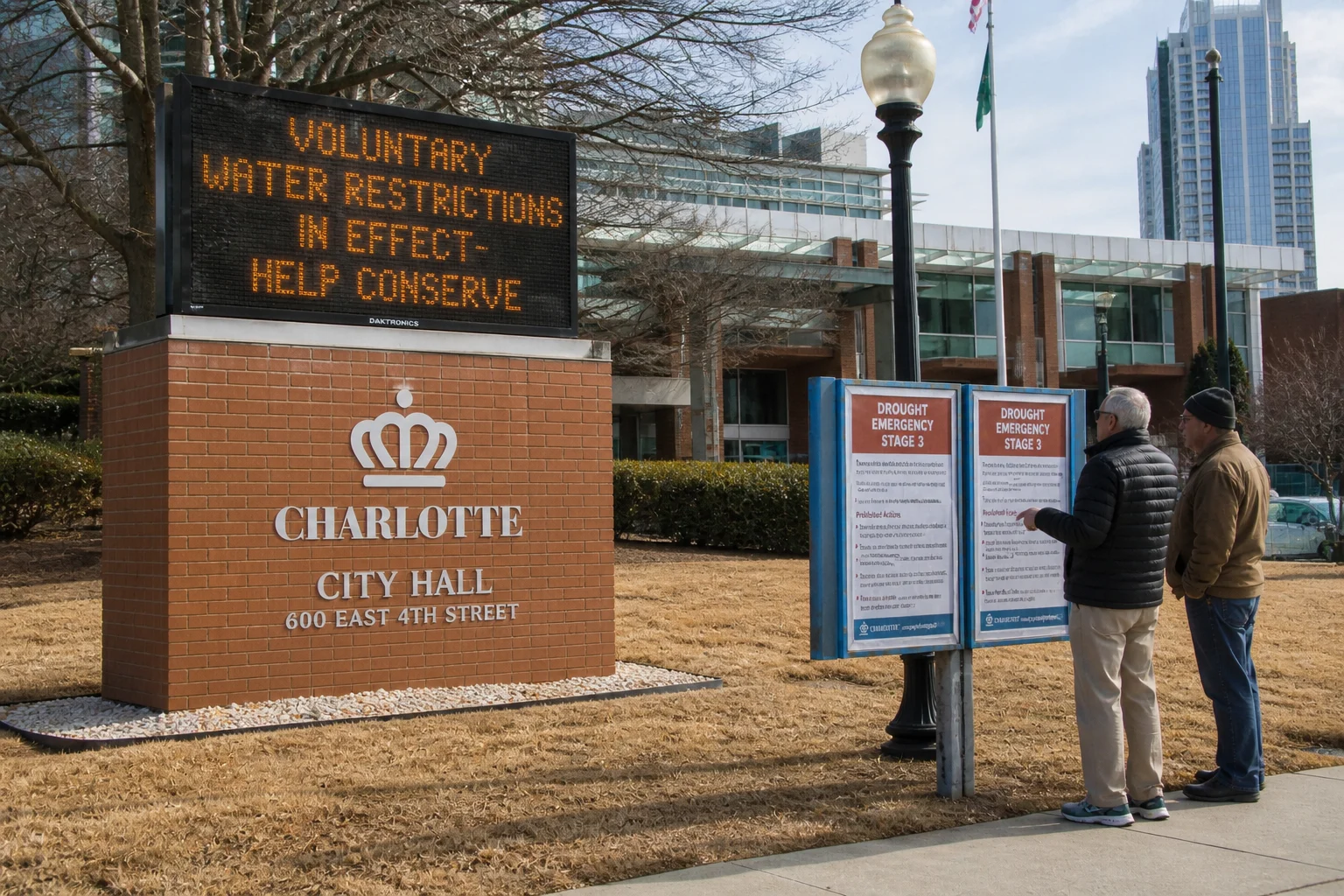
Charlotte Issues Voluntary Water Restrictions and Burn Ban Amid Ongoing Drought
May 2, 2026
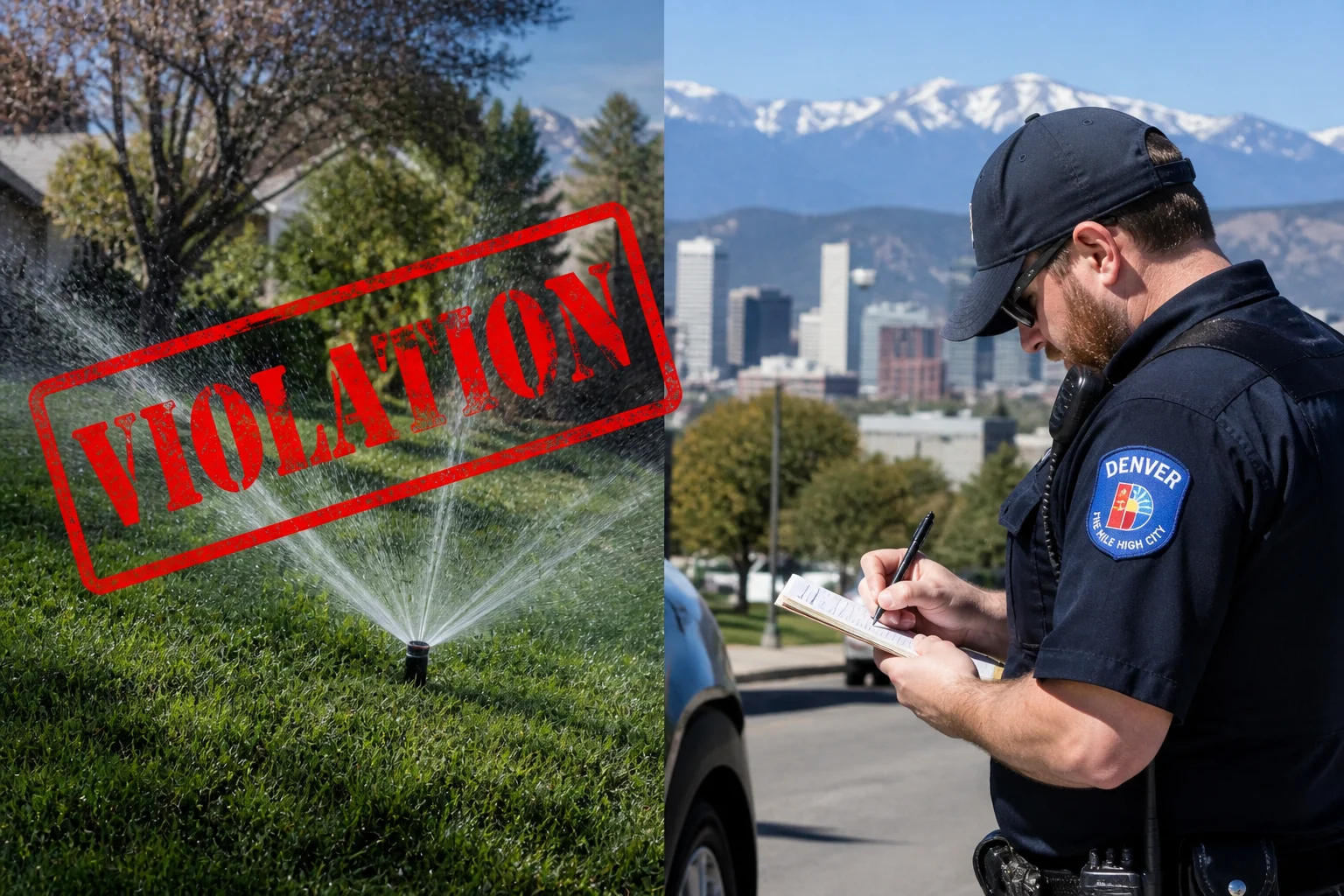
Denver Implements Mandatory Water Restrictions with 'Hundreds of Dollars' in Fines
May 2, 2026
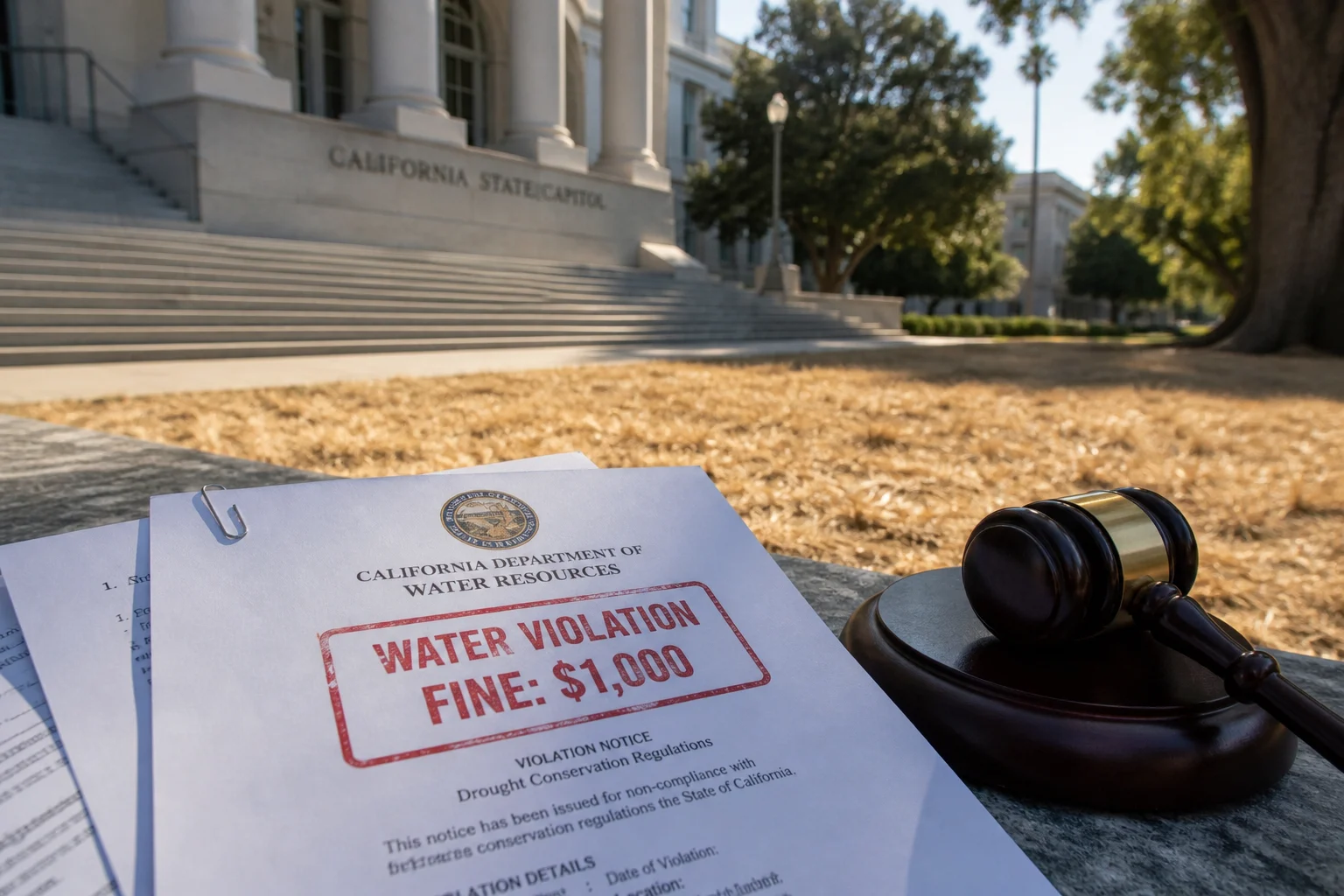
California Water Violation Fines Set to Increase 20-Fold Under New Legislation
May 2, 2026

Alberta Orders Provincial Investigation Into Calgary's Recurring Water Main Breaks
May 2, 2026
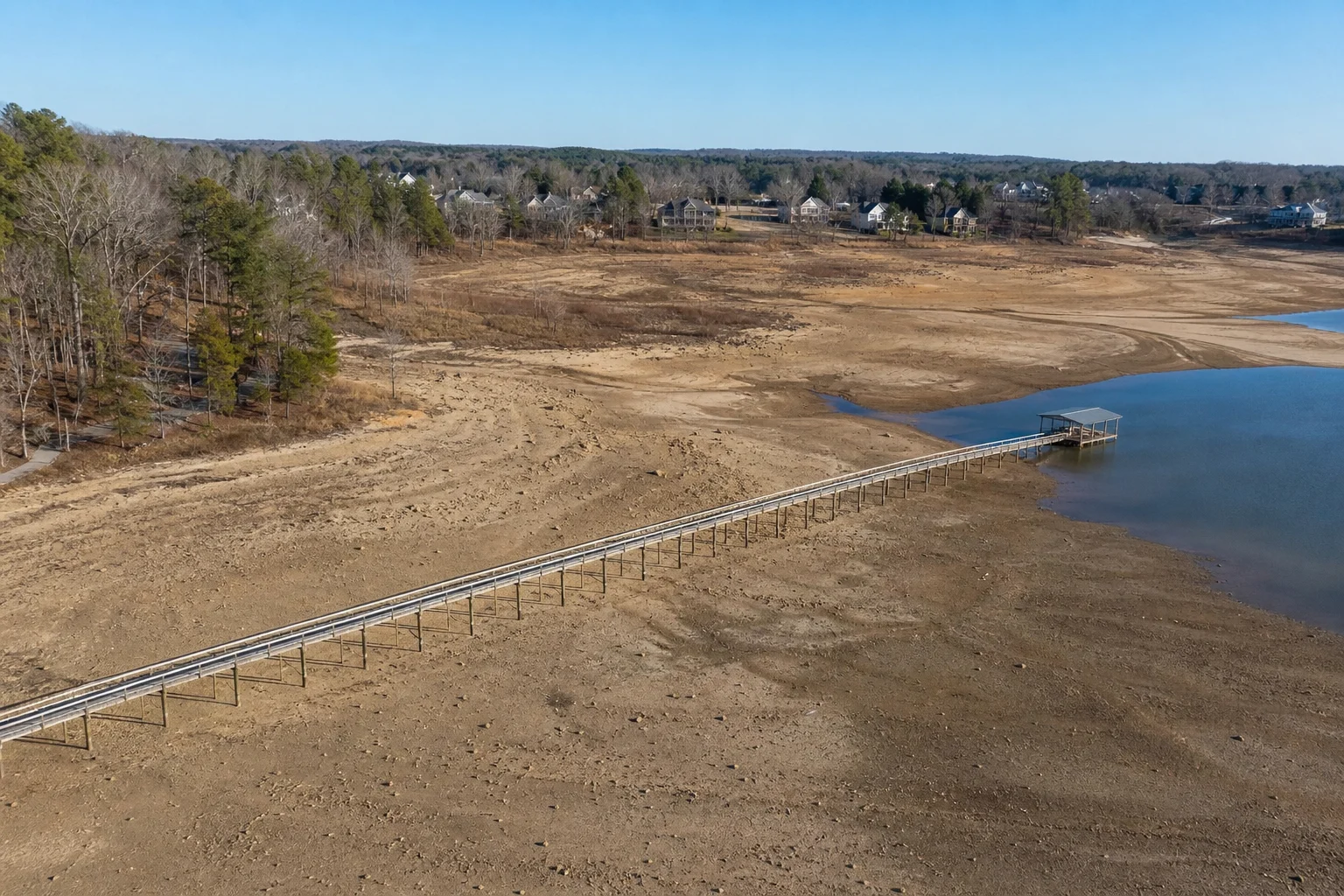
Raleigh Activates Stage 1 Water Restrictions as Falls Lake Drops to 84% Capacity
May 2, 2026
Auburn, Alabama Enacts Mandatory Water Restrictions and Drought Surcharges
May 1, 2026
Vancouver Bans All Lawn Watering — Why BC Skipped Straight to Stage 2
May 1, 2026
Charlotte Imposes First Mandatory Water Restrictions Since 2007 — What Homeowners Need to Know
May 1, 2026