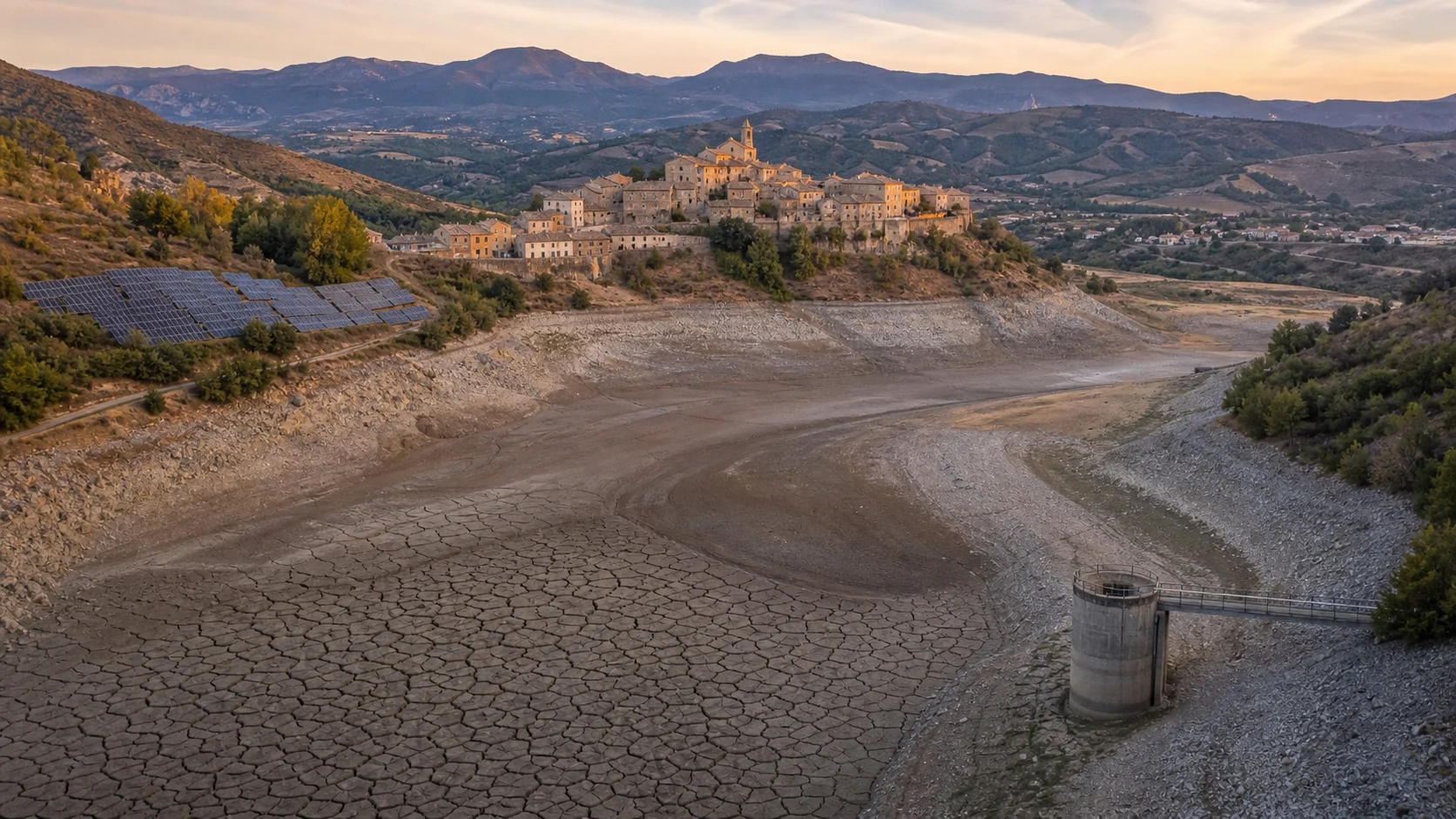
Europe's Water Crisis Worsens: Continental Aquifer Depletion Accelerates
Europe's water crisis has shifted from acute drought episodes to a structural continental phenomenon. National Geographic's April 2026 reporting, drawing on satellite-based GRACE-FO groundwater measurements and the European Environment Agency's annual State of Water assessment, found that Mediterranean Europe has lost between 20 and 30 percent of total groundwater storage over the past decade. Spain, Italy, Greece, and Portugal show the steepest declines. The crisis is now driving a significant repositioning by Europe's largest water companies — Veolia, Suez, and Severn Trent — toward desalination, reuse, and aquifer-recharge infrastructure that European cities will rely on for the next 30 years.
What the satellite data shows
The GRACE-FO satellite mission, jointly operated by NASA and the German Aerospace Center, measures gravity anomalies that translate directly into estimates of total water storage at large continental scales. The April 2026 European Environment Agency analysis of GRACE-FO data covering 2014 through 2024 found that southern Europe's groundwater storage has declined every year of the measurement window. The cumulative decadal loss in Spain is estimated at 32% of pre-2014 baseline storage. Italy is at 28%. Greece at 25%. Portugal at 22%.
Northern Europe shows a meaningfully different picture. The UK is at -8%, Germany at -14%, France's southern regions at -18%. Sweden is roughly flat at -2%. Norway is positive. The pattern is consistent with the broader climate signal: warming is amplifying evapotranspiration losses across the Mediterranean and reducing winter snowpack across Alpine and Pyrenean catchments that recharge southern European aquifers. Northern European aquifers have so far been buffered by stable or increasing winter precipitation.
What is driving the loss
Three factors compound. First, climate. Europe is warming roughly twice as fast as the global average — the European State of the Climate 2024 report from Copernicus put European 2024 temperatures at +2.5°C above pre-industrial baseline, well past the Paris Agreement's 1.5°C target and crossing the 2°C ceiling for the second consecutive year. Higher temperatures drive higher evapotranspiration, reducing soil moisture and downward recharge to aquifers even when total precipitation is unchanged.
Second, agricultural pumping. Spanish, Italian, and Greek agriculture has steadily increased its dependence on groundwater for irrigation since the 1990s, particularly for high-value export crops like Spanish strawberries, Italian olives and grapes, and Greek tree fruits. The Doñana wetlands in southern Spain have been at the centre of repeated EU enforcement actions for unauthorised agricultural pumping that has measurably depleted the regional aquifer below ecological-flow thresholds. Italy's Po basin has experienced multiple summers of agricultural rationing as river flows fell below permitted withdrawal limits.
Third, urban demand growth. European urban populations have grown roughly 15% since 2000, with most of the growth concentrated in metropolitan areas — Madrid, Barcelona, Athens, Naples, Lisbon — that depend partially or fully on groundwater for drinking water. Per-capita urban demand has fallen modestly through fixture-efficiency standards and conservation campaigns, but the absolute population increase has more than offset per-capita reductions. Aggregate municipal groundwater extraction in southern Europe is roughly 28% higher in 2024 than it was in 2000.
The EU policy response
The European Commission published its EU Water Resilience Strategy in March 2026 — the most significant water-policy document at the EU level since the 2000 Water Framework Directive. The strategy commits €40 billion in EU funding through 2034 toward four priority areas: water-reuse infrastructure (treated wastewater reused for agriculture and industry), desalination capacity for Mediterranean coastal cities, aquifer-recharge projects to rebuild groundwater storage in over-pumped basins, and leak-detection and pipe-renewal investments across older European urban distribution systems.
The strategy also includes regulatory teeth. Member states are required to publish detailed water-balance assessments at the river-basin scale every two years, identifying basins where withdrawals exceed sustainable yield and committing to specific reduction trajectories. The European Court of Justice has been given expanded standing to enforce the assessment requirements; Italy and Spain were both subject to formal infringement proceedings in 2024 and 2025 for delays in publishing basin-scale assessments. The political message is clear: water-resource governance is no longer a fully sovereign matter for member states; the EU is prepared to enforce.
The role of private water companies
Europe's three largest private water companies — Veolia, Suez (now part of Veolia after the 2022 acquisition), and Severn Trent — have repositioned aggressively in response to the crisis. Veolia's 2025 annual report identified water reuse, desalination, and aquifer-recharge infrastructure as the three highest-growth segments of the company's water business, with combined revenue projected to grow from €4.2 billion in 2024 to €7.8 billion by 2028. The company has secured contracts for major desalination capacity in Barcelona, Valencia, Athens, and Limassol over the past 18 months.
The political question that Europe's private-water-company expansion raises — and that critics including the European Public Service Union have pressed hard — is whether crisis-driven outsourcing locks European cities into long-term contractual dependencies that reduce democratic control over essential infrastructure. The 2010 remunicipalisation of Paris water — which terminated long-running Suez and Veolia concessions and brought Paris water back into public ownership — remains the touchstone case for the public-versus-private debate in European water-policy circles. The 2026 wave of new private contracts is happening at a moment when the historical experience with privatisation is still actively contested.
What this means for European homeowners and farmers
For homeowners across southern Europe, the practical implications of the structural water shift are already visible. Spanish, Italian, and Greek municipalities have all increased water rates substantially — Spanish residential water rates rose an average of 18% in real terms between 2015 and 2024, with Mediterranean coastal cities seeing larger increases than the national average. Outdoor irrigation restrictions have become permanent annual fixtures rather than drought-emergency measures: most major Spanish coastal cities now operate year-round odd/even watering schedules independent of any specific drought declaration.
For farmers, the shift is more existential. The European Common Agricultural Policy reform under negotiation for the 2028 funding period explicitly conditions agricultural support payments on demonstrated water-efficient practices — drip irrigation rather than flood irrigation, drought-tolerant crop varieties, and verified reduction in groundwater extraction. Several Spanish and Italian agricultural regions have begun managed transitions away from the highest-water-demand crops; Andalusian strawberry acreage has declined 12% since 2020 as growers facing increasingly tight water allocations have shifted to lower-water-demand crops or exited farming entirely.
The North American parallel
European water observers consulted by National Geographic for the April 2026 reporting drew explicit parallels to the North American Southwest. The Colorado River basin, which supplies water to 40 million people across seven US states and northern Mexico, has experienced a 20% decline in average flow over the past 25 years. Spanish, Italian, and Greek aquifer depletion patterns track the Colorado River reduction trajectory closely. The structural lesson European policymakers have drawn from the Southwest experience is that delayed action compounds the eventual cost — and that the political window for proactive infrastructure investment narrows rapidly once a basin enters acute crisis.
Whether the EU's €40 billion Water Resilience Strategy is sufficient to alter the trajectory remains an open question. The cumulative investment requirement to fully rebuild Mediterranean European aquifer storage and modernise distribution infrastructure across the continent has been estimated at €180–220 billion through 2040 by the European Investment Bank's 2025 water-sector assessment. The published strategy covers roughly a quarter of that figure. Closing the remaining gap will require either substantial additional EU funding, materially higher private-sector investment, or — most likely — both.
Related water restrictions
Community Reports & Questions
Share an update, ask a question, or report a change in your local restrictions.
No community reports yet
Be the first to share a local update, ask a question, or report a change in your area's restrictions.
More news
Florida Escalates to Phase III Extreme - SJRWMD Tightens Rules Across 18 Counties
May 13, 2026
Coastal Bend Water Crisis Spreads - Aransas Pass and Beeville Declare Disasters as Corpus Christi Hits 7.8%
May 12, 2026
UK Braces for Summer 2026 Drought as Key Reservoir 'Will Not Fully Recover'
May 2, 2026
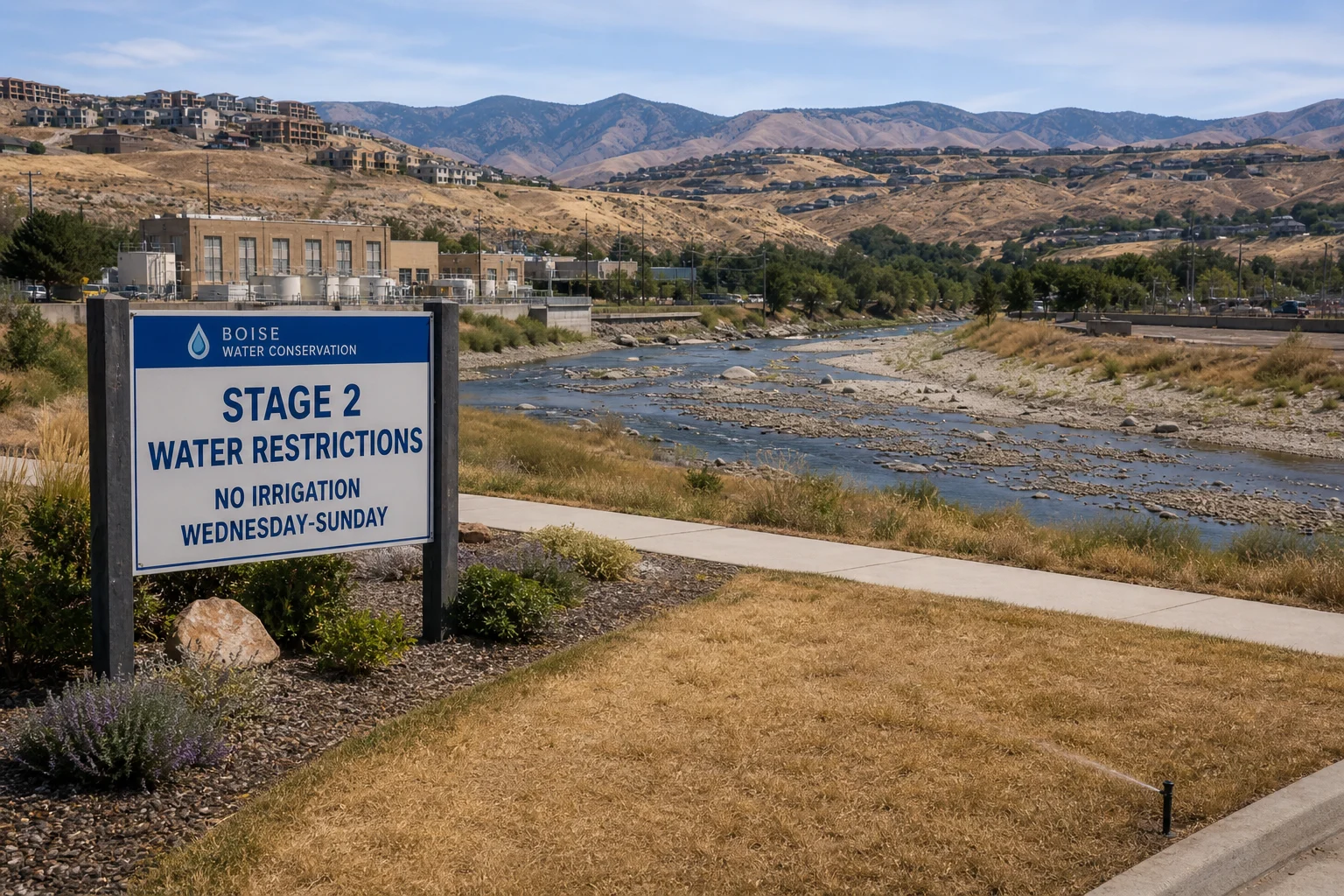
Boise Forced Into Early Stage 2 Water Restrictions as Snake River Hits Record Lows
May 2, 2026
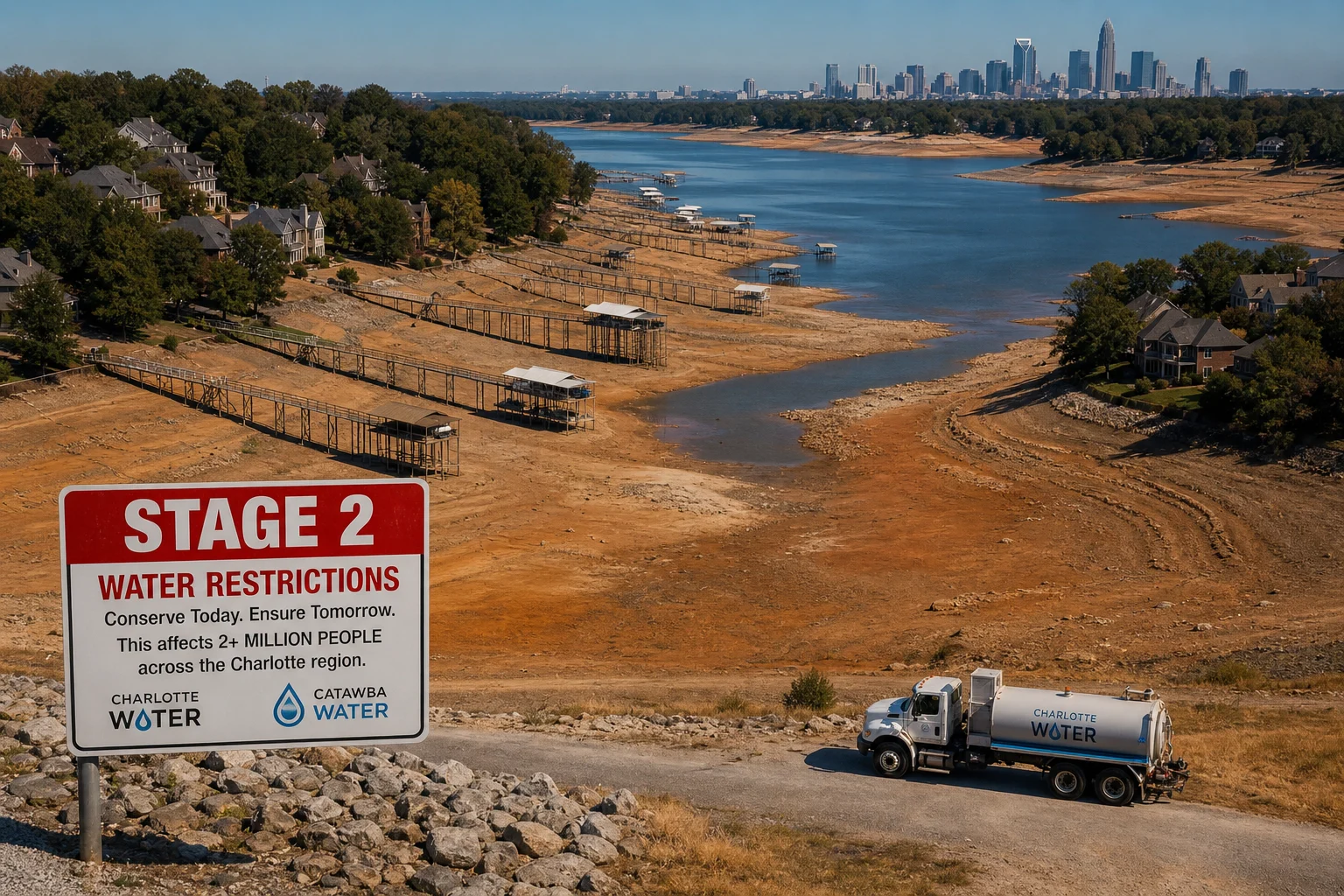
Charlotte Metro Hits Stage 2 Water Restrictions — First 'Exceptional Drought' Since 2008
May 2, 2026
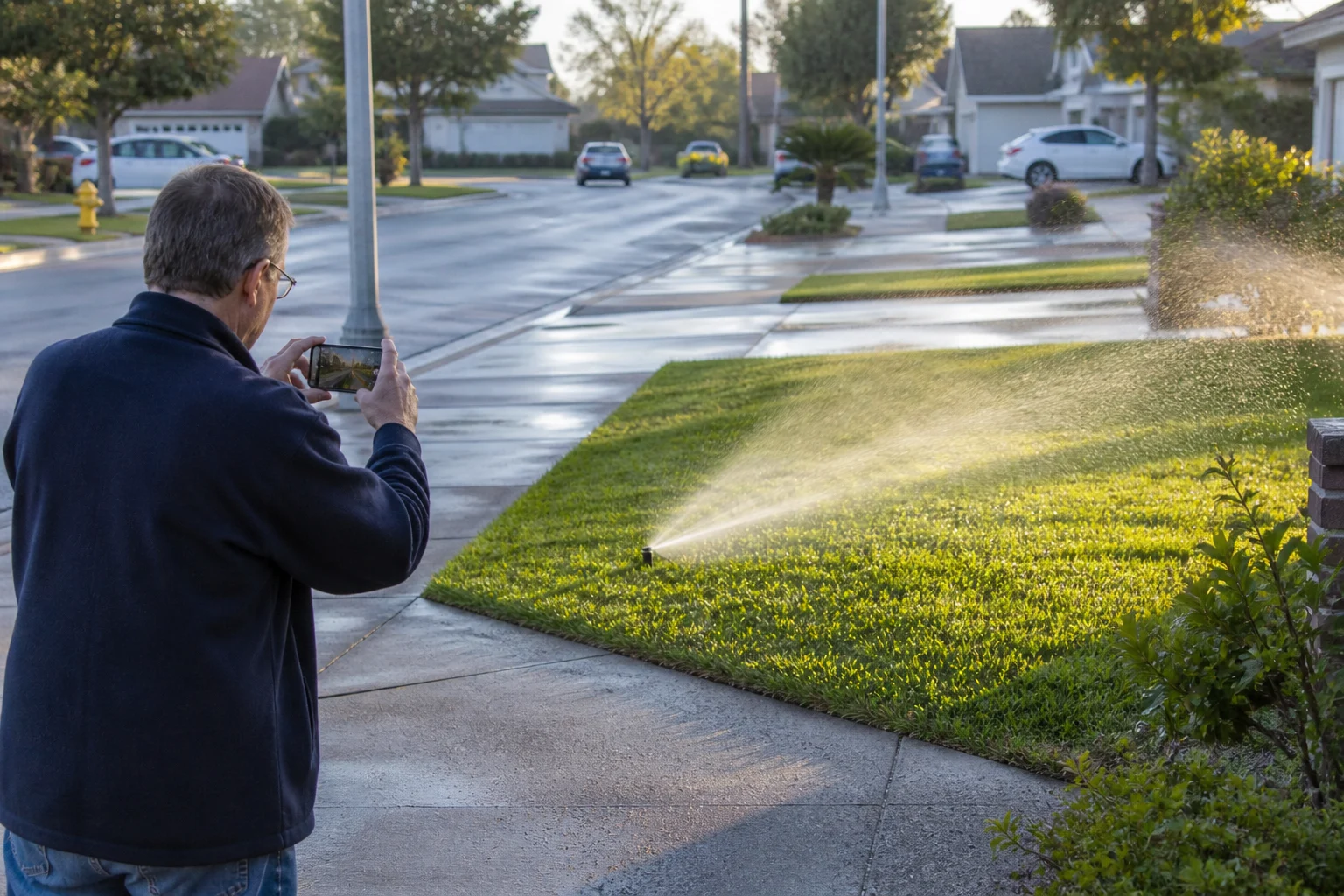
Neighbors Turn 'Water Police': Community Reporting of Violations Rises
May 2, 2026
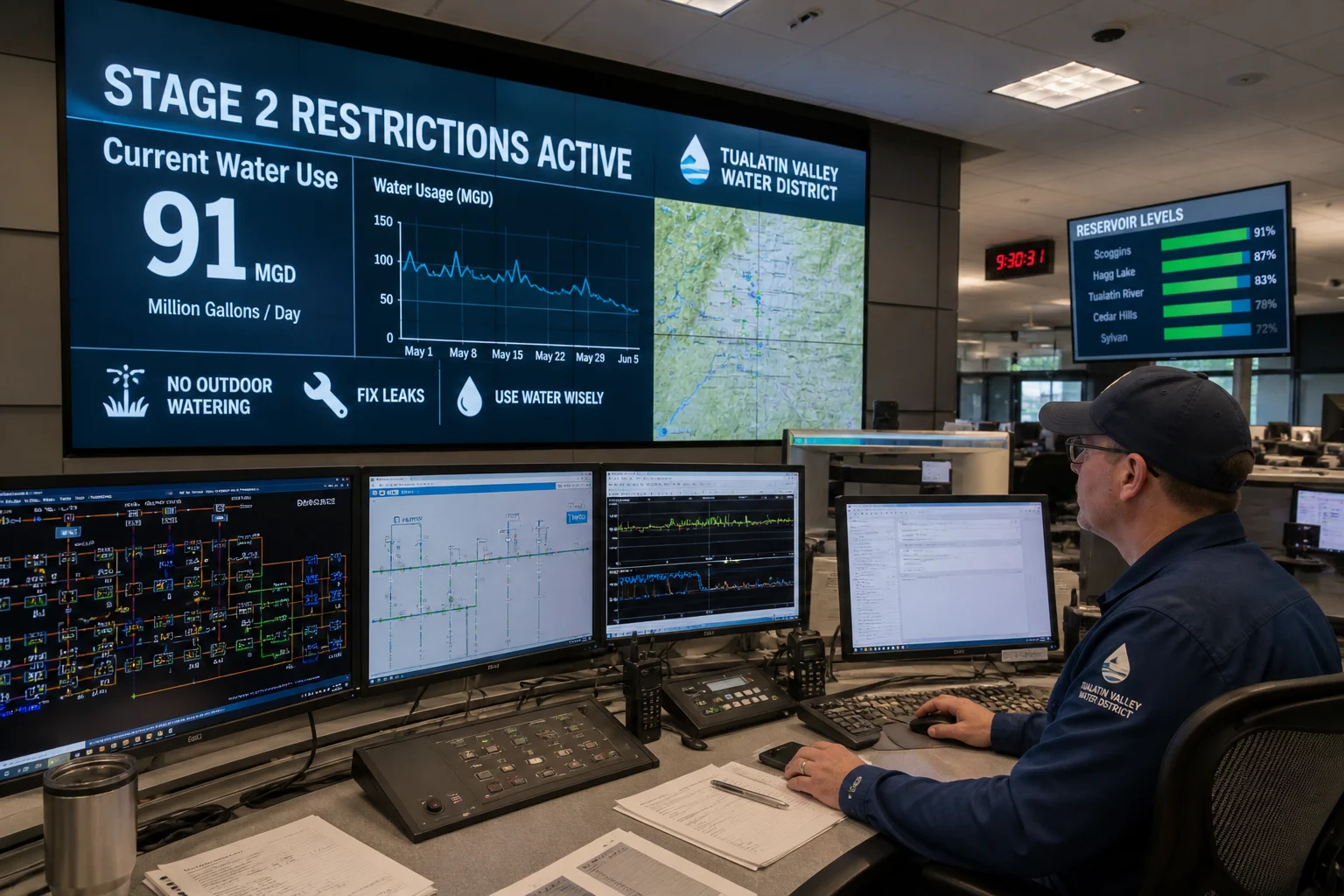
Water Companies Proactively Restrict Customer Usage Across Drought-Affected Regions
May 2, 2026
Charlotte Issues Voluntary Water Restrictions and Burn Ban Amid Ongoing Drought
May 2, 2026
Denver Implements Mandatory Water Restrictions with 'Hundreds of Dollars' in Fines
May 2, 2026
California Water Violation Fines Set to Increase 20-Fold Under New Legislation
May 2, 2026
Alberta Orders Provincial Investigation Into Calgary's Recurring Water Main Breaks
May 2, 2026
Raleigh Activates Stage 1 Water Restrictions as Falls Lake Drops to 84% Capacity
May 2, 2026
Auburn, Alabama Enacts Mandatory Water Restrictions and Drought Surcharges
May 1, 2026
Vancouver Bans All Lawn Watering — Why BC Skipped Straight to Stage 2
May 1, 2026
Charlotte Imposes First Mandatory Water Restrictions Since 2007 — What Homeowners Need to Know
May 1, 2026
Corpus Christi Could Become the First American City to Run Out of Water
May 1, 2026