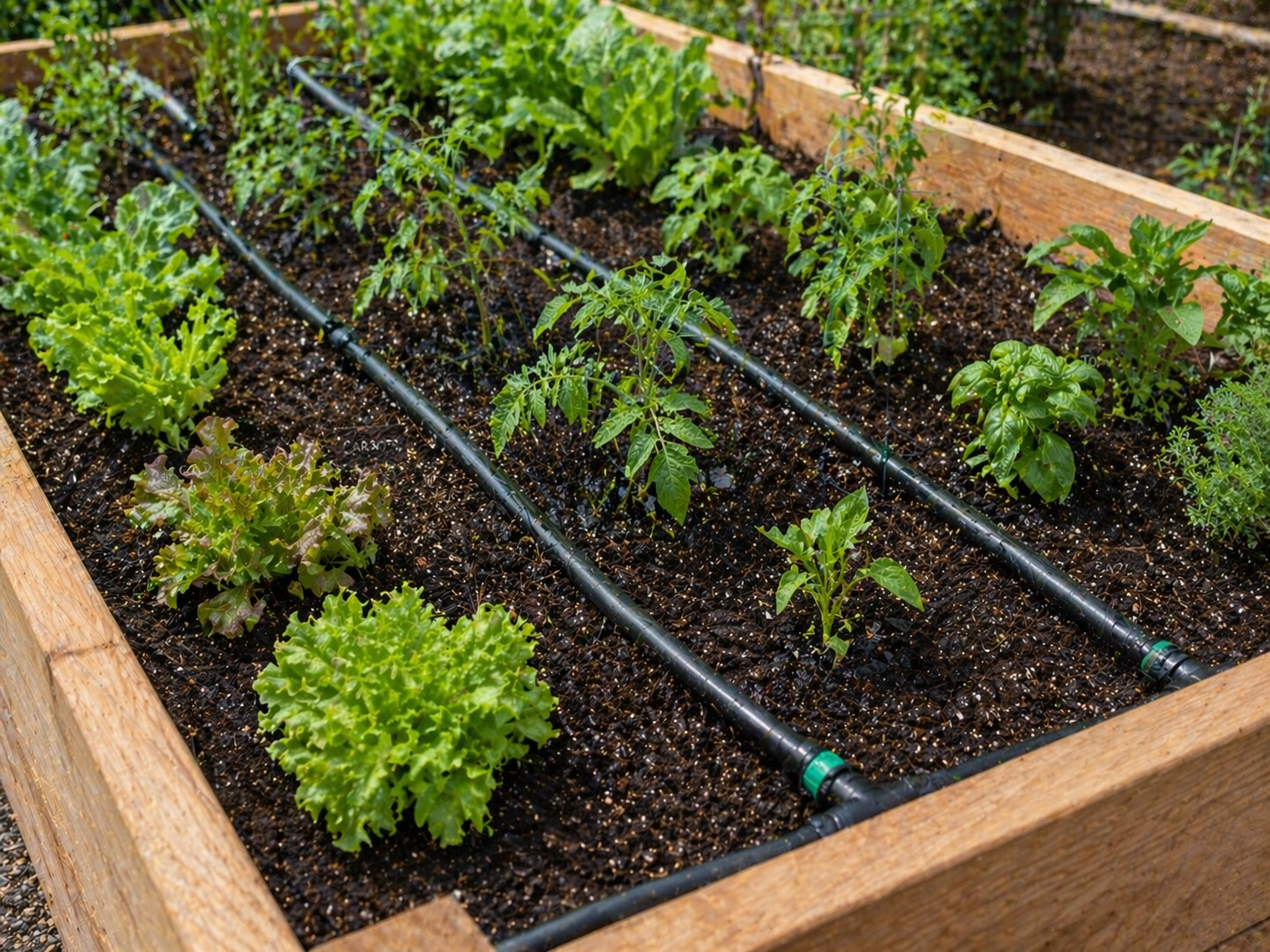
Watering is the task that separates raised beds that produce well from raised beds that struggle. Raised beds dry out significantly faster than in-ground gardens, and the consequences of under-watering show up as stunted growth, blossom-end rot, and bolting within days. This guide covers how much water raised beds actually need, the four watering methods compared, a drip irrigation setup that automates the daily decision, and a full seasonal schedule.
Why Raised Beds Dry Out Faster
A raised bed has better drainage than the surrounding native soil, which is good for roots but means water moves through the bed faster. The bed's elevated position also exposes all four sides to air and wind, accelerating evaporation. These two factors combine to make raised beds need watering 2 to 3 times more often than equivalent in-ground gardens. In hot summer weather (90°F+), daily watering is standard; on windy high-desert days in Arizona or Colorado, twice-daily watering is sometimes necessary.
How Much Water
Vegetables need roughly 1 to 2 inches of water per week through the growing season. In raised beds with good drainage, most of that evaporates or moves past the root zone within 3 to 5 days — which is why schedules are based on frequency rather than weekly totals. The practical test:
- Push a finger 2 inches into the soil. If it feels dry, water now.
- In hot dry weather, check twice daily — morning and late afternoon.
- After watering, the top 4 to 6 inches of soil should feel evenly moist (not muddy).
- In cool spring or fall weather, check every 2 to 3 days — the need drops significantly.
Watering Methods Compared
| Method | Cost | Effort | Evenness | Notes |
|---|---|---|---|---|
| Drip irrigation | $$$ | Low | Excellent | Best overall — automates via timer |
| Soaker hose | $ | Low | Good | Cheap, simple, DIY-friendly |
| Hand watering | Free | High | Variable | Fine for 1–2 beds, not more |
| Overhead sprinkler | $$ | Low | Poor | Causes fungal disease — avoid for raised beds |
Drip Irrigation Setup
A basic drip system for a single raised bed costs $30 to $80 and takes 1 to 2 hours to install. The standard layout:
- Connect a battery-powered timer to your hose spigot.
- Run a main line (½-inch poly tubing) from timer to the bed.
- At the bed, split into ¼-inch drip tubing runs along each planting row.
- Add emitters every 6 to 12 inches, or use pre-emittered drip line.
- Set the timer to run 15 to 30 minutes per day, depending on season.
A manifold with multiple zones lets one timer drive up to 6 beds independently. Once set, the system runs hands-free all season — the single most impactful improvement for raised bed productivity.
Mulching to Reduce Watering Frequency
A 2 to 3 inch layer of mulch on top of the soil reduces watering frequency by 30 to 50 percent. Straw, shredded leaf mulch, and wood chips all work well. Apply after plants are established (avoid smothering seedlings) and maintain the layer through the season. Mulch also suppresses weeds and moderates soil temperature — useful in both summer heat and early fall cool-downs.
Seasonal Watering Schedule
- Spring (50–70°F): Every 2 to 3 days for established plants. New transplants need daily water for the first week.
- Summer (70–90°F): Daily in most regions. Check morning moisture; water deeply rather than lightly.
- Peak heat (90°F+): Daily, sometimes twice daily. Morning watering is best — evening watering keeps leaves wet and drives fungal disease.
- Fall (50–70°F): Every 3 to 4 days. Returning cool weather reduces evaporation significantly.
- Winter (below 50°F): Minimal to none for dormant beds. Continue light watering for overwintering crops.