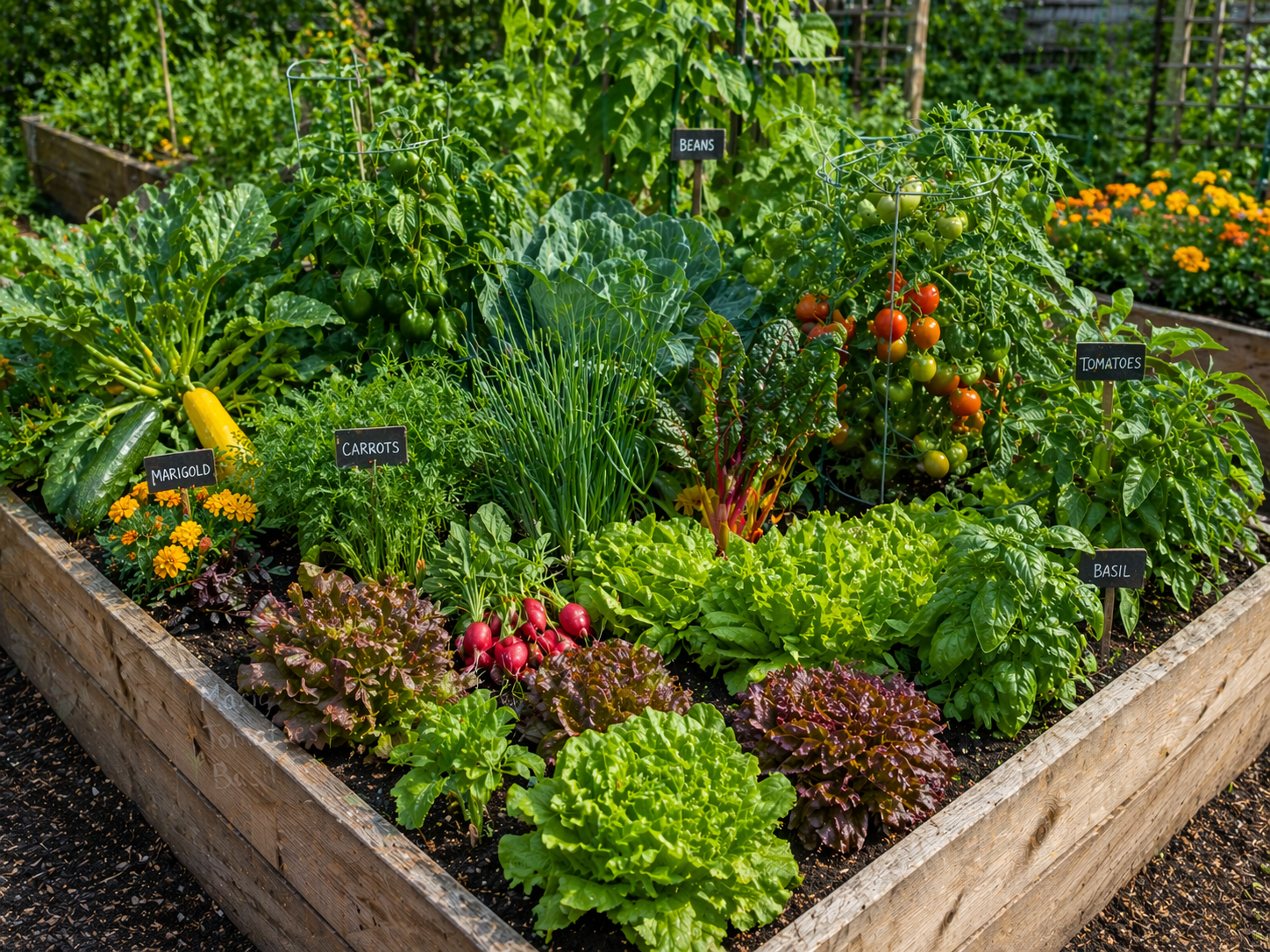
Most first-year raised bed gardens fail for the same five reasons. This guide walks through each reason, then gives the exact 8-step plan that produces a successful first garden. The goal is not perfection — it's building something that works well enough in year one that you want to keep going in year two.
The 5 Beginner Mistakes (and How to Avoid Them)
- Starting too big. A 4×12 or 4×16 bed for year one is overwhelming — too much soil to buy, too many crops to track, too much watering to keep up with. Start with a single 4×4 bed, or at most one 4×8. You can always add beds in year two.
- Wrong location. Planting where there's only 4 to 5 hours of sun produces disappointing results for nearly every vegetable. Spend one full day checking sun exposure before placing the bed.
- Skipping soil prep. Filling the bed with whatever cheap dirt is available kills the whole premise of raised bed gardening. Invest in Mel's Mix or a proper topsoil-plus-compost blend.
- Overplanting. Beginners routinely plant 30 varieties in a 4×8 bed. Stick to 3 to 5 crops in year one. Lettuce, green beans, zucchini, cherry tomatoes, and herbs are the forgiving beginner crops.
- Underwatering. Raised beds dry out 2 to 3 times faster than you expect. Check soil daily in summer; water when the top 2 inches feel dry.
The 8-Step First Bed Plan
- Choose location. Pick the sunniest spot in your yard — 6 to 8 hours of direct sun is the minimum. Near a water source (within 30 feet of a hose spigot). Level ground, or flat enough to work with.
- Pick size. Start with ONE 4×4 bed. Total investment is manageable; you can always add beds in year two once you know what works.
- Choose material. A cedar kit is the easiest path for beginners — no cutting, no measuring, arrives ready to assemble in 30 to 60 minutes. Galvanized steel kits are a close second and 20 to 30 percent cheaper.
- Fill with soil mix. Mel's Mix or a 60/40 topsoil-and-compost blend. A 4×4 bed at 12 inches deep needs about 0.6 cubic yards — roughly 20 bags or a small bulk delivery.
- Plan what to grow. Three to five crops maximum in year one. Good starter choices: cherry tomatoes (1 plant), zucchini (1 plant), lettuce (4–6 heads), green beans (1 square foot), and basil (2 plants). Leave room between for access.
- Plant at the right time. Use local frost dates — find your last spring frost and first fall frost. Warm-season crops (tomatoes, zucchini, beans, basil) go in 1 to 2 weeks after last frost. Cool-season crops (lettuce) can go in 2 to 4 weeks before last frost.
- Water consistently. Check daily in summer by pushing a finger 2 inches into the soil. If dry, water deeply. Aim for the top 4 to 6 inches of soil to feel evenly moist (not muddy).
- Mulch to reduce work. Once plants are established (3 to 4 weeks in), add a 2 to 3 inch layer of straw or shredded leaf mulch. This reduces watering frequency by 30 to 50 percent and suppresses weeds.
Best First-Year Vegetables
- Lettuce. Fast (30 to 45 days), cool-season, easy to harvest cut-and-come-again. Plant early spring and again in late summer for fall crop.
- Green beans. Direct sow after last frost. Bush beans produce heavily in 50 to 60 days with minimal fuss. Pick daily during peak production.
- Zucchini. One plant produces enough for a family. Transplants or direct sow 1 week after last frost. Harvest at 6 to 8 inches.
- Cherry tomatoes. More forgiving than large tomato varieties. Reliable production, resist cracking, produce through summer heat better than slicing tomatoes.
- Basil. Classic tomato companion, great for salads. Plant 2 to 3 weeks after last frost once nights are consistently above 50°F.
First-Year Timeline
- February to March: Order bed kit, plan layout, buy seeds and soil.
- March to April: Assemble bed, fill with soil mix, plant cool-season crops (lettuce).
- April to May: Last frost passes. Plant warm-season crops (tomatoes, zucchini, beans, basil).
- June to August: Peak production. Water daily, mulch, harvest continuously.
- September to October: Fall lettuce crop. Harvest final tomatoes and zucchini.
- November: Clear bed, add 2 to 3 inches of compost, plan year two.
Tools You Actually Need
Beginner tool lists are often bloated. The short practical list:
- Trowel (for transplanting and digging small holes)
- Hand fork (for loosening soil and weeding)
- Watering can OR garden hose with wand attachment
- Garden gloves
- Kneeling pad (you will use this constantly)
That's it for year one. Add pruners, twine, stakes, and a wheelbarrow in year two as specific needs arise.