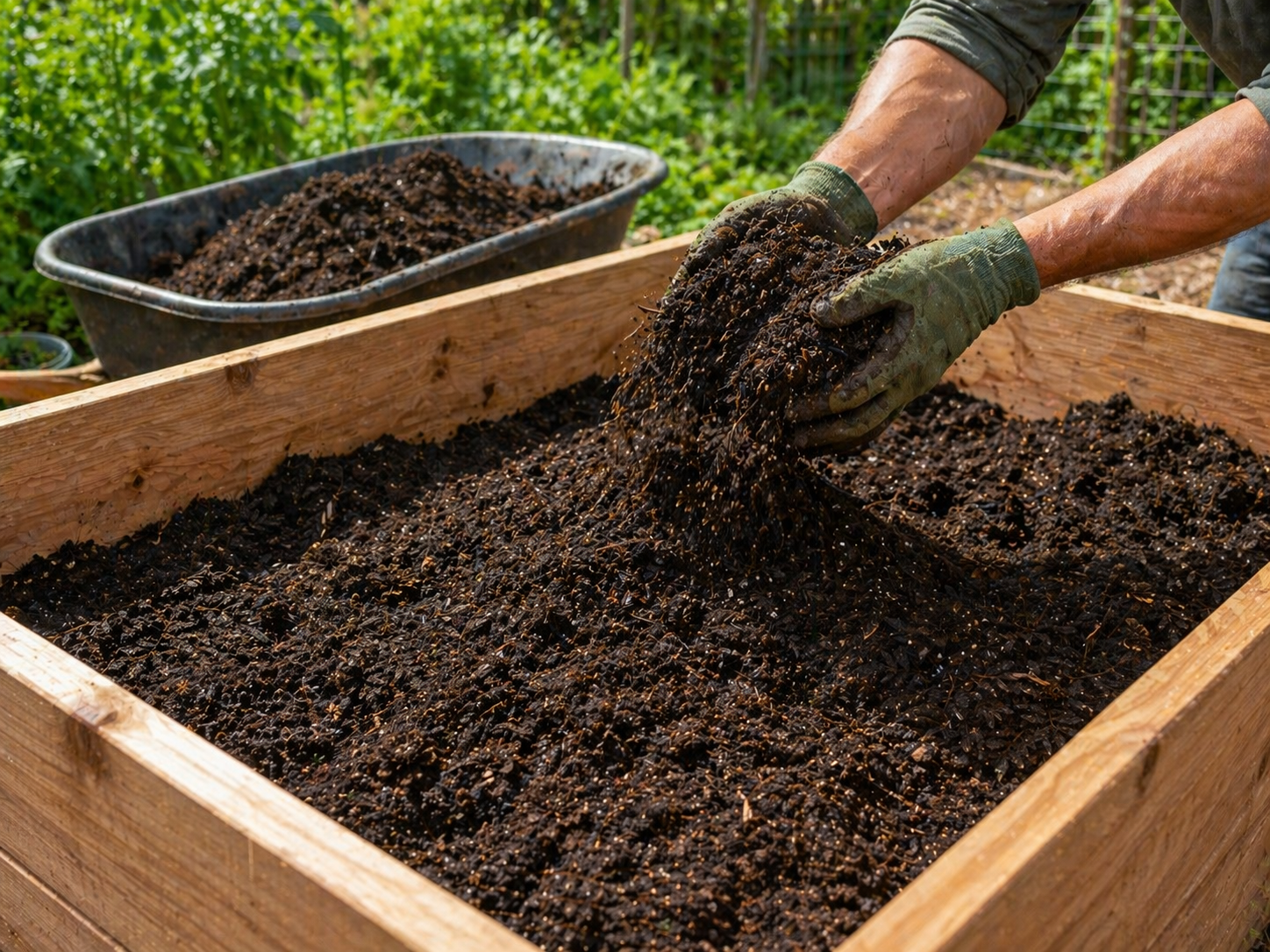
The soil mix you put in a raised bed matters more than almost any other decision. A good mix produces a lush, productive garden from day one; a bad mix compacts, drains poorly, grows weeds faster than vegetables, and makes you want to quit gardening. The good news: mixing raised bed soil is straightforward once you know what to buy and in what proportions. This guide walks through Mel's Mix (the gold standard), a budget alternative, how much soil you actually need, and the common mistakes that ruin a bed.
Why Not Just Use Native Soil
Native garden soil has three problems that make it a poor choice for raised beds. First, it compacts — especially clay-based soils that make up most of the central and southeastern US. A raised bed filled with compacted clay drains poorly and suffocates roots. Second, it drains poorly because in the elevated bed, the native soil loses its connection to the deeper water table that would otherwise wick moisture up. Third, native soil is full of weed seeds that will sprout enthusiastically in the warm, well-fed bed environment. Starting with a clean mix pays back in every one of these dimensions.
Mel's Mix — The Gold Standard
Mel Bartholomew's Square Foot Gardening mix is the most widely-recommended raised bed blend. The formula is:
- 1/3 vermiculite — coarse horticultural grade, holds water, improves aeration
- 1/3 peat moss or coco coir — retains moisture, improves structure
- 1/3 blended compost — ideally from 5+ different sources for a nutrient variety
The compost diversity matters. A mix of worm castings, mushroom compost, composted manure, leaf mold, and municipal compost provides a broader nutrient profile than any single compost source. At 2026 prices, Mel's Mix costs roughly $5 to $8 per cubic foot fully mixed — about $160 to $250 to fill a 4×8 bed at 12 inches deep.
Budget Alternative: Topsoil + Compost Blend
If Mel's Mix is outside the budget, the standard alternative is a 60/40 topsoil-to-compost blend. Use quality screened topsoil (not bagged “garden soil” which compacts in containers) and a diverse compost source. This blend costs roughly $2 to $3 per cubic foot — about $65 to $100 for a 4×8 bed at 12 inches deep — but is heavier, drains less well than Mel's Mix, and often needs more annual top-dressing with compost to maintain structure.
How Much Soil You Need — Calculator Table
| Bed Size | 6 in deep | 12 in deep | 18 in deep |
|---|---|---|---|
| 4×4 | 0.3 cu yd | 0.6 cu yd | 0.9 cu yd |
| 4×8 | 0.6 cu yd | 1.2 cu yd | 1.8 cu yd |
| 4×12 | 0.9 cu yd | 1.8 cu yd | 2.7 cu yd |
One cubic yard equals 27 cubic feet, or roughly 35 (40-pound) bags of soil mix. For bed volumes under 1 cubic yard, bagged mix is usually cheaper per unit. For 2+ cubic yards, bulk delivery saves 30 to 50 percent over bags.
Annual Top-Up
Raised beds settle 20 to 30 percent in the first year as organic matter decomposes and the mix compacts naturally. Plan to top up with 2 to 3 inches of fresh compost each spring — this replenishes organic matter, supplies nutrients, and restores the original depth. A 4×8 bed needs roughly 0.2 cubic yards (5 to 6 bags) of compost annually. Mix it into the top 4 inches rather than just layering on top.
What NOT to Use
- Pure topsoil. Compacts within weeks, drains poorly, grows weeds aggressively.
- Straight compost. Settles to nothing within months, has no mineral structure, burns plants if too fresh.
- Bagged “garden soil.” Most garden soil bags are designed for in-ground amendment and compact severely in containers.
- Subsoil or construction fill. No nutrient value, heavy clay texture, may contain contaminants.
- Manure that hasn't composted at least 6 months. Fresh manure burns roots and may carry weed seeds.