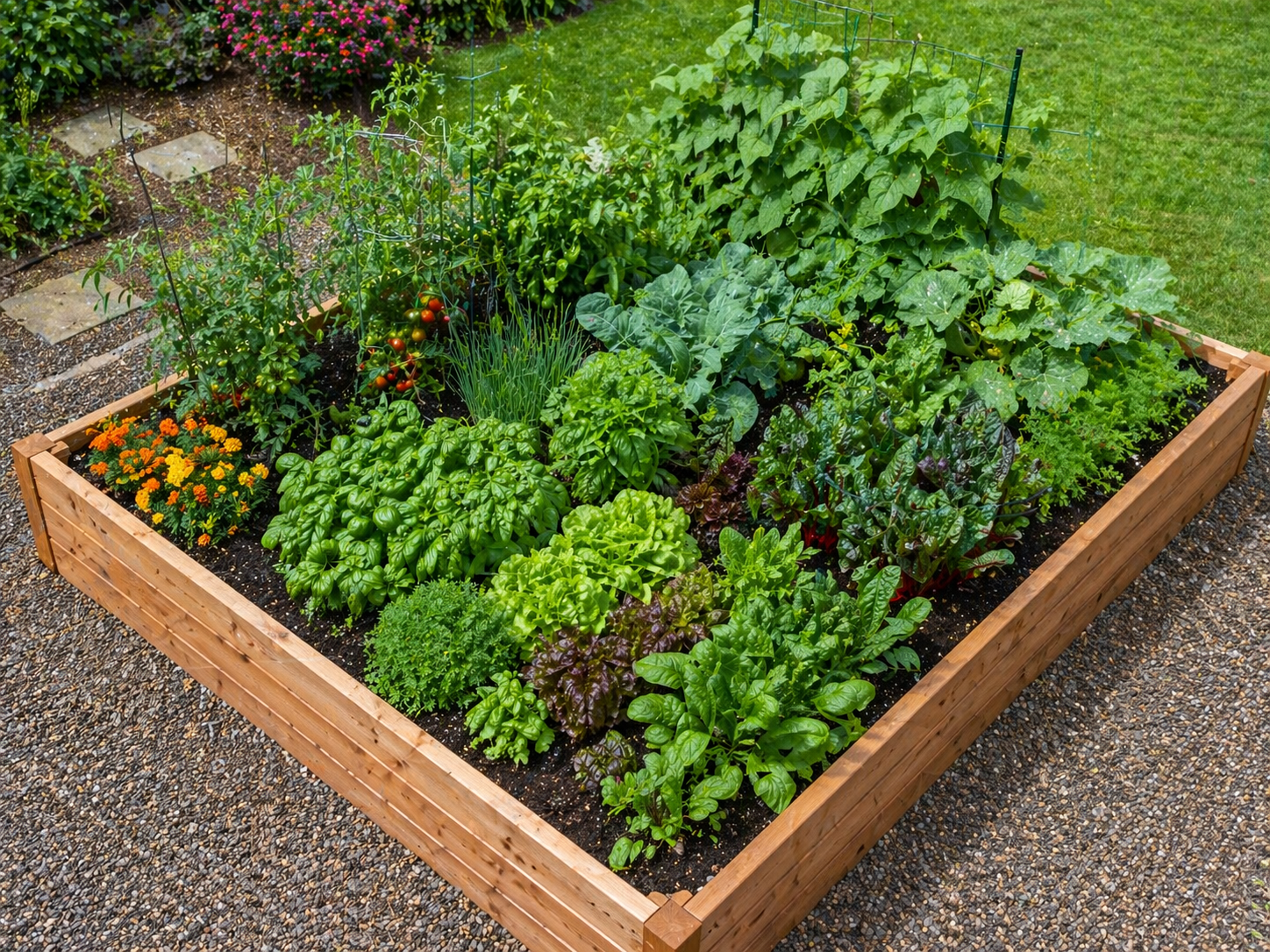
Choosing the right raised bed size is the decision that determines how much you harvest and how much you regret. Too small and you run out of room for the crops you actually wanted. Too large and the bed becomes unreachable, the middle gets stepped on, and soil compaction kills the root zone. This guide walks through the universal 4-foot width rule, compares the standard size options with plant-count data, and explains how deep each crop actually needs.
The Golden Rule: Maximum 4 Feet Wide
The single most important size rule for raised beds is that the bed should never be wider than 4 feet. This width lets you reach the center from either side without stepping on the soil — roughly 2 feet from each side. The moment a bed is wider than 4 feet, reaching the middle requires either stretching uncomfortably or stepping on the soil, which compacts it and destroys the aerated root zone that makes raised beds worthwhile in the first place. Length can be anything you want from 2 feet to 16 feet or more, but width is fixed.
Size Comparison Table
| Size (ft) | Sq ft | Best for | Plants (intensive) |
|---|---|---|---|
| 4×4 | 16 | Beginners, 1–2 crops | 16–32 |
| 4×8 | 32 | Standard home use | 32–64 |
| 4×12 | 48 | Serious gardeners | 48–96 |
| 2×8 | 16 | Narrow spaces, herbs, lettuce | 16–32 |
| 4×16 | 64 | Full kitchen garden | 64–128 |
Depth Guide
Depth matters because every vegetable has a minimum root-zone requirement. Too shallow and roots hit the underlying native soil (if poor) or compete for oxygen. Too deep and you spend money filling with expensive soil mix.
| Depth | Best for |
|---|---|
| 6 inches | Lettuce, herbs, radishes, green onions, strawberries |
| 12 inches | Most vegetables — beans, peppers, cucumbers, brassicas |
| 18 inches | Tomatoes, peppers, deep-rooted tomato varieties |
| 24 inches | Long root crops — carrots, parsnips, leeks, potatoes |
How Many Plants Fit (Square Foot Gardening)
Square Foot Gardening assigns each vegetable a plants-per-square-foot density. The common rates:
- 1 per sq ft: tomato, pepper, eggplant, broccoli, cabbage, zucchini
- 2 per sq ft: cucumber (trellised), pole beans
- 4 per sq ft: lettuce, Swiss chard, strawberry, corn
- 9 per sq ft: bush beans, peas, spinach, beets
- 16 per sq ft: carrots, radishes, onions, garlic
A 4×8 bed (32 square feet) can therefore hold 32 tomatoes if fully dedicated to them, or a diverse mix — for example, 4 tomatoes (4 sq ft), 4 peppers (4 sq ft), 16 lettuce heads (4 sq ft), 32 carrots (2 sq ft), 9 peas (1 sq ft), plus 17 sq ft of other crops. Intensive planting like this is the raised bed advantage.
Rough Lumber Cost by Size
These are rough DIY cedar lumber costs (2×10 or 2×12 boards) at 2026 prices, excluding corner hardware:
- 4×4 bed, 12 inches deep: $30–60
- 4×8 bed, 12 inches deep: $50–100
- 4×12 bed, 12 inches deep: $80–140
- 4×8 bed, 18 inches deep: $80–140
- 4×8 bed, 24 inches deep: $110–180
Pre-cut kits cost 2 to 3 times the raw lumber price but save the cut-and-assemble time (2 to 3 hours DIY for a 4×8 bed). Galvanized steel raised bed kits generally run 20 to 30 percent cheaper than cedar kits and last longer.