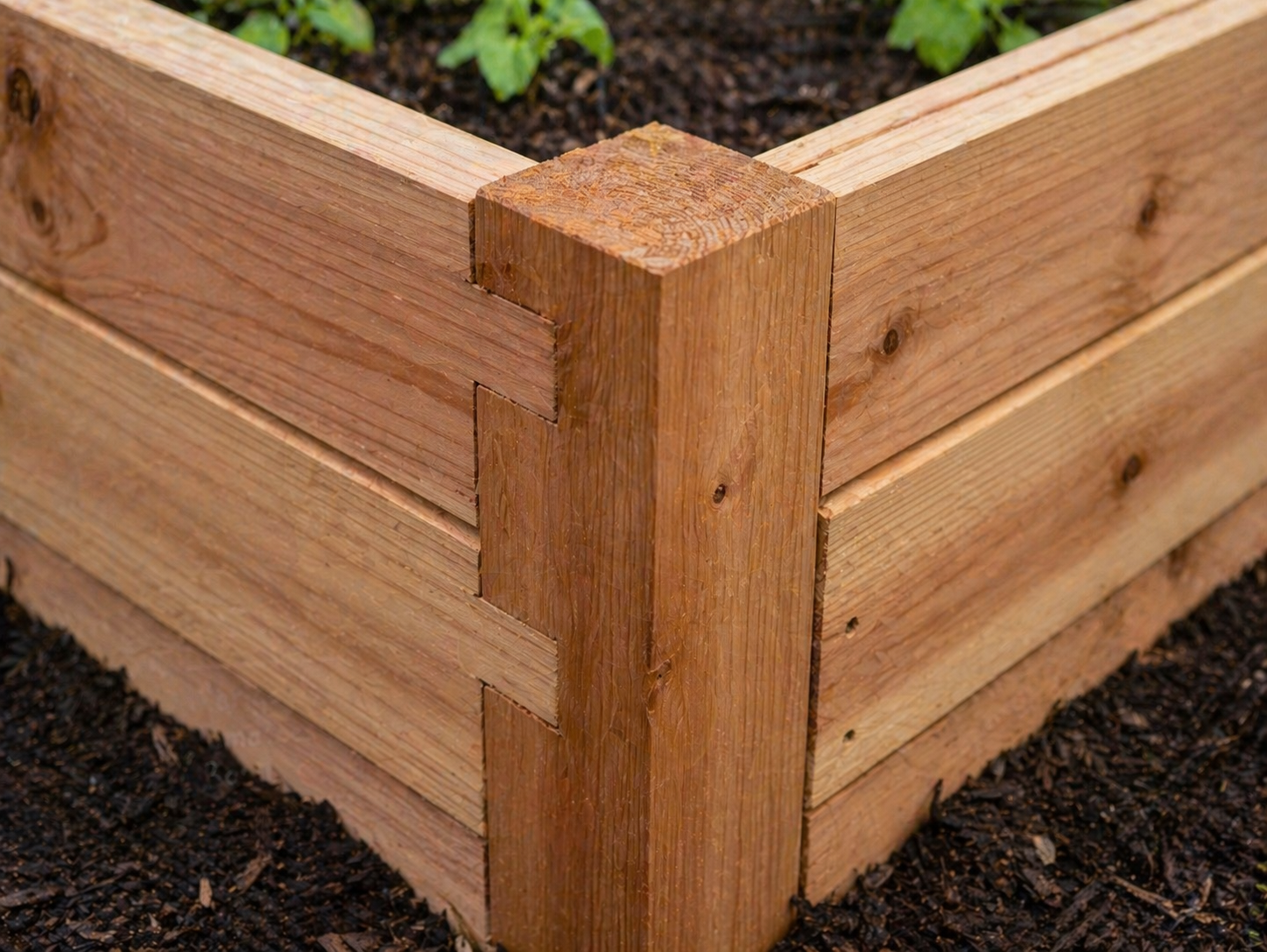
The material you choose for your raised bed determines how long it lasts, how much it costs, whether it's safe for food, and how the finished garden looks. Cedar dominates the market because it hits all four criteria reasonably well, but galvanized metal is catching up fast as a modern alternative. This guide compares every common material and identifies what to avoid outright.
Materials Comparison
| Material | Lifespan | Cost | Pros | Cons |
|---|---|---|---|---|
| Cedar | 10–15 yr | $$$ | Natural, safe, attractive | Expensive |
| Redwood | 15–20 yr | $$$$ | Beautiful, long-lasting | Very expensive, limited availability |
| Pine | 3–5 yr | $ | Cheap, widely available | Rots fast, needs replacing |
| Galvanized Metal | 20+ yr | $$ | Durable, sleek, no rot | Heats up in full sun |
| Composite | 20+ yr | $$$ | No rot or splinter | Plastic feel, heavier |
| Concrete Block | 50+ yr | $$ | Permanent, very durable | Heavy, plain look |
Cedar — Why It's the Standard
Western red cedar has been the default raised bed material for decades because it hits the sweet spot on every criterion. The natural oils in the wood resist rot and insect damage without any chemical treatment, which means it's safe for food-growing soil. The grain is attractive and weathers to a silver-gray if left unstained. A cedar 4×8 raised bed built from standard 2×10 lumber lasts 10 to 15 years in most climates — 20 years in drier regions like the Mountain West. The downside is cost: cedar runs 2 to 3 times the price of pine. Eastern white cedar is a slightly cheaper and slightly shorter-lived alternative.
Galvanized Metal — The Modern Option
Corrugated galvanized steel raised beds have taken significant market share since 2020. The appeal is lifespan — a galvanized bed lasts 20+ years with essentially no maintenance — plus a clean modern aesthetic that fits contemporary landscaping. Most quality metal beds are powder-coated to prevent rust and to moderate heat transfer. The heat concern is real: direct sun on bare galvanized steel can push surface temperatures to 140°F+ on hot summer days, stressing roots near the edges. Line the inside with landscape fabric to buffer temperatures and prevent any soil-to-metal contact. Cost is 20 to 30 percent cheaper than cedar at equivalent sizes.
What to Avoid
- CCA (chromated copper arsenate) treated lumber. Banned for residential use in 2004 but still sold as reclaimed wood. Leaches arsenic into soil and anything grown in it.
- Railroad ties. Creosote-treated and leach toxic compounds for decades. Never use around food crops regardless of age.
- Old pallets. May be treated with methyl bromide (marked “MB”) which is toxic. Only “HT” (heat-treated) pallets are safe, and even those often have unknown contamination from their original cargo.
- Painted or stained lumber. Unless the paint is specifically labeled safe for food-growing soil contact, don't use it.
DIY vs Kit — Cost Comparison
Rough 2026 prices for a standard 4×8 raised bed, 12 inches deep:
- DIY cedar: $60–90 lumber only (2 to 3 hours assembly)
- Pre-cut cedar kit: $120–250 (30 to 60 minutes assembly)
- Galvanized steel kit: $80–180 (30 to 45 minutes assembly)
- Composite lumber kit: $150–300
- Stone or concrete block: $100–200 materials, 4 to 8 hours build
For one bed, the assembly time savings from a kit rarely justify the 2× price premium. For 4+ beds or if you're buying tools specifically for the project, the DIY math favors lumber. For single-bed installations where you want it done in an afternoon, kits win.