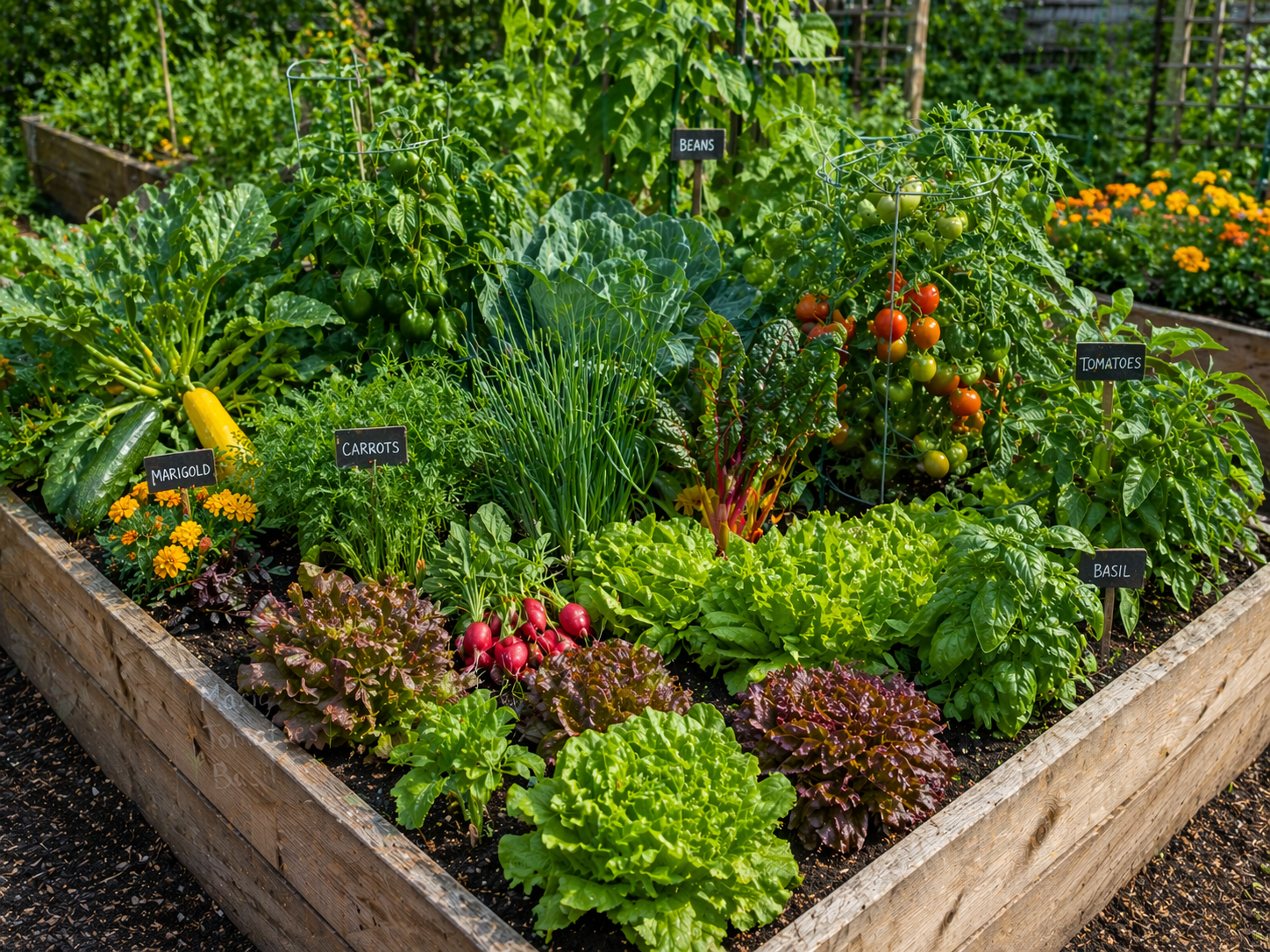
A raised bed garden is a contained growing area filled with amended soil that sits above ground level — typically 6 to 24 inches tall, framed in cedar, galvanized steel, or composite lumber. Raised beds produce more food per square foot than in-ground gardens, warm up earlier in spring, drain better, and put a clean end to the most common reason home gardens fail: poor native soil. This guide walks through everything you need to plan, build, fill, plant, and maintain a raised bed garden — and points to seven dedicated guides for the planning decisions that matter most.
Why Raised Beds
Raised beds solve five specific problems that limit ordinary vegetable gardening. Drainage: elevated soil drains excess water that would pool in flat-ground gardens after heavy rain. Soil control: you choose the exact soil mix your plants need rather than working with whatever your yard delivers. Early spring warmth: raised soil warms 1 to 2 weeks earlier than the ground, extending the growing season on both ends. No soil compaction: with paths outside the bed, nobody walks on the growing area, keeping roots in loose, oxygenated soil. Accessibility: a 24-inch tall bed cuts back strain and makes gardening workable from a stool or wheelchair.
Quick-Start Summary
| Step | What to do |
|---|---|
| 1. Choose size | 4×4 for beginners, 4×8 standard home-use. Never more than 4 feet wide. |
| 2. Pick material | Cedar lasts 10–15 years; galvanized steel 20+ years. Avoid treated lumber. |
| 3. Fill with soil | Mel's Mix (vermiculite + peat + compost), or 60% topsoil + 40% compost on a budget. |
| 4. Plan layout | Orient longest axis north-south; tall plants on north end to avoid shading. |
| 5. Water system | Drip irrigation or soaker hose — not overhead sprinklers (drives fungal disease). |
7 Essential Guides in This Cluster
Each of the links below covers one planning decision in depth. Read them in order for a complete first-year raised bed, or jump to the one you need right now.