Is My Lawn Dead or Dormant? Two Quick Tests
Published:

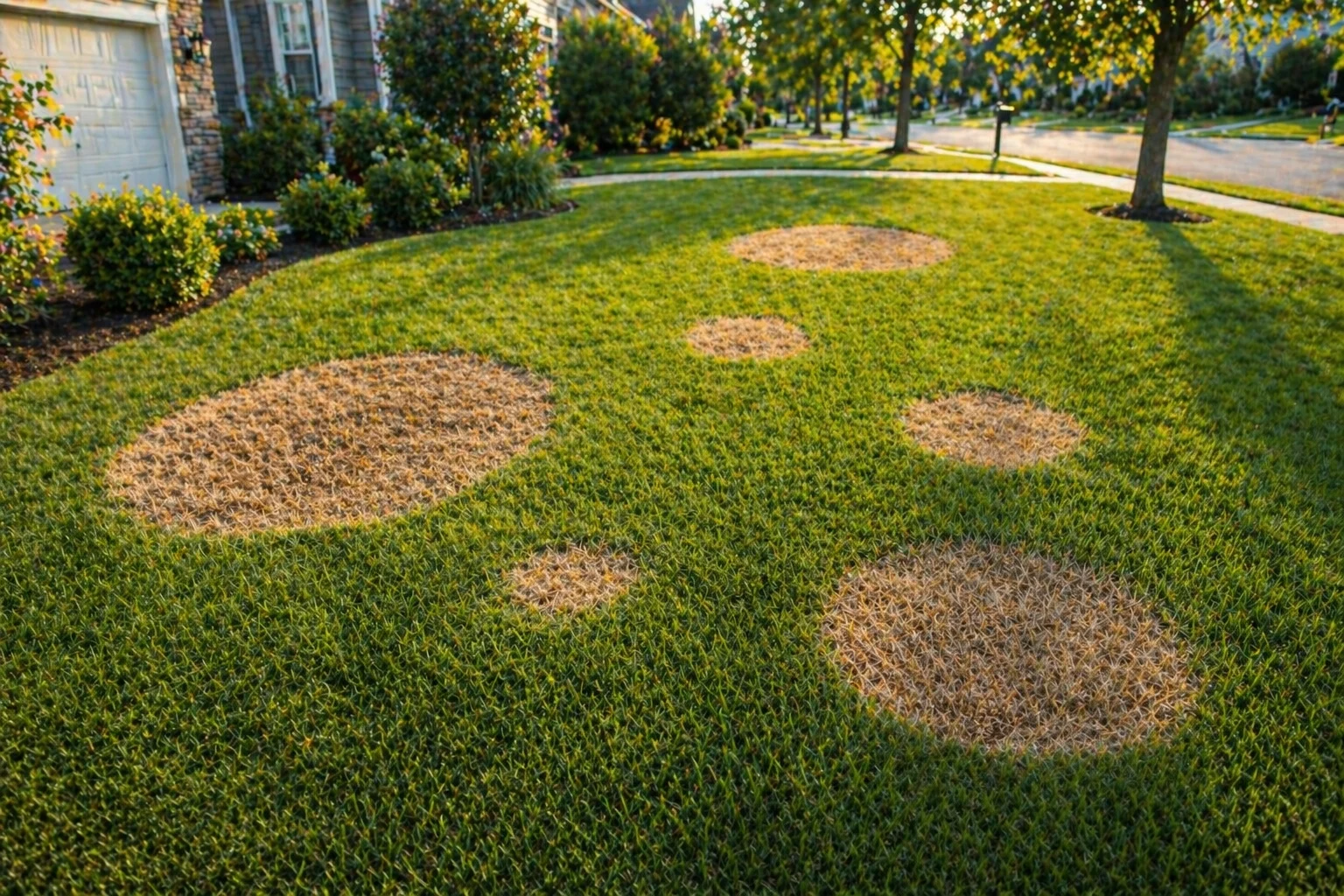
Brown grass rarely means the lawn is dead. Cool-season grasses (fescue, Kentucky bluegrass, ryegrass) enter heat dormancy above 85F soil, browning from the tips down but keeping the crown alive on stored reserves. Warm-season grasses (Bermuda, zoysia, St. Augustine) go dormant in the opposite direction, browning as soil temperature drops below 55F. Drought dormancy can happen to any grass. In all three cases, the crown at the soil surface stays white or tan and firm, and the plant recovers when conditions improve. Death, by contrast, means the crown itself has failed. Two 30-second tests, done in four or five patches across the lawn, tell you the answer with a high degree of certainty. This page walks through the tug test, the crown test, when each type of dormancy is normal, the recovery timeline for each, and what to do when part of the lawn really is dead.
The 30-second answer
Grab a small tuft of brown blades and gently pull straight up. If the blades resist and stay rooted, the crown is alive and the patch is dormant. If the tuft pulls out with almost no resistance and the roots look brown and brittle, that patch is dead.
The tug test (do this first)
Walk to a browned patch and pinch a small tuft of grass between your thumb and forefinger. Pull straight up with steady, moderate force. There are three possible outcomes.
Outcome A, the tuft stays rooted and you feel resistance: the plant is alive. Turf pulled at moderate force should stay in place; healthy grass shears at the blade before the crown lets go. This is a dormant lawn. Move on to the crown test to confirm.
Outcome B, the tuft pulls out easily and the roots at the base are brown, brittle, and short: that patch is dead. The crown has failed. You will need to reseed or resod this area. Do the test in 3 or 4 more spots to map how much of the lawn is affected.
Outcome C, the tuft pulls out but the roots are long, white, and moist: this is not dead grass, this is a symptom of a specific problem. On St. Augustine, chinch bugs. On cool-season lawns, grub damage. On many species, take-all root rot. Investigate the pattern (rings, expanding edges, worst in sun or in shade) and treat the underlying cause, not the browning.
The crown test (do this second)
Kneel down at a browned patch. Gently pull a few blades from the base and inspect the crown, which is the whitish or tan tissue right at the soil surface where the blade meets the roots. Roll it between your fingers.
A living crown is firm, slightly rubbery, and white to pale tan. Under a fingernail it will indent slightly and spring back. This plant is dormant. It will recover when heat or drought stress ends.
A dead crown crumbles between your fingers into dry brown flakes. There is no green, no white core, just dry powdery tissue. This plant is gone. If most of the patch tests this way, you have permanent stand loss and will need to reseed.
In practice, most heat- or drought-dormant lawns show a mix: 60 to 80 percent of crowns are firm and alive, 20 to 40 percent are dead. If more than half your test crowns crumble, the patch will not fully recover on its own and you should plan an overseed.
Types of dormancy (all normal, all recoverable)
Heat dormancy hits cool-season grasses when air temperatures push above 90 to 95F for extended periods and soil temperatures climb over 85F. Kentucky bluegrass, tall fescue, fine fescue, and perennial ryegrass all enter heat dormancy to conserve resources. The crown stays alive on stored carbohydrates for 3 to 4 weeks with no water at all, or 6+ weeks with 1 inch of water per week. See <a href='/keep-lawn-alive-heat-wave'>keep your lawn alive in a heat wave</a> for the survival playbook.
Drought dormancy is triggered by soil moisture, not temperature. Any grass can go drought-dormant if soil dries out for 2 to 3 weeks. The plant stops top growth, roots hydraulic-lift what water they can find, and the crown holds the plant together on reserves. Drought dormancy looks nearly identical to heat dormancy, but it can happen in any season. A single 1 inch deep watering usually holds a drought-dormant lawn indefinitely.
Cold dormancy affects warm-season grasses (Bermuda, zoysia, St. Augustine, centipede, bahia, buffalo) once soil temperatures drop below 55 to 60F, usually mid-fall through mid-spring. Bermuda goes fully straw-brown from top to bottom and stays that way all winter. Zoysia and St. Augustine can hold partial green longer. All warm-season lawns come out of cold dormancy naturally as soil warms in spring; no intervention is needed.
How long dormancy lasts (and when to worry)
Beyond these safe durations, crown reserves run out and stand loss begins. If a cool-season lawn has been fully dormant for 6+ weeks with no water in a 100F+ climate (Texas, Oklahoma, Kansas), assume some crowns are dying. Start deep morning watering (1 inch per session, once a week) and reassess in 10 days.
If a warm-season lawn is still fully brown 4 weeks after soil warms above 65F in spring, something else is wrong. Winter kill (Bermuda north of its range), spring dead spot, or take-all root rot can all mimic prolonged cold dormancy. Do the crown test in the brown areas and look for pattern.
| Dormancy type | Trigger | Safe duration | Recovery timeline |
|---|---|---|---|
| Heat dormancy (cool-season) | Soil 85F+, air 95F+ | 3 to 4 weeks unwatered, 6+ weeks with 1 in/wk | 10 to 14 days after soil drops under 80F |
| Drought dormancy (any grass) | Soil dries out 2+ weeks | 3 to 4 weeks | 5 to 10 days after deep watering resumes |
| Cold dormancy (warm-season) | Soil under 55 to 60F | Full winter | 2 to 4 weeks after consistent 65F+ soil |
| Winter cool-season dormancy | Soil under 40F | Full winter | Immediate greenup as soil hits 40 to 50F |
What kills a lawn (that looks like dormancy)
Trying to force greenup with heavy watering and fertilizer during heat dormancy kills more lawns than the heat itself. Nitrogen forces top growth the crown cannot fund from reserves, and daily shallow watering fails to reach the crown while spiking disease pressure. If the lawn is dormant, protect the crown (see <a href='/keep-lawn-alive-heat-wave'>keep lawn alive in a heat wave</a>) and wait.
Chinch bug damage on St. Augustine looks exactly like heat dormancy at first: irregular patches of brown that spread outward. The tell is that pulled blades come out easily, roots are pale, and if you dig into the thatch you see small red-black insects. Float test: cut both ends off a coffee can, press it into the edge of a suspect patch, fill with water, and count the bugs that float up in 5 minutes. Over 5 bugs per can equals treatment threshold.
Grub damage in cool-season lawns creates spongy patches of dead turf that lift like carpet. If the tug test hands you a whole tuft with C-shaped larvae still attached to the roots, the answer is grubs, not dormancy.
Fungal disease (brown patch on tall fescue, dollar spot on Kentucky bluegrass, large patch on zoysia) usually shows as rings, expanding edges, or distinct shapes rather than the diffuse browning of heat dormancy. Photograph the pattern and match to university-extension photos before treating.
Dog urine damage is unmistakable if you know the pattern: small circular dead spots (usually 4 to 8 inches wide) with a lush dark green ring around each dead center. The nitrogen concentration burns the center; the diluted edge fertilizes. Water the spots heavily; consider fencing the dog off for a season.
Reviving a dormant lawn
Start with a single deep 1 inch morning watering. Deep watering signals the plant that stress is easing and triggers dormancy break. Wait 7 to 10 days and observe. Cool-season lawns should begin showing green growth from the crown outward within 2 weeks of soil dropping below 80F.
Do not fertilize until 2 weeks after visible greenup begins. When you do fertilize, use half the normal nitrogen rate (0.5 lb N per 1,000 sq ft) for the first application. A full-rate application on a stressed lawn burns roots and undoes the recovery.
Mow at the top of the recommended height for your grass. Never mow off more than one-third of the blade at once. If the lawn has grown from 1 inch of green (barely) to 3 inches, mow to 2 inches, not 1.5 inches. See our <a href='/should-i-mow-during-heat-wave'>mowing in a heat wave</a> guide for details.
Plan a fall overseed for any patches where crown testing showed more than 50 percent dead crowns. September in most cool-season regions, October in warm-transition zones, following the fall lawn care schedule. See <a href='/fall-lawn-care'>fall lawn care</a> for the full timing.
When to reseed or resod
Reseed if the crown test showed more than 50 percent dead crowns in a patch and you can see individual dead plants surrounded by soil. Small (under 6 inches) dead patches self-fill from surrounding healthy grass in 2 to 4 weeks. Medium (6 to 24 inch) patches need overseed. Large patches (over 24 inches) or entire zones need renovation.
Resod if more than 30 percent of the lawn is dead and the underlying cause is manageable. Full renovation with sod costs $2 to $10 per square foot depending on region and grass type. See our <a href='/grass-seeding-cost'>grass seeding cost</a> guide for the seed vs sod economics.
Do neither in July or August in most of the US. Cool-season seed cooks above 80F soil. Warm-season sod stresses hard in extreme heat. Wait 4 to 6 weeks past the heat wave and target September 1 to October 15 for cool-season, June for warm-season new installs.
Frequently Asked Questions
How can I tell if my grass is dead or dormant?
Two 30-second tests. First, tug a small tuft of brown grass. If it resists, the plant is alive. If it pulls out easily with brown brittle roots, it is dead. Second, pinch a few blades at the base and inspect the crown at the soil line. A living crown is white to tan and firm; a dead crown crumbles between your fingers. Do both tests in four or five patches to map the lawn.
How long can grass stay dormant without dying?
Cool-season grasses can hold heat dormancy 3 to 4 weeks with no water, or 6 or more weeks with 1 inch of water per week. Drought dormancy lasts 3 to 4 weeks before crown failure. Warm-season grasses are dormant all winter (typically November to April in most zones) and recover fully in spring.
Will dormant grass come back on its own?
Yes, if the crown is alive. Heat-dormant cool-season grass greens up 10 to 14 days after soil temperature drops below 80F. Drought-dormant grass recovers 5 to 10 days after deep watering resumes. Cold-dormant warm-season grass greens up 2 to 4 weeks after soil consistently hits 65F. If the crown is dead, that patch does not recover and must be reseeded.
Should I water a dormant lawn?
1 inch of water per week keeps a heat- or drought-dormant lawn from crossing into stand loss. Deliver it as a single deep morning irrigation, not daily shallow watering. Skipping water entirely for 3 to 4 weeks is also survivable but starts the crown-loss clock. Never water a cold-dormant warm-season lawn in winter; it does not need it.
Why is my lawn still brown after the heat wave?
Recovery takes time. Cool-season grass needs 10 to 14 days at soil temperatures under 80F to fully green up. If it has been 3 or more weeks and the lawn is still 50 percent or more brown, do the crown test to see which parts are dead vs slow to recover. Plan a fall overseed for confirmed dead patches.
Is heat dormancy the same as drought dormancy?
Almost identical from the plant's perspective (both stop top growth to protect the crown) but triggered by different conditions. Heat dormancy needs 85F+ soil. Drought dormancy needs 2 to 3 weeks of dry soil at any temperature. A cool-season lawn in a wet 100F heat wave is heat-dormant. A cool-season lawn in a dry cool October is drought-dormant. The tug and crown tests work the same for both.
About the Author
Lawn Care Expert & Writer · Denver, Colorado · Florida State University
Jason Allen is a lawn care expert and freelance writer based in Denver, Colorado. He studied turfgrass science and horticulture at Florida State University before founding his own lawn care operation serving the Denver metro area. With over a decade of hands-on experience managing cool-season lawns in Colorado's challenging high-altitude climate, Jason specializes in aeration, fertilization timing, drought management, and water-restriction compliance. His practical, science-backed approach to lawn care has helped thousands of homeowners achieve healthy turf despite Colorado's short growing seasons, clay soils, and frequent drought conditions.
Related lawn diagnosis and care
Sources: University extension turfgrass diagnostic guides (Purdue, Iowa State, University of Georgia, Penn State); tug and crown tests from foundational turf pathology references; recovery timelines from university plot data. Last reviewed July 2026.
Diagnose and Recover
Meters and gear that help you separate dormancy from real damage and set up recovery once the heat breaks.

Orbit 62067 1-Outlet Programmable Digital Hose Watering Timer, 2-Pack
$59.99
View on Amazon →

Lawn Sprinkler, 18 Brass Nozzles Garden Water Oscillating Sprinkler for Yard Covers up to 3,600 sq.ft, Heavy Weight Base, Built-in Spray Jet Cleaning Needle
$18.97
View on Amazon →
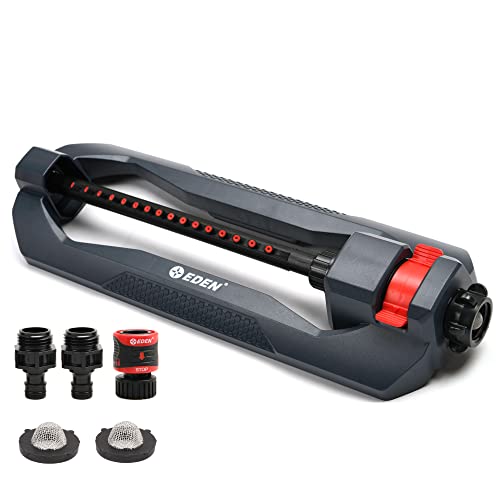
Eden 96213EDAMZ Weighted Essential Oscillating Sprinkler | Covers Up to 3,600 sq. ft., 16 Precision Nozzles, Adjustable Range, Turbo Drive Motor, Quick Connect Bundle, Stainless Steel Filters, Black
$20.83
View on Amazon →

Melnor 65051-AMZ Pulsating Sprinkler with QuickConnect Product Adapter, Amazon Bundle
$17.11
View on Amazon →

WEMADE Heavy Duty Metal Pulsating Sprinklers for Yard - 360 Degree Roating Automatic Water Sprinkler for Lawn with Metal Base, Impact Sprinklers for Large Area Covers Up to 85‘ Diameter
$19.99
View on Amazon →

Rocky Mountain Goods Soaker Hose - Heavy duty rubber - Saves 70% water - End cap included for additional hose connect - Great for gardens/flower beds - Reinforced fittings (50-Feet by 5/8-Inch)
$27.95
View on Amazon →
Prices as of Jul 14, 2026. Live price and availability on Amazon.