Should I Mow My Lawn During a Heat Wave?
Published:

The short answer: no if the lawn is not actively growing, yes at the top of the recommended height with a sharp blade if it is. Cool-season grass (fescue, Kentucky bluegrass, ryegrass) that has entered heat dormancy should not be mowed at all until soil temperature drops back under 80F. Warm-season grass (Bermuda, zoysia, St. Augustine) still actively growing in a heat wave should be mowed at the top of its recommended range, on the coolest morning or evening you can find, with a freshly sharpened blade, and cut no more than one-third of the leaf blade per session. Wrong-height, wrong-time, dull-blade mowing during a 100F week can strip crown reserves and turn a survivable dormancy into permanent stand loss. This guide covers when to skip mowing entirely, the exact height for each grass type, why sharpness matters more in heat than at any other time, and the safest window to mow if you have to.
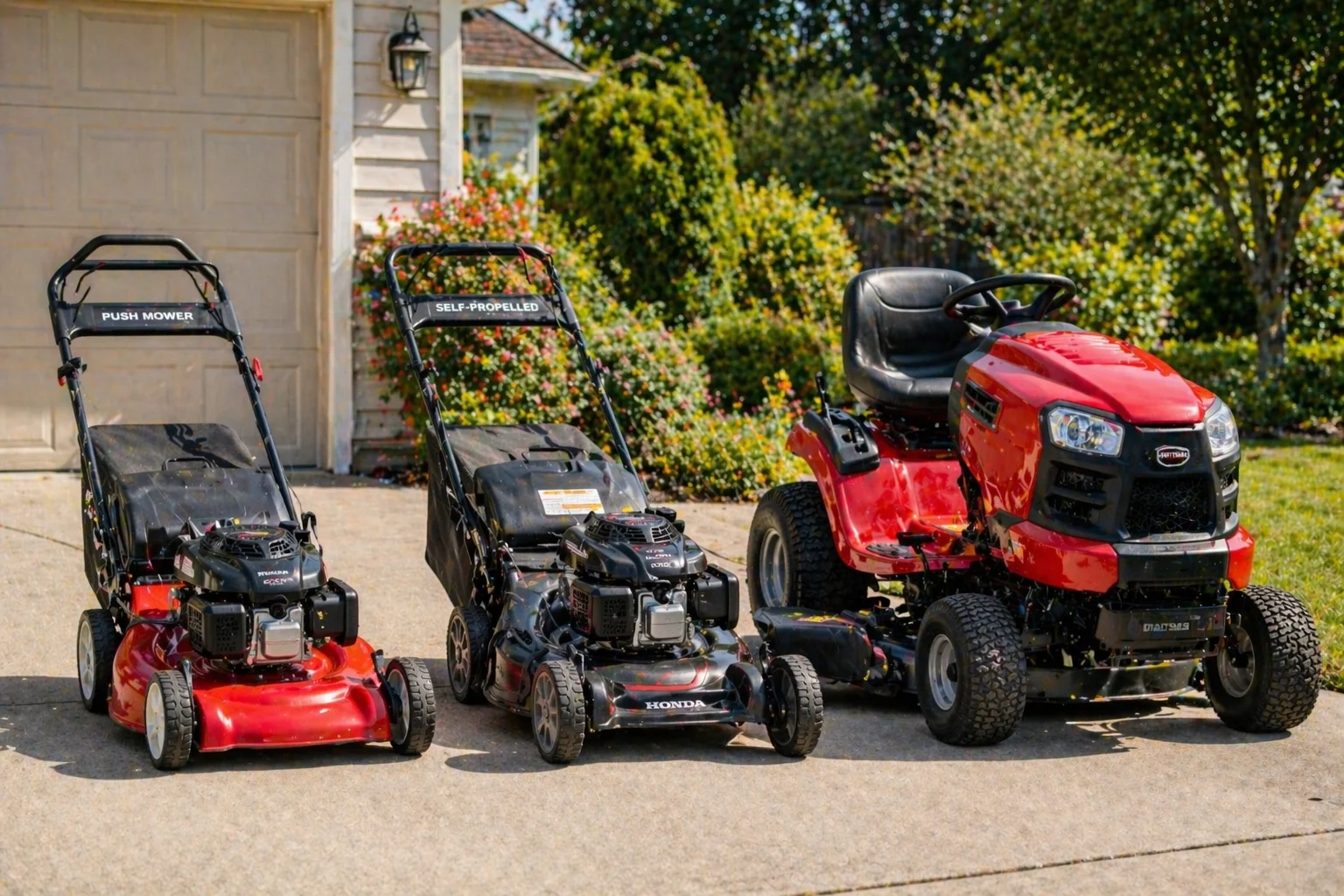
The one-third rule is not optional in a heat wave
Never remove more than one-third of the leaf blade in a single mowing, ever, but especially in a heat wave. A 4 inch tall fescue lawn should not be cut below 2.7 inches. Cutting closer than the one-third rule strips carbohydrate reserves the crown needs to survive.
When to skip mowing entirely
Skip mowing if the grass has stopped growing. In a real heat wave, cool-season lawns enter heat dormancy: blades turn straw brown from the tips down, growth stalls, and the plant lives off crown reserves. Running a mower over dormant grass strips the leaf material that shades the soil, exposes the crown to direct sun, and steals reserves the plant needs to green up when the heat breaks. If the lawn is still 60 percent green but slow, mow at the top height with a sharp blade. If it is more than 50 percent brown, park the mower.
Skip mowing if the soil is powder dry. A stress-mow on desiccated soil creates fine dust that clogs stomata, damages crowns, and blows into the road. Wait until you have watered deeply (0.75 to 1 inch morning irrigation) 24 hours before you plan to mow.
Skip mowing if the air temperature is above about 95F at cut time. Even warm-season grass is not thriving above 100F ambient. Wait for a morning under 90F or an evening under 88F, mow then, and skip a week if the heat wave never lets up.
Skip mowing if the wheels leave tracks. Persistent tire tracks or shoe prints are a sign of turgor loss: the plant is not holding water and cannot rebound from mechanical damage. Water deeply, wait 24 hours, and reassess.
The right height by grass type
The core rule for a heat wave is: raise the deck to the top of the recommended range for your grass. Every 0.5 inch of extra blade length shades soil, holds moisture, and reduces surface temperature by 3 to 8F. In a 100F week, that difference decides whether the crown survives. Do not stack cuts week over week to slowly reach the top height; raise to the target in one step by mowing tall and letting the lawn catch up.
Do not scalp thinking a short cut buys you a longer window before the next mow. A scalped heat-stressed lawn will not regrow before the next mow anyway (dormancy), and the exposed crown loses moisture and burns. This is the single most common way homeowners kill lawns during a heat wave.
| Grass type | Normal range | Heat-wave target | Why |
|---|---|---|---|
| Tall fescue | 3.0 to 4.0 inch | 4.0 inch | Deepest roots when tall; best drought tolerance in the cool-season group |
| Kentucky bluegrass | 2.5 to 3.5 inch | 3.5 inch | Shallow roots relative to fescue; extra shade helps crown |
| Perennial ryegrass | 2.0 to 3.0 inch | 3.0 inch | Highest disease risk; taller blade dries faster after morning water |
| Fine fescue | 2.5 to 4.0 inch | 3.5 to 4.0 inch | Shade tolerant; do not scalp under trees |
| Bermuda | 0.5 to 2.0 inch (varies) | 1.5 to 2.0 inch (bump up 0.5 in) | Actively growing; extra height shades but do not overshadow warm-season energy |
| Zoysia | 1.0 to 2.5 inch | 2.5 inch | Slow growing; taller cut prevents thatch spikes |
| St. Augustine | 3.5 to 4.0 inch | 4.0 inch | Chinch bug pressure is high in heat; tall blade harbors fewer bugs than crown-tight cut |
| Centipede | 1.0 to 2.0 inch | 2.0 inch | Low fertility grass; taller cut protects the naturally shallow root system |
| Buffalo grass | 3.0 to 4.0 inch (or unmowed) | 4.0 inch or skip | Native; often left unmowed in heat with no ill effect |
Sharp blades are non-negotiable in heat
A dull mower blade tears grass instead of cutting it. Torn tips have several times more surface area per unit length than clean cuts, and they lose moisture much faster. In a normal week, torn tips just look bad. In a heat wave they cause visible whole-lawn browning within 48 hours, and the blade cannot heal because the plant has stopped growing. This is a common cause of what looks like heat damage but is actually damage from a dull blade.
Sharpen the blade before the mow, not after. If you have not sharpened this year, sharpen now. If you have sharpened once and mowed 15 or more times since, sharpen again. In heat-wave conditions, sharpen every 5 to 8 mowings. A file-sharp edge (you can shave paper with it) cuts cleanly and doubles the survival window under stress.
A quick sharpness test at the mower: after mowing a strip, look at the leaf tips 12 hours later. Clean-cut tips are square and slightly discolored at the very tip. Torn tips are frayed and whitened up to a quarter inch back from the tip. Whitened frayed tips across the lawn mean the blade needs sharpening before the next mow.
When to mow if you must
The safest window in a heat wave is a morning when the air temperature is under 85F and the grass is dry to the touch. Typically that is 7 to 9 AM in most of the US, later on cooler mornings. Mowing wet grass rips instead of cuts, clumps clippings, and spreads disease.
Second-best is an evening after 6 PM when the sun is off the lawn but before dew starts. This works if you have not watered that day and the blades are dry.
Never mow midday in a heat wave (roughly 11 AM to 5 PM). Air temperatures above 95F, direct solar load, and mechanical stress from the mower combine to burn crowns and turn one bad cut into weeks of visible damage.
Leave the clippings on the lawn. Mulched clippings return moisture, nitrogen, and organic matter to the soil, insulate against heat, and shade the crown. Bagging in a heat wave removes all three benefits and hauls off free fertilizer. The only exception is if you have skipped 2 mowings and are cutting heavy growth in one pass; even then, mulch first, and rake heavy clumps only if they smother the grass beneath.
The mowing frequency question
In a heat wave, mow less often, not more. Cool-season lawns entering dormancy will not grow enough to need cutting. Skip a week, then reassess. Warm-season lawns still growing may go from a 5-day cycle to a 7-day cycle because the extra height at cut is helping the plant. That is fine; the goal in a heat wave is protection, not appearance.
The one-third rule tells you how often to mow: cut when the grass has grown to about 1.5 times the target height. A Bermuda lawn maintained at 2 inches needs mowing when it hits 3 inches. If it is only at 2.4 inches, wait. Cutting more than one-third at once strips too many photosynthetic reserves and stresses the crown.
For a full month-by-month schedule that respects heat windows, see our <a href='/lawn-care-calendar'>US lawn care calendar</a>. For the underlying watering plan, see <a href='/best-time-to-water-lawn'>best time to water lawn</a>.
Frequently Asked Questions
Is it OK to mow the lawn during a heat wave?
Only if the lawn is still actively growing and you can mow at the top of the recommended height range with a sharp blade during the coolest part of the day (typically 7 to 9 AM). If the lawn has entered heat dormancy (more than 50 percent browning, no growth), skip mowing entirely until the heat breaks and green growth resumes.
What is the best time of day to mow in extreme heat?
Early morning after the dew has dried but before air temperature reaches 85F, typically 7 to 9 AM in the US. Second-best is early evening after 6 PM when the sun is off the lawn. Never mow midday (11 AM to 5 PM) in a heat wave.
How high should I mow my lawn in a heat wave?
Raise the deck to the top of the recommended range for your grass type. For tall fescue, 4 inches. For Bermuda, 1.5 to 2 inches. For St. Augustine, 4 inches. Longer blades shade the soil, reduce evaporation, keep the crown cooler, and hide brown tips. Never scalp during heat stress.
Should I bag or mulch clippings during a heat wave?
Mulch. Leaving clippings in place returns moisture, nitrogen, and organic matter to the soil, shades the crown, and reduces heat load. Bagging removes all of that. The only exception is when you have skipped multiple mowings and cutting heavy clumps that smother the grass beneath.
How often should I mow during a heat wave?
Less often than normal. Cool-season lawns entering dormancy will not grow enough to need mowing. Skip a week. Warm-season lawns may stretch from a 5-day to a 7-day cycle because of the taller cut height. Mow when the grass has grown to 1.5 times the target height, never sooner (the one-third rule).
Does mowing a stressed lawn kill it?
It can. Mowing dormant or stressed grass strips carbohydrate reserves the crown needs, exposes soil to direct sun, and creates entry points for disease and insects. Two or three stress-mows during a severe heat wave can turn a recoverable dormancy into permanent stand loss, especially with a dull blade.
About the Author
Lawn Care Expert & Writer · Denver, Colorado · Florida State University
Jason Allen is a lawn care expert and freelance writer based in Denver, Colorado. He studied turfgrass science and horticulture at Florida State University before founding his own lawn care operation serving the Denver metro area. With over a decade of hands-on experience managing cool-season lawns in Colorado's challenging high-altitude climate, Jason specializes in aeration, fertilization timing, drought management, and water-restriction compliance. His practical, science-backed approach to lawn care has helped thousands of homeowners achieve healthy turf despite Colorado's short growing seasons, clay soils, and frequent drought conditions.
More heat-wave lawn care
Sources: University extension turfgrass management guidelines (Penn State, Texas A&M AgriLife, University of Nebraska Lincoln, Iowa State); the one-third rule from foundational turf agronomy; standard mowing height ranges from grass-type breeder recommendations. Last reviewed July 2026.
Heat-Wave Watering Gear We Recommend
If you cannot mow, at least water right. These are the picks that make morning irrigation reliable.

Orbit 62067 1-Outlet Programmable Digital Hose Watering Timer, 2-Pack
$59.99
View on Amazon →

Lawn Sprinkler, 18 Brass Nozzles Garden Water Oscillating Sprinkler for Yard Covers up to 3,600 sq.ft, Heavy Weight Base, Built-in Spray Jet Cleaning Needle
$18.97
View on Amazon →
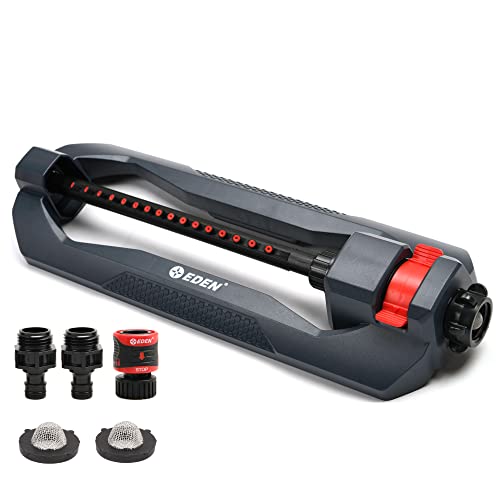
Eden 96213EDAMZ Weighted Essential Oscillating Sprinkler | Covers Up to 3,600 sq. ft., 16 Precision Nozzles, Adjustable Range, Turbo Drive Motor, Quick Connect Bundle, Stainless Steel Filters, Black
$20.83
View on Amazon →

Melnor 65051-AMZ Pulsating Sprinkler with QuickConnect Product Adapter, Amazon Bundle
$17.11
View on Amazon →

WEMADE Heavy Duty Metal Pulsating Sprinklers for Yard - 360 Degree Roating Automatic Water Sprinkler for Lawn with Metal Base, Impact Sprinklers for Large Area Covers Up to 85‘ Diameter
$19.99
View on Amazon →

Rocky Mountain Goods Soaker Hose - Heavy duty rubber - Saves 70% water - End cap included for additional hose connect - Great for gardens/flower beds - Reinforced fittings (50-Feet by 5/8-Inch)
$27.95
View on Amazon →
Prices as of Jul 14, 2026. Live price and availability on Amazon.