How to Keep Your Lawn Alive in a Heat Wave
Published:

Extreme heat is the single most stressful condition a US home lawn faces in a normal year. When air temperatures push above 95F and soil temperatures climb over 85F, cool-season grasses (Kentucky bluegrass, fescue, ryegrass) shift into heat dormancy: growth stops, blades brown, and the plant lives off crown reserves. Warm-season grasses (Bermuda, zoysia, St. Augustine, buffalo) keep photosynthesizing but still burn out fast without water. The single most important thing you can do during a heat wave is stop trying to make the lawn grow and start protecting the crown. That means deep infrequent morning watering, mowing high or not at all, zero fertilizer, and accepting brown as the color of survival. This guide covers what to do (and stop doing) so the lawn is alive and ready to recover the week the heat breaks.
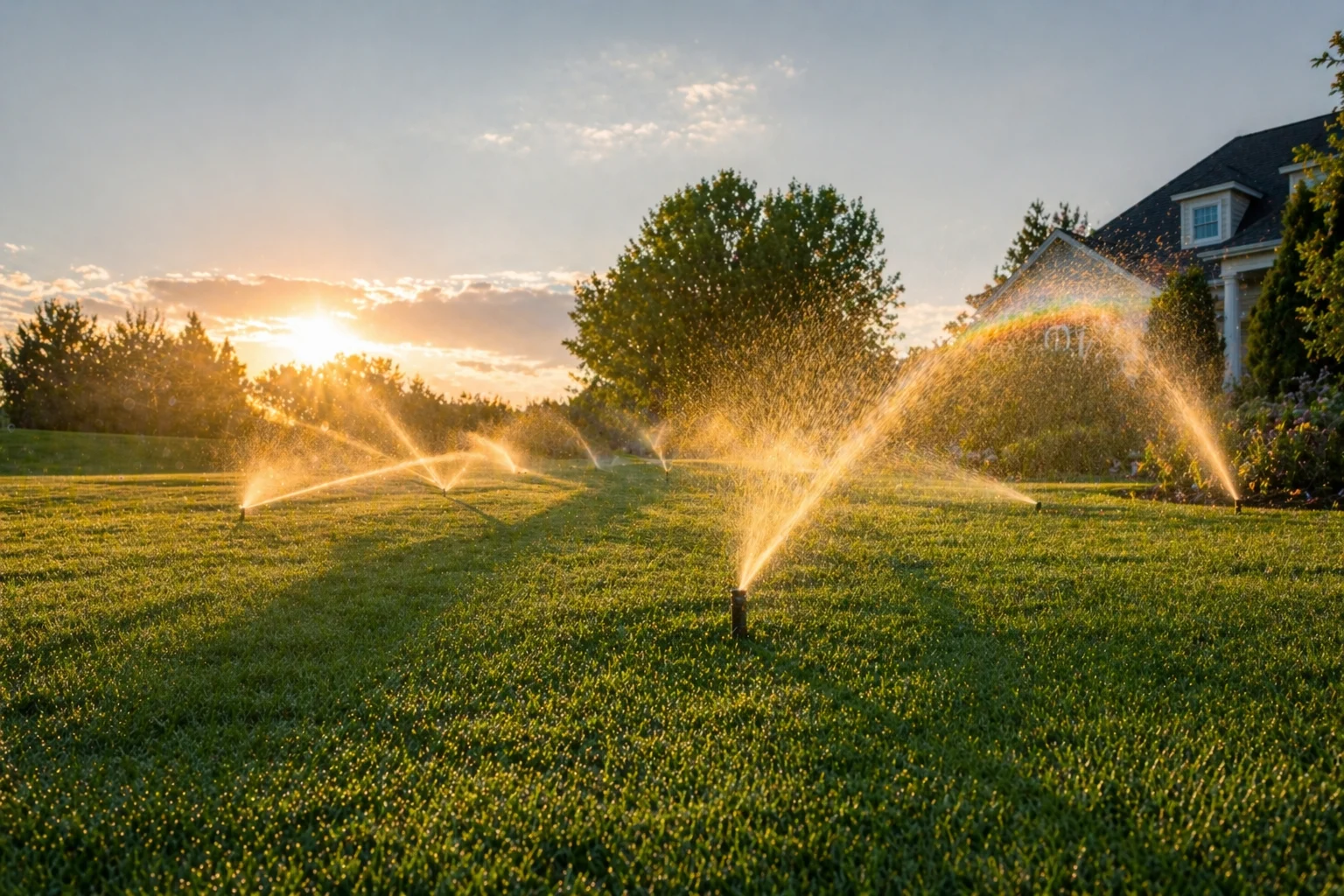
Heat dormancy is not death
Brown does not mean dead. A dormant lawn's crown (the growing point at the soil surface) stays alive for 3 to 4 weeks with minimal water. Trying to force green with heavy watering and fertilizer during a heat wave kills more lawns than the heat itself. Protect the crown; ignore the color.
What extreme heat actually does to grass
Above roughly 85F soil temperature, cool-season grasses stop net photosynthesis. Kentucky bluegrass, tall fescue, fine fescue, and perennial ryegrass respire more sugar than they can produce and enter heat dormancy. Blades brown from the tips down, growth halts, and the plant survives on carbohydrate reserves stored in the crown and roots. In a healthy stand, cool-season grasses can hold heat dormancy for 3 to 4 weeks without dying. Beyond about 6 weeks, crown reserves run out and thinning turns to stand loss.
Warm-season grasses (Bermuda, zoysia, St. Augustine, centipede, bahia, buffalo) evolved for exactly this weather. Optimum growth for Bermuda is 80 to 95F air temperature and soil temperature above 65F. A 100F heat wave does not push them into dormancy, but it does accelerate their water demand. A Bermuda lawn that used 1 inch of water per week in June may need 1.75 to 2 inches during a 105F Texas week. Miss that adjustment and warm-season grass still browns, though it recovers faster than cool-season grass once water returns.
Both grass types are more vulnerable to compounding stress during a heat wave. Insects (chinch bugs on St. Augustine, army worms on Bermuda, sod webworms broadly) feed harder in heat. Weeds like crabgrass and spurge thrive when the desirable stand thins. Fungal diseases (brown patch, Pythium, take-all) explode if the wrong irrigation timing keeps blades wet at night. The lawn that walks out of a heat wave healthy is the one you protected, not the one you tried to green up.
The crown protection rule (the only rule that matters)
The crown is the growing point at the base of each grass plant, right at the soil surface. It contains the meristem tissue that regrows blades and roots. As long as the crown is alive and hydrated, the lawn can recover. If the crown dies, that individual plant is gone and needs to be replaced by reseeding or spread from surviving neighbors.
Two things kill crowns during a heat wave: soil temperatures above about 105F for extended periods, and complete desiccation. You can knock 10 to 15F off soil temperature by mowing tall (leaving 3.5 to 4 inches of blade to shade the soil), by leaving clippings in place as an insulating mulch, and by watering deeply enough to reach 4 to 6 inches down. A single 0.75 to 1 inch morning irrigation once or twice a week is enough to keep crowns alive on most soils. That is a maintenance rate, not a growth rate.
You cannot save the crown with frequent shallow watering. Fifteen minutes of sprinkler time daily wets only the top inch, evaporates within hours, encourages shallow roots, and drives the crown into stress. Deep infrequent watering does the opposite: it wets 4 to 6 inches down, holds moisture for days, and lets roots follow the water down where soil temperatures are cooler.
Heat-wave watering: deep, infrequent, morning only
Target 0.75 to 1 inch of water per session, delivered before 9 AM. On most soils that is 30 to 45 minutes per zone with an oscillating sprinkler, or 45 to 90 minutes with a rotor zone. If runoff starts before you hit the target, split the run: 20 minutes on, 30 minutes off, 20 minutes on. Cycle-and-soak lets water infiltrate on slopes and clay.
Frequency depends on grass and soil. Cool-season lawns during heat dormancy need one 1-inch session per week to keep crowns alive, sometimes two on sandy soil or in true 100F+ conditions. Warm-season lawns actively growing need two sessions of 1 inch each per week during a normal summer, rising to 1.5 inches per week (in two or three sessions) during a heat wave.
Never water in the evening or overnight during a heat wave. Warm humid nights plus 12 hours of wet blades is textbook conditions for brown patch, Pythium blight, and dollar spot. In a heat wave, evening watering can turn a survivable dormancy into permanent stand loss to disease. If you must water midday because of a schedule or watering restrictions, do it, but expect 25 to 40 percent evaporation loss and extend the run.
A cheap soil moisture probe or a screwdriver test settles the question. Push the tool 4 inches down 24 hours after watering. If soil is moist at 4 inches, you have watered enough. If the tool stops in dry ground at 2 inches, extend the next session.
What to stop doing during a heat wave
- Stop fertilizing. Nitrogen forces top growth the plant cannot support in heat. A summer nitrogen application on cool-season grass during a heat wave burns roots and stimulates blade growth the crown cannot fund. Wait until soil temperature drops below 80F.
- Stop applying pre-emergent or post-emergent herbicides above 85F. Most herbicide labels list a temperature cutoff around 85 to 90F. Above the cutoff the product either evaporates before absorption or burns the turf.
- Stop mowing short. Raise your mower deck to the top of the recommended range for your grass. For tall fescue, 3.5 to 4 inches. For Bermuda, at least 1.5 inches. For St. Augustine, 3.5 inches. Long blades shade the soil, reduce evaporation, and hide brown tips.
- Stop mowing when the grass is stressed. If the lawn is already partly brown or the ground is dry, skip the mow entirely. Mowing a stressed lawn strips crown reserves and opens more surface area to sun damage.
- Stop trying to establish new seed. Cool-season seed germination stalls above 80F soil and cooks above 85F. Wait 4 to 6 weeks past the heat wave and target early September for cool-season overseed.
- Stop foot traffic on dormant patches. Compressed brown turf is much slower to recover. Reroute the dog, the kids, and the shortcut across the lawn until it greens up.
Cool-season vs warm-season heat playbook
| Grass type | Heat behavior above 95F | Water strategy | Recovery outlook |
|---|---|---|---|
| Kentucky bluegrass | Enters heat dormancy at 85F+ soil; browns from tips | 1 inch/week to keep crowns alive; skip 2nd irrigation if browning | Full recovery in 2-3 weeks once soil below 80F |
| Tall fescue | Stays green longer than KBG but browns after 10+ days at 95F+ | 1 to 1.25 inch/week deep watering; morning only | Recovers well; overseed thin areas in September |
| Perennial ryegrass | Least heat tolerant; Pythium risk is severe | 1 inch/week; strict morning only; NEVER evening | Slow recovery; often needs overseeding after severe stress |
| Fine fescue | Handles heat via drought avoidance if unwatered | Water only if temperatures exceed 100F for 5+ days | Bounces back quickly in fall; drought tolerant |
| Bermuda | Active growth continues; water demand rises 50-75 percent | 1.5 inch/week in 2 sessions; more on sand | Fastest recovery of any lawn grass |
| Zoysia | Slow but steady growth; watch for large patch in transition | 1.25 inch/week in 2 sessions morning only | Recovers slowly but steadily |
| St. Augustine | Active growth; chinch bug pressure spikes in heat | 1.5 inch/week deep watering; scout for chinch bugs weekly | Recovers within 2 weeks of heat break |
| Centipede | Very heat tolerant; low fertility need | 0.75 to 1 inch/week; do NOT push nitrogen | Strong recovery; avoid iron chlorosis |
| Buffalo grass | Native to hot dry conditions; naturally goes semi-dormant | 0.5 inch/week or less; overwatering causes decline | No intervention needed for most heat waves |
Signals the lawn is losing the fight
A dormant lawn is straw colored and dry to the touch but the crown at the soil line is still tan-white and slightly firm. A dying lawn feels brittle and the crown crumbles when you pinch it. Do a crown check in 3 or 4 patches: gently pull a few blades and inspect the base. Green or white and firm means alive. Brown, dry, and crumbly means dead.
The footprint test tells you the lawn needs water. Walk across it in the evening. If your footprints stay visible for more than 30 seconds, the grass has lost turgor and needs water within 24 hours to avoid crown damage. Water deeply the next morning.
Patchy browning that spreads in rings, or has a distinct edge, or is worst near the edge of the sprinkler zone, is likely fungal or insect damage rather than heat dormancy. Take a photo, note the pattern, and check for chinch bugs (float test in a coffee can) or brown patch mycelium (early morning inspection with a flashlight). See our page on <a href='/is-my-lawn-dead-or-dormant'>is my lawn dead or dormant</a> for the tug and crown tests in detail.
If the lawn has been dormant for more than 5 weeks and you have not been watering at all, restart with a single deep 1-inch morning irrigation and wait 7 to 10 days. If more than 50 percent of the crowns are still alive, the lawn will recover on its own once soil temperatures drop. If not, plan a fall overseed program.
The week the heat breaks
Do not overreact when the heat breaks. Resume normal watering (usually 1 inch per week broken into 1 or 2 sessions) gradually. A dormant cool-season lawn takes 10 to 14 days at soil temperatures below 80F to fully green up. Pushing it with heavy watering and fertilizer in that window is what kills more heat-stressed lawns than the heat itself.
Wait at least 2 weeks after the heat wave before applying nitrogen. When you do fertilize, use a starter or balanced fertilizer at 0.5 lb N per 1,000 sq ft, not a full 1 lb rate. Overseed thin cool-season areas in early September when nights cool.
Now is the right time to sharpen mower blades, service the irrigation controller, and audit sprinkler head coverage. Uneven coverage is the single most common cause of localized heat damage. Set out a few catch cans, run each zone for 15 minutes, and measure delivered inches.
For a state-by-state watering schedule and month-by-month lawn care, see our <a href='/lawn-care-calendar'>lawn care calendar</a> and <a href='/lawn-care'>US lawn-care hub</a>.
Frequently Asked Questions
How long can a lawn survive a heat wave without water?
Cool-season lawns (fescue, Kentucky bluegrass, ryegrass) can survive 3 to 4 weeks of heat dormancy with no supplemental water in most US climates. Beyond 6 weeks, crown reserves run out and stand loss begins. Warm-season lawns (Bermuda, zoysia, St. Augustine) tolerate 2 to 3 weeks without irrigation before recoverable damage. Deep infrequent watering (1 inch every 7 to 10 days) doubles or triples both windows.
Should I water a lawn every day during a heat wave?
No. Daily shallow watering does more harm than good in extreme heat. It wets only the top 1 inch, evaporates quickly, encourages shallow roots, and cannot cool the soil where the crown lives. Deep infrequent watering (0.75 to 1 inch per session, once or twice per week, always in early morning) protects the crown and reaches 4 to 6 inches down where soil stays cooler.
Can I fertilize during a heat wave to help my lawn?
No. Nitrogen fertilizer during a heat wave forces top growth the crown cannot support and burns roots in dry soil. It is one of the most common ways homeowners kill lawns during summer stress. Wait until soil temperatures drop below 80F, usually early September for cool-season lawns.
Is my grass dead or dormant after a heat wave?
Do the crown test: pull a few blades near the base of a brown patch. If the crown (the white or tan tissue at the soil surface) is firm, the plant is dormant and will recover. If the crown crumbles between your fingers, that patch is dead and will need reseeding. See our full <a href='/is-my-lawn-dead-or-dormant'>dead vs dormant guide</a>.
Should I mow my lawn during a heat wave?
Only if the lawn is still actively growing (warm-season lawns with adequate water). Raise the deck to the top of the recommended range for your grass. If the lawn is stressed or already brown, skip mowing entirely until the heat breaks and green growth resumes. See <a href='/should-i-mow-during-heat-wave'>should I mow during a heat wave</a> for full details.
Which grasses handle extreme heat best?
Bermuda, zoysia, buffalo grass, and bahia are the most heat-tolerant common lawn grasses in the US. They are warm-season species that actively photosynthesize at 95 to 100F. Cool-season grasses (fescue, Kentucky bluegrass, ryegrass) go dormant in heat but recover in fall. See our <a href='/heat-tolerant-grass'>heat-tolerant grass guide</a> for zone-by-zone recommendations.
About the Author
Lawn Care Expert & Writer · Denver, Colorado · Florida State University
Jason Allen is a lawn care expert and freelance writer based in Denver, Colorado. He studied turfgrass science and horticulture at Florida State University before founding his own lawn care operation serving the Denver metro area. With over a decade of hands-on experience managing cool-season lawns in Colorado's challenging high-altitude climate, Jason specializes in aeration, fertilization timing, drought management, and water-restriction compliance. His practical, science-backed approach to lawn care has helped thousands of homeowners achieve healthy turf despite Colorado's short growing seasons, clay soils, and frequent drought conditions.
More heat-wave lawn care
Sources: University extension services (Texas A&M AgriLife, Penn State, University of Minnesota, Michigan State, University of California ANR); USDA soil temperature ranges; standard turfgrass management references. Last reviewed July 2026.
Watering + Heat Gear We Recommend
The evergreen picks that make heat-wave watering easier and more accurate. Static curated list; live prices on Amazon.

Orbit 62067 1-Outlet Programmable Digital Hose Watering Timer, 2-Pack
$59.99
View on Amazon →

Lawn Sprinkler, 18 Brass Nozzles Garden Water Oscillating Sprinkler for Yard Covers up to 3,600 sq.ft, Heavy Weight Base, Built-in Spray Jet Cleaning Needle
$18.97
View on Amazon →
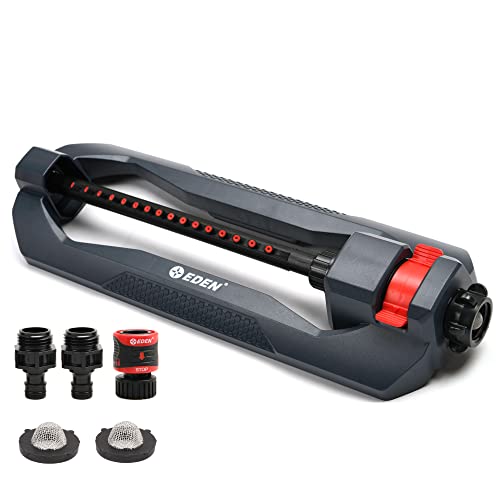
Eden 96213EDAMZ Weighted Essential Oscillating Sprinkler | Covers Up to 3,600 sq. ft., 16 Precision Nozzles, Adjustable Range, Turbo Drive Motor, Quick Connect Bundle, Stainless Steel Filters, Black
$20.83
View on Amazon →

Melnor 65051-AMZ Pulsating Sprinkler with QuickConnect Product Adapter, Amazon Bundle
$17.11
View on Amazon →

WEMADE Heavy Duty Metal Pulsating Sprinklers for Yard - 360 Degree Roating Automatic Water Sprinkler for Lawn with Metal Base, Impact Sprinklers for Large Area Covers Up to 85‘ Diameter
$19.99
View on Amazon →

Rocky Mountain Goods Soaker Hose - Heavy duty rubber - Saves 70% water - End cap included for additional hose connect - Great for gardens/flower beds - Reinforced fittings (50-Feet by 5/8-Inch)
$27.95
View on Amazon →
Prices as of Jul 14, 2026. Live price and availability on Amazon.