Heat-Tolerant Grass Types (Warm-Season Guide)
Published:

A grass that shrugs off a 100F week comes from a warm-season species, not just a well-watered cool-season lawn. Bermuda, zoysia, St. Augustine, centipede, bahia, and buffalo grass all keep photosynthesizing at soil temperatures where fescue and Kentucky bluegrass have stopped and gone dormant. Their optimum growth range is 80 to 95F air temperature; they treat 100F as a busy week, not a stress event. If you live in the southern US or lower transition zone and want a lawn that stays green through summer without heroic irrigation, choose a warm-season grass. If you live in the northern US and are stuck with cool-season grass, the picks below still tell you which cool-season species handles heat the least badly. This guide ranks the six major warm-season grasses by 100F performance, water demand, wear, and USDA zone, plus the cool-season grasses that survive heat better than their peers.
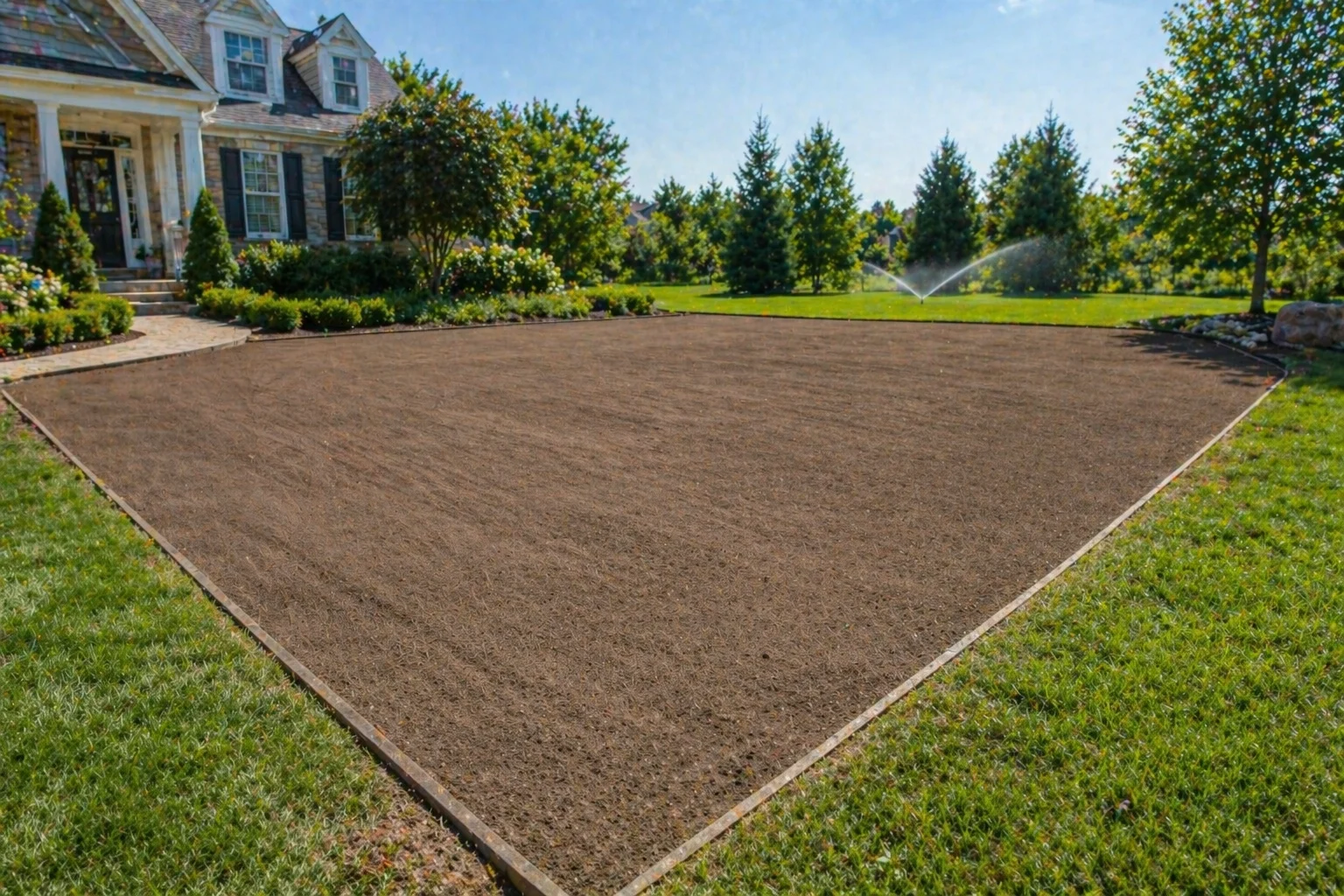
Warm-season vs cool-season, in one line
Warm-season grasses grow best at 80 to 95F. Cool-season grasses grow best at 60 to 75F and go dormant above 85F soil. The single strongest predictor of heat performance is species, not variety or fertility.
How grass tolerates heat (the biology)
All grasses photosynthesize, but warm-season and cool-season species use different photosynthetic pathways. Warm-season grasses use C4 photosynthesis, which concentrates CO2 near the enzyme that fixes it. This is more efficient at high temperatures and under water stress, letting the plant keep making sugar at 95 to 100F with limited water loss. Cool-season grasses use C3 photosynthesis, which loses efficiency above 85F and stalls entirely above 95F.
The practical effect: a Bermuda lawn at 100F in July grows about as well as a Kentucky bluegrass lawn at 75F in May. Same photosynthetic output; different temperatures. Try to grow Kentucky bluegrass at 100F and it enters heat dormancy to stop losing sugar it cannot replace.
Deep roots reinforce the biology. Bermuda and zoysia roots routinely reach 3 to 4 feet down in unimpeded soil, versus 8 to 18 inches for tall fescue and 4 to 8 inches for Kentucky bluegrass. Deep roots access deeper, cooler, moister soil, so the plant survives dry weeks between rain or irrigation.
The six major warm-season grasses ranked for heat
Bermuda is the most heat-tolerant common lawn grass in the US. Common Bermuda spreads by rhizomes and stolons, recovers from wear fast, tolerates poor soil, and stays green through 100F+ weeks with adequate water. Hybrid Bermudas (Tifway 419, Latitude 36, TifTuf) push the envelope on drought tolerance and finer texture. The tradeoffs: full sun only, aggressive spread into flower beds, cold dormancy November to March in most of its range.
Zoysia is Bermuda's slower, less aggressive competitor. It handles more shade (about 4 hours of sun minimum), spreads more slowly, needs less nitrogen, and holds green a few weeks longer into fall. The tradeoff is slower recovery from wear: a well-used dog run in zoysia takes weeks to fill in versus days for Bermuda. Meyer zoysia is the cold-hardiest option and goes as far north as Zone 6.
St. Augustine dominates the humid Gulf Coast (Florida, coastal Louisiana, coastal Texas). It tolerates more shade than Bermuda or zoysia, produces a lush thick sod, and handles salt spray. The tradeoffs are heavy water demand (1.5 to 2 inches per week), chinch bug pressure that spikes in heat, and no meaningful cold tolerance. Floratam is the standard variety; Palmetto handles slightly more shade and less water.
Bahia is the drought-and-heat champion for low-input yards in Florida and the Gulf Coast. It sends roots down 8 feet in sandy soil, needs almost no water in most years, and tolerates poor fertility. The tradeoffs are coarse texture, seedheads that stand up like antennae between mowings, and no cold hardiness above Zone 8b.
Centipede is the low-maintenance heat grass for acidic soils and low fertility. Zero nitrogen requirement (over-fertilizing kills it), and once established it needs almost no work. The tradeoffs are shallow roots that fail in prolonged drought, poor wear tolerance, and iron chlorosis on high-pH soils.
Buffalo grass is the native heat-and-drought answer for the Great Plains, semi-arid West, and Front Range Colorado. It coevolved with 100F summers and cattle grazing, needs 0.25 to 0.5 inch per week or less, and mows to 3 to 4 inches (or is often left unmowed). It goes gray-green in extreme heat as a natural drought avoidance mechanism and greens back up with any rain. Do not treat it like Bermuda; heavy watering and fertilizing weakens it.
| Grass | 100F performance | Water demand | USDA zones | Best for |
|---|---|---|---|---|
| Bermuda (common + hybrid) | Excellent (active growth) | 1 to 1.5 in/week | 7 to 10 | Full sun lawns, sports fields, hard-wear areas |
| Zoysia (Emerald, Zeon, Meyer) | Excellent | 0.75 to 1.25 in/week | 6 to 10 | Full sun to light shade, medium-wear residential |
| St. Augustine (Floratam, Palmetto) | Very good | 1.5 to 2 in/week | 8 to 10 | Coastal Gulf, humid shade, no cold-hardy option |
| Bahia (Pensacola, Argentine) | Excellent (drought+heat) | 0.5 to 0.75 in/week | 7 to 10 | Low-input Florida and Gulf coastal; poor cold tolerance |
| Centipede | Very good | 0.75 to 1 in/week | 7 to 9 | Low-fertility acidic soils, low-input yards |
| Buffalo grass | Excellent (native to it) | 0.25 to 0.5 in/week | 3 to 9 (cool-varieties) | Great Plains and semi-arid West; no irrigation needed most years |
Cool-season grasses ranked for heat tolerance
If you are in the northern US or upper transition zone, warm-season grass may not be an option (Bermuda dies in Zone 5 winters). The cool-season picks below are ranked by heat tolerance among the species that survive northern winters.
Tall fescue is the practical cool-season choice for any climate that gets summer heat. Deep taproot-like roots reach further than Kentucky bluegrass, and the plant tolerates 90F weeks with 1 to 1.25 inches of water per week without going into deep dormancy. Modern turf-type varieties (Rebel IV, Titan Ultra, Cochise IV) improve on 1990s Kentucky 31 fescue in texture, disease resistance, and drought tolerance.
Kentucky bluegrass in heat is a compromise. It only survives 100F weeks with reliable irrigation, and thin stands after summer stress are the norm in the transition zone. Heat-tolerant KBG cultivars (Midnight, NuBlue Plus, Everest) hold up better than 1970s standards. Mix with tall fescue to combine the color of KBG with the heat tolerance of fescue.
Fine fescues (creeping red, chewings, hard fescue, sheep fescue) survive heat by going dormant early and staying dormant. That is not really heat tolerance so much as heat avoidance, but the practical effect is a low-input lawn that goes brown in July and greens back up in September. Perfect for shady, low-fertility, low-irrigation lawns in the northern US.
Perennial ryegrass is the worst cool-season heat option. Pythium blight can kill a ryegrass lawn in a single warm humid night. Do not use ryegrass as the primary species in any climate that sees 90F humid summers. Its best use is overseeding a dormant Bermuda lawn for winter color in the South.
| Cool-season grass | Heat tolerance | Water need above 90F | Best US region |
|---|---|---|---|
| Tall fescue (Rebel IV, Titan Ultra, Cochise IV) | Best of the cool-season group | 1 to 1.25 in/week | Transition zone (Kansas through Virginia) |
| Turf-type tall fescue improved varieties | Very good | 1 in/week | Transition zone, Mid-Atlantic, Ohio Valley |
| Kentucky bluegrass (heat-tolerant cultivars) | Fair | 1 to 1.5 in/week | Northern US with irrigation |
| Fine fescue (drought avoidance) | Fair (avoids heat by dormancy) | 0 to 0.5 in/week | Shade, low input, cool northern zones |
| Perennial ryegrass | Poor (Pythium risk severe) | 1 in/week + strict morning irrigation | Overseeding warm-season lawns in winter |
Which grass by region
Deep South (Florida, Louisiana, southern Texas, coastal Alabama and Georgia): St. Augustine or Bermuda for lush green; centipede for low-input; bahia for very low water. Zoysia works where you want a finer texture than St. Augustine.
Upper South and transition zone (Kansas, Missouri, Kentucky, Tennessee, Virginia, North Carolina): Tall fescue for cool-season; Bermuda or zoysia for warm-season. Meyer zoysia is the go-to for a transition-zone warm-season lawn that survives winter.
Midwest and Great Lakes: Tall fescue in the south, Kentucky bluegrass or bluegrass-fescue mix in the north. Warm-season grasses do not survive typical winters.
Northeast: Tall fescue for full sun, Kentucky bluegrass for high-maintenance lawns with irrigation, fine fescue for shade. Perennial ryegrass only for temporary overseed.
Pacific Northwest west of the Cascades: Fine fescue, tall fescue, or perennial ryegrass all work; heat is rarely the limiting factor.
Southwest and Great Plains: Buffalo grass for native low-input; Bermuda for irrigated lawns; blue grama in the Front Range; bahia does not survive the freeze.
See our <a href='/grass'>grass types hub</a> and <a href='/lawn-care'>US lawn-care hub</a> for individual grass pages with zone maps and cultivar guidance.
Overseeding, transitioning, and mixing
Transitioning a cool-season lawn to a warm-season lawn takes 1 to 2 years of steady renovation. Kill the existing fescue with glyphosate in July when soil is 80F+, wait 10 days, sod or plug with Bermuda or zoysia. Warm-season grass fills in from stolons and rhizomes over the first season. Do not try this north of Zone 6 where the new grass will not survive the following winter.
Overseeding thin cool-season lawns is a September to early October job in most of the US. Slit-seed 4 to 6 lb per 1,000 sq ft of turf-type tall fescue into the thinned lawn, keep the seedbed moist for 10 to 14 days, and mow at the top of the height range once seedlings reach 3 inches. Do not overseed in July or August; seed cooks above 80F soil.
Mixing tall fescue with heat-tolerant Kentucky bluegrass gives the color of KBG with the drought resistance of fescue. Use a 80/20 fescue-KBG blend in the transition zone. Do not mix warm-season and cool-season species; they compete rather than complement and one always wins.
For seeding cost by region and grass type, see <a href='/grass-seeding-cost'>grass seeding cost</a>. For step-by-step overseed timing, see <a href='/when-to-overseed'>when to overseed</a>.
Frequently Asked Questions
What is the most heat-tolerant grass for a home lawn?
Bermuda for irrigated southern lawns, buffalo grass for unirrigated Great Plains and semi-arid West, bahia for low-input Florida and Gulf Coast. All three are C4 warm-season species that keep growing at 95 to 100F. Zoysia is a close second and handles more shade than Bermuda.
What is the most heat-tolerant cool-season grass?
Tall fescue. Deep roots and turf-type varieties (Rebel IV, Titan Ultra, Cochise IV) handle 90F weeks with 1 to 1.25 inches of water and recover well from heat dormancy. Kentucky bluegrass is a distant second; perennial ryegrass and fine fescue are poor choices for hot climates.
Which is more heat-tolerant, Bermuda or zoysia?
Bermuda handles slightly more extreme heat and recovers from wear faster. Zoysia handles more shade (4 hours of sun vs 6+), spreads less aggressively, and needs less nitrogen. Both survive 100F weeks with adequate water. Pick Bermuda for full-sun hard-wear lawns; pick zoysia for finer texture with light shade tolerance.
Can I plant heat-tolerant grass in the North?
Warm-season grasses generally do not survive winters north of USDA Zone 6. Meyer zoysia is the cold-hardiest option (Zone 6). Bermuda dies out in Zone 5 winters. In Zones 3 to 5, your best heat-tolerant option is turf-type tall fescue, which is a cool-season grass with the best heat performance in its group.
Does buffalo grass really need no water?
Buffalo grass native to the Great Plains and semi-arid West evolved for exactly that climate and typically survives on natural rainfall alone. Established stands go semi-dormant gray-green in extreme heat and green up with rain. Overwatering weakens buffalo grass and encourages weed pressure. It is not a good match for humid climates.
Will heat-tolerant grass save me on water?
Yes, in most cases. A Bermuda lawn typically uses 30 to 40 percent less irrigation water than a Kentucky bluegrass lawn in the same climate. Buffalo grass can use 80 percent less. Warm-season grasses go dormant in winter (November to March) with no water needed at all, further reducing annual demand.
About the Author
Landscaping Expert & Writer · Raleigh, North Carolina · North Carolina State University
Jennifer Hall is a professional landscaper and lawn care writer based in Raleigh, North Carolina. She studied landscape horticulture at North Carolina State University, home to one of the country's leading turfgrass programs, and went on to build a specialized landscaping service serving the greater Raleigh-Durham region. Jennifer's expertise spans the Southeast and Mid-Atlantic transition zone, where she advises homeowners on warm-season grass selection, seasonal lawn care calendars, landscape design, and water-efficient gardening. Her writing brings together professional horticultural training and real-world experience in one of America's most challenging grass-growing climates.
Related grass and lawn-care guides
Sources: University turfgrass breeding programs (Texas A&M, University of Georgia, University of Florida, Penn State, University of Nebraska Lincoln); NTEP (National Turfgrass Evaluation Program) heat and drought data; USDA plant hardiness zone maps. Last reviewed July 2026.
Heat-Tolerant Seed and Watering Gear
Seed for warm-season overseed and watering equipment to establish new plantings in heat.

Orbit 62067 1-Outlet Programmable Digital Hose Watering Timer, 2-Pack
$59.99
View on Amazon →

Lawn Sprinkler, 18 Brass Nozzles Garden Water Oscillating Sprinkler for Yard Covers up to 3,600 sq.ft, Heavy Weight Base, Built-in Spray Jet Cleaning Needle
$18.97
View on Amazon →
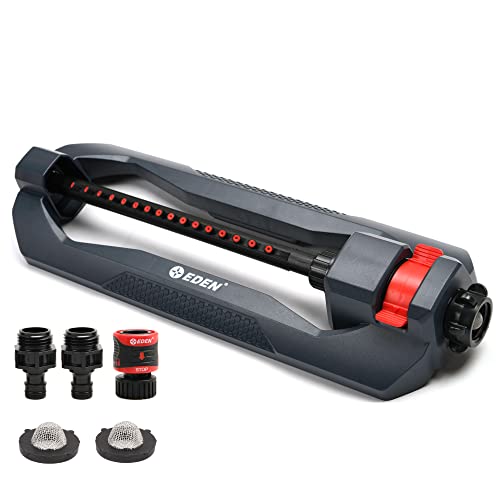
Eden 96213EDAMZ Weighted Essential Oscillating Sprinkler | Covers Up to 3,600 sq. ft., 16 Precision Nozzles, Adjustable Range, Turbo Drive Motor, Quick Connect Bundle, Stainless Steel Filters, Black
$20.83
View on Amazon →

Melnor 65051-AMZ Pulsating Sprinkler with QuickConnect Product Adapter, Amazon Bundle
$17.11
View on Amazon →

WEMADE Heavy Duty Metal Pulsating Sprinklers for Yard - 360 Degree Roating Automatic Water Sprinkler for Lawn with Metal Base, Impact Sprinklers for Large Area Covers Up to 85‘ Diameter
$19.99
View on Amazon →

Rocky Mountain Goods Soaker Hose - Heavy duty rubber - Saves 70% water - End cap included for additional hose connect - Great for gardens/flower beds - Reinforced fittings (50-Feet by 5/8-Inch)
$27.95
View on Amazon →
Prices as of Jul 14, 2026. Live price and availability on Amazon.