Sprinkler System Installation Cost 2026
Published:

Installing a residential sprinkler system costs $1,800 to $5,000 for most single-family homes in 2026, with typical suburban installations running $2,800 to $3,800 for a half-acre lot with 6 to 8 zones. Costs scale primarily by zone count ($350 to $600 per zone fully installed), with secondary factors including controller type, backflow preventer requirements, head density, and local labor rates. A properly installed system pays back through water savings in 3 to 5 years versus manual hose watering and adds measurable resale value. This guide breaks down 2026 pricing by home size, component, system type, region, and permit requirements so you can estimate your own project accurately and evaluate contractor quotes.
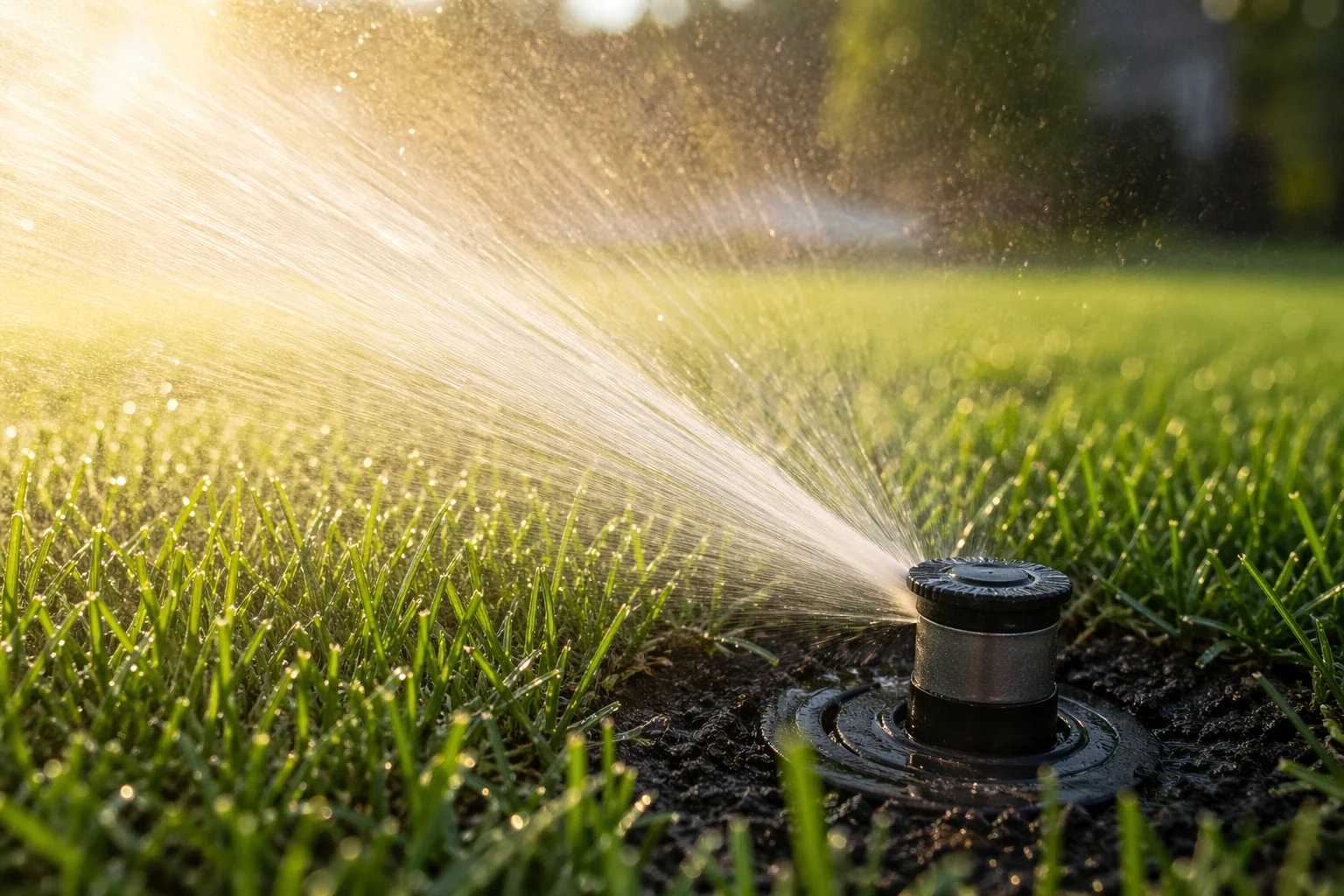
Average Sprinkler System Cost by Home Size
Home size drives the zone count, and zone count drives the total cost. Most residential sprinkler installations price at $350 to $600 per zone fully installed, which includes heads, pipe, valves, wire, and labor for that zone's coverage area.
Zone count is driven by water pressure, head type, and coverage area. A typical residential water service delivers 8 to 14 gallons per minute (GPM) at 50 to 60 psi — enough to run a single zone of 6 to 10 spray heads or 4 to 6 rotor heads. Zones exist because you cannot run every head in the yard simultaneously without starving individual heads of pressure and producing poor coverage. Larger lots need more zones, and zones with higher-flow heads (rotors, impact sprinklers) cost slightly more per zone than spray-head zones because of the additional pipe sizing and valve capacity.
The per-zone cost rises with lot size because outer zones require longer lateral pipe runs, more trenching, and sometimes pressure-boost pumps for upland elevation. Estate-sized properties often require a completely separate high-flow water service dedicated to irrigation, which adds $3,000 to $7,000 to project cost but is necessary for properties needing 30 or more zones.
| Lot Size | Typical Zones | 2026 Cost Range | Per-Zone Avg |
|---|---|---|---|
| 1/4 acre (10,890 sq ft) | 4–6 | $1,800–$3,200 | $450 |
| 1/3 acre (14,520 sq ft) | 5–7 | $2,200–$4,000 | $475 |
| 1/2 acre (21,780 sq ft) | 7–10 | $2,800–$5,000 | $500 |
| 3/4 acre (32,670 sq ft) | 9–12 | $3,800–$6,500 | $525 |
| 1 acre (43,560 sq ft) | 11–16 | $4,500–$8,500 | $550 |
| 2 acres | 18–26 | $8,000–$14,000 | $575 |
| 3+ acres (estate) | 30+ | $14,000–$25,000+ | $600+ |
Cost Breakdown by Component
The controller is the single most visible component and the one homeowners tend to over-invest in during the initial install. A basic Rain Bird ESP-Me or Hunter X2 controller ($75 to $150) handles standard residential scheduling reliably for 10+ years. WiFi smart controllers ($200 to $400 installed) add weather-based scheduling, phone app control, and rebate eligibility in most drought-sensitive states, and are worth the upgrade on any install over 6 zones.
The backflow preventer is not optional. Almost every US municipality requires a reduced-pressure zone (RPZ) or pressure-vacuum breaker (PVB) device on residential irrigation to prevent contaminated irrigation water from siphoning back into the municipal potable supply. The device itself runs $75 to $300, but licensed installation and required annual testing ($50 to $100 per year) adds to the long-term cost. Skipping the backflow preventer is both illegal and dangerous — do not accept a quote that excludes it.
Pipe and trenching are the hidden cost drivers. Most residential systems use Class 200 PVC for main lines (under constant pressure) and Class 160 PVC for lateral lines to heads. A typical 6-zone system uses 600 to 1,200 linear feet of pipe with trenching 8 to 12 inches deep. On rocky soils, the trenching cost can double — a $3,000 quote on friable loam becomes $5,500 on Texas caliche or New England glacial till.
| Component | Typical Cost Range | Notes |
|---|---|---|
| Controller (basic) | $50–$300 | 8–12 zone mechanical or digital |
| Controller (smart WiFi) | $150–$600 | Rachio, Hunter Hydrawise, Rain Bird ST8 |
| Backflow preventer | $75–$300 (+$200 install) | Required by code in most municipalities |
| Spray heads (pop-up) | $3–$8 each | Hunter Pro-Spray, Rain Bird 1800 |
| Rotor heads | $12–$25 each | Hunter PGP, Rain Bird 5000 |
| Valves (zone) | $25–$45 each | Hunter PGV, Rain Bird DV |
| Pipe (PVC) | $0.30–$0.60/LF | Main line + lateral lines |
| Wire (multi-strand) | $0.40–$0.80/LF | Controller to valve communication |
| Labor | $50–$100/hr | Typically 1–3 days for residential |
| Permit + inspection | $100–$350 | Varies by municipality |
Cost by System Type
Sprinkler systems divide into four main categories. Most residential installs combine multiple approaches — overhead spray for lawn areas, drip for beds and foundation plantings.
In-ground drip is the most water-efficient option and the lowest-cost add-on for homeowners who already have overhead irrigation for the lawn. Drip delivers water directly to root zones with almost no evaporative loss and is exempt from day-of-week watering restrictions in most drought-response ordinances. A 300-foot drip loop around foundation plantings and vegetable beds runs $400 to $800 DIY or $800 to $1,200 professionally installed.
Overhead spray systems are the residential default. Spray heads cover 6 to 15-foot radius patterns and work well on flat, open lawns with reasonable head-to-head spacing. Pop-up spray heads disappear below the turf canopy when not running and pop up 3 to 12 inches when activated. Spray systems are cheaper per square foot than rotor systems but use water less efficiently on larger lots because of shorter throw distances and more edge-of-pattern overlap.
Rotor systems use slowly-rotating heads that throw water 15 to 50 feet, making them the efficient choice for lawns over 5,000 square feet. Hunter PGP rotors and Rain Bird 5000 series rotors are the residential standard. Rotor runtime is longer (30 to 45 minutes per zone vs 15 to 20 for spray) because precipitation rates are lower, but total water applied per zone is comparable. Most large residential installs combine spray heads in tight, irregular areas with rotors in larger open areas.
| System Type | 2026 Cost Range | Best For |
|---|---|---|
| In-ground drip (beds only) | $400–$1,200 | Garden beds, foundation plantings |
| Overhead spray (standard) | $1,800–$5,000 | Most residential lawns |
| Rotor/rotary system | $2,200–$5,500 | Larger lawns, longer throw |
| Hybrid spray+drip+rotor | $2,800–$6,500 | Full-property coverage |
| Smart zone system (add-on) | +$200–$500 | Rachio/Rain Bird with sensors |
Cost by US Region
Northeast and Midwest installs include automatic winterization blow-out requirements — systems must be fully drained each fall to prevent freeze damage to heads, valves, and underground pipe. A typical blow-out service runs $65 to $150 per year and is not optional in any climate with sustained sub-freezing temperatures. Sun Belt installations skip winterization entirely but may include additional pressure-reducing valves to handle the higher municipal water pressures common in southern cities.
California installs carry the highest permit burden. Most California municipalities require a licensed C-27 landscaping contractor or C-36 plumbing contractor for the install, plus annual backflow preventer certification. Los Angeles County in particular has detailed MWELO (Model Water Efficient Landscape Ordinance) compliance requirements for systems installed after 2015, which add engineering documentation fees of $150 to $350 to the project cost.
| Region | Typical Install Cost | Regional Factors |
|---|---|---|
| Northeast (NY, NJ, MA, CT) | $3,200–$5,500 | Higher labor + winter blow-out required |
| Mid-Atlantic (PA, MD, VA) | $2,800–$4,800 | Freeze prep adds $75–$150/yr |
| Southeast (GA, FL, NC, SC) | $2,200–$4,000 | No freeze concerns, year-round operation |
| Midwest (OH, IL, MI, WI) | $2,800–$5,200 | Similar to Northeast with winter prep |
| Texas + Oklahoma | $2,400–$4,500 | Rocky/caliche soils add trenching cost |
| Mountain West (CO, UT, AZ) | $2,500–$4,800 | AZ requires licensed irrigation contractor |
| Pacific NW (WA, OR) | $2,800–$5,000 | Permit costs higher; wet-winter systems |
| California | $3,000–$6,000 | Permits + backflow testing adds $200–$500 |
Permits and Local Regulations
Most US municipalities require a plumbing permit for in-ground irrigation installation. Permit costs run $50 to $200 in most jurisdictions, with California and Arizona commonly requiring $200 to $400 for design review plus installation permits. The permit process typically requires (1) a site plan showing head locations and pipe routing, (2) specifications for the backflow preventer, and (3) inspection by a licensed plumbing inspector after installation but before backfill.
California and Arizona additionally require licensed irrigation contractors for systems above threshold pressures (typically 60 psi) or for systems serving commercial/multi-family properties. The licensing requirement adds roughly 10% to 15% to project cost versus unlicensed installation but provides code compliance documentation needed for property insurance and resale. Verify your contractor's license on the state licensing board website before signing.
The backflow preventer is legally mandatory in virtually every US municipality with public water service. After installation, most jurisdictions require annual testing by a certified tester ($50 to $100 per year) and results filing with the utility. Failure to submit annual test results can result in water service shutoff in strict enforcement jurisdictions. Budget for this ongoing compliance cost when evaluating project economics.
DIY vs Professional Installation
DIY sprinkler installation is feasible for handy homeowners on properties with simple layouts and friable soil. DIY kit systems from Rain Bird, Orbit, and Hunter include 4 to 8 zones of pre-assembled components for $400 to $800 covering roughly 1/4 acre. Adding a trencher rental ($125/day), pipe materials ($150 to $300), and controller ($100 to $200) brings typical DIY total to $800 to $1,400 — a 40% to 60% savings versus professional installation.
The risks of DIY installation are well-documented. The most common problems are (1) improper head spacing creating dry spots and wet spots, (2) backflow preventer omission or incorrect installation creating code violations, (3) pipe sizing errors causing pressure drops and poor head performance, and (4) inadequate zone separation creating simultaneous-run conflicts. Each of these problems is expensive to fix after the fact — retrofit trenching costs run $200 to $500 per zone.
The ROI case for professional installation is strong on properties over 1/3 acre. Professional installers spec out zone pressure calculations before installation, use pipe sizing tables to match flow to head density, and provide warranties covering parts and labor for 1 to 2 years. On a $3,500 professional install versus a $1,400 DIY install, the $2,100 difference is recovered through water savings and avoided retrofit costs in 3 to 5 years on most suburban properties.
Maintenance and Annual Operating Costs
The largest recurring cost in sprinkler system ownership is water itself. A typical 1/2-acre lawn irrigated at the recommended 1 inch per week uses 13,500 gallons per week during peak summer, or roughly 200,000 gallons over a 15-week peak season. At 2026 average US water rates of $3.50 to $5.50 per 1,000 gallons, that's $700 to $1,100 annually just for irrigation water. Smart controllers with weather-based scheduling typically reduce this by 15% to 30%, making the $200 to $400 smart controller premium pay back in 1 to 2 summers.
Head replacement is the second most common ongoing cost. Spray and rotor heads are mechanical devices operating in abrasive soil environments — plan on replacing 2 to 4 heads per year as normal wear. Keep spares of your specific model on hand for quick replacement. Lawn-edge damage from mowers is the #1 cause of head failure; raising heads to 4 inches during installation reduces mower impact significantly.
| Service | Annual Cost | Notes |
|---|---|---|
| Winterization (blow-out) | $65–$150 | Mandatory in freeze zones |
| Spring startup | $50–$125 | Leak check, head adjustment |
| Annual inspection | $50–$100 | Professional zone walk-through |
| Backflow preventer testing | $50–$100 | Required by code in most cities |
| Head replacement | $5–$15/head | Typical 2–4 heads/year |
| Controller battery | $10–$20 | Annual replacement |
| Total annual maintenance | $150–$350 | Average residential system |
How to Get Accurate Quotes
Get at least three written quotes before signing. Each quote should include a zone-by-zone site plan showing head type, head count, and coverage area for each zone. Quotes that do not include a site plan are not quotes — they are rough estimates subject to significant change during installation. Request the head brand and model number (Hunter vs Rain Bird vs Orbit) and the controller brand/model. Generic 'premium heads' language in quotes is a red flag.
Verify the contractor's license on your state's licensing board website before signing. Ask for three references from installations completed in the past 24 months and call at least two. Ask specifically about post-installation service — how quickly do they respond to warranty issues, and what does the warranty cover? A typical warranty is 1 to 2 years parts and labor; anything less is sub-standard.
Red flags in quotes to watch for: (1) no mention of backflow preventer or permit, (2) generic 'premium parts' language without brand names, (3) hourly labor rates significantly below regional average ($30/hr and under often indicates unlicensed labor), (4) demands for more than 50% deposit before installation begins, (5) completion timelines under 24 hours for projects over 6 zones (inadequate for proper trenching and testing), and (6) no written warranty document.
Frequently Asked Questions
How many zones does a typical home need?
Most single-family homes need 4 to 12 zones. A 1/4-acre lot typically runs 4 to 6 zones; a 1/2-acre lot runs 7 to 10 zones; a full acre runs 11 to 16 zones. The driver is water pressure — most residential water service supports 6 to 10 spray heads or 4 to 6 rotors simultaneously, so total head count divides into zones accordingly. Adding beds, side yards, and foundation plantings typically adds 1 to 2 drip zones beyond the turf irrigation zone count.
How much does it cost to add a zone to an existing system?
Adding a single zone to an existing system typically costs $400 to $700 installed, including new valve, pipe, wire, heads, and programming. The price is roughly 20% to 30% higher per zone than an original-install zone because of the added labor to tie into existing infrastructure and restore disturbed landscape. If the existing controller is at its zone limit, add another $150 to $300 for a controller upgrade or zone expander module.
Do sprinkler systems increase home value?
Yes — modestly. Real estate data shows in-ground irrigation adds roughly 70% to 90% of install cost to resale value on single-family homes in drought-sensitive markets (CA, AZ, NV, TX, FL). The ROI is higher in xeriscape-regulated markets where maintaining a green lawn without a system is impractical. In the Northeast and Midwest, the ROI is smaller (typically 40% to 60% of install cost) because manual hose watering remains feasible. Smart irrigation systems with WaterSense certification add the highest value because they qualify for utility rebates and reduce operating costs.
How long does a sprinkler system installation take?
A typical residential installation takes 1 to 3 days start to finish. Day 1 is site layout, trenching, and pipe installation (6 to 10 hours on a 1/2-acre lot). Day 2 is head installation, valve assembly, and controller wiring (4 to 8 hours). Day 3 is testing, programming, and cleanup (2 to 4 hours). Larger installations on 1-acre-plus properties can take 3 to 5 days. Weather delays for rain or freeze can extend timelines. Request the projected timeline in writing in your contract.
What is the most expensive part of a sprinkler system?
Labor is the largest single cost on most residential installs, accounting for 40% to 55% of total project cost. Pipe and trenching materials run 15% to 25%, heads and valves run 15% to 20%, and the controller plus backflow preventer run 10% to 15%. On smaller DIY-suitable projects, the cost distribution shifts toward materials (50% to 60%) because DIY labor is free. Upgrading the controller to a WiFi smart model adds $100 to $300 but typically pays back through water savings in 1 to 2 seasons.
About the Author
Lawn Care Expert & Writer · Denver, Colorado · Florida State University
Jason Allen is a lawn care expert and freelance writer based in Denver, Colorado. He studied turfgrass science and horticulture at Florida State University before founding his own lawn care operation serving the Denver metro area. With over a decade of hands-on experience managing cool-season lawns in Colorado's challenging high-altitude climate, Jason specializes in aeration, fertilization timing, drought management, and water-restriction compliance. His practical, science-backed approach to lawn care has helped thousands of homeowners achieve healthy turf despite Colorado's short growing seasons, clay soils, and frequent drought conditions.