When to Apply Pre-Emergent Herbicide (2026)
Published:

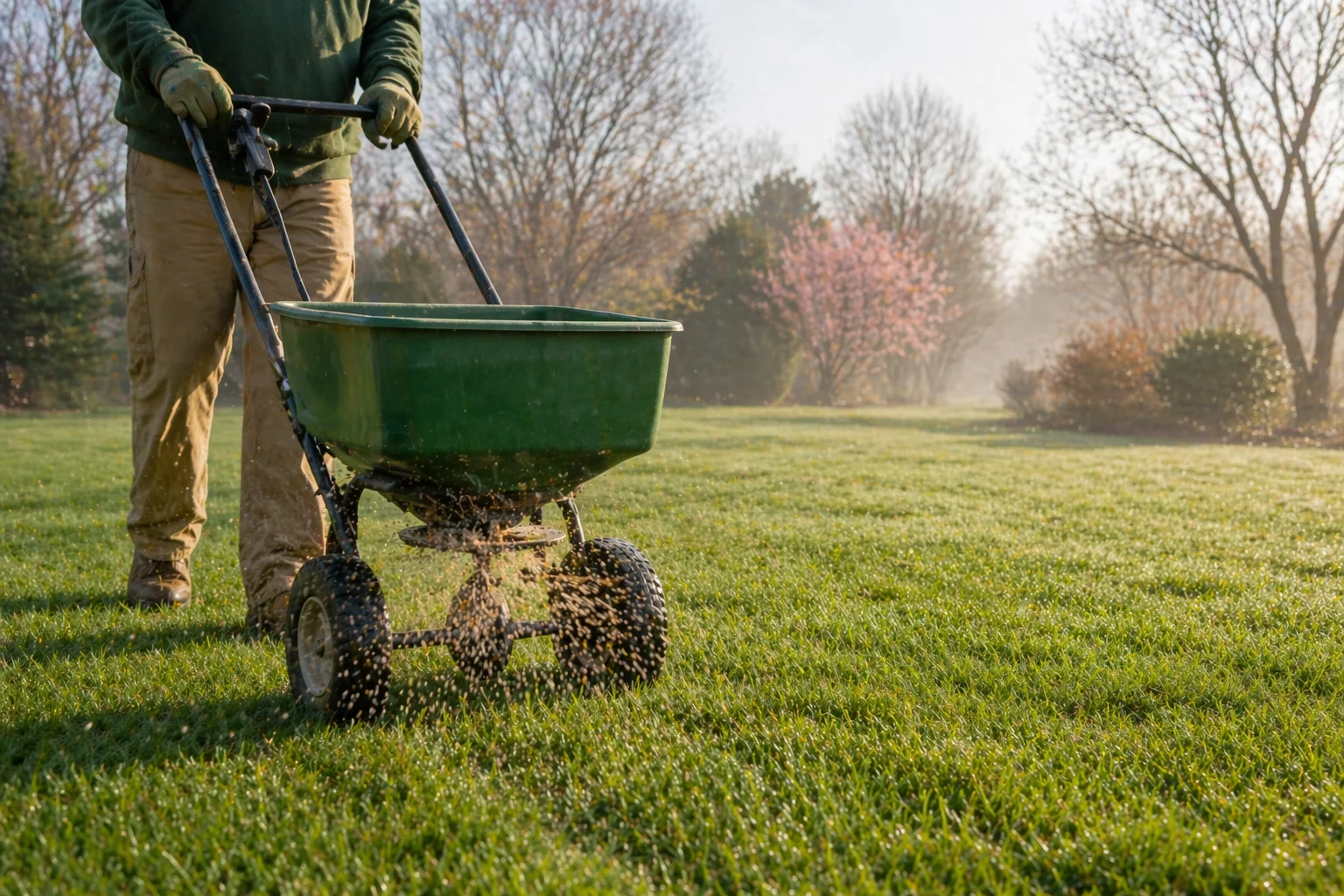
Pre-emergent herbicide is the single most time-sensitive product in lawn care. Apply it a week too late and crabgrass, foxtail, and goosegrass have already germinated — and pre-emergent cannot kill seedlings that have already emerged. Apply it too early and the residual fades before the soil warms enough for weed seed germination. This guide covers the exact spring and fall application windows by region, why soil temperature beats the calendar, and how pre-emergent interacts with overseeding.
Regional Timing Table
| Region | States | Spring Window | Fall Window | Key Trigger |
|---|---|---|---|---|
| Deep South | FL, LA, coastal TX | Jan 15 – Feb 15 | Aug 15 – Sept 15 | Soil reaches 55°F in January |
| Southeast | GA, AL, MS, SC, NC coast | Feb 1 – Mar 1 | Sept 1 – Sept 30 | Azalea bloom rule |
| South-Central | TX (central), AR, OK | Feb 15 – Mar 15 | Sept 1 – Oct 1 | Forsythia bloom |
| Upper South | TN, NC piedmont, VA | Mar 1 – Apr 1 | Sept 15 – Oct 15 | Soil 55°F in late Feb |
| Midwest | OH, IN, IL, MO, KS | Mar 15 – Apr 15 | Sept 15 – Oct 15 | Mar 15 rule of thumb |
| Mid-Atlantic | MD, DE, NJ, PA | Mar 15 – Apr 15 | Sept 15 – Oct 15 | Forsythia + soil test |
| Northeast | NY, CT, MA, RI, VT, NH, ME | Apr 1 – May 1 | Oct 1 – Oct 31 | Tax Day rule |
| Great Lakes | MI, WI, MN | Apr 15 – May 15 | Oct 1 – Oct 31 | May 1 is common |
| Mountain West | CO, UT, WY, NV, ID | Apr 1 – May 1 | Sept 15 – Oct 15 | Altitude-dependent |
| Pacific NW | WA, OR | Mar 15 – Apr 15 | Sept 15 – Oct 15 | Poa annua focus |
| Southwest | AZ, NM, southern CA | Jan 15 – Feb 15 | Sept 1 – Oct 1 | Early desert spring |
| California (north) | Sacramento, Bay Area | Feb 15 – Mar 15 | Sept 1 – Oct 1 | Soil warms gradually |
The Soil Temperature Rule — Why Calendar Dates Fail
Crabgrass — the #1 target of spring pre-emergent — germinates when soil temperature at a 4-inch depth hits 55°F for three consecutive days. Goosegrass and foxtail germinate at 60–65°F. Annual bluegrass (Poa annua), the #1 fall target, germinates when soil drops below 70°F. These thresholds are physiological, not calendar-based, and they shift year to year with weather patterns.
Air temperature is not a reliable proxy for soil temperature. Soil warms 2–4 weeks behind air because of thermal mass — a stretch of 65°F days in March won't push soil above 50°F if nights are still dropping to freezing. The single best $10 investment any lawn owner can make is a digital soil thermometer (Home Depot, Lowe's, or Amazon). Insert it 2–4 inches deep, check the same spot three consecutive days, and apply pre-emergent when the reading stabilises at 50–53°F — a few degrees ahead of the 55°F crabgrass threshold.
Regional soil temperature maps (available at greencastonline.com, weather.gov soil data, and land-grant university extension sites) give you real-time readings for your ZIP code without buying a thermometer. The MSU, Purdue, NC State, and University of Missouri extension services all publish free soil temp monitors updated daily.
Spring Pre-Emergent Timing in Detail
Target weeds: crabgrass (primary), foxtail, goosegrass, spotted spurge, and annual bluegrass where spring-germinating biotypes occur. Apply when soil is at 50–53°F — a few degrees of margin built in so the barrier is active when soil crosses 55°F.
Split application vs single application: a split programme (half-rate at 50°F, second half-rate 6–8 weeks later) gives the longest protection and catches both early- and late-germinating weeds. A single-application strategy works if you use a long-residual product. Prodiamine (Barricade) provides 10–12 weeks of residual control at label rate — enough for a full crabgrass season in most of the country.
The Forsythia bloom rule is a classic traditional timing indicator: apply pre-emergent when the forsythia in your neighbourhood is in full yellow bloom. It roughly corresponds to the 55°F soil temperature threshold in most of the Northeast and Midwest, and it is a reliable visual trigger when you don't have a soil thermometer. For the Deep South and Southwest, azalea bloom is the parallel indicator.
Fall Pre-Emergent Timing
The fall application is overlooked by most homeowners and is precisely why winter weeds dominate so many American lawns. Annual bluegrass (Poa annua), henbit, chickweed, and hairy bittercress all germinate in fall — soil temperature needs to drop below 70°F. That's typically September across most of the country, earlier in the Upper Midwest, later in the South.
Apply fall pre-emergent 1–2 weeks before expected seed germination, not after. Products are the same as spring (Prodiamine, Dithiopyr, Pendimethalin), and the residual carries you through winter.
Exception: skip fall pre-emergent entirely if you are overseeding this fall. Pre-emergent cannot distinguish between Poa annua seed and your Kentucky Bluegrass seed — it blocks both. If overseeding is the priority this year, plan for pre-emergent next fall.
Pre-Emergent and Overseeding — The Conflict
This is the single most common mistake in cool-season lawn care: applying pre-emergent in the same season as overseeding. The result is a wasted bag of herbicide, a wasted bag of seed, or both. Pre-emergent herbicides work by forming a chemical barrier in the top ½ inch of soil that prevents seed germination — any seed. Grass seed, weed seed, flower seed, it doesn't matter.
If you plan to overseed this fall, skip the fall pre-emergent. Resume pre-emergent next fall or next spring after the new grass is established (wait at least 8–12 weeks after overseeding). If you applied pre-emergent this spring and now want to overseed this fall, you're usually safe — most pre-emergents have faded to non-residual levels by September, though the exact timing depends on rainfall, product, and application rate.
The one meaningful exception: Tenacity (mesotrione) can be applied at seeding for specific grass types including Kentucky Bluegrass, Tall Fescue, Fine Fescue, and Perennial Ryegrass. It prevents weed germination without affecting labelled grass species. Read the label carefully — Tenacity is not safe on Bermuda, St. Augustine, Zoysia, or Centipede.
How Long Does Pre-Emergent Last?
| Active Ingredient | Brand Examples | Residual | Best Use |
|---|---|---|---|
| Prodiamine | Barricade, Prodiamine 65 WDG | 10–12 weeks | Single application spring or fall |
| Dithiopyr | Dimension, Dithiopyr 40 WSB | 8–10 weeks + early post-emergent | Good for late applicators |
| Pendimethalin | Pendulum, Halts | 8–10 weeks | Economy option |
| Mesotrione | Tenacity, Tenacity 4SC | 4–6 weeks + post-emergent | Safe at seeding on cool-season |
| Oryzalin | Surflan | 6–8 weeks | Ornamental use |
| Corn Gluten Meal (organic) | WOW! Supreme, Safe'n'Simple | 4–6 weeks | 70–80% control; organic programs |
Pre-Emergent by Grass Type Restrictions
Not every pre-emergent is safe on every grass type. Always check the product label, but the general pattern is straightforward.
St. Augustine is the most chemical-sensitive of the common US lawn grasses. Never exceed the label rate on St. Augustine, and avoid combination weed-and-feed products that layer high nitrogen with herbicide. Dithiopyr and Pendimethalin are both label-safe at normal rates; Prodiamine requires more caution.
Centipede grass should not receive high-nitrogen fertiliser combinations during dormancy (Oct–March). Stand-alone pre-emergent without fertiliser is fine; weed-and-feed products can trigger Centipede decline. Zoysia tolerates most pre-emergents well; Dithiopyr is often preferred because of its post-emergent activity on young crabgrass.
Never apply pre-emergent herbicide to newly seeded lawns of any grass type until the lawn has been mowed at least three times (roughly 8–12 weeks post-emergence). Pre-emergent applied before young grass has established a deep root system kills seedlings by preventing root extension.
Frequently Asked Questions
Is it too late to apply pre-emergent?
Check your local soil temperature. If your area is consistently above 55°F at 4-inch depth for more than 7–10 days, crabgrass has already germinated and pre-emergent will not catch it. Switch to a post-emergent product (quinclorac for crabgrass) targeted at young seedlings. For most of the North, mid-May is the cutoff; for the South, late February to early March.
Can I apply pre-emergent before or after rain?
Most pre-emergents need to be watered in within 7–14 days of application to activate the soil barrier. A light rainfall of ¼ inch or more is ideal. Heavy rain within 24 hours of application can wash granular product off the surface — aim for 24 hours of dry weather after application, then rainfall or irrigation. Liquid pre-emergents need to dry on plant surfaces for 2–4 hours before rain.
What's the best pre-emergent for crabgrass?
Prodiamine (Barricade) for the longest residual — 10–12 weeks from a single application. Dithiopyr (Dimension) for late applicators who need both pre-emergent plus early post-emergent activity on 1–3 leaf crabgrass. Corn gluten meal for organic programmes, with lower but still useful control rates.
Can I apply pre-emergent to a new lawn?
No. Pre-emergent prevents root extension in young grass seedlings the same way it prevents weed seed germination. Wait until the new lawn has been mowed at least three times (8–12 weeks after seeding or sod installation) before the first pre-emergent application.
What happens if I apply pre-emergent too early?
The residual fades before the weed seeds germinate, and you get 4–6 weeks of protection during a period when weeds aren't germinating anyway — followed by weeks of vulnerability when the soil is actually warm enough for crabgrass. A split application (half rate now, half rate in 6–8 weeks) hedges against early application by extending the total protection window.
About the Author
Lawn Care Expert & Writer · Denver, Colorado · Florida State University
Jason Allen is a lawn care expert and freelance writer based in Denver, Colorado. He studied turfgrass science and horticulture at Florida State University before founding his own lawn care operation serving the Denver metro area. With over a decade of hands-on experience managing cool-season lawns in Colorado's challenging high-altitude climate, Jason specializes in aeration, fertilization timing, drought management, and water-restriction compliance. His practical, science-backed approach to lawn care has helped thousands of homeowners achieve healthy turf despite Colorado's short growing seasons, clay soils, and frequent drought conditions.