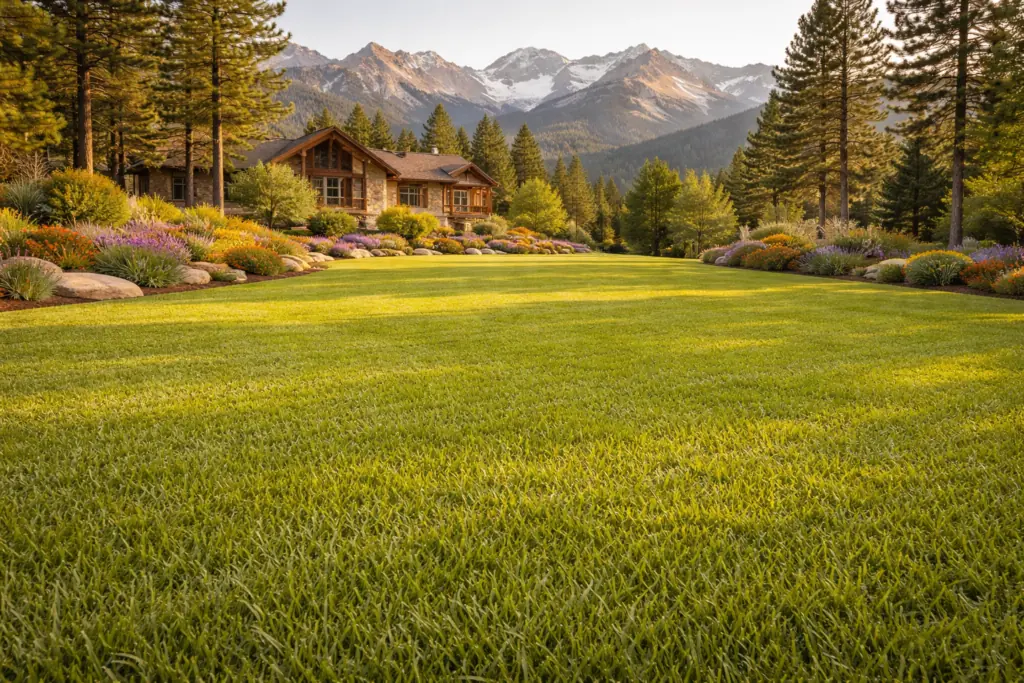
Mountain West Lawn Care Guide
Share:
The Mountain West features high elevation, low humidity, intense sunlight, and dramatic temperature swings between day and night. Cold, dry winters and warm, dry summers demand grasses that tolerate both extremes. Water is scarce in much of the region, making drought-tolerant varieties and efficient irrigation essential.
Key Facts
- Elevation ranges from 3,500 to 7,000+ feet, affecting growing seasons and grass selection
- Low humidity reduces disease pressure but increases water evaporation rates
- Intense UV at high altitude can stress some grass varieties more than at lower elevations
- Buffalo grass and blue grama are native options requiring minimal irrigation
- Many communities offer rebates for converting turf to water-wise landscaping
Recommended Grass Types
Kentucky BluegrassFine FescueBuffalo GrassBlue GramaTall Fescue
Common Challenges
- Low annual rainfall (10–20 inches) means most lawns depend on irrigation
- Wide day-night temperature swings of 30–40°F stress turf and complicate watering schedules
- Alkaline soils (pH 7.5–8.5) limit nutrient availability and may cause iron chlorosis
- Short growing season at higher elevations compresses lawn care into 4–5 months
Popular Cities in the Mountain West
New York
New York · Zone 6a
Chicago
Illinois · Zone 5b
Philadelphia
Pennsylvania · Zone 6a
Boston
Massachusetts · Zone 5b
Detroit
Michigan · Zone 5b
Seattle
Washington · Zone 4b
Minneapolis
Minnesota · Zone 5a
Brooklyn
New York · Zone 6a
Denver
Colorado · Zone 6a
Queens
New York · Zone 6a
Baltimore
Maryland · Zone 6a
Portland
Oregon · Zone 4b
Indianapolis
Indiana · Zone 6a
Pittsburgh
Pennsylvania · Zone 6a
Cincinnati
Ohio · Zone 6a
USDA Zones in This Region
Frequently Asked Questions
What is the best grass for high-altitude Mountain West lawns?
Kentucky bluegrass is the most popular choice for irrigated lawns in the Mountain West, performing well at elevations up to 7,000 feet. For water-conscious homeowners, buffalo grass is an outstanding native option that survives on rainfall alone once established. Fine fescue blends work well in partially shaded areas and need less water than pure bluegrass. At elevations above 7,000 feet, choose cold-hardy bluegrass cultivars and expect a growing season of just 4 months.
How do I deal with alkaline soil in the Mountain West?
Most Mountain West soils have a pH between 7.5 and 8.5, which can lock up iron and cause yellowing in Kentucky bluegrass. Apply chelated iron supplements (iron sulfate or chelated EDDHA iron) to provide quick green-up without lowering pH. For longer-term improvement, incorporate elemental sulfur into the top 2–3 inches of soil at 5–10 pounds per 1,000 square feet. Regular soil testing every 2 years will help you track pH changes and adjust your amendment strategy.
Can I have a lawn without irrigation in the Mountain West?
Yes, but your grass options are limited to native species like buffalo grass and blue grama that evolved in the region’s dry conditions. These grasses go dormant and turn brown during extended dry spells but recover quickly when rain returns. They require mowing only a few times per season and no fertilizer, making them extremely low maintenance. The aesthetic is different from a traditional bluegrass lawn—more of a natural prairie look—but water savings of 50–75% make it worthwhile for many homeowners.