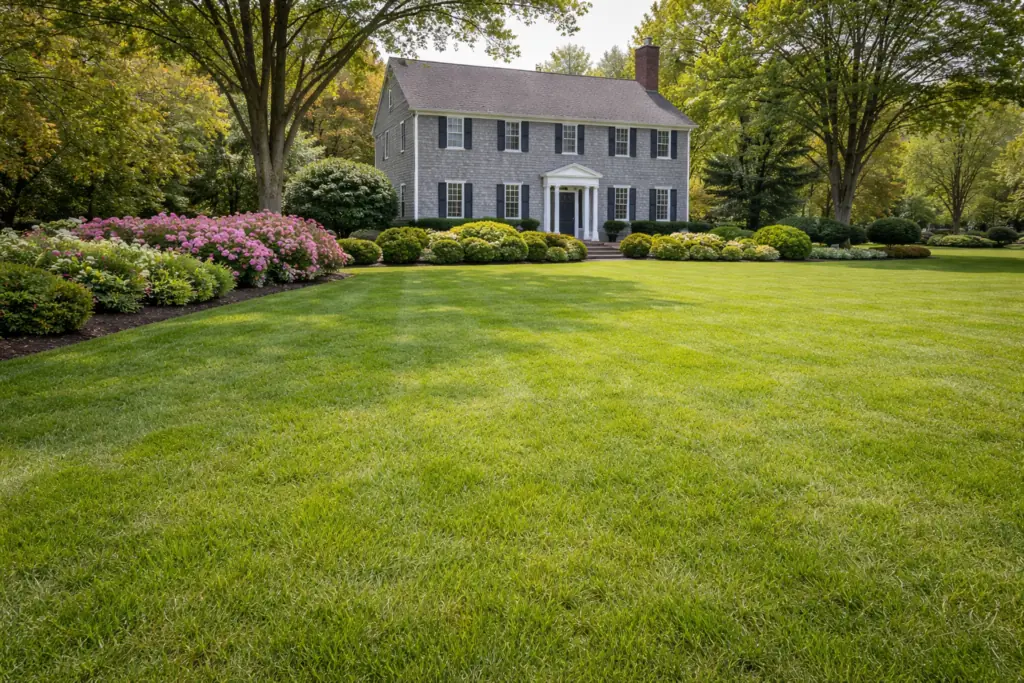
USDA Zone 5B Lawn Care Guide
Zone 5b enjoys moderate winters and warm, humid summers. The region receives ample rainfall through the growing season but can experience drought spells in July and August. Fall is long and mild, making it the prime season for lawn improvement.
Seasonal Lawn Care Highlights
🌱 Spring
Begin pre-emergent applications when forsythia begins to bloom, usually early April. Dethatch any heavy thatch buildup before growth kicks in.
☀️ Summer
Mow at 3.5–4 inches to shade the soil and reduce evaporation. Watch for fungal diseases like brown patch during humid stretches and avoid evening watering.
🍂 Fall
Overseed and aerate from Labor Day through mid-October for best results. Apply a slow-release fall fertilizer to build root reserves before winter.
❄️ Winter
Rake remaining leaves to prevent matting and snow mold. Plan next year’s grass seed mix based on how your lawn performed this year.
Best Grass Types for Zone 5B
Cities in Zone 5B
Chicago
Illinois · Zone 5b
Boston
Massachusetts · Zone 5b
Detroit
Michigan · Zone 5b
Cleveland
Ohio · Zone 5b
Providence
Rhode Island · Zone 5b
Hartford
Connecticut · Zone 5b
Bridgeport
Connecticut · Zone 5b
Buffalo
New York · Zone 5b
Omaha
Nebraska · Zone 5b
Ogden
Utah · Zone 5b
Grand Rapids
Michigan · Zone 5b
Albany
New York · Zone 5b
Des Moines
Iowa · Zone 5b
New Haven
Connecticut · Zone 5b
Akron
Ohio · Zone 5b
Worcester
Massachusetts · Zone 5b
Toledo
Ohio · Zone 5b
Springfield
Massachusetts · Zone 5b
Scranton
Pennsylvania · Zone 5b
Fort Wayne
Indiana · Zone 5b