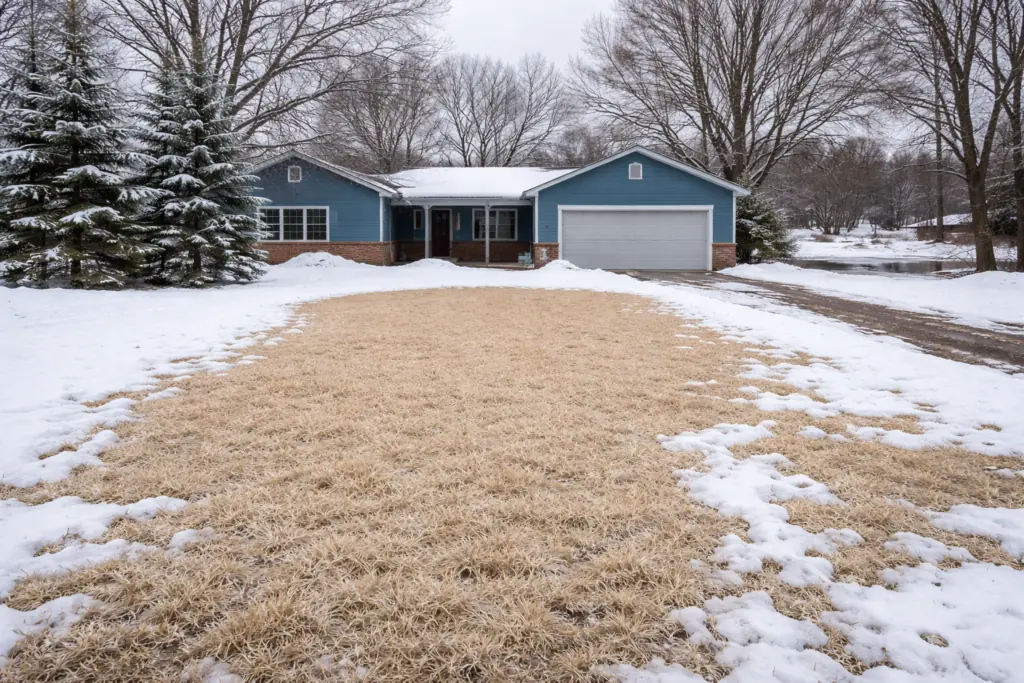
USDA Zone 4B Lawn Care Guide
Zone 4b features long, brutally cold winters with heavy snowfall and a very short growing season. Summers are warm but brief, with average highs in the 70s–80s°F. Late spring frosts can extend well into May, and first fall frosts often arrive by mid-September.
Seasonal Lawn Care Highlights
🌱 Spring
Wait until soil temps reach 50°F before applying pre-emergent, usually mid-May. Overseed bare patches as soon as snow fully melts and the ground thaws.
☀️ Summer
Water deeply once or twice per week and keep mowing height at 3–3.5 inches. This is your narrow window for fertilization and weed treatment.
🍂 Fall
Apply a winterizer fertilizer by early September before the first frost. Core aerate and overseed in late August for best establishment before dormancy.
❄️ Winter
Avoid walking on frozen turf to prevent crown damage. Use this time to sharpen mower blades and plan your spring schedule.
Best Grass Types for Zone 4B
Cities in Zone 4B
Seattle
Washington · Zone 4b
Portland
Oregon · Zone 4b
Spokane
Washington · Zone 4b
Anchorage
Alaska · Zone 4b
Kennewick
Washington · Zone 4b
Fargo
North Dakota · Zone 4b
Bremerton
Washington · Zone 4b
Tacoma
Washington · Zone 4b
Olympia
Washington · Zone 4b
Vancouver
Washington · Zone 4b
Marysville
Washington · Zone 4b
Bellevue
Washington · Zone 4b
Yakima
Washington · Zone 4b
Kent
Washington · Zone 4b
Bellingham
Washington · Zone 4b
Coeur d'Alene
Idaho · Zone 4b
Billings
Montana · Zone 4b
Duluth
Minnesota · Zone 4b
St. Cloud
Minnesota · Zone 4b
Gresham
Oregon · Zone 4b