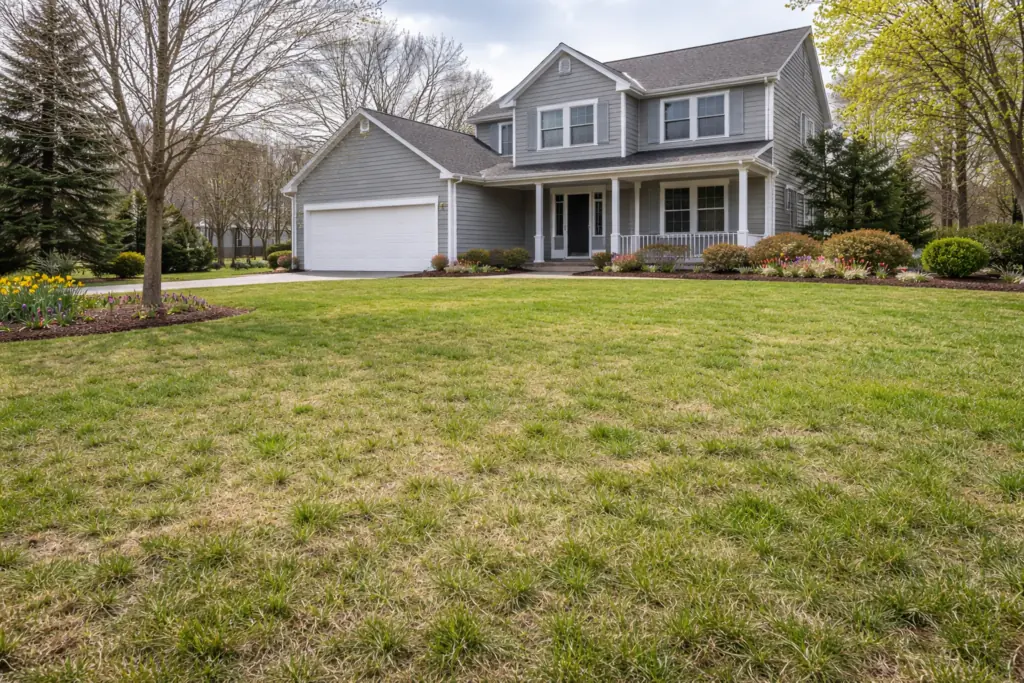
USDA Zone 5A Lawn Care Guide
Zone 5a has distinct four-season weather with cold winters and warm summers. Spring arrives gradually with frequent late frosts into April. Summer temperatures regularly reach the mid-80s to low 90s, and fall provides an excellent window for lawn renovation.
Seasonal Lawn Care Highlights
🌱 Spring
Apply pre-emergent when soil hits 55°F, typically late April. Wait until after the last frost date before overseeding or planting new turf.
☀️ Summer
Water 1–1.5 inches per week and raise your mowing height to 3.5 inches during heat waves. Spot-treat broadleaf weeds rather than blanket-spraying.
🍂 Fall
September is the ideal month for core aeration, overseeding, and fall fertilization. Take advantage of cooler nights and reliable rainfall for fast seed germination.
❄️ Winter
Stay off dormant turf as much as possible. Service your mower and order seed and soil amendments for spring.
Best Grass Types for Zone 5A
Cities in Zone 5A
Minneapolis
Minnesota · Zone 5a
Milwaukee
Wisconsin · Zone 5a
Rochester
New York · Zone 5a
Madison
Wisconsin · Zone 5a
Boise
Idaho · Zone 5a
Syracuse
New York · Zone 5a
St. Paul
Minnesota · Zone 5a
Flint
Michigan · Zone 5a
Eugene
Oregon · Zone 5a
Salem
Oregon · Zone 5a
Appleton
Wisconsin · Zone 5a
Green Bay
Wisconsin · Zone 5a
Portland
Maine · Zone 5a
Sioux Falls
South Dakota · Zone 5a
Nampa
Idaho · Zone 5a
Muskegon
Michigan · Zone 5a
Meridian
Idaho · Zone 5a
Rochester
Minnesota · Zone 5a
Burlington
Vermont · Zone 5a
Utica
New York · Zone 5a