How to Kill Dandelions in Your Lawn (2026 Guide)
Published:

Dandelions are broadleaf perennial weeds with tough taproots that can reach 6–10 inches deep. Selective herbicides containing 2,4-D, dicamba, or triclopyr kill them without damaging lawn grass. Physical removal works if you extract the entire taproot — break the root and the plant regenerates. Fall is the most effective treatment window because the plant is translocating carbohydrates to the root for winter storage and carries any applied herbicide with them. This guide covers chemical, physical, and preventive control with specific product recommendations and timing.
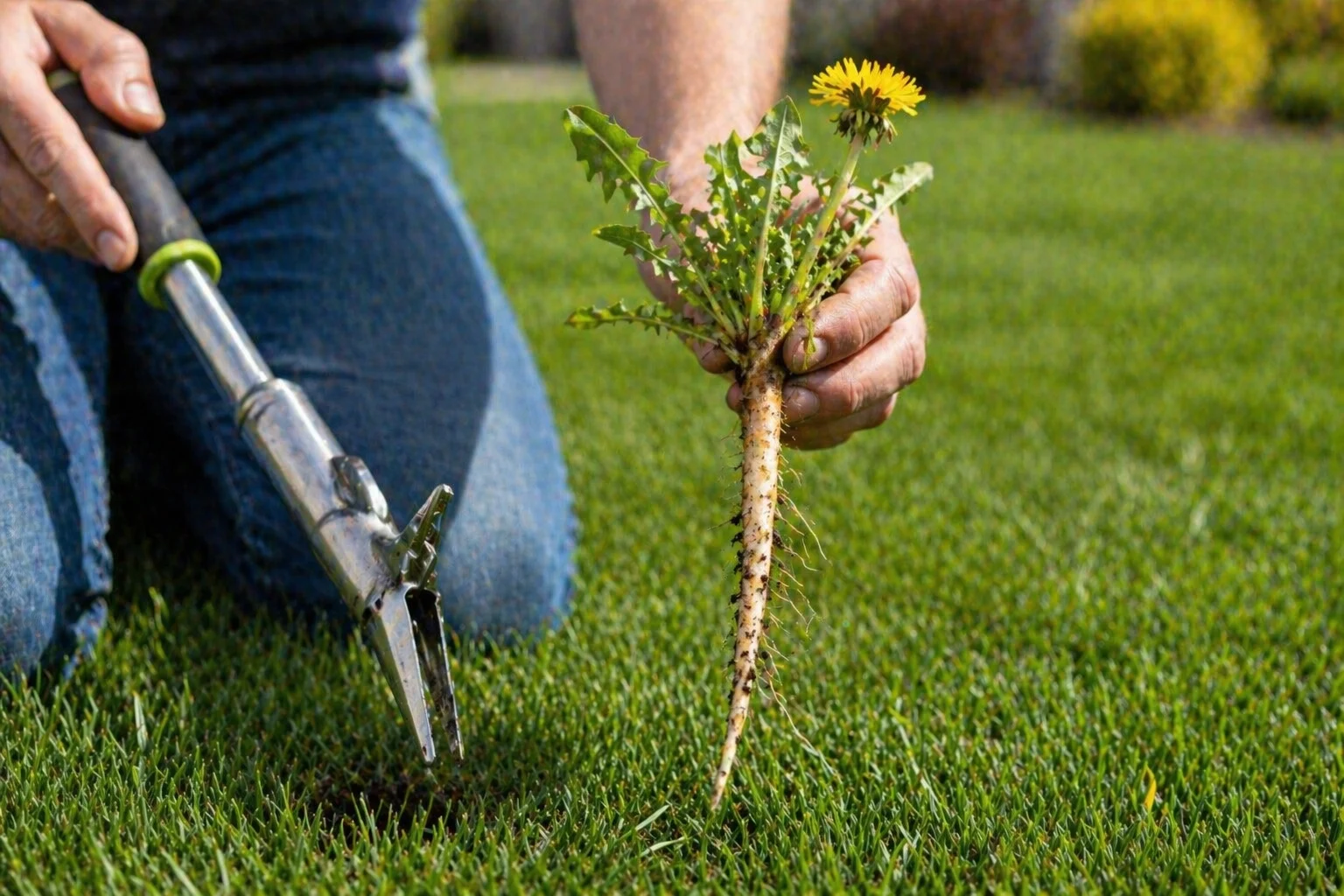
Identify the Dandelion
Dandelions (Taraxacum officinale) are unmistakable once flowering — bright yellow composite flower heads on hollow stems above a rosette of deeply toothed leaves. The leaves emerge in a flat basal rosette directly from the taproot, with no vertical stem until the flower develops.
Before flowering, dandelion leaves are the diagnostic feature: lance-shaped or deeply toothed, with a milky white sap when broken. The deep taproot is the plant's survival structure — it can regenerate the entire top from a fragment of remaining root tissue.
Flowering peaks April–May across most of the US, with a smaller fall bloom in September–October. Each flower head produces 100+ seeds that disperse by wind — a single uncontrolled dandelion can seed a full lawn within 2 years.
Fall vs Spring Treatment — Fall Wins
Dandelion carbohydrate flow reverses in fall. In spring, the plant sends carbohydrates upward from the taproot to fuel new leaf and flower growth. In fall, it sends carbohydrates downward to the taproot for winter storage. Herbicide applied to dandelion leaves in fall gets pulled directly into the taproot, killing the root and preventing regeneration.
Fall herbicide application (September–October, when soil temperatures drop but the plant is still growing) delivers 90%+ kill rates. Spring herbicide application (April–May) delivers 70–80% kill rates and often allows the taproot to regenerate.
If you treat only one time per year for dandelions, choose fall. Spring treatment has a role — it reduces visible flowering during prime lawn-use season — but fall treatment eliminates the plants for the long term.
Chemical Control: Selective Broadleaf Herbicides
Three active ingredients dominate dandelion control in home lawns. 2,4-D is the classic broadleaf herbicide — effective, inexpensive, safe on most grass types at label rate. Dicamba adds control of tougher weeds (ground ivy, wild violet) but can damage ornamental plants if spray drifts. Triclopyr is the most aggressive option, killing difficult perennial broadleaf weeds including older dandelions and creeping charlie.
Most homeowner products combine two or three active ingredients in a single formulation. Ortho Weed B Gon (2,4-D + MCPP + dicamba), Trimec Classic (same active ingredients), and Tenacity (mesotrione) are the mainstream choices. Spectracide Weed Stop 2x and Scotts Turf Builder Weed + Feed are the common big-box retailer options.
Application: apply on a calm day when air temperature is 60–85°F. Avoid application in rain or when rain is forecast within 6–8 hours. Use a tank sprayer rather than a hose-end sprayer for accurate dilution and targeted spray. Dandelion leaves are waxy — add a non-ionic surfactant to improve herbicide uptake.
Timing: most effective in early fall (September–early October). Second best: late April to early May, before flowering but after active growth begins. Do not spray in midsummer heat above 85°F — both the herbicide loses effectiveness and the treated lawn is stressed.
Physical Removal: Digging and Pulling
Physical removal works for low dandelion populations (fewer than 10 plants per 1,000 sq ft) but fails on heavily infested lawns because of the seed bank and missed root fragments. A dandelion root pulled cleanly produces reliable elimination; a root broken off produces 2–3 new plants from the remaining fragments.
Tool options: Grampa's Weeder ($30, vertical lever-action tool with 4 prongs that grasps the taproot) is the standout pick for most homeowners. Fiskars Deluxe Stand-Up Weeder ($40) works similarly. Specialist long-handled dandelion diggers from hardware stores ($15–30) work but require more manual effort.
Technique: water the area an hour before pulling to soften soil. Insert the tool straight down alongside the taproot, leverage it to lift the entire root, and drop the weed into a collection bucket. Missed root fragments regenerate — inspect the extracted weed to confirm the full taproot came out.
Physical removal is most effective in fall or early spring when the ground is moist. Summer soil is usually too dry and hard for clean root extraction.
Organic and Low-Toxicity Options
Corn gluten meal provides modest pre-emergent control of dandelion seed germination — similar mechanism to its crabgrass control. Apply 20 lb per 1,000 sq ft in early spring. Not effective against established plants.
Horticultural vinegar (20%+ acetic acid) burns dandelion leaves and provides visible rapid kill of top growth. However, it does not kill the taproot, and plants regrow within 3–4 weeks. Best use: aesthetic spot treatment for a visible plant before a garden party, not long-term control.
Iron-based herbicides (FeHEDTA, sold as Fiesta or Iron X) kill dandelion foliage selectively without harming lawn grass. Multiple applications required — less reliable than synthetic herbicides but a legitimate option for homeowners committed to organic programmes.
Boiling water works on isolated dandelions in driveway cracks or mulch beds — completely non-selective and kills anything it touches. Do not use in the lawn.
Long-Term Prevention
Dandelions invade thin, stressed, or short-mowed lawns. A dense, healthy lawn is the most reliable long-term dandelion prevention. Raise mowing height to the top of your grass type's range (3.5–4 inches for Kentucky Bluegrass and Tall Fescue), overseed thin areas annually in fall, and fertilise at the correct rate (not too much, not too little).
Apply pre-emergent herbicide in spring to prevent dandelion seed germination — products labelled for both crabgrass and broadleaf weed prevention (like Scotts Halts Crabgrass & Grassy Weed Preventer with an added broadleaf component) cover both targets.
Maintain soil pH in the 6.0–7.0 range. Dandelions tolerate more acidic soil than many lawn grasses and can outcompete grass at pH 5.5–6.0. Apply lime if soil tests below 6.0.
Remove dandelion flowers before they set seed. A single week between flowering and seed dispersal is your window to mow low and remove the developing seed heads before they can spread.
Common Mistakes
- Spraying on a hot summer day — herbicide volatilises and damages nearby ornamental plants, while the weed is too stressed to absorb the chemical
- Pulling dandelions in dry hard soil — roots break off, and the fragments regenerate
- Using a broadcast spreader of weed-and-feed when only a few dandelions are present — wastes product on clean areas of lawn
- Applying herbicide just before a rain event — chemical washes off before absorption
- Expecting one treatment to eliminate dandelions permanently — seed bank in the soil produces new plants for 2–3 years after the last mature plant is removed
- Spot-spraying with a non-selective herbicide (glyphosate) — kills surrounding lawn grass creating bare spots that more dandelions colonise
Frequently Asked Questions
Will vinegar kill dandelions permanently?
No. Horticultural vinegar (20% acetic acid) burns the leaves and produces rapid visible top-kill, but does not reach the taproot. Plants regrow from the root within 3–4 weeks. Effective for aesthetic quick-fixes only — not long-term control.
Why do dandelions come back every year?
Each flower produces 100+ wind-dispersed seeds, and seeds remain viable in soil for 3+ years. Even after eliminating all mature plants, new seedlings emerge from the seed bank. Consistent pre-emergent herbicide in spring plus fall post-emergent control reduces the seed bank over 2–3 seasons.
Can I eat dandelions from my lawn?
Only if you've never applied herbicide, pesticide, or chemical fertiliser to the area. Dandelion greens are edible (slightly bitter, best young) and flowers can be used for wine or fritters. But most suburban lawns have some chemical history — forage only from lawns you're certain about.
Does mowing dandelions help?
Partially. Frequent mowing prevents flower and seed production, reducing the seed bank over time. Mowing does not kill the plant — the rosette regenerates from the root — but it prevents new seeds from establishing. Combine with selective herbicide for full control.
Can I use Roundup on dandelions in my lawn?
No — Roundup (glyphosate) is non-selective and kills lawn grass along with the dandelion. For lawns, use selective broadleaf herbicide (2,4-D, dicamba, triclopyr) that targets broadleaf weeds while leaving grass unharmed. Glyphosate is only appropriate for driveway cracks, mulch beds, or pre-sodding renovation.
About the Author
Lawn Care Expert & Writer · Denver, Colorado · Florida State University
Jason Allen is a lawn care expert and freelance writer based in Denver, Colorado. He studied turfgrass science and horticulture at Florida State University before founding his own lawn care operation serving the Denver metro area. With over a decade of hands-on experience managing cool-season lawns in Colorado's challenging high-altitude climate, Jason specializes in aeration, fertilization timing, drought management, and water-restriction compliance. His practical, science-backed approach to lawn care has helped thousands of homeowners achieve healthy turf despite Colorado's short growing seasons, clay soils, and frequent drought conditions.