Dethatching Cost 2026 – Prices by Lawn Size & Region
Published: April 23, 2026 · Updated:

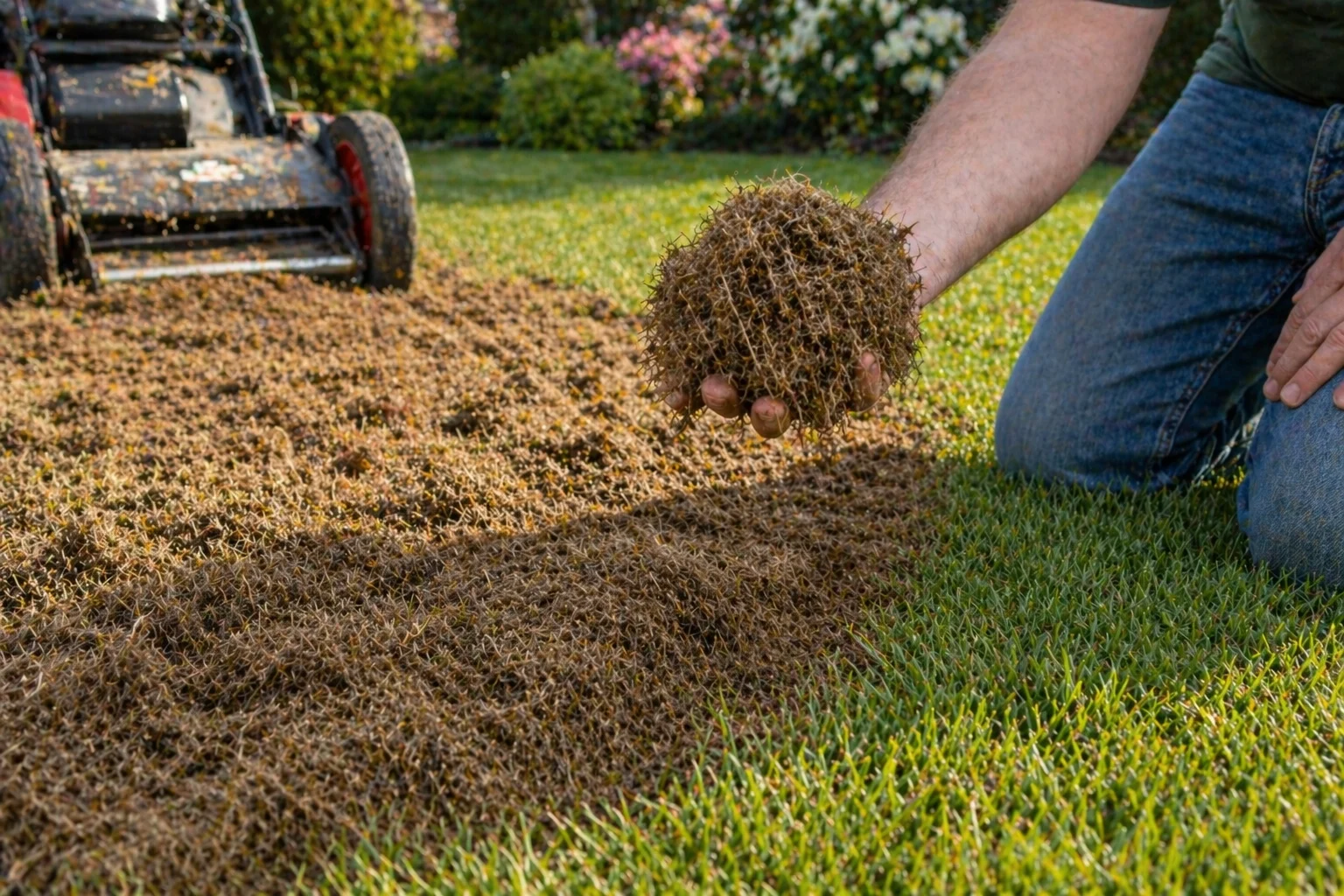
Professional dethatching costs $100–$400 for most residential lawns in 2026, with the national average at roughly $175 for a ¼-acre lot. DIY dethatcher rental runs $75–$120 per day from Home Depot or United Rentals — genuinely competitive with hiring out if you have a day to invest. Most suburban lawns need dethatching every 2–3 years, not annually. This guide breaks down pricing by lawn size, method, region, and DIY vs professional with specific product and rental recommendations.
Cost by Lawn Size
| Lawn Size | Professional | DIY Rental |
|---|---|---|
| Up to 2,500 sq ft | $75 – $130 | $75 – $120/day |
| 2,500 – 5,000 sq ft | $100 – $180 | $75 – $120/day |
| 5,000 – 10,000 sq ft | $150 – $280 | $75 – $120/day |
| 10,000 – 20,000 sq ft | $260 – $450 | $75 – $120/day |
| ½ acre | $350 – $600 | Add $50 – $100 for 2nd day |
| 1 acre | $500 – $900 | 2-day rental recommended |
Cost by Method
| Method | Cost | Best For |
|---|---|---|
| Manual dethatching rake | $30 – $60 (one-time) | Light thatch, <3,000 sq ft |
| Power dethatcher rental | $75 – $120/day | ½–1 inch thatch, ≤15,000 sq ft |
| Verticutter / slit-seeder rental | $100 – $150/day | Heavy thatch + overseeding same day |
| Professional power dethatch | $100 – $280 | Convenience, medium lawns |
| Professional verticutting | $180 – $400 | Heavy thatch renovation |
| Dethatching mower blade kit | $15 – $40 | Very light surface debris only |
Regional Price Variation
| Region | States | Avg ¼-Acre | Range |
|---|---|---|---|
| Northeast | NY, CT, MA, NJ, PA | $220 | $150 – $320 |
| Mid-Atlantic | MD, VA, DE | $195 | $140 – $280 |
| Southeast | NC, SC, GA | $165 | $120 – $240 |
| Midwest | OH, IN, IL, MI, WI | $175 | $130 – $260 |
| Great Plains | KS, NE, IA, MO | $150 | $110 – $220 |
| Mountain West | CO, UT, ID | $190 | $140 – $270 |
| Pacific Northwest | WA, OR | $200 | $150 – $290 |
| Southwest | AZ, NM, NV | $165 | $120 – $230 |
Do You Actually Need to Dethatch?
The single biggest mistake homeowners make with dethatching is doing it too often. Thatch under ½ inch is actually beneficial — it insulates the soil, holds moisture, and cushions foot traffic. Only when the thatch layer exceeds ½ inch does it start blocking water and nutrients from reaching roots.
Test your thatch with a long screwdriver or steel probe. Push it vertically into the soil, then note the depth from the green leaf surface down to firm soil. Multiple samples from different parts of the lawn give a representative reading. If the spongy brown layer exceeds ½ inch across more than a third of the lawn, dethatching is warranted. Otherwise skip it this year.
Grass type matters. Zoysia is the most thatch-prone common lawn grass — annual dethatching is normal on over-fertilised or heavy-use Zoysia lawns. Bermuda produces moderate thatch. Kentucky Bluegrass moderate-to-high. Tall Fescue and Fine Fescue produce minimal thatch and rarely need dethatching — a Fescue lawn can go 5+ years between dethatchings.
Don't confuse thatch with dead grass from drought or disease. Matted dead grass from a drought period rakes up with a leaf rake; actual thatch is a spongy organic layer that a rake won't remove. The soil-test with a screwdriver is the definitive diagnostic.
Dethatching vs Aeration: Cost Comparison
The two services cost roughly the same but address different problems. Core aeration pulls soil cores to relieve compaction; dethatching removes the organic layer between soil and grass. Compacted soil with minimal thatch → aerate only. Heavy thatch with loose soil → dethatch only. Both conditions present → do both, in sequence: dethatch first, then aerate.
Bundled cost: professional dethatch + aerate typically runs $175–$450 depending on lawn size and region — 10–15% less than booking the two services separately. The combination is the single most thorough lawn renovation available without tearing out and re-sodding.
Most suburban lawns need aeration annually but dethatching only every 2–3 years. If you can only afford one service per year, aeration delivers more value on most properties. Heavy Zoysia lawns are the main exception — their thatch buildup can justify annual dethatching.
DIY Dethatching: Is the Rental Worth It?
Yes, for the right person with the right lawn. Power dethatcher rental at $75–$120 per day is genuinely competitive with a $175 professional quote, if you have a Saturday to dedicate and can operate the equipment safely. The equipment is heavy (80–120 lb), noisy, and kicks up significant dust and debris.
The main DIY risk is over-dethatching. Power dethatchers have depth-adjustment wheels that control how aggressively the tines strip thatch. Set too shallow and you waste a day; set too deep and you shred the grass crowns into a multi-week recovery. Start with the shallowest setting, make one pass, evaluate results, and adjust. Professional operators have calibrated intuition from thousands of jobs — DIY requires patience.
Worth DIY: large lawn (to amortise the rental day), moderate thatch (so aggressive setting isn't needed), healthy grass that can recover from some mistakes. Worth paying pro: small lawn where the rental day doesn't pay for itself, heavy thatch requiring verticutting, sensitive grass types (St. Augustine, Centipede) where damage is less forgiving.
Manual Dethatching Rake — The Budget Option
A heavy-tined dethatching rake ($30–$60 at Home Depot, Lowe's, or Amazon) is a real tool, not a toy, for small lawns with light thatch. Work methodically across the lawn in overlapping strokes, pulling thatch up into piles. A 2,000 sq ft lawn takes 2–3 hours of physical work.
The rake is not a substitute for power equipment on heavy thatch. If the screwdriver test shows ¾ inch or deeper thatch, skip the rake and rent a power dethatcher. Manual raking can't penetrate deep thatch and you'll fail to solve the problem while exhausting yourself.
Buy a sturdy rake with a steel head and riveted-metal tines. Plastic tines wear out quickly on tough thatch. Amazon carries several quality options for under $45 including the Corona Thatching Rake and the Truper Tru Tough.
Dethatching + Overseeding: The Combined Job
The single most productive use of a rented verticutter is combining dethatching with overseeding. Verticutters cut vertical slits through the thatch and into the top ½ inch of soil, which serves both dethatching purposes and seedbed preparation simultaneously. Broadcast seed immediately after verticutting and you get ideal seed-to-soil contact in the fresh slits.
Verticutter rental: $100–$150 per day. Budget a full day for a 10,000 sq ft lawn — the verticutting pass is slower than a simple dethatching pass because the blades bite deeper.
Professional verticutting + overseeding bundle: $280–$550 for a typical ¼-acre lawn. The job is the flagship fall renovation service at many landscape companies and produces results comparable to replacing a lawn at a tenth the cost.
Dethatching Cost by State
Dethatching pricing varies by state based on local labor rates, dominant grass type, and soil conditions. Select your state below for local contractor prices, regional timing windows, and metro-area cost benchmarks.
Frequently Asked Questions
How often should I dethatch?
Most lawns every 2–3 years. Zoysia annually if over-fertilised. Bermuda every 2 years. Kentucky Bluegrass every 2–3 years. Tall Fescue and Fine Fescue only when the screwdriver test shows >½ inch thatch — often 5+ years between dethatchings. Annual dethatching is overkill for most American lawns.
Can I dethatch and overseed the same day?
Yes — rent a verticutter ($100–$150/day) and you can do both in one pass. The vertical slits the verticutter cuts through the thatch become ideal seed furrows. Broadcast seed immediately after the last pass, water, and you're done. This is the best single-day lawn renovation available.
Is a dethatching mower blade worth it?
Marginal. Replacement dethatching blades for standard mowers cost $15–$40 and perform only very light surface scarification. They can pick up surface debris and light dead grass but cannot reach the thatch layer in any meaningful way. For actual dethatching, use a power dethatcher or manual rake.
When is the best time to dethatch?
Cool-season grass: early fall (September for most of the country, late August in Upper Midwest). Warm-season grass: late spring (late May to early June). Always dethatch during the grass's active growth window. Wrong-season dethatching (summer for cool-season, fall for warm-season) can cause lasting damage.
How much thatch is normal?
Up to ½ inch is beneficial — acts as insulation and moisture retention. Over ½ inch starts blocking water and nutrients. Over 1 inch requires verticutting rather than standard power dethatching. Test with a long screwdriver and measure from green leaf to firm soil.
About the Author
Lawn Care Expert & Writer · Denver, Colorado · Florida State University
Jason Allen is a lawn care expert and freelance writer based in Denver, Colorado. He studied turfgrass science and horticulture at Florida State University before founding his own lawn care operation serving the Denver metro area. With over a decade of hands-on experience managing cool-season lawns in Colorado's challenging high-altitude climate, Jason specializes in aeration, fertilization timing, drought management, and water-restriction compliance. His practical, science-backed approach to lawn care has helped thousands of homeowners achieve healthy turf despite Colorado's short growing seasons, clay soils, and frequent drought conditions.