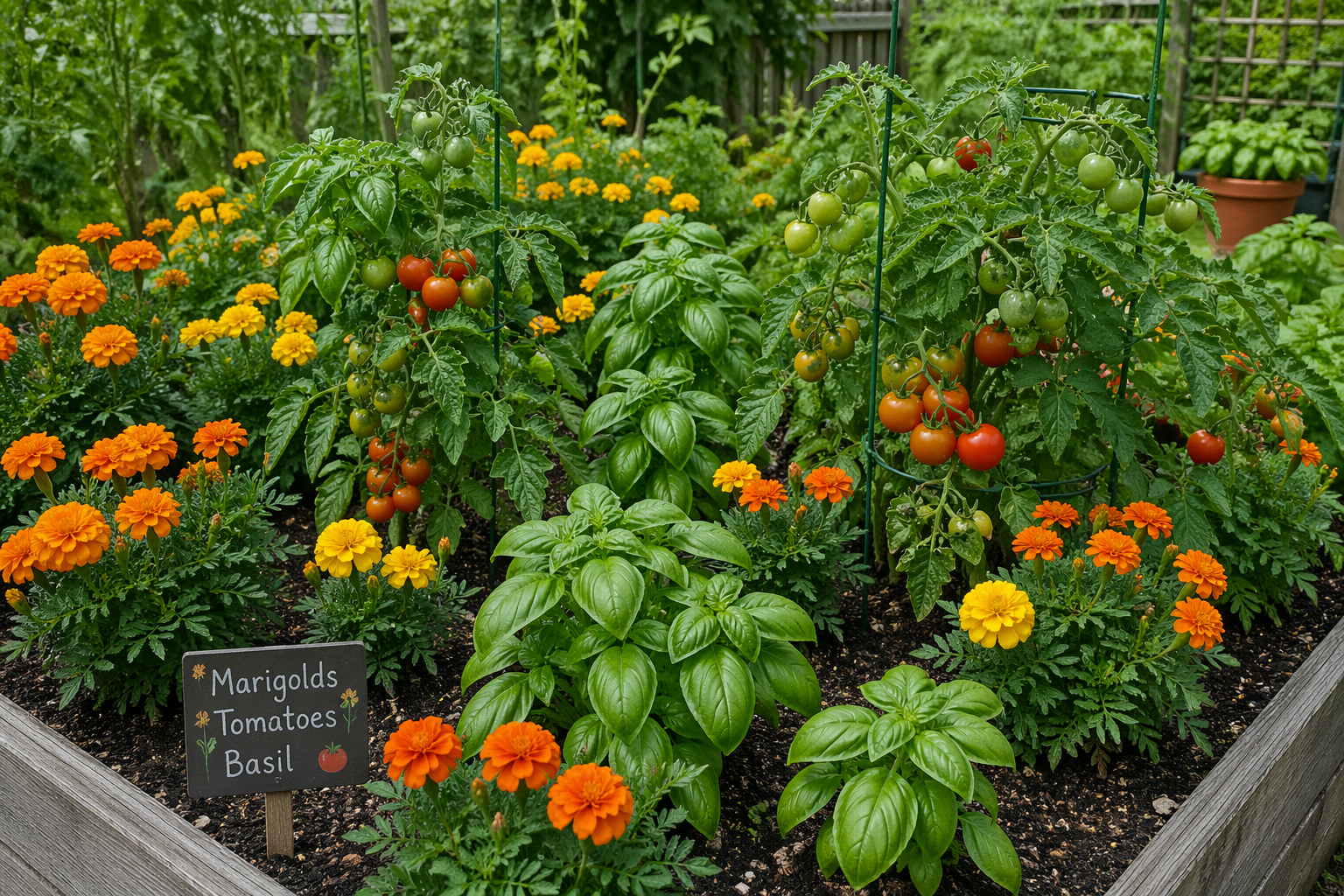
Companion planting is the practice of growing specific plants together because they benefit each other — through pest deterrence, pollinator attraction, nitrogen fixation, or physical support. The technique predates modern agriculture by thousands of years; the Three Sisters method (corn, beans, and squash) was practiced by Indigenous peoples across the Americas long before European contact.
Not every “companion” pairing holds up under scientific scrutiny. The most reliable benefits come from specific, well-documented combinations: basil repelling whitefly from tomatoes, marigolds killing soil nematodes, alliums deterring carrot fly. Generic rules like “always plant herbs with vegetables” are less reliable than these vegetable-specific pairings. The chart below focuses only on pairings with real mechanism-based benefits.
The four main benefit categories to look for: pest control (chemical repellents and trap crops), pollinator attraction (flowers that bring bees and hoverflies), soil improvement (legumes that fix nitrogen), and space efficiency (layering fast crops between slow ones, or using trellising plants like corn for beans).