Southeast Lawn Care Guide
Share:
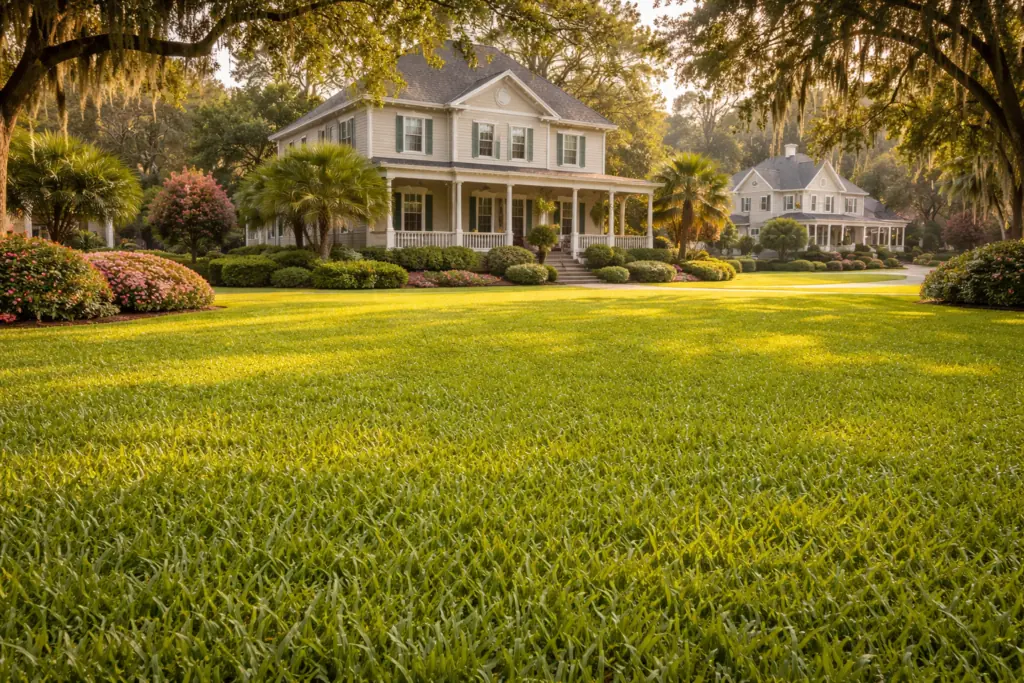
The Southeast is defined by hot, humid summers and mild winters with abundant rainfall. Warm-season grasses dominate the region, thriving from March through November. The combination of heat and moisture creates a long growing season but also sustains persistent pest and fungal pressure.
Key Facts
- Average growing season lasts 8–10 months
- Annual rainfall ranges from 45–65 inches across the region
- Chinch bugs and armyworms are the most damaging lawn pests
- Brown patch and dollar spot are the most common fungal diseases
- Soil tends to be clay-heavy in the Piedmont and sandy along the coast
Recommended Grass Types
BermudaZoysiaSt. AugustineCentipedeTall Fescue
Common Challenges
- High humidity drives persistent fungal disease throughout the growing season
- Chinch bug infestations can destroy St. Augustine lawns in weeks if untreated
- Heavy clay soils in the Piedmont require annual core aeration
- Summer droughts can stress even well-established warm-season lawns
Popular Cities in the Southeast
Dallas
Texas · Zone 8a
Atlanta
Georgia · Zone 7b
San Antonio
Texas · Zone 8b
Austin
Texas · Zone 8b
Charlotte
North Carolina · Zone 7a
Virginia Beach
Virginia · Zone 7a
Jacksonville
Florida · Zone 8b
Nashville
Tennessee · Zone 7a
Raleigh
North Carolina · Zone 7a
Memphis
Tennessee · Zone 7a
Oklahoma City
Oklahoma · Zone 7a
Fort Worth
Texas · Zone 8a
New Orleans
Louisiana · Zone 8b
El Paso
Texas · Zone 8a
Birmingham
Alabama · Zone 7b
USDA Zones in This Region
Frequently Asked Questions
What is the best low-maintenance grass for the Southeast?
Centipede grass is the best low-maintenance option for Southeast lawns, requiring less fertilizer and mowing than bermuda or St. Augustine. It grows slowly, tolerates acidic soils, and stays relatively short without frequent mowing. The tradeoff is lower wear tolerance, so it’s best for yards with light foot traffic. For higher-traffic areas, zoysia offers a good balance of durability and lower maintenance.
When should I fertilize my lawn in the Southeast?
Start fertilizing warm-season lawns in late March or early April once the grass is fully green and actively growing. Apply a slow-release nitrogen fertilizer every 6–8 weeks through September, then switch to a potassium-heavy fall fertilizer in October. Avoid fertilizing during the hottest weeks of July and August when grass is already stressed. A soil test every two years will tell you exactly what nutrients your lawn needs.
How do I handle lawn care during Southeast summers?
Southeast summers combine heat, humidity, and afternoon thunderstorms into challenging conditions for lawn care. Water only in the early morning to let blades dry before nightfall and reduce fungal risk. Raise your mowing height by half an inch during heat waves and never remove more than one-third of the blade. Monitor weekly for pest damage—catching chinch bugs or armyworms early is the difference between a small spot treatment and a full lawn renovation.