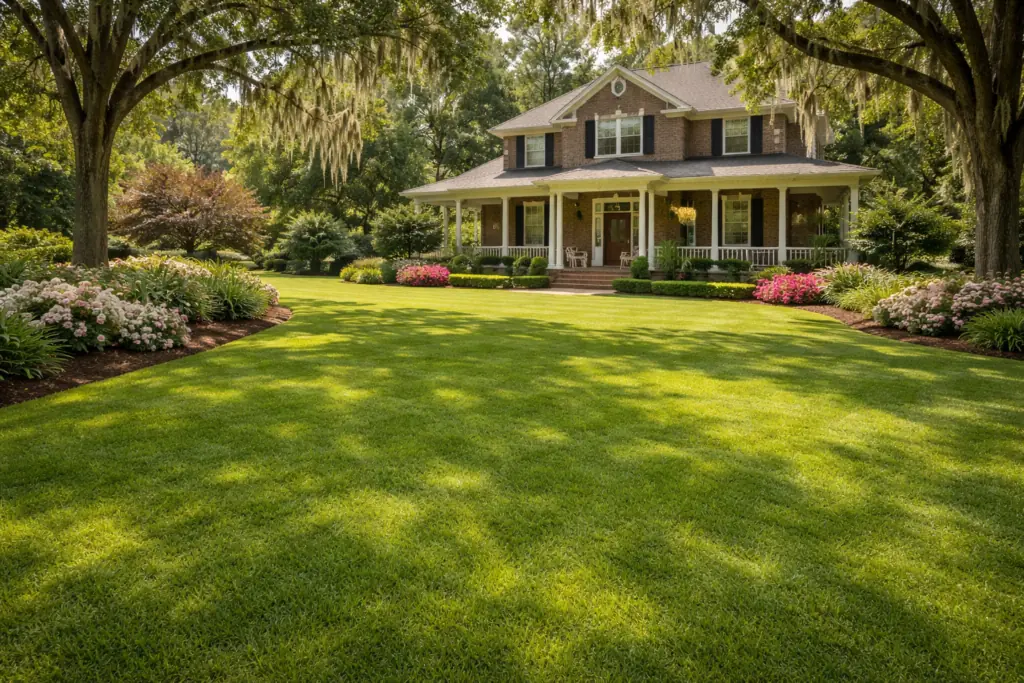
USDA Zone 7B Lawn Care Guide
Zone 7b is solidly in warm-season grass territory with hot, humid summers and mild winters. The growing season is long and productive, but the heat and humidity also create ideal conditions for pests and disease. Bermuda grass dominates sunny areas while centipede and zoysia handle partial shade.
Seasonal Lawn Care Highlights
🌱 Spring
Apply pre-emergent in late February to early March before crabgrass germinates. Begin mowing bermuda when it shows 50% green-up, usually by mid-March.
☀️ Summer
Monitor for chinch bugs, especially in St. Augustine and centipede lawns. Mow bermuda every 5–7 days at 1.5–2 inches and water deeply during drought.
🍂 Fall
Apply a potassium-rich fall fertilizer by October to strengthen roots. If you have fescue, overseed in September; warm-season grasses begin slowing growth.
❄️ Winter
Warm-season grasses go dormant and turn brown by December. Overseed bermuda with annual ryegrass for winter color if desired.
Best Grass Types for Zone 7B
Cities in Zone 7B
Atlanta
Georgia · Zone 7b
Birmingham
Alabama · Zone 7b
Columbia
South Carolina · Zone 7b
Little Rock
Arkansas · Zone 7b
Denton
Texas · Zone 7b
Augusta
Georgia · Zone 7b
Greenville
South Carolina · Zone 7b
Oxnard
California · Zone 7b
Huntsville
Alabama · Zone 7b
Indio
California · Zone 7b
Victorville
California · Zone 7b
Plano
Texas · Zone 7b
Wilmington
North Carolina · Zone 7b
Lubbock
Texas · Zone 7b
Santa Clarita
California · Zone 7b
Rock Hill
South Carolina · Zone 7b
Frisco
Texas · Zone 7b
Spartanburg
South Carolina · Zone 7b
McKinney
Texas · Zone 7b
Thousand Oaks
California · Zone 7b