USDA Zone 7A Lawn Care Guide
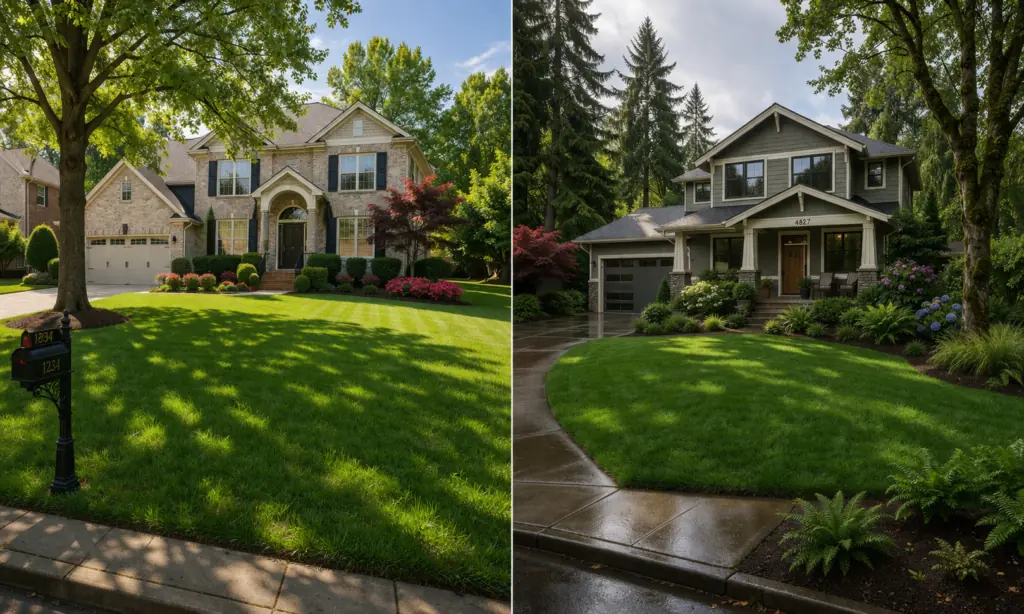
Zone 7a spans a wide geographic range from the Pacific Northwest to the upper South. Winters are generally mild with occasional hard freezes, and summers range from the dry heat of Oregon to the sticky humidity of the Southeast. Grass selection varies significantly based on whether you’re in the humid East or the dry West.
Seasonal Lawn Care Highlights
🌱 Spring
Apply pre-emergent by early March in the Southeast or late March in the Pacific Northwest. Begin mowing when grass reaches 3 inches.
☀️ Summer
Tall fescue lawns in the Southeast will struggle during July and August—water deeply and avoid fertilizing. Bermuda and zoysia lawns peak during this period.
🍂 Fall
Fall is the critical time to renovate cool-season lawns. Overseed thin fescue in September and apply a slow-release fertilizer by mid-October.
❄️ Winter
Pacific Northwest lawns may stay green year-round with light maintenance. In the Southeast, warm-season grasses go dormant from November through March.
Best Grass Types for Zone 7A
Cities in Zone 7A
Charlotte
North Carolina · Zone 7a
Virginia Beach
Virginia · Zone 7a
Nashville
Tennessee · Zone 7a
Raleigh
North Carolina · Zone 7a
Memphis
Tennessee · Zone 7a
Oklahoma City
Oklahoma · Zone 7a
Albuquerque
New Mexico · Zone 7a
Tulsa
Oklahoma · Zone 7a
Knoxville
Tennessee · Zone 7a
Winston-Salem
North Carolina · Zone 7a
Durham
North Carolina · Zone 7a
Chattanooga
Tennessee · Zone 7a
Fayetteville
Arkansas · Zone 7a
Greensboro
North Carolina · Zone 7a
Fayetteville
North Carolina · Zone 7a
Concord
North Carolina · Zone 7a
Asheville
North Carolina · Zone 7a
Chesapeake
Virginia · Zone 7a
Norfolk
Virginia · Zone 7a
Clarksville
Tennessee · Zone 7a