Lawn Mower Cost 2026 – Full Price Guide by Type
Published:

A basic gas push mower costs $250–$450 in 2026. Battery-powered push mowers run $250–$550 and have become the dominant choice for suburban lawns under a half-acre. Zero-turn ride-ons for larger properties cost $2,500–$7,000, and robot mowers start around $700 for wired models or $900 for modern wire-free AI-navigating units. This guide covers pricing by mower type, brand comparisons, ongoing maintenance costs, and how to decide whether buying a robot mower is cheaper than hiring a lawn service.
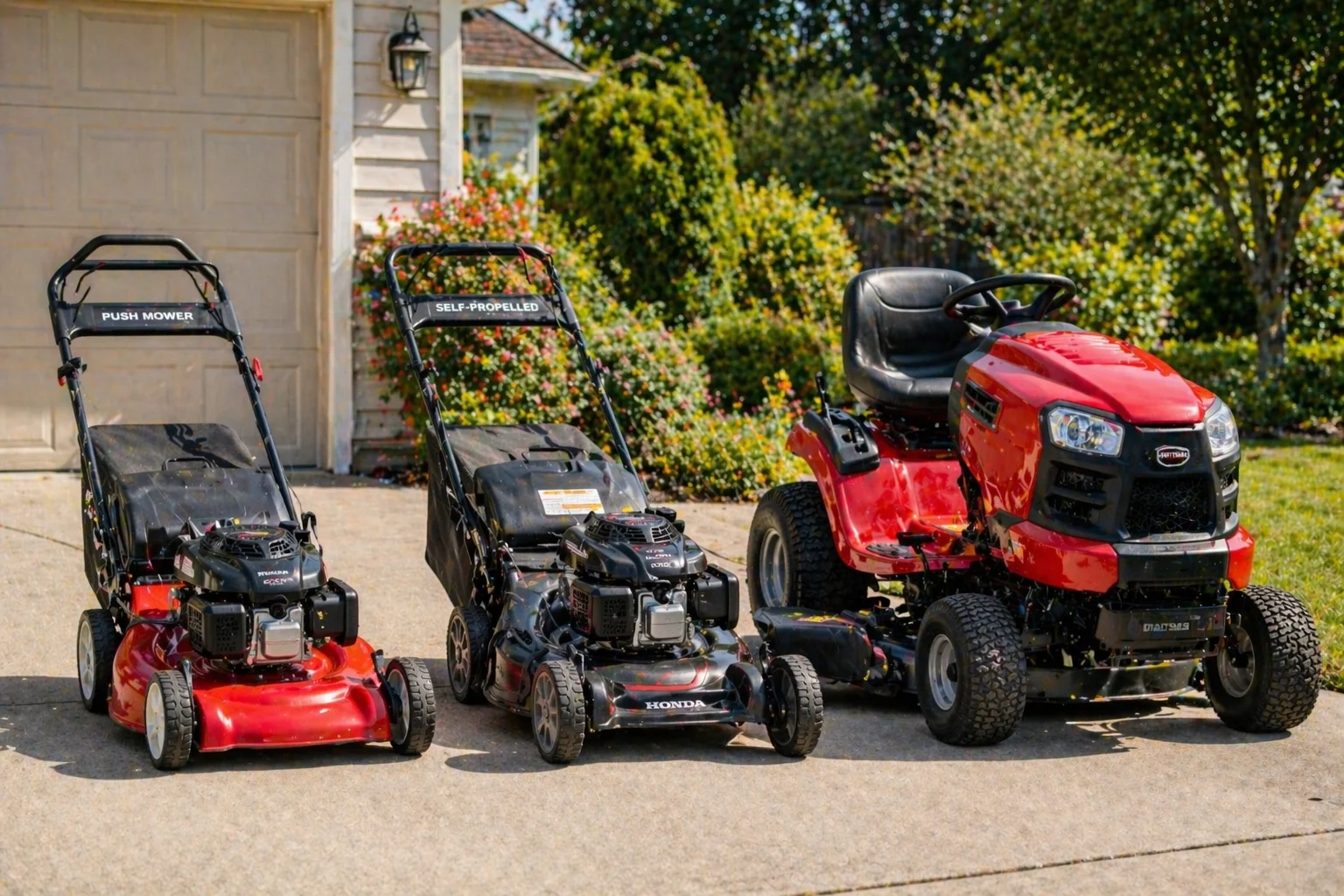
Cost by Mower Type
| Type | Price Range | Best For | Drawback |
|---|---|---|---|
| Manual reel mower | $100 – $200 | Small flat lawns; eco | Hard work; ≤¼ acre |
| Electric push (corded) | $150 – $300 | Small lawns; low maintenance | Cord limitation |
| Battery push | $250 – $550 | <½ acre; quiet; zero emissions | Runtime 45–90 min |
| Gas push (self-propelled) | $300 – $650 | ½–1 acre; reliable power | Maintenance; noise |
| Gas riding mower | $1,200 – $3,500 | 1–3 acres | Large turning radius |
| Zero-turn mower | $2,500 – $7,000 | 2+ acres; pro-level efficiency | Expensive upfront |
| Robot mower (wired) | $700 – $2,000 | Set-and-forget; ≤½ acre | Perimeter wire install |
| Robot mower (wire-free, RTK GPS) | $900 – $3,500 | Modern AI nav; ≤1 acre | Premium price |
| Tractor (garden) | $2,000 – $5,000 | Multi-purpose property | Not best for mowing alone |
Brand Price Comparison (2026)
| Brand | Entry Model | Mid-Range | Premium |
|---|---|---|---|
| Honda | $350 (HRX 217) | $550 (HRX 217VYA) | $3,000+ (ride-on) |
| Husqvarna | $300 (walk-behind gas) | $500 (premium walk) | $7,000+ (Automower 550H) |
| Ego Power+ | $400 (21" battery) | $600 (self-propelled) | $1,000 (ride-on battery) |
| Greenworks | $250 (40V battery) | $400 (80V) | $1,200 (riding) |
| Craftsman | $200 (basic gas) | $350 (self-propelled) | $1,500 (riding) |
| John Deere | — | $1,500 (E130 riding) | $4,000+ (Z300 ZT) |
| Toro | $350 (Recycler) | $600 (Super Recycler) | $4,500+ (TimeCutter ZT) |
| Ryobi | $300 (40V) | $500 (80V self-propelled) | $2,200 (electric ride-on) |
| Worx Landroid | $900 (M500) | $1,400 (L1500) | $2,000 (L2500) |
| Husqvarna Automower | $900 (310 Mark II) | $1,400 (430X) | $3,500+ (450XH) |
| Mammotion LUBA | $1,600 (AWD 1000) | $2,200 (AWD 3000) | $3,500 (AWD 5000H) |
| Segway Navimow | $1,200 (H800) | $1,600 (H1500) | $2,200 (H3000) |
Ongoing Cost of Ownership
| Cost Item | Annual Estimate |
|---|---|
| Gas mower maintenance (oil, spark plug, air filter) | $100 – $200/year |
| Gas mower fuel (½-acre, full season) | $30 – $80/year |
| Battery mower battery replacement | $150 – $300 (every 5 years) |
| Battery mower — no other operating cost | $0 |
| Robot mower blade replacement | $20 – $50/year |
| Robot mower software/app subscription (some brands) | $0 – $80/year |
| Blade sharpening (walk-behind, gas/battery) | $20 – $60/year |
| Riding mower annual tune-up | $150 – $350/year |
| Zero-turn mower belt/blade replacement | $100 – $250/year |
What Type of Mower Do You Actually Need?
Under ¼ acre (roughly 10,000 sq ft): a push mower or a robot mower is the right choice. Battery push mowers have become the dominant pick in this segment — they're quieter than gas, require no fuel or oil, and have runtime more than enough for the job. Robot mowers are an attractive alternative if you want to eliminate mowing from your weekend entirely.
¼ to ½ acre: self-propelled gas mower or premium battery (Ego Power+ LM2150SP, Ryobi 80V, Greenworks 80V). Single-battery runtime is usually enough for a ½-acre lot if you use a 6Ah or larger battery. Self-propelled gas remains the workhorse choice for homeowners who prioritise raw power over quietness.
½ to 1 acre: self-propelled gas remains the standard, but an entry-level riding mower (Craftsman, John Deere E100, Cub Cadet XT1) makes sense if you'd rather ride than walk. Robot mowers at the premium end (Husqvarna Automower 450XH, Mammotion LUBA AWD 3000) handle this size range.
1 to 3 acres: riding mower territory. A gas riding mower at $1,500–$3,000 or an entry zero-turn at $2,500–$4,000 is the pragmatic choice. Zero-turn is faster per pass but requires more open space to maneuver.
3+ acres: zero-turn mower is the only sensible choice. A commercial-grade zero-turn (Scag, Bad Boy, Ferris) at $6,000–$10,000 pays back in time savings across many seasons on a large property.
Robot Mower vs Hiring a Lawn Service: Break-Even Analysis
The national average residential mowing service rate is $44.92 per visit in 2026, with most suburban lawns mowed 24 times per season (April through October, every 1–2 weeks). That's roughly $1,078 per year for a standard ¼-acre lot, every year.
A wired robot mower at $700–$1,200 pays for itself in the first year versus hiring out. A premium wire-free robot (Mammotion LUBA AWD, Husqvarna Automower 450XH) at $2,000–$3,500 pays back in 2–3 years. Over a 10-year service life, the savings from robot ownership on a ¼-acre lot reach $8,000–$10,000 versus continued service hiring.
Beyond cost, robot mowers mow more frequently than a weekly service — most models mow every 1–2 days in short passes, which mulches clippings continuously and produces a healthier, denser lawn than weekly high-volume cutting. The quality advantage is genuine.
Ownership costs are minimal: $20–$50 per year in replacement blades, occasional wheel or sensor replacement after 3–5 seasons, and battery replacement every 5–7 years. Total annual cost of ownership after purchase: $30–$80 per year.
Battery vs Gas: 2026 Decision Guide
Battery mowers have reached parity with gas for most suburban residential lawns. A 6Ah battery on a 40V or 80V platform (Ego, Ryobi, Greenworks premium lines) delivers 45–90 minutes of runtime — enough for a standard ¼ to ½ acre lawn on one charge. Two batteries rotate through a full charger in 60 minutes, covering even 1-acre lots.
Gas still wins on raw power. Tough wet grass, overgrown conditions after vacation, and dense thatch all favour gas mowers that don't run out of torque. If your lawn regularly gets ahead of you (e.g., seasonal home, rental property), gas is more forgiving.
Running costs favour battery. Gas mower annual maintenance (oil changes, spark plug, air filter, fuel stabiliser, fuel itself) runs $130–$280 per year on a ½-acre lot. Battery mower running cost is essentially electricity — under $10 per year to charge — plus a battery replacement every 5 years at $150–$300.
Noise is the under-appreciated advantage of battery. A battery mower runs at 75–80 dB vs gas at 95–100 dB. For homeowners in HOA communities with noise rules, or families with young children, battery transforms the weekend mowing experience.
For most suburban ½-acre lawns in 2026, battery is the better buy. Upgrade to gas or a riding mower only if lawn size, terrain, or growth conditions demand it.
Where to Buy in 2026
Home Depot and Lowe's carry the mainstream brands (Honda, Toro, Craftsman, Ego, Ryobi, Greenworks, Husqvarna walk-behinds) and offer competitive pricing, extended warranties, and in-store servicing. End-of-season clearance at big-box stores (late August through September) routinely offers 20–30% off mid-range models.
Authorised dealers (Husqvarna, John Deere, Stihl, Scag) matter for riding mowers and zero-turns — dealer service access is part of the purchase. Buying a $5,000 zero-turn from a dealer two miles from your house vs from an online retailer 500 miles away makes a meaningful difference when something breaks.
Amazon carries robot mowers (Mammotion, Segway Navimow, Worx Landroid, some Husqvarna models) with two-day shipping and generous return windows. Robot mowers are a good fit for online purchasing because delivery doesn't require local service infrastructure.
Used and refurbished: Facebook Marketplace, Craigslist, and authorised dealer refurbishment programmes. A 2-year-old mid-range mower typically sells for 50–60% of new price and has plenty of service life remaining. Verify that the seller will include original manuals and any warranty paperwork.
Frequently Asked Questions
Are robot mowers worth the price?
For ¼ to ½ acre lots with standard suburban conditions, yes. A $1,000–$1,500 robot mower pays for itself in 1–2 years vs hiring a service at $44/visit. Premium wire-free robots ($2,000+) make sense on larger or more complex lawns where the navigation matters. They're not worth it for steep slopes over 25°, rocky terrain, or very small lawns under 1,500 sq ft.
Is battery mower runtime enough for a half-acre?
Yes with the right battery. A 6Ah battery on an 80V platform (Ego, Greenworks 80V, Ryobi 80V) delivers 60–90 minutes of runtime — more than enough for ½ acre. Two batteries on rotation handle a full 1-acre lot without interruption. Check the battery Ah rating, not just the voltage.
How long does a lawn mower last?
Gas mowers: 10–15 years with regular maintenance (oil changes, carburetor cleaning, occasional repairs). Battery mowers: 8–12 years for the motor, 5–7 years per battery (replacements available). Robot mowers: 8–12 years for the unit, 5–7 years per battery. Commercial-grade mowers last 15–25 years with heavy annual use.
Should I buy a used mower?
Yes, for mainstream brands under 4 years old. Mid-range gas and battery mowers sell for 50–60% of new price at 2–3 years old and have plenty of life remaining. Avoid used robot mowers unless verified to be fully operational with the seller's app account released — some require account transfer that previous owners don't always complete.
What's the cheapest mower that's still good quality?
For small lawns under 3,000 sq ft: the Ego Power+ LM2101 battery mower at $400. For ½ acre: the Honda HRX 217VKA at $650. Both are industry-leading value in their categories. Avoid sub-$200 mowers — the quality-to-price ratio is poor and failures are common in year 2 or 3.
About the Author
Lawn Care Expert & Writer · Denver, Colorado · Florida State University
Jason Allen is a lawn care expert and freelance writer based in Denver, Colorado. He studied turfgrass science and horticulture at Florida State University before founding his own lawn care operation serving the Denver metro area. With over a decade of hands-on experience managing cool-season lawns in Colorado's challenging high-altitude climate, Jason specializes in aeration, fertilization timing, drought management, and water-restriction compliance. His practical, science-backed approach to lawn care has helped thousands of homeowners achieve healthy turf despite Colorado's short growing seasons, clay soils, and frequent drought conditions.