When to Plant Spring Flowers — 2026 Planting Guide
Published:
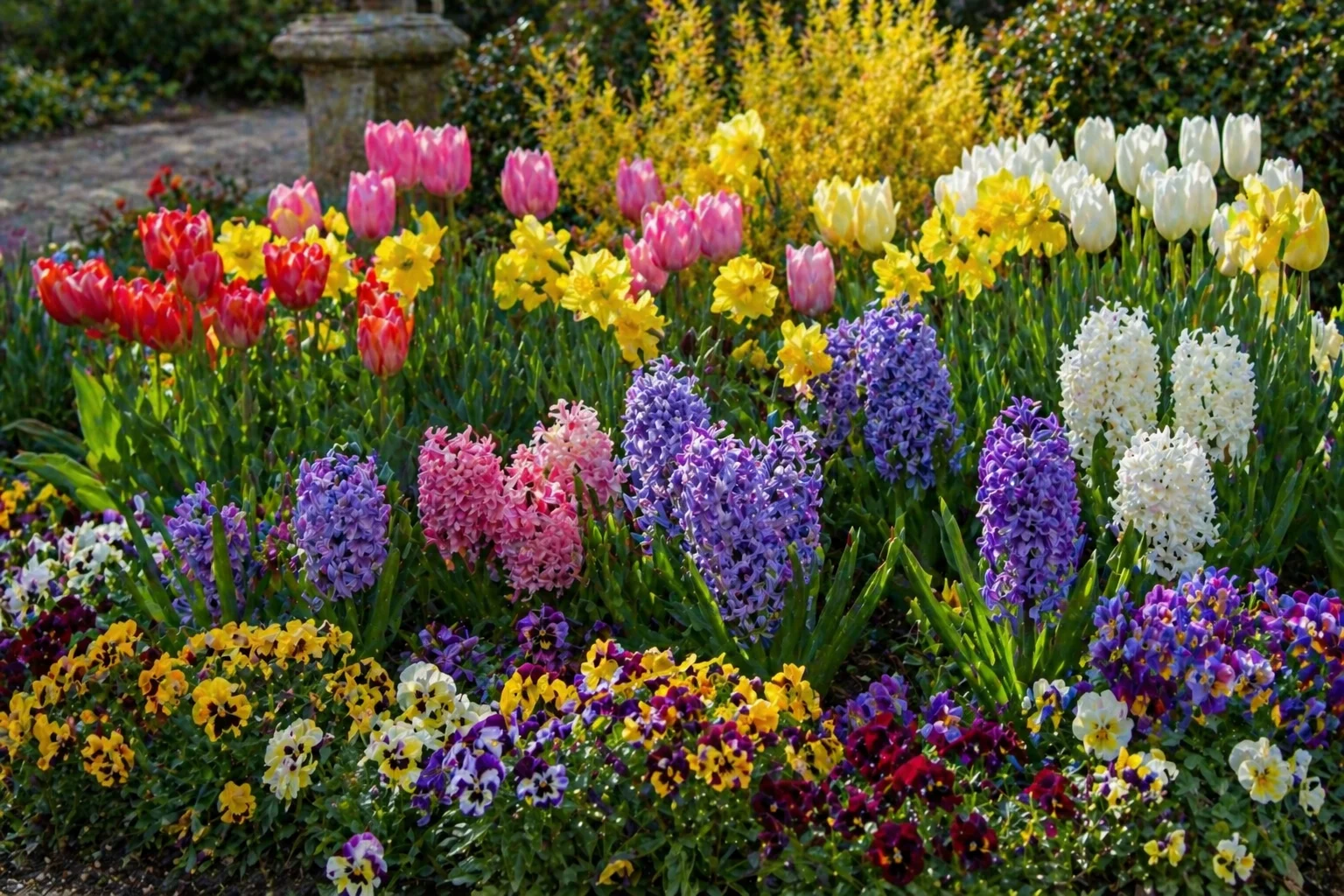
Spring flowers create the most anticipated garden display of the year — but only when planted correctly the previous fall (for bulbs) or in early spring (for cool-season annuals). The two main categories work on different schedules: spring-blooming bulbs (tulips, daffodils, hyacinths, crocuses) must go in the ground in fall to receive winter cold dormancy. Spring-blooming annuals (pansies, snapdragons, alyssum) can tolerate light frost and get planted 2 to 4 weeks before last frost. This guide covers the right window for every US state and the species that produce the longest spring color.
Quick Answer
Spring-blooming bulbs (tulips, daffodils, hyacinths, crocuses) are planted in fall for spring bloom. Spring-blooming annuals (pansies, snapdragons) are planted 2–4 weeks before last frost. Start of spring planting season: when soil reaches 4°C / 40°F.
Spring Flowers Planting Dates by State
Click your state for the exact spring flowers planting window, the best varieties for your USDA zone, and a state-specific care calendar. All dates are based on average last frost dates and population-weighted USDA zone primary for each state.
How to Plant Spring Flowers
Sow method: bulb (fall) or direct/transplant (spring). Below are the practical steps — site selection, depth, spacing, and first-season care — that produce healthy first-year plants. Each step matters; skipping site selection or depth in particular dramatically reduces success rates.
- →Spring bulbs: plant in fall (September through November in Zones 3–7; November through January in Zones 8–9) at 3x the bulb's height deep.
- →Cool-season annuals: transplant 2 to 4 weeks before last frost when soil reaches 4°C (40°F).
- →Choose sites with full sun for spring bulbs (foliage needs sun to rebuild bulbs after bloom).
- →Apply bone meal or bulb fertilizer at the bottom of bulb planting holes.
- →After spring bulbs bloom, cut spent flowers but leave foliage to yellow naturally — the foliage rebuilds the bulb for next year.
- →Water cool-season annuals weekly during dry periods; they tolerate dry soil better than warm-season annuals.
- →Mulch newly planted bulbs after first hard freeze to prevent freeze-thaw heaving.
- →In Zone 8+, refrigerate tulip and hyacinth bulbs for 8 to 10 weeks before planting to provide artificial dormancy.
Spring Flowers Care After Planting
First-season care for spring flowers centers on consistent watering during establishment, light fertilization (or none for low-input species like lavender and natives), and protection from pests during the vulnerable early-season period. Established plants typically need far less attention than first-year plantings — this is the year-by-year payoff for choosing perennial and self-seeding species.
Bloom timing for spring flowers is spring. Match this expected bloom window to your garden design — pair spring flowers with species that bloom before and after to extend total garden color from spring through fall. Most plants take 1 to 3 full growing seasons to reach mature size and full flowering performance, which is why first-year results often look modest. Plant for the third year, not the first.
Best Spring Flowers Varieties by Zone
The right variety for your garden depends on your USDA zone, sun exposure, and soil. Below are the top spring flowers cultivars and species for each major US climate region.
Most reliable spring bulb. Squirrel-resistant (toxic to rodents). Naturalizes well in lawns and woodlands. Plant fall.
Classic spring bulb. Best treated as annuals in Zone 8+ (require pre-chilling). Plant fall, 15 cm deep.
Earliest spring bloom — often pushes through snow. Naturalizes in lawns. Plant fall, 8 cm deep.
Cool-season annuals tolerating frost down to -7°C (20°F). Plant 2 to 4 weeks before last frost or in fall for late-fall bloom.
Cool-season annuals (perennial in Zone 8+). Tolerate light frost. Plant 2 to 4 weeks before last frost. Long stems for cutting.
Common Mistakes When Planting Spring Flowers
The most common spring-flower mistake is planting bulbs at the wrong depth. Spring bulbs need to be planted 3 times the bulb's height deep — typically 15 to 20 cm (6 to 8 inches) for tulips and daffodils, 8 cm (3 inches) for crocuses. Shallow planting produces weak stems, reduced return bloom, and bulbs that rot or shrivel. Always measure depth from the top of the bulb to the soil surface.
The second common mistake is removing bulb foliage too soon after bloom. Yellowing foliage is rebuilding the bulb's energy reserves for next spring. Cut foliage back only when it has turned completely yellow and pulls away easily — typically 6 to 8 weeks after the last flower.
Third mistake: waiting until last frost to plant cool-season annuals. Pansies, snapdragons, alyssum, and other cool-season annuals tolerate frost down to -7°C (20°F) and bloom best in cool weather. Plant 2 to 4 weeks before last frost when soil reaches 4°C (40°F) — earlier planting produces 2 to 4 weeks of additional bloom before warm-season annuals can be planted.
Frequently Asked Questions
When do I plant spring-blooming bulbs?
Fall, 6 to 8 weeks before the ground freezes. Zones 3–4: September. Zones 5–6: October. Zone 7: late October through mid-November. Zones 8–9: November through January with bulbs refrigerated for 6 to 8 weeks first. The bulb needs to root before hard freeze for solid spring bloom.
What's the difference between spring bulbs and cool-season annuals?
Spring bulbs (tulips, daffodils, hyacinths, crocuses) are perennial in their hardy zones and bloom in spring from fall-planted bulbs that received winter cold dormancy. Cool-season annuals (pansies, snapdragons, alyssum) are spring-planted plants that bloom in cool weather and die in summer heat — they are replaced each year.
When can I plant pansies?
2 to 4 weeks before last frost when soil reaches 4°C (40°F). In Zones 8–9, pansies are planted in fall for winter and spring bloom (October through November). In Zones 5–7, pansies are planted in early spring after last frost or in fall for late-fall display before winter dormancy. Pansies tolerate frost down to -7°C (20°F).
Do spring bulbs come back every year?
Daffodils and species crocus: yes, reliably for decades. Tulips: variable — Darwin Hybrids and species tulips return reliably; other types decline after 2 to 3 years. Hyacinths: smaller blooms each year, typically replaced after 2 to 3 seasons. Plant Daffodils for permanent spring color; treat fancy tulips as annuals.
Why aren't my spring bulbs blooming?
Most common cause: planted too shallow. Bulbs need 3x their height deep — typically 15 to 20 cm (6 to 8 inches). Other causes: foliage was removed too soon last spring (preventing bulb rebuilding), insufficient sun (less than 6 hours), or squirrels/voles ate the bulbs. Check planting depth first; replant deeper if needed.