When to Plant Native Flowers — 2026 Planting Guide
Published:
Native flowers are plants that evolved in your specific region — and they dramatically outperform non-native ornamentals in lower water needs, lower fertilizer needs, lower pest pressure, and pollinator support. The 2024 Doug Tallamy research at the University of Delaware showed that native plants support 4 to 35 times more native insect species than introduced ornamentals. This guide covers the right planting window for every US state, the best native flowers for each region, and the establishment techniques that produce thriving native gardens.
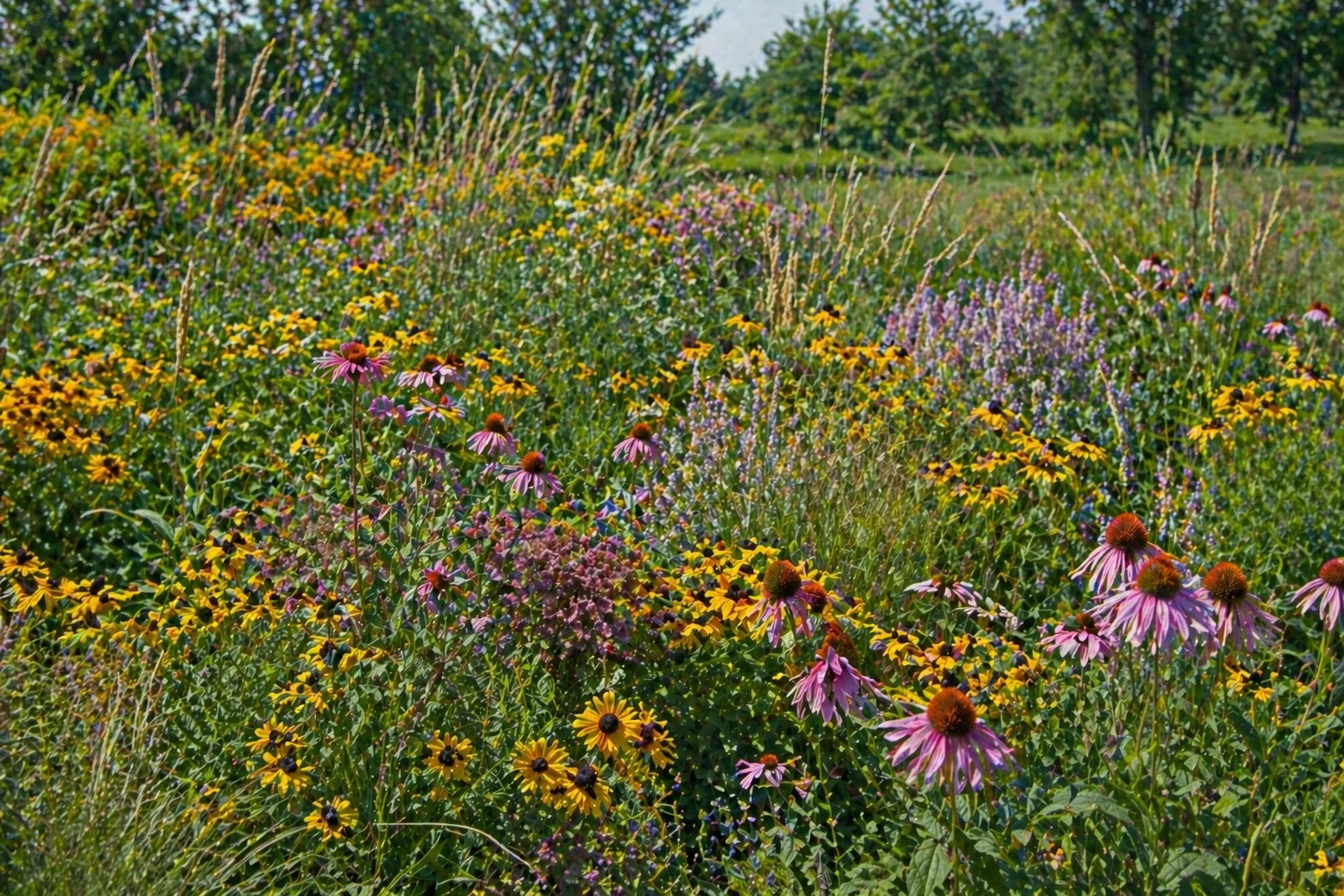
Quick Answer
Plant native perennials (coneflower, black-eyed Susan, native aster) in spring or fall. Most native flowers require less water, no fertilizer, and resist local pests naturally. Region-specific natives dramatically outperform non-native plants in attracting pollinators.
Native Flowers Planting Dates by State
Click your state for the exact native flowers planting window, the best varieties for your USDA zone, and a state-specific care calendar. All dates are based on average last frost dates and population-weighted USDA zone primary for each state.
How to Plant Native Flowers
Sow method: transplant or direct. Below are the practical steps — site selection, depth, spacing, and first-season care — that produce healthy first-year plants. Each step matters; skipping site selection or depth in particular dramatically reduces success rates.
- →Identify your specific region (using USDA zone + Level III ecoregion) and choose plants native to that region — not just 'native to North America'.
- →Source plants from regional native plant nurseries (Prairie Moon, Native American Seed, regional Audubon chapters) — big-box stores often sell non-native cultivars.
- →Plant most native perennials in spring (after last frost) or early fall (6 weeks before first frost).
- →Choose a site that matches the plant's native habitat: prairie species in full sun, woodland species in part shade, wetland species in moist areas.
- →Skip soil amendments — native plants are adapted to your local soil. Heavy amendment with compost or fertilizer can reduce vigor.
- →Water deeply during the first growing season; once established, most natives need no supplemental irrigation.
- →Skip fertilizer entirely — natives evolved with native soil fertility levels.
- →Leave plants standing through winter — native bees, beneficial insects, and birds use stems and seedheads for habitat and food.
Native Flowers Care After Planting
First-season care for native flowers centers on consistent watering during establishment, light fertilization (or none for low-input species like lavender and natives), and protection from pests during the vulnerable early-season period. Established plants typically need far less attention than first-year plantings — this is the year-by-year payoff for choosing perennial and self-seeding species.
Bloom timing for native flowers is spring through fall. Match this expected bloom window to your garden design — pair native flowers with species that bloom before and after to extend total garden color from spring through fall. Most plants take 1 to 3 full growing seasons to reach mature size and full flowering performance, which is why first-year results often look modest. Plant for the third year, not the first.
Best Native Flowers Varieties by Zone
The right variety for your garden depends on your USDA zone, sun exposure, and soil. Below are the top native flowers cultivars and species for each major US climate region.
Native to Eastern and Central US. Drought-tolerant perennial. Goldfinches feed on seed heads in winter.
Native to most of US. Self-seeding biennial/short-lived perennial. State flower of Maryland.
Native to Eastern and Central US. Critical Monarch butterfly host plant. Drought-tolerant once established.
Native to most of US. Lavender flowers, mint family. Powdery mildew resistant. Excellent for pollinator gardens.
Many native species across US. Late-summer to fall bloom — critical for migrating Monarchs and bees. Not the cause of hay fever (that's ragweed).
Common Mistakes When Planting Native Flowers
The most common native flower mistake is using 'nativars' (cultivars of native species) and assuming they perform like true natives. Many cultivars selected for unusual flower colors or compact habit have lost the chemistry that supports native pollinators. The 2018 Mt. Cuba Center research showed sterile double-flowered cultivars supported 60 to 80 percent fewer pollinators than the species form. When possible, plant the species form (e.g., Echinacea purpurea, not 'Cherry Brandy') from a regional native plant nursery.
The second common mistake is buying plants labeled as 'native' from big-box stores. Many big-box 'native' plants are actually non-native species marketed broadly, or cultivars with reduced ecological value. Source from regional native plant nurseries, native plant society sales, or your state's extension office native plant program.
Third mistake: cleaning up the native garden in fall. Standing native flower stems and seedheads provide overwintering habitat for native bees (which nest in hollow stems), beneficial insects, and food for birds. Wait until late spring (after temperatures consistently exceed 10°C / 50°F) to cut back native plantings — earlier cleanup destroys overwintering native pollinator populations.
Frequently Asked Questions
What does 'native' actually mean?
A plant native to a specific region (not just 'North America') means a plant species that evolved in that ecoregion before European settlement. The relevant scale is the EPA Level III ecoregion (about 80 zones across the US), not state boundaries — Echinacea purpurea is native to the Eastern Tallgrass Prairie ecoregion, not California or the Pacific Northwest. Always source plants native to your specific ecoregion.
When should I plant native flowers?
Most native perennials: spring (after last frost) or early fall (6 weeks before first frost). Spring planting in cold zones (Zones 3–6) gives the full growing season to establish before winter. Fall planting in warm zones (Zones 7–10) avoids summer transplant stress. Native bulbs and tap-rooted species (butterfly milkweed) prefer fall planting in all zones.
Why are native flowers better than non-natives?
Native flowers support 4 to 35 times more native insect species than introduced ornamentals — and native insect species are the foundation of native bird food webs. Beyond pollinator value, natives need 75 to 90 percent less water, no fertilizer, and have far lower pest pressure than equivalent non-native ornamentals adapted to other climates.
Where can I buy true native plants?
Regional native plant nurseries are the best source — examples include Prairie Moon Nursery (Midwest), Native American Seed (Texas), Plants of the Southwest, Larner Seeds (California native), and Pinelands Nursery (Mid-Atlantic). Many state native plant societies and Audubon chapters host annual native plant sales. Check Wild Ones (wildones.org) for chapters near you.
Do native plants need any special care?
Less than non-natives, not more. First-year planting requires deep watering once a week to establish; once established, most natives need no irrigation, no fertilizer, and minimal pruning. The main maintenance task is keeping non-native invasive plants from competing with native plantings during establishment.