When to Plant Marigolds — 2026 Planting Guide
Published:
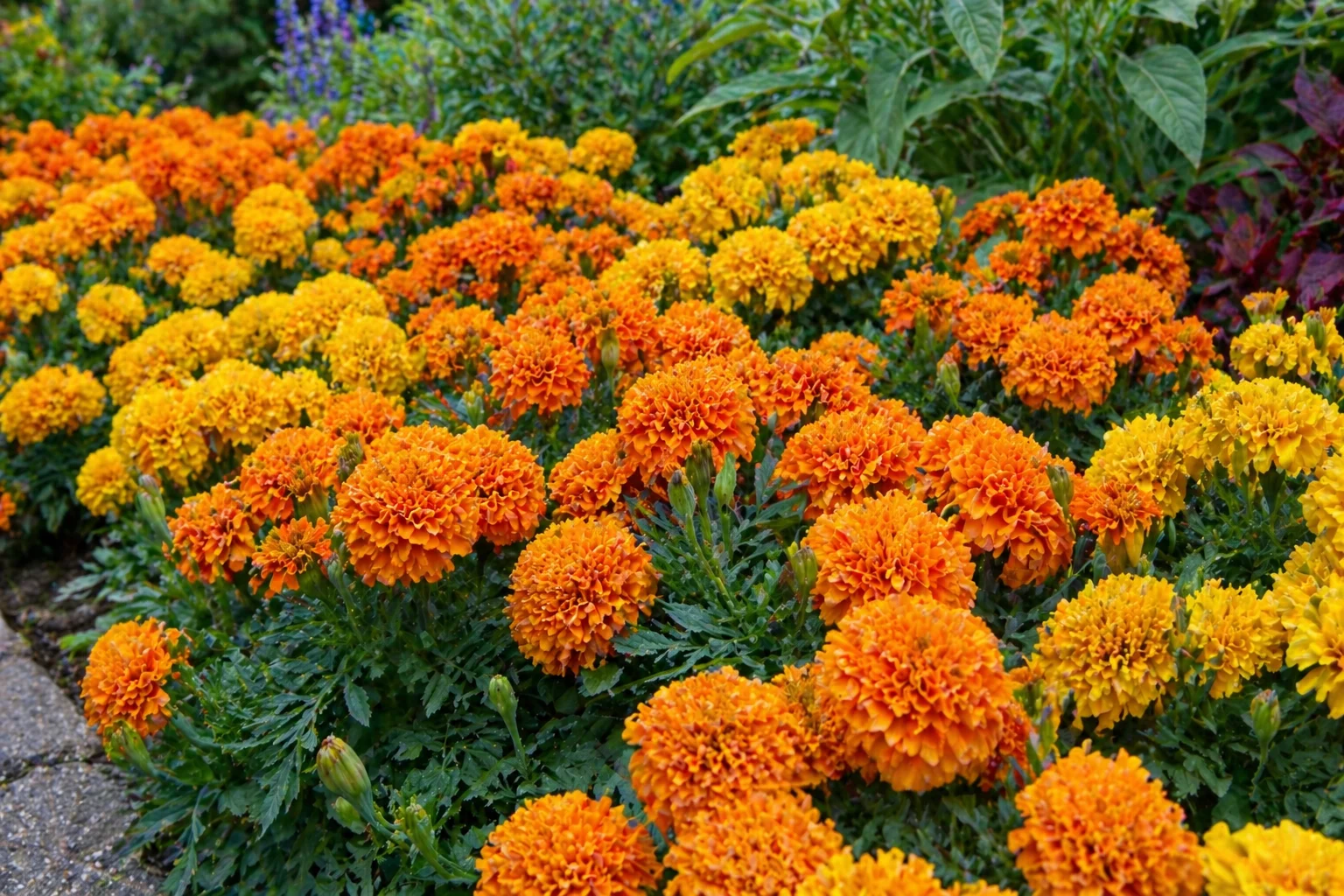
Marigolds are the most reliable flower for new gardeners — direct sow after the last frost, water occasionally, and bloom for the entire growing season until first frost. Beyond their bright orange and yellow blooms, marigolds are the standard companion plant for vegetable gardens because their root exudates suppress nematodes and their scent deters several common pests. This guide covers the right planting window for every US state, the three main marigold types (French, African, and Signet), and the spacing that produces solid color blocks.
Quick Answer
Direct sow marigolds after last frost or start indoors 6–8 weeks before last frost. One of the easiest annuals — germinates in 5–7 days, blooms in 6–8 weeks. Natural pest deterrent for vegetable gardens.
Marigolds Planting Dates by State
Click your state for the exact marigolds planting window, the best varieties for your USDA zone, and a state-specific care calendar. All dates are based on average last frost dates and population-weighted USDA zone primary for each state.
How to Plant Marigolds
Sow method: direct sow or transplant. Below are the practical steps — site selection, depth, spacing, and first-season care — that produce healthy first-year plants. Each step matters; skipping site selection or depth in particular dramatically reduces success rates.
- →Direct sow marigold seeds 0.5 cm (1/4 inch) deep, after last frost when soil reaches 12°C (55°F).
- →For earliest blooms, start seeds indoors 6 to 8 weeks before last frost; transplant after frost.
- →Space French marigolds 15 cm (6 inches) apart; African 30 cm (12 inches); Signet 20 cm (8 inches).
- →Choose a site with full sun (6+ hours) — marigolds in shade get leggy and stop blooming.
- →Water at the base; avoid overhead watering which causes powdery mildew on Old World marigolds.
- →Deadhead spent blooms to extend the flowering period (skip for triploid hybrids — they self-clean).
- →Marigolds prefer poor to average soil — skip fertilizer entirely for the most blooms.
- →Companion plant with tomatoes, peppers, and beans — marigold root exudates suppress root-knot nematodes.
Marigolds Care After Planting
First-season care for marigolds centers on consistent watering during establishment, light fertilization (or none for low-input species like lavender and natives), and protection from pests during the vulnerable early-season period. Established plants typically need far less attention than first-year plantings — this is the year-by-year payoff for choosing perennial and self-seeding species.
Bloom timing for marigolds is summer through fall. Match this expected bloom window to your garden design — pair marigolds with species that bloom before and after to extend total garden color from spring through fall. Most plants take 1 to 3 full growing seasons to reach mature size and full flowering performance, which is why first-year results often look modest. Plant for the third year, not the first.
Best Marigolds Varieties by Zone
The right variety for your garden depends on your USDA zone, sun exposure, and soil. Below are the top marigolds cultivars and species for each major US climate region.
Most popular type. 25–40 cm (10–16 inches) tall, smaller flowers, longer bloom period. Best for borders and bedding.
Largest flowers (10 cm / 4 inch heads), 60–90 cm (2–3 ft) tall. Best for back of border and cutting.
Small daisy-like single flowers, 30 cm (12 inch) mounding habit. Edible flowers with citrus scent. Best for herb gardens.
Sterile hybrids of French × African. Large flowers, longest bloom period of any marigold, no deadheading needed.
Perennial in warm zones, used as anise-flavored Mexican tarragon. Yellow flowers in fall.
Common Mistakes When Planting Marigolds
The most common marigold mistake is over-fertilizing. Marigolds bloom most heavily in poor to average soils — adding compost or fertilizer produces lush green plants with few flowers. Skip the fertilizer entirely; if soil is genuinely poor, a single light application of balanced fertilizer at planting is sufficient for the entire season.
The second common mistake is overwatering. Marigold leaves develop powdery mildew when watered overhead or kept consistently wet. Water at the base of the plant, only when the top inch of soil is dry — typically once a week during normal weather, twice weekly during summer drought.
Third mistake: planting too early. Marigolds are warm-season annuals and frost-sensitive. Direct sown seeds before soil reaches 12°C (55°F) rot in cold wet ground; transplanted seedlings before last frost get killed by overnight cold. Wait until 1 to 2 weeks after last frost — the wait pays off in stronger plants and earlier flowering.
Frequently Asked Questions
When should I plant marigolds?
After last frost when soil reaches 12°C (55°F). Most US zones plant April through June. Direct sowing germinates in 5 to 7 days. For earliest blooms, start indoors 6 to 8 weeks before last frost and transplant after frost. Marigolds bloom in 6 to 8 weeks from seed, providing the entire summer through first frost.
Do marigolds repel bugs?
Partly — marigold roots release alpha-terthienyl, a compound that suppresses root-knot nematodes (microscopic soil pests that damage tomatoes, peppers, and beans). The flowers' scent also deters some flying pests. Marigolds are NOT effective against deer, rabbits, or aphids. Plant marigolds throughout vegetable gardens for nematode suppression — the effect is real and well-documented.
Why aren't my marigolds blooming?
Three common causes: insufficient sun (less than 6 hours produces leaves not blooms), excess fertilizer (especially nitrogen) pushes foliage at the expense of flowers, and lack of deadheading (spent blooms signal the plant to set seed and stop flowering). Skip fertilizer, choose full sun, and deadhead weekly for continuous blooms.
How long do marigolds bloom?
Marigolds bloom continuously from 6 to 8 weeks after seeding until first frost — typically 4 to 5 months of continuous color. Deadheading extends the bloom period; triploid hybrids self-clean and do not need deadheading. In Zones 9 and 10, marigolds bloom nearly year-round with consistent watering.
Can I grow marigolds in pots?
Yes — marigolds are excellent container plants. Use a 20–25 cm (8–10 inch) pot for one French or Signet marigold; 30 cm (12 inch) pot for one African marigold. Use any general-purpose potting mix; water when the top inch is dry. Container marigolds need slightly more frequent watering than ground-planted but still benefit from low fertility.