When to Plant Daisies — 2026 Planting Guide
Published:
'Daisies' covers a broad family of plants — from short-lived annuals (Bachelor's Button, Swan River Daisy) to long-lived perennials (Shasta, Oxeye, Painted) to native wildflowers (Black-Eyed Susan, Coneflower) — all sharing the classic daisy form: ray petals around a central disk. The right planting time depends on which type you're growing. Annual daisies tolerate light frost and can be direct-sown 2 to 4 weeks before last frost. Perennial daisies prefer spring transplanting after last frost or fall planting 6 weeks before first frost. This guide covers the right window for every US state and the right type for each climate zone.
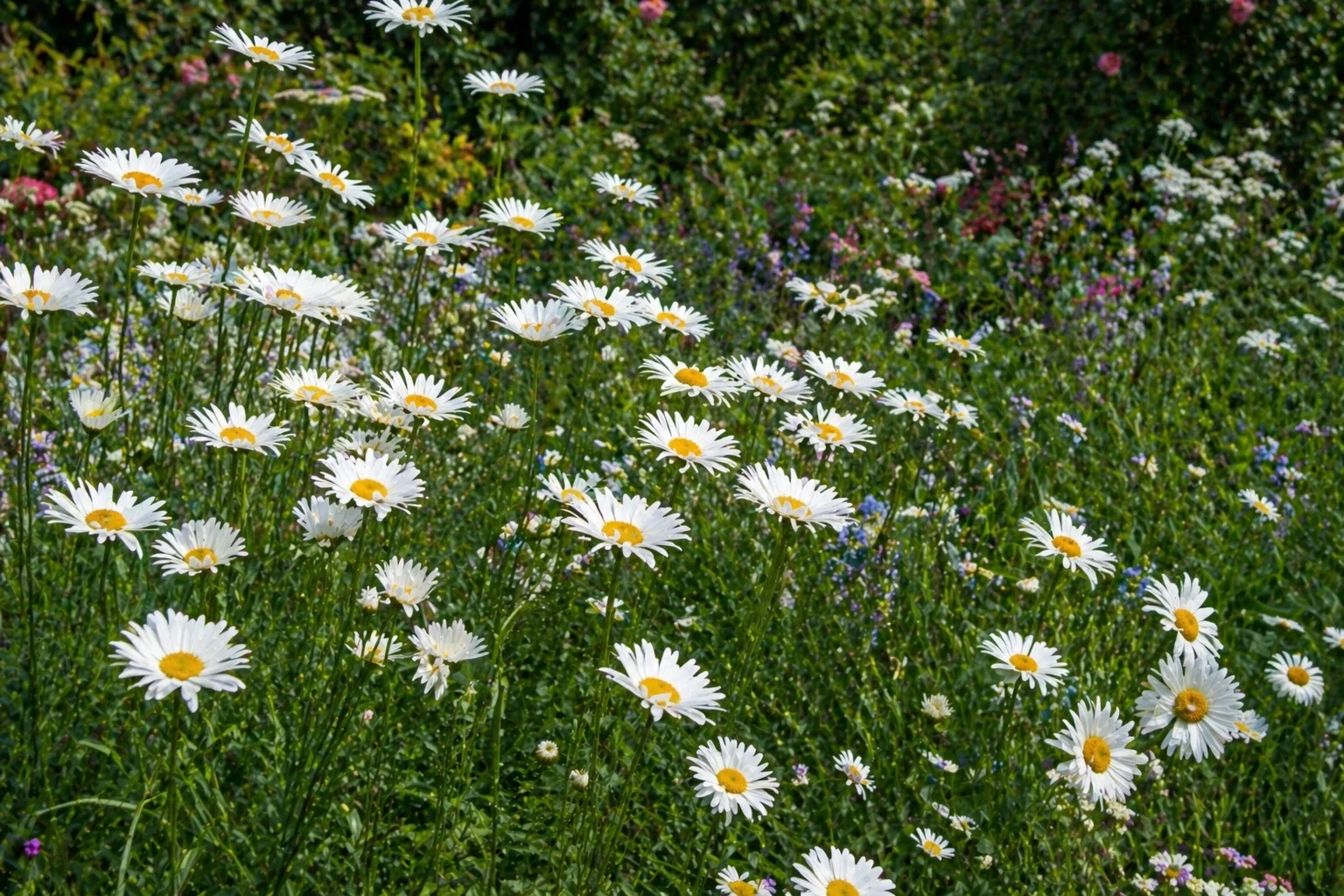
Quick Answer
Shasta daisies: transplant in early spring or fall. Annual daisies (Bachelor's Button, Swan River Daisy): direct sow 2–4 weeks before last frost. Oxeye daisy is perennial — plant in spring or fall. Most daisies self-seed freely once established.
Daisies Planting Dates by State
Click your state for the exact daisies planting window, the best varieties for your USDA zone, and a state-specific care calendar. All dates are based on average last frost dates and population-weighted USDA zone primary for each state.
How to Plant Daisies
Sow method: direct sow or transplant. Below are the practical steps — site selection, depth, spacing, and first-season care — that produce healthy first-year plants. Each step matters; skipping site selection or depth in particular dramatically reduces success rates.
- →Annual daisies: direct sow seeds 2 to 4 weeks before last frost when soil is workable.
- →Perennial daisies: transplant in early spring (after last frost) or fall (6 weeks before first frost).
- →Choose a site with full sun (6+ hours) — daisies in shade get leggy and bloom poorly.
- →Space Shasta daisies 45 cm (18 inches) apart; Oxeye 30 cm (12 inches); Painted 30 cm (12 inches).
- →Water consistently for the first month after transplanting; established daisies tolerate moderate drought.
- →Deadhead spent blooms to extend the flowering period and prevent self-seeding (or skip deadheading to encourage naturalizing).
- →Divide perennial clumps every 3 to 4 years in early spring to maintain vigor.
- →Cut back to ground level in late fall (Zone 4–7) or after first frost (Zone 8+); apply 5 cm (2 inches) of mulch in cold zones.
Daisies Care After Planting
First-season care for daisies centers on consistent watering during establishment, light fertilization (or none for low-input species like lavender and natives), and protection from pests during the vulnerable early-season period. Established plants typically need far less attention than first-year plantings — this is the year-by-year payoff for choosing perennial and self-seeding species.
Bloom timing for daisies is spring through fall (varies by type). Match this expected bloom window to your garden design — pair daisies with species that bloom before and after to extend total garden color from spring through fall. Most plants take 1 to 3 full growing seasons to reach mature size and full flowering performance, which is why first-year results often look modest. Plant for the third year, not the first.
Best Daisies Varieties by Zone
The right variety for your garden depends on your USDA zone, sun exposure, and soil. Below are the top daisies cultivars and species for each major US climate region.
Classic perennial white daisy. 60–90 cm (2–3 ft) tall, blooms June through September. The standard for cottage and cutting gardens.
Wildflower-style daisy that naturalizes in meadows. Considered invasive in some Western states — check local rules.
Pink, red, or white blooms with yellow centers. Source of natural pyrethrum insecticide. Cold-hardy and deer-resistant.
Tender perennial grown as annual in cold zones. White, pink, or yellow blooms on a 60 cm (2 ft) shrubby plant.
Florist-style large bright blooms. Tender — overwinter indoors in cold zones or treat as annual.
Common Mistakes When Planting Daisies
The most common daisy mistake is misidentifying the type and applying the wrong care. Annual daisies (Bachelor's Button, Swan River) tolerate light frost and benefit from early sowing — waiting for warm weather wastes their cool-season preference. Perennial daisies (Shasta, Painted) need warmer soil for transplanting and dislike frost on tender new growth. Identify the species before planting.
The second common mistake is over-watering established perennial daisies. Shasta and Oxeye daisies are drought-tolerant once established and develop crown rot under daily watering schedules suitable for vegetables. Water deeply once a week during summer drought; reduce to nothing during normal rainfall periods.
Third mistake: planting Oxeye daisy in Western states without checking local invasive species rules. Oxeye daisy is classified as a noxious weed in Colorado, Wyoming, Montana, and Washington — naturalizing populations damage native ecosystems and reduce livestock forage value. Use Shasta daisy (the cultivated hybrid) instead for similar appearance without invasive risk.
Frequently Asked Questions
When should I plant daisies?
Depends on type. Annual daisies: direct sow seeds 2 to 4 weeks before last frost. Perennial daisies: transplant in early spring after last frost or in fall 6 weeks before first frost. Shasta daisy specifically prefers spring planting in Zones 4–6 and fall planting in Zones 7–9 to avoid summer transplant heat stress.
Are daisies annuals or perennials?
Both — depends on species. Shasta, Oxeye, and Painted daisies are perennials hardy in Zones 3–9. Bachelor's Button and Swan River Daisy are annuals. Marguerite and Gerbera daisies are tender perennials grown as annuals in cold zones. Always check the species name to determine the type.
How long do daisies bloom?
Annual types bloom 8 to 10 weeks from sowing until killed by frost or summer heat. Perennial types bloom 4 to 8 weeks per year, typically June through August for Shasta. Deadheading spent blooms extends the flowering period by 2 to 4 weeks for both annual and perennial types.
Do daisies come back every year?
Perennial varieties yes — Shasta, Oxeye, and Painted daisies return reliably for 4 to 7 years before needing division. Annual varieties die after one season but often self-seed and return as new plants the following year. Marguerite and Gerbera daisies are tender perennials that survive winters only in Zone 9 and warmer.
How do I divide Shasta daisies?
Divide every 3 to 4 years in early spring as new growth emerges. Dig the entire clump, separate into 3 to 5 sections each with healthy roots and shoots, and replant immediately at the same depth. Water deeply after replanting. Division revitalizes older clumps and produces free new plants for other parts of the garden.