When to Plant Daisies in Saskatoon, SK – 2026
Published:
Saskatoon is in Canadian Zone 3b (semi-arid Prairie continental). Last spring frost averages May 20; first fall frost September 20; the growing season runs about 123 frost-free days. Plant daisies in Saskatoon from late may through june 1 (perennials); cool annuals in early to mid-may..
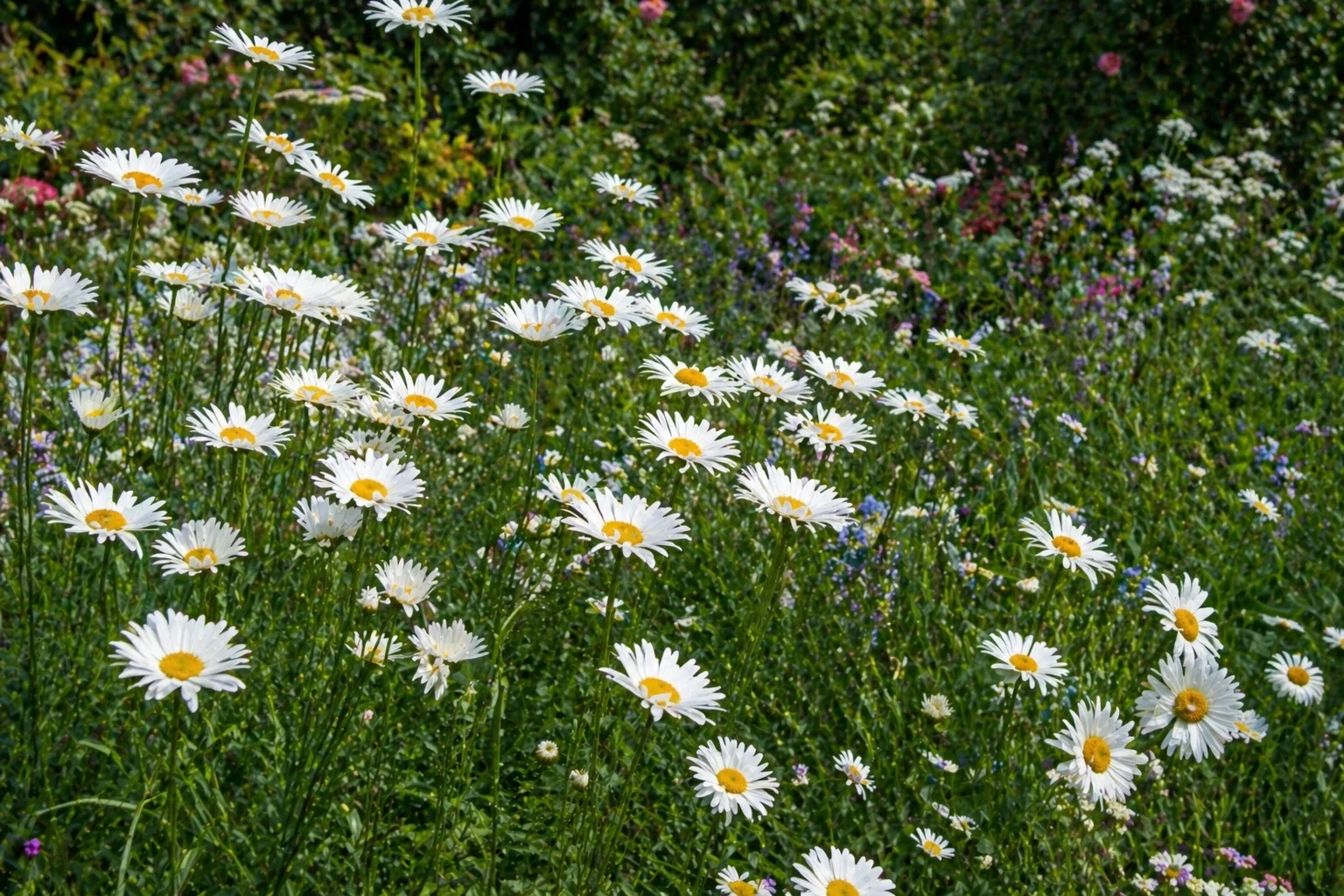
Daisies Planting Window for Saskatoon, SK
Shasta daisies: transplant in early spring or fall. Annual daisies (Bachelor's Button, Swan River Daisy): direct sow 2–4 weeks before last frost. Oxeye daisy is perennial — plant in spring or fall. Most daisies self-seed freely once established.
For Saskatoon, SK specifically, the recommended planting window is Late May through June 1 (perennials); cool annuals in early to mid-May.. Saskatoon averages only 350 mm of annual rainfall — irrigation is essential for most vegetables. Prairie soil is rich and black with excellent fertility but compacts easily. Extended midsummer daylight (16+ hours) partially compensates for the short season; Saskatchewan peas and root vegetables are legendary for quality.
Shasta daisies are reliably hardy to Zone 3 in Canada. Oxeye daisy (the wild meadow type) is hardy to Zone 2 but considered invasive in some Canadian provinces — check before planting.
Best Daisies Varieties for Saskatoon, SK
For Saskatoon, SK (Canadian Zone 3b), choose varieties rated for your zone or one zone colder for reliable winter survival. The Canadian-bred or tested varieties below perform well in Saskatchewan conditions.
Tallest Shasta cultivar (90 cm). Strong stems don't flop in summer rain. Excellent across all Canadian zones.
Compact (60 cm) classic Shasta. The standard for Canadian perennial gardens.
Pink, red, or white blooms with yellow centres. Source of natural pyrethrum insecticide. Reliably hardy in Calgary and Saskatoon.
Tender perennial — annual in cold Canadian zones. Use for container plantings only.
Native white daisy-form perennial. Spreads aggressively in moist Canadian gardens. Excellent ground cover for Prairie shaded sites.
How to Plant Daisies in Saskatoon
Sow method: direct sow or transplant. The steps below adapt the general planting advice for Saskatoon, SK's climate and timing.
- →Annual daisies: direct sow seeds 2 to 4 weeks before last frost when soil is workable.
- →Perennial daisies: transplant in early spring (after last frost) or fall (6 weeks before first frost).
- →Choose a site with full sun (6+ hours) — daisies in shade get leggy and bloom poorly.
- →Space Shasta daisies 45 cm (18 inches) apart; Oxeye 30 cm (12 inches); Painted 30 cm (12 inches).
- →Water consistently for the first month after transplanting; established daisies tolerate moderate drought.
- →Deadhead spent blooms to extend the flowering period and prevent self-seeding (or skip deadheading to encourage naturalizing).
Frequently Asked Questions about Daisies in Saskatoon, SK
When can I plant daisies in Saskatoon?
Plant daisies in Saskatoon from late may through june 1 (perennials); cool annuals in early to mid-may. based on the city's Canadian Zone 3b. Last spring frost: May 20; first fall frost: September 20; frost-free growing season: 123 days.
What Canadian zone is Saskatoon?
Saskatoon is in Canadian Zone 3b (USDA equivalent 3a). The climate is semi-arid prairie continental. Saskatoon averages only 350 mm of annual rainfall — irrigation is essential for most vegetables. Prairie soil is rich and black with excellent fertility but compacts easily. Extended midsummer daylight (16+ hours) partially compensates for the short season; Saskatchewan peas and root vegetables are legendary for quality.
Are daisies winter-hardy in Saskatoon?
Shasta daisies are reliably hardy to Zone 3 in Canada. Oxeye daisy (the wild meadow type) is hardy to Zone 2 but considered invasive in some Canadian provinces — check before planting.