When to Plant Daisies in Canada — 2026 Province Guide
Published:
'Daisies' covers a broad family of plants — from short-lived annuals (Bachelor's Button, Swan River Daisy) to long-lived perennials (Shasta, Oxeye, Painted) to native wildflowers (Black-Eyed Susan, Coneflower) — all sharing the classic daisy form: ray petals around a central disk. The right planting time depends on which type you're growing. Annual daisies tolerate light frost and can be direct-sown 2 to 4 weeks before last frost. Perennial daisies prefer spring transplanting after last frost or fall planting 6 weeks before first frost. This guide covers the right window for every US state and the right type for each climate zone. For Canadian gardeners specifically, the planting window shifts dramatically by province — BC coast starts in March or April, Ontario and Quebec wait until Victoria Day, and the Prairies hold until June 1. This guide covers province-specific windows, Canadian cold-hardy varieties, and the indoor seed-starting schedule that gives short-season Prairie gardeners a head start.
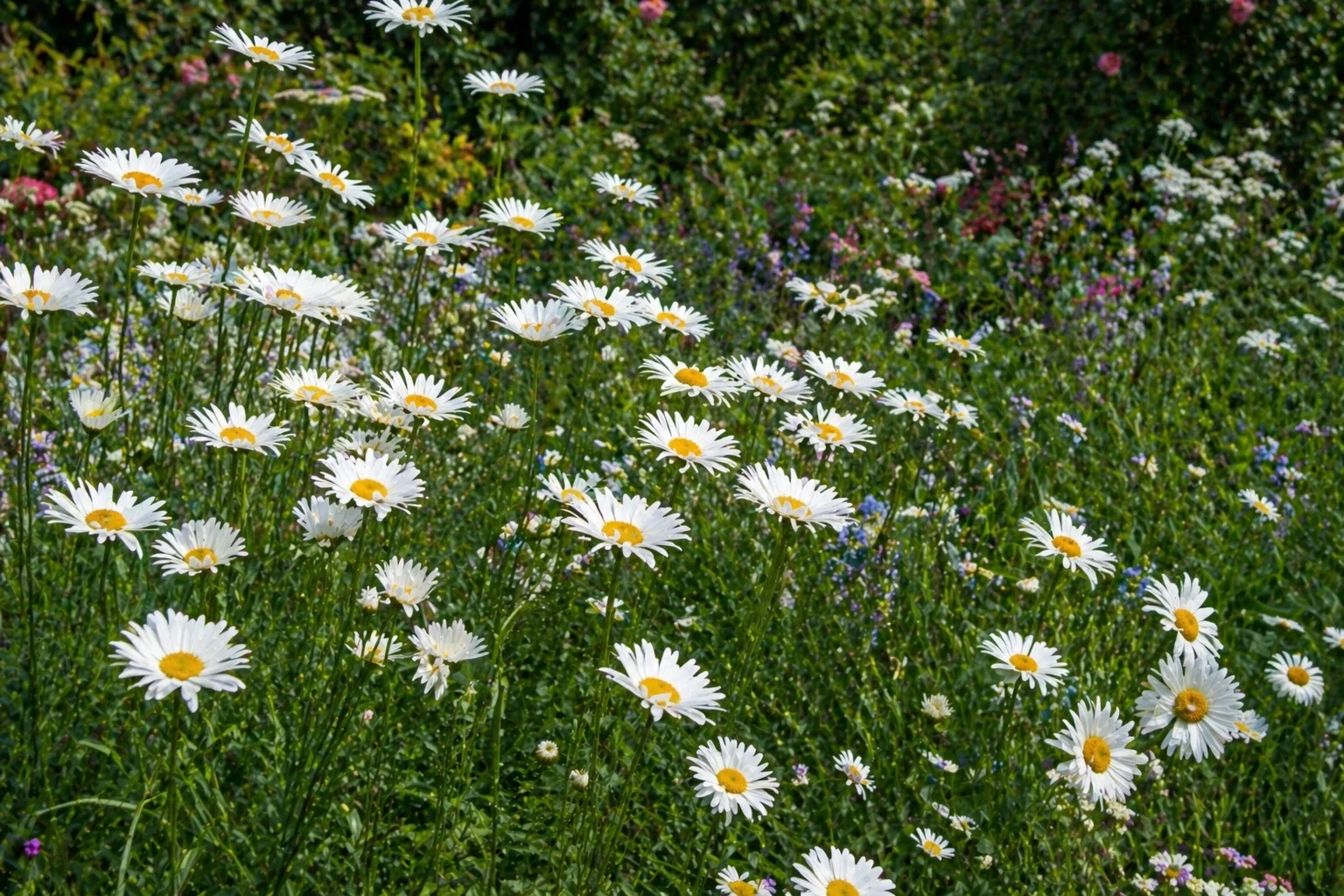
Quick Answer for Canada
Shasta daisies: transplant in early spring or fall. Annual daisies (Bachelor's Button, Swan River Daisy): direct sow 2–4 weeks before last frost. Oxeye daisy is perennial — plant in spring or fall. Most daisies self-seed freely once established.
When to Plant Daisies in Canada
| Region | Planting Window |
|---|---|
| BC Coast (Vancouver, Victoria) | March through April. |
| BC Interior (Kelowna, Kamloops) | April through May. |
| Ontario (Toronto, Ottawa) | Mid-May (cool annuals) or after Victoria Day (perennials). |
| Quebec (Montreal, Quebec City) | Late May. |
| Prairies (Calgary, Edmonton, Saskatoon, Winnipeg) | Late May through June 1 (perennials); cool annuals in early to mid-May. |
| Atlantic Canada (Halifax, Moncton) | Mid- to late May. |
Daisies by Province
Daisies by City
Canadian Varieties for Daisies
The following daisies varieties are bred for or tested in Canadian conditions. Match variety to your specific Canadian zone — generic varieties recommended in US guides may not survive Canadian winters.
Tallest Shasta cultivar (90 cm). Strong stems don't flop in summer rain. Excellent across all Canadian zones.
Compact (60 cm) classic Shasta. The standard for Canadian perennial gardens.
Pink, red, or white blooms with yellow centres. Source of natural pyrethrum insecticide. Reliably hardy in Calgary and Saskatoon.
Tender perennial — annual in cold Canadian zones. Use for container plantings only.
Native white daisy-form perennial. Spreads aggressively in moist Canadian gardens. Excellent ground cover for Prairie shaded sites.
How to Plant Daisies in Canada
Sow method: direct sow or transplant. The steps below apply to Canadian climates with seasonal adjustments built in (mulching for winter, frost protection, zone-appropriate timing).
- →Annual daisies: direct sow seeds 2 to 4 weeks before last frost when soil is workable.
- →Perennial daisies: transplant in early spring (after last frost) or fall (6 weeks before first frost).
- →Choose a site with full sun (6+ hours) — daisies in shade get leggy and bloom poorly.
- →Space Shasta daisies 45 cm (18 inches) apart; Oxeye 30 cm (12 inches); Painted 30 cm (12 inches).
- →Water consistently for the first month after transplanting; established daisies tolerate moderate drought.
- →Deadhead spent blooms to extend the flowering period and prevent self-seeding (or skip deadheading to encourage naturalizing).
- →Divide perennial clumps every 3 to 4 years in early spring to maintain vigor.
- →Cut back to ground level in late fall (Zone 4–7) or after first frost (Zone 8+); apply 5 cm (2 inches) of mulch in cold zones.
Winter Care for Daisies in Canada
Shasta daisies are reliably hardy to Zone 3 in Canada. Oxeye daisy (the wild meadow type) is hardy to Zone 2 but considered invasive in some Canadian provinces — check before planting.
For Canadian gardens specifically, fall preparation is critical. In Zone 3 to 5 (Calgary, Edmonton, Saskatoon, Regina, Winnipeg, Ottawa, Montreal, Halifax), apply 5 to 10 cm of mulch over perennial root zones after the first hard frost — shredded bark, fall leaves, or straw all work. Avoid mulching too early (before consistent freezing) as this can encourage rodent nesting in the warm mulch.
For Zone 6 to 8 (Toronto, Hamilton, London, Vancouver, Victoria), winter protection is less critical but still beneficial — apply 3 to 5 cm of mulch to retain soil moisture during winter dry spells. In coastal BC gardens, winter wet rather than winter cold is the bigger threat — ensure good drainage rather than focusing on cold protection.
Shasta daisies are excellent perennials for Calgary, Edmonton, Saskatoon, and Winnipeg gardens. They withstand Prairie freeze-thaw cycles well and self-seed lightly to fill in over time. Painted daisy (Tanacetum coccineum) is also Zone 3-hardy and adds pink and red colours to Prairie daisy plantings.
Daisies Monthly Care Calendar for Canada
January–March: Dormant period across Canada. Plan and order seeds. Indoor seed starting begins in March for slow germinators (petunias, lavender, begonias) — 10 to 12 weeks before last frost.
April: BC coast: outdoor planting begins for cool-season daisies. Rest of Canada: continue indoor seed starting; bare-root planting in Ontario.
May (early to mid): Cool-season planting in Ontario, Quebec, and Atlantic Canada. Cool-season annual daisies (Bachelor's Button, Swan River Daisy) can go out 2 to 4 weeks before Victoria Day in Ontario and Quebec — they tolerate frost down to -7°C. Shasta daisy and other perennials wait until after Victoria Day for safe transplanting.
Late May to early June: Prairie planting window. Saskatoon, Regina, Winnipeg can plant after May 24. Calgary and Edmonton wait until June 1 to 7.
June: Peak Prairie planting. Continue Ontario summer growth — deadhead annuals weekly, water deeply once a week.
July–August: Full summer. Established perennials at peak. Deadhead spent blooms to extend the bloom period.
September: Fall planting window in southern Canada. Plant new perennials, divide overgrown clumps, plant fall bulbs (tulips, daffodils). Calgary and Edmonton: stop perennial planting by mid-September.
October: Final mulching. Lift tender perennials (dahlias, cannas) before first hard frost. Stop watering perennials. Last bulb planting in southern Ontario and BC.
November–December: Dormancy. No outdoor work needed. Plan next year, review winter survival.
Common Mistakes Planting Daisies in Canada
The most common Canadian daisy mistake is planting Oxeye daisy (Leucanthemum vulgare) without checking provincial invasive species rules. Oxeye daisy is classified as a noxious weed in BC, Alberta, and Saskatchewan — it spreads aggressively and reduces livestock forage value on Prairie pastures. Plant Shasta daisy (Leucanthemum × superbum, the cultivated hybrid) instead for similar appearance without invasive risk.
The second common mistake is over-watering established Shasta daisies. Shasta daisies are drought-tolerant once established and develop crown rot under daily Canadian Prairie watering schedules. Water deeply once a week during summer drought; reduce to nothing during normal rainfall periods.
Third mistake: cutting back Shasta daisies in fall. Standing daisy stems and seedheads provide overwintering habitat for native Canadian bees and birds (chickadees, finches feed on seeds in winter). Wait until late spring to cut back — earlier cleanup destroys overwintering native pollinator populations.
Frequently Asked Questions
When can I plant daisies in Canada?
Canadian planting windows for daisies vary by province: BC coast march through april.; Ontario mid-may (cool annuals) or after victoria day (perennials).; Quebec late may.; Prairies late may through june 1 (perennials); cool annuals in early to mid-may.; Atlantic Canada mid- to late may..
Are daisies winter-hardy in Canada?
Shasta daisies are reliably hardy to Zone 3 in Canada. Oxeye daisy (the wild meadow type) is hardy to Zone 2 but considered invasive in some Canadian provinces — check before planting.
What daisies varieties are best for the Canadian Prairies?
Shasta daisies are excellent perennials for Calgary, Edmonton, Saskatoon, and Winnipeg gardens. They withstand Prairie freeze-thaw cycles well and self-seed lightly to fill in over time. Painted daisy (Tanacetum coccineum) is also Zone 3-hardy and adds pink and red colours to Prairie daisy plantings.
Should I plant daisies on Victoria Day?
Cool-season annual daisies (Bachelor's Button, Swan River Daisy) can go out 2 to 4 weeks before Victoria Day in Ontario and Quebec — they tolerate frost down to -7°C. Shasta daisy and other perennials wait until after Victoria Day for safe transplanting.
How do I start daisies indoors in Canada?
Annual daisies (Bachelor's Button, Swan River Daisy): direct sow 4 to 6 weeks before last frost in cool soil. Perennial daisies (Shasta): buy nursery transplants — seed germination is slow.