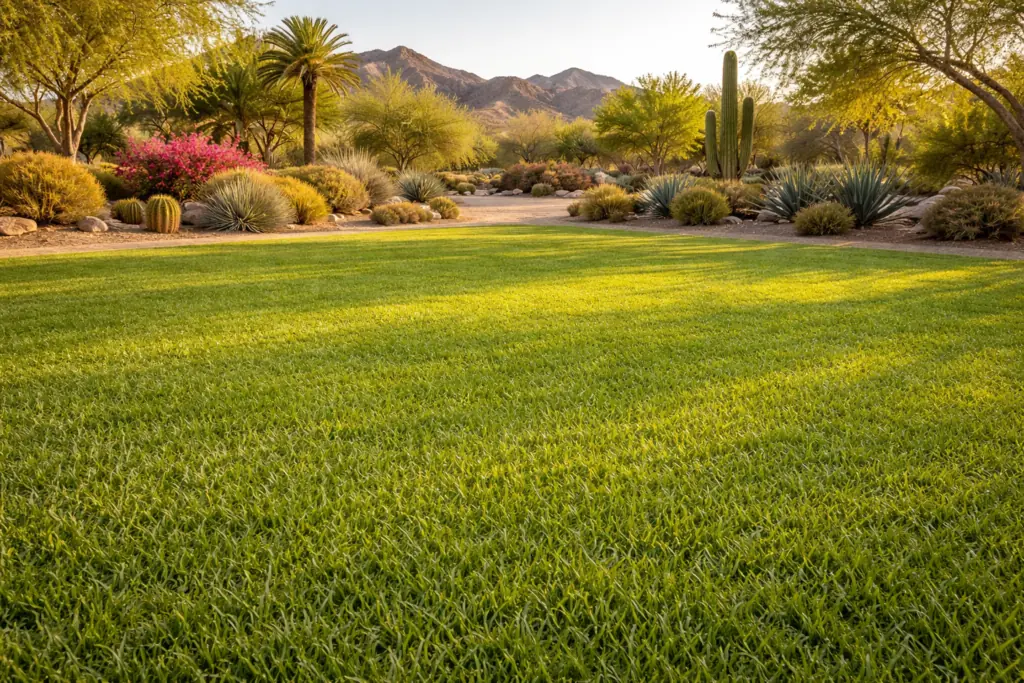
Southwest Lawn Care Guide
Share:
The Southwest is characterized by extreme heat, low humidity, and limited rainfall that demands drought-tolerant grass varieties and efficient irrigation. Desert landscapes dominate, but well-maintained lawns are achievable with the right grass selection and water management. Many municipalities enforce strict water restrictions that influence lawn size and irrigation practices.
Key Facts
- Annual rainfall averages just 5–15 inches in most areas
- Summer temperatures routinely exceed 110°F in Phoenix and Tucson
- Water restrictions limit irrigation to 2–3 days per week in most cities
- Bermuda grass is the dominant lawn grass, used in over 80% of irrigated lawns
- Many homeowners are converting lawn areas to xeriscaping to reduce water use
Recommended Grass Types
BermudaBahiagrassBuffalo GrassBlue Grama
Common Challenges
- Extreme heat above 110°F can stress even bermuda grass if not watered properly
- Water restrictions limit when and how much you can irrigate
- Alkaline soils with high pH require sulfur amendments for optimal grass growth
- Dust and wind erosion damage exposed soil and thin turf areas
Popular Cities in the Southwest
Houston
Texas · Zone 9a
Dallas
Texas · Zone 8a
Phoenix
Arizona · Zone 9b
Tampa
Florida · Zone 9b
Riverside
California · Zone 9b
Las Vegas
Nevada · Zone 9a
Sacramento
California · Zone 9b
Orlando
Florida · Zone 9b
San Jose
California · Zone 9b
Fort Worth
Texas · Zone 8a
Tucson
Arizona · Zone 9a
El Paso
Texas · Zone 8a
McAllen
Texas · Zone 9b
Charleston
South Carolina · Zone 9a
Fresno
California · Zone 9b
USDA Zones in This Region
Frequently Asked Questions
What is the most drought-tolerant grass for the Southwest?
Bermuda grass is the most drought-tolerant turf grass widely used in the Southwest, capable of surviving on as little as 1 inch of water per week once established. Hybrid bermuda varieties like Tifway 419 and TifTuf offer improved drought resistance over common bermuda. Buffalo grass and blue grama are native options that need even less water but produce a different look than traditional turf. For the absolute lowest water use, consider reducing lawn area and using desert landscaping in low-traffic zones.
How do I keep a green lawn in Arizona?
Maintaining a green lawn in Arizona requires efficient irrigation, heat-tolerant grass, and smart timing. Plant bermuda grass for summer green and overseed with annual ryegrass in October for winter color. Water deeply every 3–4 days during summer, applying 1–1.5 inches per week total. Set your irrigation to run before sunrise when evaporation is lowest, and keep mowing height at 1.5–2 inches to reduce water demand.
When should I overseed my Southwest lawn?
Overseed bermuda lawns with annual or perennial ryegrass in mid-October when daytime temperatures drop below 85°F. This gives the ryegrass cool nights for germination while bermuda is transitioning to dormancy. Mow your bermuda short (0.5–1 inch) before overseeding to reduce competition and improve seed-to-soil contact. The ryegrass will provide green color through winter and naturally die off in May as bermuda resumes growth.