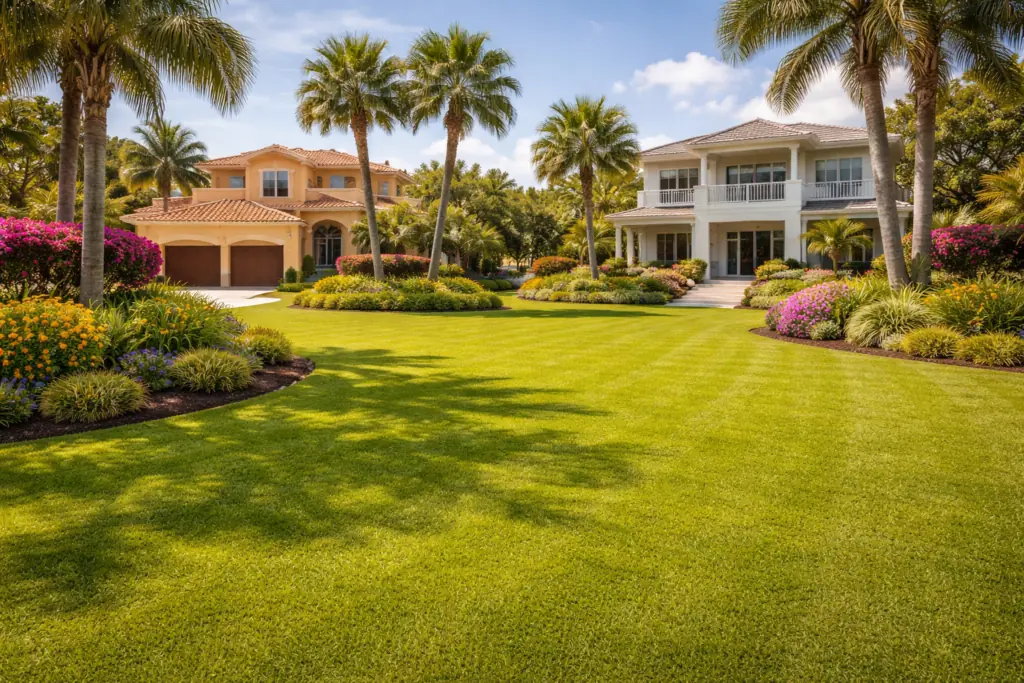
USDA Zone 9A Lawn Care Guide
Zone 9a enjoys a year-round growing season with warm to hot temperatures most of the year. Freezes are rare and brief, lasting only a few hours on the coldest winter nights. The long season allows for lush, tropical-looking lawns but also demands constant vigilance against pests, disease, and irrigation management.
Seasonal Lawn Care Highlights
🌱 Spring
Begin your heaviest fertilization schedule in March with a slow-release nitrogen product. Apply pre-emergent in February to catch early-germinating weeds.
☀️ Summer
Water deeply early in the morning three times per week. Watch for gray leaf spot in St. Augustine and large patch in zoysia during the rainy season.
🍂 Fall
Reduce nitrogen fertilizer after September to slow top growth before winter. Continue regular mowing but begin reducing frequency as growth slows slightly.
❄️ Winter
Mow less frequently but don’t stop entirely. Apply a light potassium application to build cold tolerance in case of an unusual freeze event.
Best Grass Types for Zone 9A
Cities in Zone 9A
Houston
Texas · Zone 9a
Las Vegas
Nevada · Zone 9a
Tucson
Arizona · Zone 9a
Charleston
South Carolina · Zone 9a
Myrtle Beach
South Carolina · Zone 9a
Corpus Christi
Texas · Zone 9a
Henderson
Nevada · Zone 9a
Savannah
Georgia · Zone 9a
North Las Vegas
Nevada · Zone 9a
Enterprise
Nevada · Zone 9a
Deltona
Florida · Zone 9a
Spring Valley
Nevada · Zone 9a
Sunrise Manor
Nevada · Zone 9a
Galveston
Texas · Zone 9a
Paradise
Nevada · Zone 9a
Spring Hill
Florida · Zone 9a
Leesburg
Florida · Zone 9a
Pasadena
Texas · Zone 9a
Beaumont
Texas · Zone 9a
Yuma
Arizona · Zone 9a