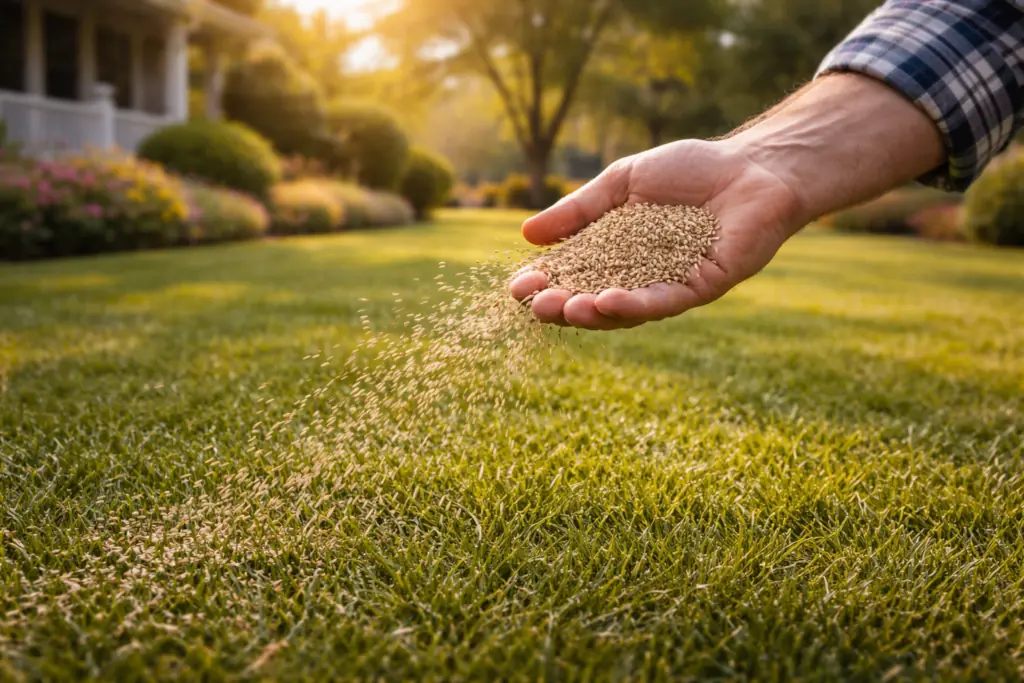
When to Overseed Your Lawn in North Charleston, SC
Overseeding fills in thin patches, improves lawn density, and refreshes grass over time. In North Charleston, South Carolina (USDA zone 9a), timing your overseeding to match your grass type's growing season is critical for good germination.
Overseeding Schedule for North Charleston
Early Fall (cool-season)
Primary overseeding window
September–October is ideal for cool-season grasses. Soil is warm enough for germination but air cools down, reducing competition from weeds.
Spring (warm-season)
Warm-season overseeding
Late spring after soil hits 65°F is ideal for bermuda, zoysia, and st. augustine. Pair with aeration for best seed-to-soil contact.
Winter overseeding
Ryegrass for color
In zones 8–10, many homeowners overseed dormant warm-season lawns with annual ryegrass in November for winter green color.
Preparing Your North Charleston Lawn for Overseeding
Seed-to-soil contact is the single biggest factor in overseeding success. Without direct soil contact, germination rates fall below 30%. Proper preparation gets them above 80%.
Step 1 — Mow Short and Scalp
Two weeks before overseeding, mow your North Charleston lawn to 1.5–2 inches — lower than normal. This reduces shade competition on new seedlings and improves seeder access to soil.
Step 2 — Dethatch if Needed
If your thatch layer exceeds 0.5 inches, rake or dethatch before seeding. Seed landing on thick thatch dries out before germination.
Step 3 — Core Aerate First
Aeration and overseeding is the most effective combination in lawn care. Seed dropped directly into aeration channels contacts moist sub-soil and germinates at 40–60% higher rates. In North Charleston, always aerate the same day or day before you overseed.
Step 4 — Rake Lightly
After aeration, lightly rake the surface to break up plugs and create a rough, open seedbed. Do not rake aggressively — you want texture, not bare soil.
Choosing the Right Seed for North Charleston
In North Charleston (Zone 9a), your overseeding goal determines your seed choice:
Thickening existing Bermuda: Use hulled Bermuda seed for fastest establishment. Seeding rate: 1–2 lbs per 1,000 sq ft in thin areas, 0.5 lbs for light overseeding.
Adding shade tolerance: Tall Fescue tolerates more shade than Bermuda. Use Turf-Type Tall Fescue (TTTF) blends at 5–8 lbs per 1,000 sq ft.
Winter color on dormant Bermuda: Annual ryegrass is the standard choice — fast germination (5–7 days at 50–65°F), bright green color, and it naturally dies off in spring as Bermuda reactivates. Apply in October–November in North Charleston at 8–10 lbs per 1,000 sq ft.
Watering After Overseeding in North Charleston
The watering schedule after overseeding is the most critical factor in success — and the most commonly gotten wrong.
Days 1–14 (germination phase): Water lightly 2–3 times per day. Goal: keep the top 0.5–1 inch of soil consistently moist. Seeds drying out in this window do not recover. In North Charleston’s climate, early morning plus early afternoon watering is ideal.
Days 15–30 (establishment phase): Reduce to once daily, watering deeper (1–1.5 inches). Encouraging roots to reach down.
Day 30+ (normal schedule): Return to your standard watering schedule, now typically 2–3 times per week.
First mow: Wait until new grass reaches 3–3.5 inches — typically 3–4 weeks after seeding in North Charleston. Mowing too early shears off seedlings before roots establish.
When NOT to Overseed in North Charleston
Avoid overseeding in North Charleston during:
Peak summer heat (June–August): Soil temperatures above 90°F stress new seedlings fatally. Even shade-tolerant varieties struggle to establish.
Spring if using pre-emergent: Pre-emergent herbicides prevent ALL seed germination — including grass seed. If you applied crabgrass preventer in spring, wait the full label period (typically 12–16 weeks) before overseeding.
Late November or December: In North Charleston, soil cools below 50°F as winter approaches — germination stops. Any seed down after this date sits dormant until spring, exposed to washout and birds.
Cost to Overseed in North Charleston
DIY overseeding in North Charleston: Seed cost runs $25–60 per 1,000 sq ft depending on grass type. A typical 5,000 sq ft lawn requires $125–300 in seed. Add $70–100 for core aerator rental and the total comes to $200–400 for a complete DIY aerate + overseed.
Professional overseeding in North Charleston: Most lawn care companies charge $150–350 for aeration + overseeding combined on a standard residential lot. Premium seed blends or larger lots push costs to $400–600.
Best value: DIY aeration + professional overseeding is uncommon but some companies will overseed only if you aerate yourself — ask local North Charleston companies about this option.
Best Grass Types for Zone 9a in North Charleston
Month-by-Month Timing for North Charleston
| Month | Action | Notes |
|---|---|---|
| August | Prepare soil, mow short | Scalp warm-season lawns |
| September | Prime overseeding window | Cool-season grasses |
| October | Last chance for fall overseeding | Keep moist until germination |
| April–May | Warm-season overseeding | Soil temp 65°F+ |
| November | Winter ryegrass (zones 8–10) | Temporary color only |
More Lawn Care Guides for North Charleston
Looking for the right spreader for seed? See our guide to the best broadcast spreaders →
Frequently Asked Questions
When is the best time to overseed in North Charleston?
For cool-season grasses in North Charleston, early fall (September–October) is ideal. For warm-season grasses, late spring after soil warms to 65°F gives the best results.
Should I aerate before overseeding in North Charleston?
Yes — core aerating before overseeding in North Charleston significantly improves germination by creating seed-to-soil contact and relieving compaction.
How long does grass seed take to germinate in North Charleston?
Most grass seeds germinate in 7–21 days depending on soil temperature and moisture. In North Charleston's fall season, expect germination in 10–14 days for fescue and ryegrass.
How long does it take to see results after overseeding in North Charleston?
Kentucky Bluegrass takes 14–21 days to germinate and 6–8 weeks to visible fill-in. Tall Fescue and Ryegrass germinate in 7–10 days with visible coverage in 3–4 weeks. Bermuda seed takes 10–14 days with fill-in over 4–6 weeks. Thin patches will continue thickening through the first full growing season.
Should I fertilize after overseeding in North Charleston?
Use a starter fertilizer immediately after overseeding — look for a formula with higher phosphorus (middle number) such as 10-18-6 or 12-24-8. Phosphorus drives root development in new seedlings. Do NOT use a fertilizer that contains a pre-emergent herbicide — it will prevent your new seed from germinating.