Summer Lawn Care in Iowa City, IA
Published:
Here is your complete summer lawn care guide for Iowa City, IA. In USDA zone 5b, summer is a critical time to keep your lawn healthy and looking its best. Follow these tasks and timing recommendations tailored to your area.
Key Lawn Care Dates for Iowa City
| Date | When | Why |
|---|---|---|
| Mowing season | Early April through late october (198 growing days) | Cool-season grasses most active spring and fall |
What to do this summer
- 1
Mow high
Raise your mowing height to 3.5–4 inches during Iowa City’s summer months. Taller grass shades the soil, reducing surface temperature and water evaporation by up to 25%. Mow every 10–14 days — cool-season grasses slow their growth significantly in summer heat. Never remove more than one-third of the blade in summer — scalping stresses already-hot cool-season grass. Keep your mower blade sharp — dull blades tear grass rather than cutting it, creating brown tips and disease entry points.
- 2
Water deeply 2-3x per week
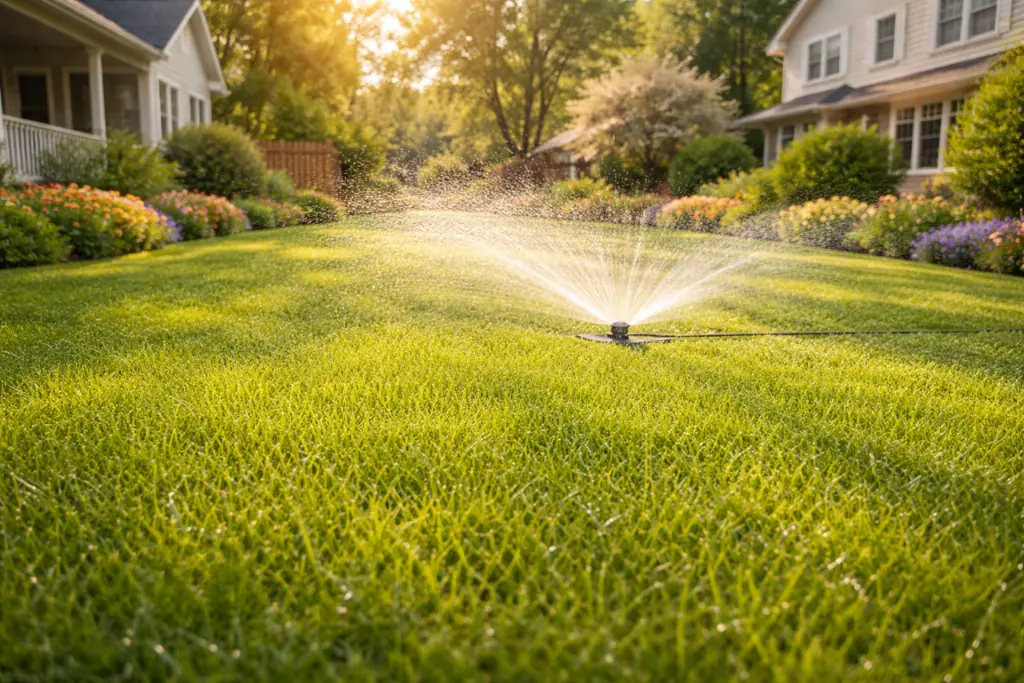
Aim for 1 to 1.5 inches of water per week, including rainfall. Water deeply 2–3 times per week rather than lightly every day — deep watering encourages roots to grow down, improving drought resistance. Always water early in the morning (5–9 AM) in Iowa City to reduce evaporation loss and lower the risk of fungal disease from overnight moisture. Use a rain gauge or tuna can to measure output. If you see runoff before reaching your target depth, use a cycle-and-soak method — run sprinklers for 10 minutes, wait 30 minutes, then repeat.
- 3
Watch for grubs
Check for brown patches that peel up easily like carpet — a classic sign of grub damage in Iowa City. White grubs (Japanese beetle and June bug larvae) feed on grass roots from May through August. To confirm, pull back a section of brown turf — if you find more than 5–10 C-shaped white grubs per square foot, treatment is needed. Apply a grub-specific product containing chlorantraniliprole (GrubEx) or trichlorfon (Dylox) for active infestations. Preventive applications work best in June before eggs hatch.
- 4
Spot-treat weeds
Hand-pull or spot-spray broadleaf weeds like dandelions, clover, and plantain rather than blanket-applying herbicide across Iowa City lawns in summer. Broadcast herbicide application during summer heat stresses grass and can cause yellowing or burn. Use a selective broadleaf herbicide (2,4-D or triclopyr) applied directly to weed foliage with a pump sprayer. The best approach is a thick, healthy lawn that outcompetes weeds naturally — plan fall overseeding to fill any thin areas where weeds are taking hold.
- 5
Hold off on fertilizing
Avoid fertilizer entirely during peak summer heat in Iowa City. Cool-season grasses slow or stop growing when daytime temperatures consistently exceed 85°F — fertilizer applied during this period cannot be absorbed and may burn already-stressed grass. If your lawn has gone semi-dormant (turned brown but roots are alive), that is a healthy survival response — do not fertilize to try to force green color. Resume fertilizing in early fall when temperatures cool and active growth resumes.
Best grass types for your zone
When to act in Iowa City
| Task | Typical Window | Notes |
|---|---|---|
| Watering schedule | June - August | 1 - 1.5 inches per week |
| Mow high (3-4 inches) | June - August | Never remove more than 1/3 |
| Grub treatment | June - July | Before eggs hatch |
| Spot-treat weeds | June - August | Hand-pull or spot-spray only |
| Monitor for drought stress | July - August | Watch for blue-grey tint |
Signs Your Lawn Needs Attention This Summer
Footprints that stay visible after walking across
Grass blades not springing back is the earliest sign of drought stress. Water deeply within 24 hours.
Blue-grey tint to grass blades
This color shift means your lawn is conserving water. Increase irrigation to 1-1.5 inches per week.
Brown irregular patches expanding outward
Could be grub damage or fungal disease. Pull on the brown grass — if it lifts like carpet, grubs are likely.
Excessive weed pressure in thin areas
Weeds exploit gaps in turf. Spot-treat with selective herbicide and plan fall overseeding to thicken up.
Scalped appearance from cutting too short
Raise mowing height to at least 3 inches in summer. Short grass exposes soil to sun and heat stress.
About Iowa City's Lawn Care Climate
Iowa City, Iowa sits in USDA hardiness zone 5b, which means residents have a slightly longer growing season than zone 5a, with winters cold enough to fully dormant all warm-season grasses. Cool-season grasses dominate. Homeowners in Iowa City should plan their summer lawn care around these local climate patterns for the best results.
More Lawn Care Guides for Iowa City
Frequently Asked Questions
How often should I water my lawn in Iowa City in summer?
Water your Iowa City lawn deeply 2 to 3 times per week during summer, aiming for 1 to 1.5 inches of water total. Water early in the morning to reduce evaporation.
Why is my lawn turning brown in summer?
Brown patches in Iowa City during summer are often caused by heat stress, drought, or grub damage. Check your watering schedule and inspect the soil for grubs.
Should I fertilize in summer in Iowa City?
Avoid heavy fertilizing during the hottest months in Iowa City. Fertilizer can burn stressed grass. If needed, use a light organic fertilizer in early summer only.
Should I let my lawn go dormant in summer in Iowa City?
Cool-season grasses in Iowa City naturally go semi-dormant when daytime temperatures consistently exceed 85°F. Allowing dormancy is healthier than stress-watering — water deeply once every 2–3 weeks to keep roots alive. Warm-season grasses thrive in summer heat and should NOT go dormant.
How often should I mow in summer in Iowa City?
In Iowa City, mow warm-season grasses every 5–7 days during peak growth and cool-season grasses every 10–14 days. Keep blade height at 3–4 inches in summer. Never cut more than one-third of the blade in summer heat — scalping stresses already-hot grass.