When to Plant Spring Flowers in Canada — 2026 Province Guide
Published:
Spring flowers create the most anticipated garden display of the year — but only when planted correctly the previous fall (for bulbs) or in early spring (for cool-season annuals). The two main categories work on different schedules: spring-blooming bulbs (tulips, daffodils, hyacinths, crocuses) must go in the ground in fall to receive winter cold dormancy. Spring-blooming annuals (pansies, snapdragons, alyssum) can tolerate light frost and get planted 2 to 4 weeks before last frost. This guide covers the right window for every US state and the species that produce the longest spring color. For Canadian gardeners specifically, the planting window shifts dramatically by province — BC coast starts in March or April, Ontario and Quebec wait until Victoria Day, and the Prairies hold until June 1. This guide covers province-specific windows, Canadian cold-hardy varieties, and the indoor seed-starting schedule that gives short-season Prairie gardeners a head start.
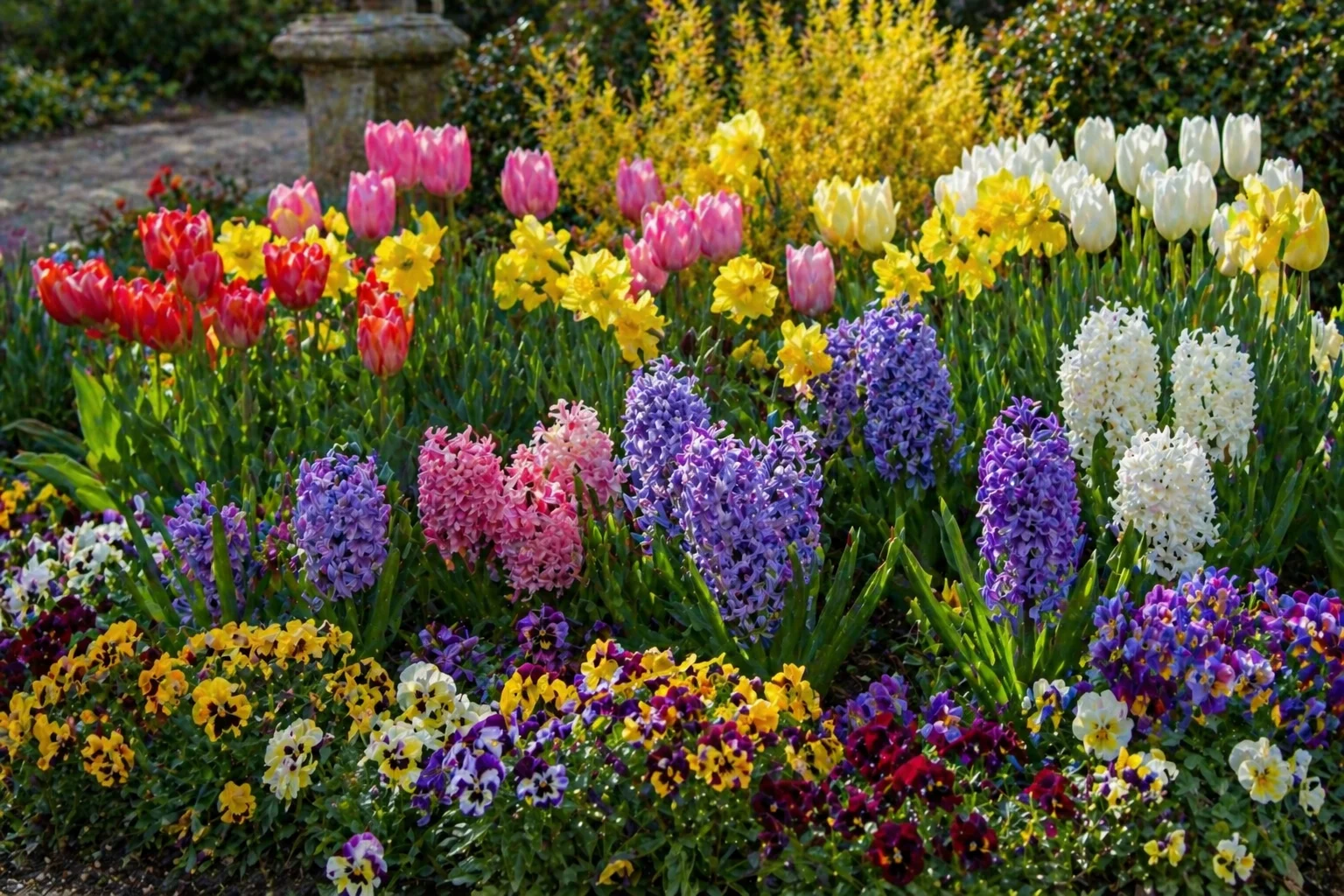
Quick Answer for Canada
Spring-blooming bulbs (tulips, daffodils, hyacinths, crocuses) are planted in fall for spring bloom. Spring-blooming annuals (pansies, snapdragons) are planted 2–4 weeks before last frost. Start of spring planting season: when soil reaches 4°C / 40°F.
When to Plant Spring Flowers in Canada
| Region | Planting Window |
|---|---|
| BC Coast (Vancouver, Victoria) | Bulbs October. Cool annuals March-April. |
| BC Interior (Kelowna, Kamloops) | Bulbs September-October. Cool annuals April-May. |
| Ontario (Toronto, Ottawa) | Bulbs October. Cool annuals 2-4 weeks before Victoria Day. |
| Quebec (Montreal, Quebec City) | Bulbs late September-October. Cool annuals early May. |
| Prairies (Calgary, Edmonton, Saskatoon, Winnipeg) | Bulbs September. Cool annuals mid-May. |
| Atlantic Canada (Halifax, Moncton) | Bulbs October. Cool annuals mid- to late May. |
Spring Flowers by Province
Spring Flowers by City
Canadian Varieties for Spring Flowers
The following spring flowers varieties are bred for or tested in Canadian conditions. Match variety to your specific Canadian zone — generic varieties recommended in US guides may not survive Canadian winters.
The most reliable Canadian spring bulb. Squirrel-resistant (toxic to rodents). Naturalize over decades in Canadian gardens.
Earliest spring bloom — often pushes through Prairie snow in March. Naturalize beautifully in Canadian lawns.
Plant in fall, October-November. Canada's natural cold provides perfect stratification.
Fragrant spring bulbs. Marginal in Zone 3 (Saskatchewan/Manitoba) without protection. Best for Ontario, Quebec, BC, Atlantic Canada.
Cool-season annuals — frost-tolerant. Plant 2 to 4 weeks before Victoria Day for spring colour. Often available at Canadian Tire and garden centres in March.
How to Plant Spring Flowers in Canada
Sow method: bulb (fall) or direct/transplant (spring). The steps below apply to Canadian climates with seasonal adjustments built in (mulching for winter, frost protection, zone-appropriate timing).
- →Spring bulbs: plant in fall (September through November in Zones 3–7; November through January in Zones 8–9) at 3x the bulb's height deep.
- →Cool-season annuals: transplant 2 to 4 weeks before last frost when soil reaches 4°C (40°F).
- →Choose sites with full sun for spring bulbs (foliage needs sun to rebuild bulbs after bloom).
- →Apply bone meal or bulb fertilizer at the bottom of bulb planting holes.
- →After spring bulbs bloom, cut spent flowers but leave foliage to yellow naturally — the foliage rebuilds the bulb for next year.
- →Water cool-season annuals weekly during dry periods; they tolerate dry soil better than warm-season annuals.
- →Mulch newly planted bulbs after first hard freeze to prevent freeze-thaw heaving.
- →In Zone 8+, refrigerate tulip and hyacinth bulbs for 8 to 10 weeks before planting to provide artificial dormancy.
Winter Care for Spring Flowers in Canada
Spring bulbs (tulips, daffodils, crocuses, hyacinths) are reliably hardy across all Canadian zones. Cool-season annuals (pansies, snapdragons) tolerate light frost but will winter-kill in unprotected plantings.
For Canadian gardens specifically, fall preparation is critical. In Zone 3 to 5 (Calgary, Edmonton, Saskatoon, Regina, Winnipeg, Ottawa, Montreal, Halifax), apply 5 to 10 cm of mulch over perennial root zones after the first hard frost — shredded bark, fall leaves, or straw all work. Avoid mulching too early (before consistent freezing) as this can encourage rodent nesting in the warm mulch.
For Zone 6 to 8 (Toronto, Hamilton, London, Vancouver, Victoria), winter protection is less critical but still beneficial — apply 3 to 5 cm of mulch to retain soil moisture during winter dry spells. In coastal BC gardens, winter wet rather than winter cold is the bigger threat — ensure good drainage rather than focusing on cold protection.
Calgary, Edmonton, Saskatoon, Regina, and Winnipeg are excellent spring-bulb climates — Prairie winters provide ideal cold stratification for tulips, daffodils, hyacinths, and crocuses. Plant bulbs in September before hard freeze. Crocuses are often the first flowers to bloom in Prairie gardens, sometimes pushing through late snow in March.
Spring Flowers Monthly Care Calendar for Canada
January–March: Dormant period across Canada. Plan and order seeds. Indoor seed starting begins in March for slow germinators (petunias, lavender, begonias) — 10 to 12 weeks before last frost.
April: BC coast: outdoor planting begins for cool-season spring flowers. Rest of Canada: continue indoor seed starting; bare-root planting in Ontario.
May (early to mid): Cool-season planting in Ontario, Quebec, and Atlantic Canada. Spring bulbs bloom BEFORE Victoria Day in Ontario and Quebec — typically late March through mid-May. Cool-season annuals (pansies, snapdragons) can go out 2 to 4 weeks BEFORE Victoria Day, providing colour during the spring bulb season.
Late May to early June: Prairie planting window. Saskatoon, Regina, Winnipeg can plant after May 24. Calgary and Edmonton wait until June 1 to 7.
June: Peak Prairie planting. Continue Ontario summer growth — deadhead annuals weekly, water deeply once a week.
July–August: Full summer. Cool-season types may struggle in Canadian summer heat — provide afternoon shade or accept summer slowdown.
September: Fall planting window in southern Canada. Plant new perennials, divide overgrown clumps, plant fall bulbs (tulips, daffodils). Calgary and Edmonton: stop perennial planting by mid-September.
October: Final mulching. Lift tender perennials (dahlias, cannas) before first hard frost. Stop watering perennials. Last bulb planting in southern Ontario and BC.
November–December: Dormancy. No outdoor work needed. Plan next year, review winter survival.
Common Mistakes Planting Spring Flowers in Canada
The most common Canadian spring flower mistake is planting bulbs at the wrong depth. Tulips and daffodils need to be planted 15 to 20 cm deep, measuring from the top of the bulb to the soil surface. Shallow planting in Canadian gardens produces weak stems, reduced return bloom, and bulbs heaved out of soil during freeze-thaw cycles.
The second common mistake is removing bulb foliage too soon after bloom. Yellowing foliage is rebuilding the bulb's energy reserves for next spring. Cut foliage back only when it has turned completely yellow and pulls away easily — typically 6 to 8 weeks after the last flower. Canadian gardeners often clean up too aggressively in May, destroying next year's bloom.
Third mistake: trying to plant spring-blooming bulbs in spring. Bulbs sold in spring at Canadian garden centres almost never bloom — they have not received the required winter cold dormancy. Always buy bulbs in September and plant before hard freeze.
Frequently Asked Questions
When can I plant spring flowers in Canada?
Canadian planting windows for spring flowers vary by province: BC coast bulbs october. cool annuals march-april.; Ontario bulbs october. cool annuals 2-4 weeks before victoria day.; Quebec bulbs late september-october. cool annuals early may.; Prairies bulbs september. cool annuals mid-may.; Atlantic Canada bulbs october. cool annuals mid- to late may..
Are spring flowers winter-hardy in Canada?
Spring bulbs (tulips, daffodils, crocuses, hyacinths) are reliably hardy across all Canadian zones. Cool-season annuals (pansies, snapdragons) tolerate light frost but will winter-kill in unprotected plantings.
What spring flowers varieties are best for the Canadian Prairies?
Calgary, Edmonton, Saskatoon, Regina, and Winnipeg are excellent spring-bulb climates — Prairie winters provide ideal cold stratification for tulips, daffodils, hyacinths, and crocuses. Plant bulbs in September before hard freeze. Crocuses are often the first flowers to bloom in Prairie gardens, sometimes pushing through late snow in March.
Should I plant spring flowers on Victoria Day?
Spring bulbs bloom BEFORE Victoria Day in Ontario and Quebec — typically late March through mid-May. Cool-season annuals (pansies, snapdragons) can go out 2 to 4 weeks BEFORE Victoria Day, providing colour during the spring bulb season.
How do I start spring flowers indoors in Canada?
Spring bulbs are not started indoors — buy fall bulbs and plant directly. Cool annuals (pansies, snapdragons): start indoors 8 to 10 weeks before last frost.