When to Plant Native Flowers in Canada — 2026 Province Guide
Published:
Native flowers are plants that evolved in your specific region — and they dramatically outperform non-native ornamentals in lower water needs, lower fertilizer needs, lower pest pressure, and pollinator support. The 2024 Doug Tallamy research at the University of Delaware showed that native plants support 4 to 35 times more native insect species than introduced ornamentals. This guide covers the right planting window for every US state, the best native flowers for each region, and the establishment techniques that produce thriving native gardens. For Canadian gardeners specifically, the planting window shifts dramatically by province — BC coast starts in March or April, Ontario and Quebec wait until Victoria Day, and the Prairies hold until June 1. This guide covers province-specific windows, Canadian cold-hardy varieties, and the indoor seed-starting schedule that gives short-season Prairie gardeners a head start.
Quick Answer for Canada
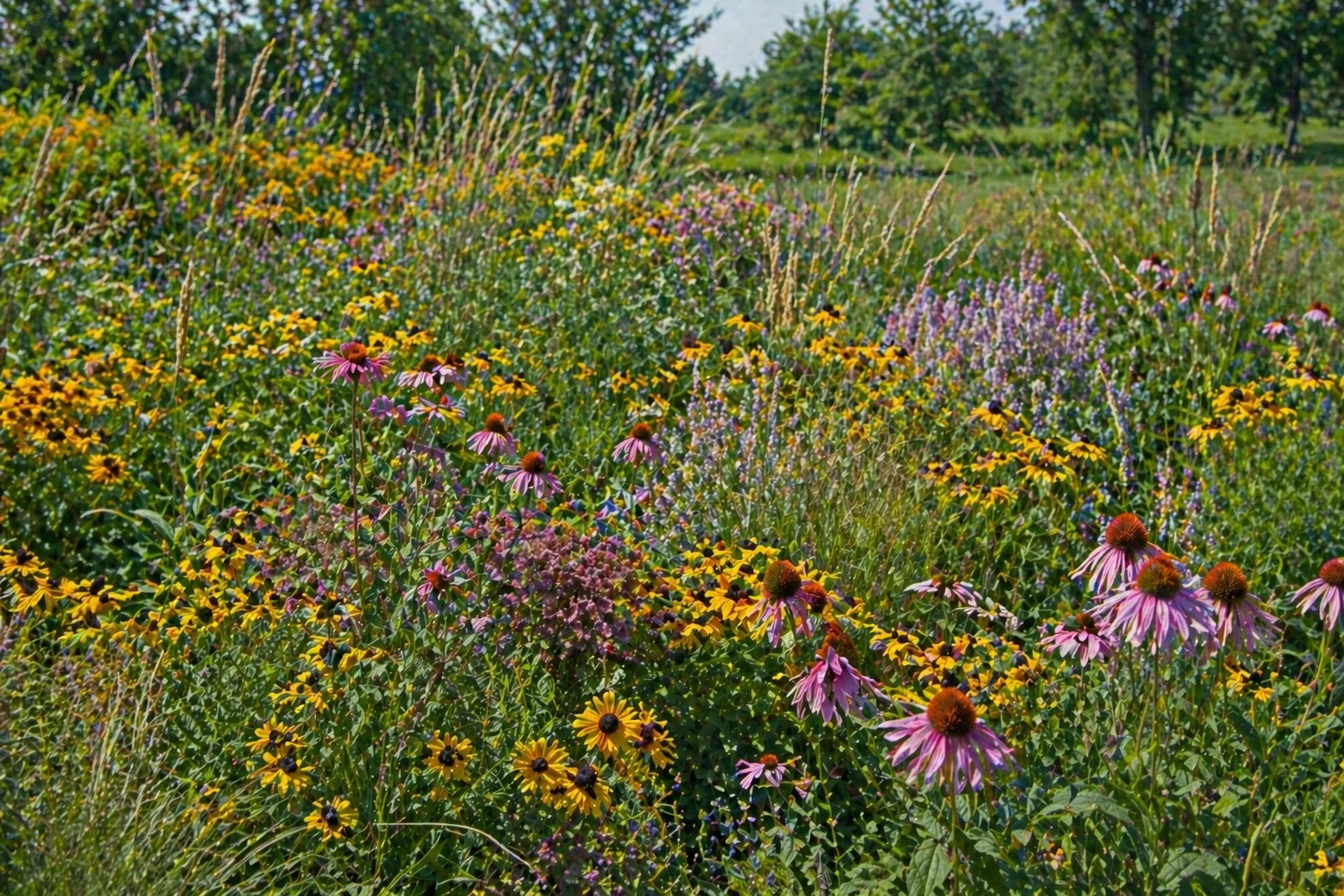
Plant native perennials (coneflower, black-eyed Susan, native aster) in spring or fall. Most native flowers require less water, no fertilizer, and resist local pests naturally. Region-specific natives dramatically outperform non-native plants in attracting pollinators.
When to Plant Native Flowers in Canada
| Region | Planting Window |
|---|---|
| BC Coast (Vancouver, Victoria) | March through April or fall. |
| BC Interior (Kelowna, Kamloops) | April through May or fall. |
| Ontario (Toronto, Ottawa) | May (after Victoria Day) or September. |
| Quebec (Montreal, Quebec City) | Late May or early September. |
| Prairies (Calgary, Edmonton, Saskatoon, Winnipeg) | Late May through June or early September. |
| Atlantic Canada (Halifax, Moncton) | Mid- to late May or September. |
Native Flowers by Province
Native Flowers by City
Canadian Varieties for Native Flowers
The following native flowers varieties are bred for or tested in Canadian conditions. Match variety to your specific Canadian zone — generic varieties recommended in US guides may not survive Canadian winters.
Native to eastern and central Canada. Drought-tolerant, monarch-friendly. The most popular Canadian native perennial.
Native across most of Canada. Self-seeding biennial/short-lived perennial. Pollinator-favourite.
Native lavender-flowered mint family. Powdery mildew resistant. Strong pollinator value.
Critical Monarch butterfly host plant. Avoid imported tropical milkweed (Asclepias curassavica) — can disrupt monarch migration. Plant native species only.
Late-summer through fall bloom. New England aster, smooth aster, sky-blue aster. Critical migration food for monarchs and bumblebees.
How to Plant Native Flowers in Canada
Sow method: transplant or direct. The steps below apply to Canadian climates with seasonal adjustments built in (mulching for winter, frost protection, zone-appropriate timing).
- →Identify your specific region (using USDA zone + Level III ecoregion) and choose plants native to that region — not just 'native to North America'.
- →Source plants from regional native plant nurseries (Prairie Moon, Native American Seed, regional Audubon chapters) — big-box stores often sell non-native cultivars.
- →Plant most native perennials in spring (after last frost) or early fall (6 weeks before first frost).
- →Choose a site that matches the plant's native habitat: prairie species in full sun, woodland species in part shade, wetland species in moist areas.
- →Skip soil amendments — native plants are adapted to your local soil. Heavy amendment with compost or fertilizer can reduce vigor.
- →Water deeply during the first growing season; once established, most natives need no supplemental irrigation.
- →Skip fertilizer entirely — natives evolved with native soil fertility levels.
- →Leave plants standing through winter — native bees, beneficial insects, and birds use stems and seedheads for habitat and food.
Winter Care for Native Flowers in Canada
Canadian native flowers are by definition adapted to your specific region's hardiness zone — Prairie natives (Zone 2-4), Eastern Canadian natives (Zone 3-6), Pacific Coast natives (Zone 7-8), Atlantic natives (Zone 5-6). Always source plants native to your specific Canadian ecoregion.
For Canadian gardens specifically, fall preparation is critical. In Zone 3 to 5 (Calgary, Edmonton, Saskatoon, Regina, Winnipeg, Ottawa, Montreal, Halifax), apply 5 to 10 cm of mulch over perennial root zones after the first hard frost — shredded bark, fall leaves, or straw all work. Avoid mulching too early (before consistent freezing) as this can encourage rodent nesting in the warm mulch.
For Zone 6 to 8 (Toronto, Hamilton, London, Vancouver, Victoria), winter protection is less critical but still beneficial — apply 3 to 5 cm of mulch to retain soil moisture during winter dry spells. In coastal BC gardens, winter wet rather than winter cold is the bigger threat — ensure good drainage rather than focusing on cold protection.
The Canadian Prairies have a rich native flower flora. Plant native milkweed (Asclepias incarnata, A. tuberosa) to support monarch butterflies on the Prairie migration corridor — this is conservation-critical work as monarch populations have declined 90% in recent decades. Other Prairie natives: native asters, prairie smoke, gaillardia, three-flowered avens, golden Alexanders.
Native Flowers Monthly Care Calendar for Canada
January–March: Dormant period across Canada. Plan and order seeds. Indoor seed starting begins in March for slow germinators (petunias, lavender, begonias) — 10 to 12 weeks before last frost.
April: BC coast: outdoor planting begins for cool-season native flowers. Rest of Canada: continue indoor seed starting; bare-root planting in Ontario.
May (early to mid): Cool-season planting in Ontario, Quebec, and Atlantic Canada. Most Canadian native perennials transplant best after Victoria Day in Ontario and Quebec when soil has warmed and frost risk has passed. Spring planting in Canadian gardens is the standard timing for natives.
Late May to early June: Prairie planting window. Saskatoon, Regina, Winnipeg can plant after May 24. Calgary and Edmonton wait until June 1 to 7.
June: Peak Prairie planting. Continue Ontario summer growth — deadhead annuals weekly, water deeply once a week.
July–August: Full summer. Established perennials at peak. Deadhead spent blooms to extend the bloom period.
September: Fall planting window in southern Canada. Plant new perennials, divide overgrown clumps, plant fall bulbs (tulips, daffodils). Calgary and Edmonton: stop perennial planting by mid-September.
October: Final mulching. Lift tender perennials (dahlias, cannas) before first hard frost. Stop watering perennials. Last bulb planting in southern Ontario and BC.
November–December: Dormancy. No outdoor work needed. Plan next year, review winter survival.
Common Mistakes Planting Native Flowers in Canada
The most common Canadian native flower mistake is buying 'native' plants from big-box stores. Many big-box 'native' plants are actually non-native species marketed broadly, or cultivars with reduced ecological value. Source from Canadian native plant nurseries (Wildflower Farm, Connon Nurseries Native Plants, Prairie Originals, Native Plant Source) for true natives that support Canadian pollinators.
The second common mistake is using 'nativars' (cultivars of native species) and assuming they perform like true natives. Many cultivars selected for unusual flower colours have lost the pollinator-supporting chemistry. When possible, plant the species form (e.g., Echinacea purpurea, not 'Cherry Brandy') for maximum Canadian pollinator value.
Third mistake: cleaning up the native garden in fall. Standing native flower stems and seedheads provide overwintering habitat for native Canadian bees (which nest in hollow stems) and food for birds. Wait until late spring to cut back — earlier cleanup destroys overwintering native pollinator populations.
Frequently Asked Questions
When can I plant native flowers in Canada?
Canadian planting windows for native flowers vary by province: BC coast march through april or fall.; Ontario may (after victoria day) or september.; Quebec late may or early september.; Prairies late may through june or early september.; Atlantic Canada mid- to late may or september..
Are native flowers winter-hardy in Canada?
Canadian native flowers are by definition adapted to your specific region's hardiness zone — Prairie natives (Zone 2-4), Eastern Canadian natives (Zone 3-6), Pacific Coast natives (Zone 7-8), Atlantic natives (Zone 5-6). Always source plants native to your specific Canadian ecoregion.
What native flowers varieties are best for the Canadian Prairies?
The Canadian Prairies have a rich native flower flora. Plant native milkweed (Asclepias incarnata, A. tuberosa) to support monarch butterflies on the Prairie migration corridor — this is conservation-critical work as monarch populations have declined 90% in recent decades. Other Prairie natives: native asters, prairie smoke, gaillardia, three-flowered avens, golden Alexanders.
Should I plant native flowers on Victoria Day?
Most Canadian native perennials transplant best after Victoria Day in Ontario and Quebec when soil has warmed and frost risk has passed. Spring planting in Canadian gardens is the standard timing for natives.
How do I start native flowers indoors in Canada?
Native flowers are best purchased from Canadian native plant nurseries. Direct sowing requires cold stratification (winter outdoor sowing or 30 days in the fridge).