When to Plant Lavender in Canada — 2026 Province Guide
Published:
Lavender thrives where most garden plants struggle — poor, alkaline soil with excellent drainage and full sun. The single most important factor for lavender success is drainage: lavender roots rot quickly in clay or wet soils, while it tolerates drought, heat, and poor fertility better than almost any other perennial. This guide covers the right planting window for every US state, the best lavender varieties for each climate (English lavender for cool zones, Spanish and French lavender for warm zones), and the soil amendments needed to convert clay or acidic soil into a lavender-friendly bed. For Canadian gardeners specifically, the planting window shifts dramatically by province — BC coast starts in March or April, Ontario and Quebec wait until Victoria Day, and the Prairies hold until June 1. This guide covers province-specific windows, Canadian cold-hardy varieties, and the indoor seed-starting schedule that gives short-season Prairie gardeners a head start.
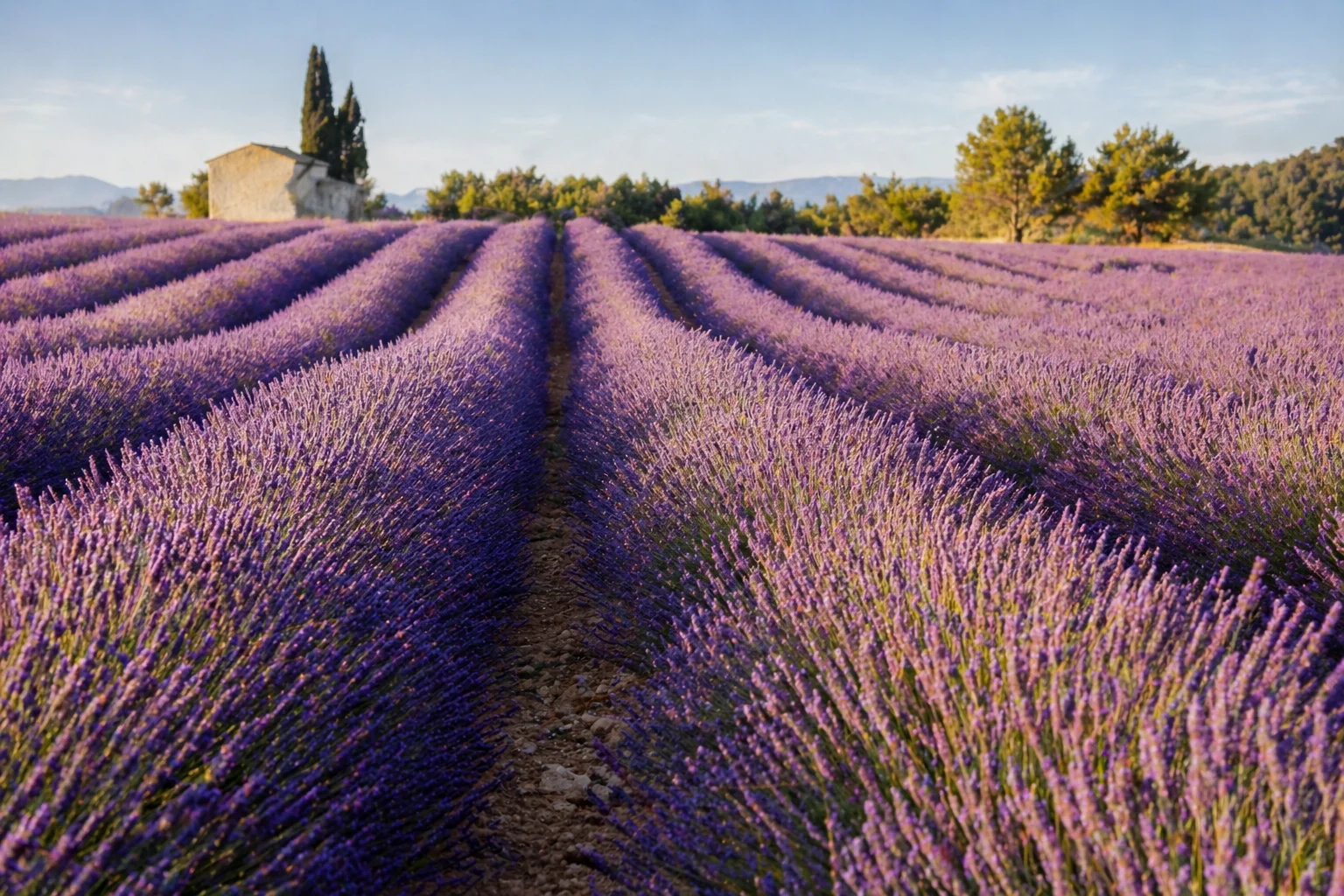
Quick Answer for Canada
Plant lavender in spring after last frost (Zones 5–7) or fall (Zones 8–9). Needs full sun, excellent drainage, and alkaline to neutral soil (pH 6.5–7.5). Avoid clay soils — lavender roots rot in wet conditions.
When to Plant Lavender in Canada
| Region | Planting Window |
|---|---|
| BC Coast (Vancouver, Victoria) | March through April (spring planting preferred). |
| BC Interior (Kelowna, Kamloops) | April through May. |
| Ontario (Toronto, Ottawa) | May (after last frost, before Victoria Day). |
| Quebec (Montreal, Quebec City) | Late May (after last frost). |
| Prairies (Calgary, Edmonton, Saskatoon, Winnipeg) | Late May through early June (after last frost). Marginal — treat as annual in Zone 3. |
| Atlantic Canada (Halifax, Moncton) | Mid- to late May. |
Lavender by Province
Lavender by City
Canadian Varieties for Lavender
The following lavender varieties are bred for or tested in Canadian conditions. Match variety to your specific Canadian zone — generic varieties recommended in US guides may not survive Canadian winters.
Compact (45 cm), deep purple flowers. Most cold-hardy named cultivar. The standard for Ontario, Quebec, and Atlantic Canada.
Slightly larger (60 cm), softer mauve flowers. Earlier bloomer than 'Hidcote'. Equally cold-hardy.
Patented hybrid bred for humidity tolerance and slightly extended cold hardiness. The best choice for Ottawa and Montreal Zone 5a.
Hybrid of English × Spike lavender. Larger plant (90 cm), longer flower spikes. Higher essential oil yield than English types.
Slightly more cold-hardy than 'Hidcote' — the best choice for Alberta gardeners attempting lavender in Zone 4.
How to Plant Lavender in Canada
Sow method: transplant (spring or fall). The steps below apply to Canadian climates with seasonal adjustments built in (mulching for winter, frost protection, zone-appropriate timing).
- →Choose a site with full sun (8+ hours) and excellent drainage — sloped beds, raised beds, or rocky soils are ideal.
- →Test soil pH; amend with lime to bring pH to 6.5–7.5 if below 6.5.
- →Improve clay soils with 30% pumice or coarse sand mixed in — never plant lavender in unamended clay.
- →Space plants 60–90 cm (2–3 ft) apart for English lavender; 90–120 cm (3–4 ft) for Lavandin.
- →Water deeply once at planting; reduce to once every 10–14 days for the first month, then minimal irrigation.
- →Skip mulch close to the crown — wet mulch causes crown rot. Use coarse gravel or pea stone if mulch is desired.
- →Prune annually after first bloom: cut back by one-third into woody growth, never into bare wood.
- →Skip fertilizer entirely — lavender prefers poor soils and produces stronger fragrance under low fertility.
Winter Care for Lavender in Canada
English lavender (Lavandula angustifolia) is hardy to Zone 5 — survives -28°C with good drainage and snow cover. 'Hidcote' and 'Munstead' are the most cold-tolerant. Spanish, French, and Italian lavenders are tender and survive only in Zone 7+ (BC coast).
For Canadian gardens specifically, fall preparation is critical. In Zone 3 to 5 (Calgary, Edmonton, Saskatoon, Regina, Winnipeg, Ottawa, Montreal, Halifax), apply 5 to 10 cm of mulch over perennial root zones after the first hard frost — shredded bark, fall leaves, or straw all work. Avoid mulching too early (before consistent freezing) as this can encourage rodent nesting in the warm mulch.
For Zone 6 to 8 (Toronto, Hamilton, London, Vancouver, Victoria), winter protection is less critical but still beneficial — apply 3 to 5 cm of mulch to retain soil moisture during winter dry spells. In coastal BC gardens, winter wet rather than winter cold is the bigger threat — ensure good drainage rather than focusing on cold protection.
Lavender is marginal to non-viable in Calgary and Edmonton (Zone 4) without protection. Treat as an annual or provide a south-facing wall microclimate. 'Vera' is slightly more cold-tolerant than 'Hidcote' for Alberta gardeners willing to experiment. Saskatchewan and Manitoba (Zone 3) cannot grow lavender outdoors as a perennial.
Lavender Monthly Care Calendar for Canada
January–March: Dormant period across Canada. Plan and order seeds. Indoor seed starting begins in March for slow germinators (petunias, lavender, begonias) — 10 to 12 weeks before last frost.
April: BC coast: outdoor planting begins for cool-season lavender. Rest of Canada: continue indoor seed starting; bare-root planting in Ontario.
May (early to mid): Cool-season planting in Ontario, Quebec, and Atlantic Canada. In Ontario and Quebec, Victoria Day weekend is too early to plant lavender — wait until cool May nights pass. Plant after Victoria Day in southern Ontario; late May in Ottawa and Montreal.
Late May to early June: Prairie planting window. Saskatoon, Regina, Winnipeg can plant after May 24. Calgary and Edmonton wait until June 1 to 7.
June: Peak Prairie planting. Continue Ontario summer growth — deadhead annuals weekly, water deeply once a week.
July–August: Full summer. Established perennials at peak. Deadhead spent blooms to extend the bloom period.
September: Fall planting window in southern Canada. Plant new perennials, divide overgrown clumps, plant fall bulbs (tulips, daffodils). Calgary and Edmonton: stop perennial planting by mid-September.
October: Final mulching. Lift tender perennials (dahlias, cannas) before first hard frost. Stop watering perennials. Last bulb planting in southern Ontario and BC.
November–December: Dormancy. No outdoor work needed. Plan next year, review winter survival.
Common Mistakes Planting Lavender in Canada
The most common Canadian lavender mistake is planting in heavy clay soil or poorly drained sites. Canadian winter's freeze-thaw cycles combined with wet clay soils kill lavender by spring even when temperature alone would not be a problem. Plant in a raised bed, on a slope, or amend planting hole heavily with sand and pumice.
The second common mistake is over-mulching with shredded bark or fall leaves. Heavy mulch holds moisture against the lavender crown all winter, causing crown rot. Use coarse gravel or pea stone instead, kept 5 cm away from the stem base.
Third mistake: planting French, Spanish, or Italian lavender (Lavandula stoechas, L. dentata) anywhere outside BC's mildest coastal zones. These tender lavenders die in the first Canadian winter. Always check the species — only Lavandula angustifolia (English lavender) and Lavandin hybrids are reliably hardy in most of Canada.
Frequently Asked Questions
When can I plant lavender in Canada?
Canadian planting windows for lavender vary by province: BC coast march through april (spring planting preferred).; Ontario may (after last frost, before victoria day).; Quebec late may (after last frost).; Prairies late may through early june (after last frost). marginal — treat as annual in zone 3.; Atlantic Canada mid- to late may..
Are lavender winter-hardy in Canada?
English lavender (Lavandula angustifolia) is hardy to Zone 5 — survives -28°C with good drainage and snow cover. 'Hidcote' and 'Munstead' are the most cold-tolerant. Spanish, French, and Italian lavenders are tender and survive only in Zone 7+ (BC coast).
What lavender varieties are best for the Canadian Prairies?
Lavender is marginal to non-viable in Calgary and Edmonton (Zone 4) without protection. Treat as an annual or provide a south-facing wall microclimate. 'Vera' is slightly more cold-tolerant than 'Hidcote' for Alberta gardeners willing to experiment. Saskatchewan and Manitoba (Zone 3) cannot grow lavender outdoors as a perennial.
Should I plant lavender on Victoria Day?
In Ontario and Quebec, Victoria Day weekend is too early to plant lavender — wait until cool May nights pass. Plant after Victoria Day in southern Ontario; late May in Ottawa and Montreal.
How do I start lavender indoors in Canada?
Lavender from seed germinates very slowly (3 to 4 weeks). Most Canadian gardeners buy nursery transplants. If starting from seed, sow indoors 10 to 12 weeks before last frost.