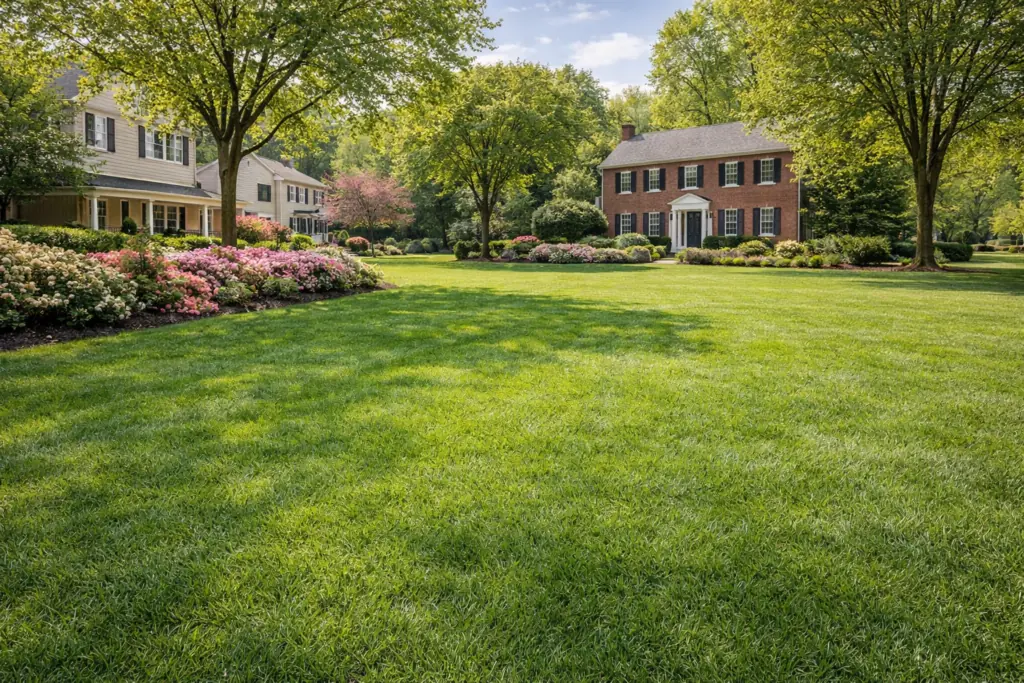
USDA Zone 6B Lawn Care Guide
Zone 6b sits at the warmer edge of the transition zone with mild winters and warm, humid summers. This region gets reliable rainfall but summer droughts are possible. Both cool-season and warm-season grasses can thrive here, giving homeowners more options but also more decisions about which direction to go.
Seasonal Lawn Care Highlights
🌱 Spring
Apply pre-emergent by mid-March before soil hits 55°F. Bermuda and zoysia begin greening in April—hold off on mowing until they show active growth.
☀️ Summer
Bermuda and zoysia thrive but tall fescue struggles above 90°F. Raise fescue mowing height to 4 inches and water deeply during drought periods.
🍂 Fall
September and October are ideal for overseeding tall fescue and applying fall fertilizer. Warm-season grasses slow down and begin preparing for dormancy.
❄️ Winter
Bermuda and zoysia go dormant and turn brown; this is normal and healthy. Tall fescue and bluegrass lawns stay green in mild winters with occasional watering.
Best Grass Types for Zone 6B
Cities in Zone 6B
Washington
District Of Columbia · Zone 6b
St. Louis
Missouri · Zone 6b
Richmond
Virginia · Zone 6b
Louisville
Kentucky · Zone 6b
Colorado Springs
Colorado · Zone 6b
Wichita
Kansas · Zone 6b
Lexington
Kentucky · Zone 6b
Springfield
Missouri · Zone 6b
Santa Rosa
California · Zone 6b
Arlington
Virginia · Zone 6b
Roanoke
Virginia · Zone 6b
Evansville
Indiana · Zone 6b
Overland Park
Kansas · Zone 6b
Huntington
West Virginia · Zone 6b
Fredericksburg
Virginia · Zone 6b
Newport News
Virginia · Zone 6b
Vallejo
California · Zone 6b
Merced
California · Zone 6b
Alexandria
Virginia · Zone 6b
Fairfield
California · Zone 6b