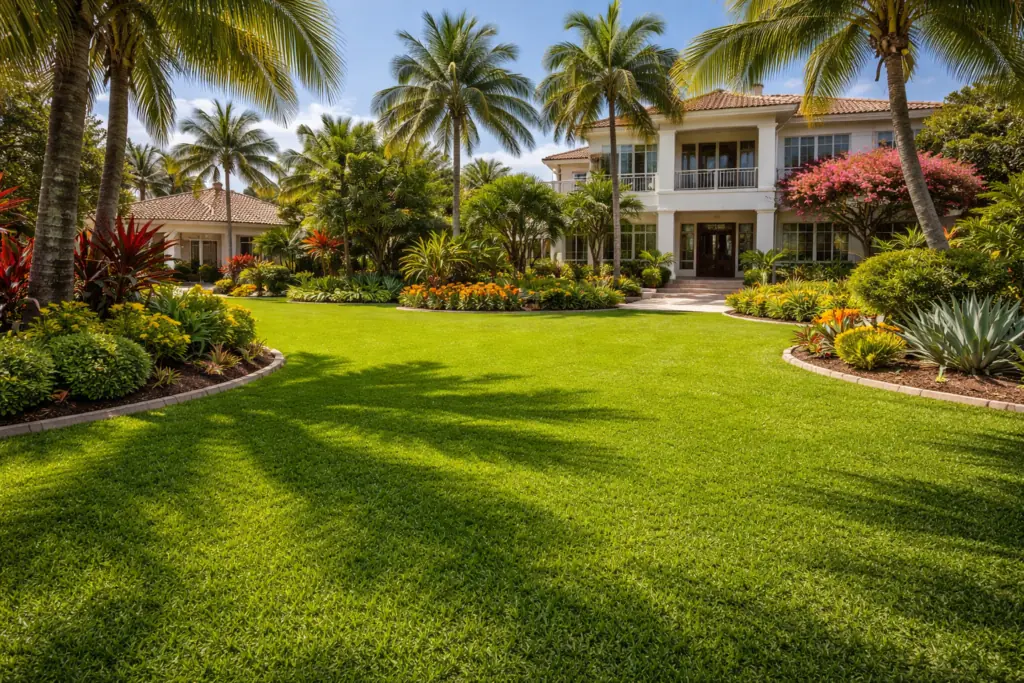
USDA Zone 10B Lawn Care Guide
Zone 10b is truly tropical with no frost risk and warm temperatures year-round. This zone supports the widest range of warm-season grasses and tropical landscaping options. Lawns grow aggressively twelve months of the year, demanding consistent maintenance but rewarding homeowners with lush, green turf in every season.
Seasonal Lawn Care Highlights
🌱 Spring
Apply slow-release fertilizer in March and begin the peak mowing schedule. Treat for chinch bugs and sod webworms proactively before populations explode.
☀️ Summer
Mow St. Augustine at 3.5–4 inches weekly and water 1–1.5 inches per week. Monitor for gray leaf spot and large patch, which thrive in the summer humidity.
🍂 Fall
Continue regular maintenance with slightly reduced fertilization. Watch for fall armyworm infestations and treat promptly to prevent widespread damage.
❄️ Winter
Lawn care continues year-round in Zone 10b. Reduce nitrogen but maintain mowing and irrigation. This is a good time for soil testing and lime applications.
Best Grass Types for Zone 10B
Cities in Zone 10B
Miami
Florida · Zone 10b
San Francisco
California · Zone 10b
San Diego
California · Zone 10b
San Juan
Puerto Rico · Zone 10b
Oakland
California · Zone 10b
Hialeah
Florida · Zone 10b
Aguadilla
Puerto Rico · Zone 10b
Fort Lauderdale
Florida · Zone 10b
Pembroke Pines
Florida · Zone 10b
Bayamón
Puerto Rico · Zone 10b
Hollywood
Florida · Zone 10b
Carolina
Puerto Rico · Zone 10b
Miramar
Florida · Zone 10b
Coral Springs
Florida · Zone 10b
Arecibo
Puerto Rico · Zone 10b
Berkeley
California · Zone 10b
Pompano Beach
Florida · Zone 10b
Ponce
Puerto Rico · Zone 10b
Davie
Florida · Zone 10b
San Mateo
California · Zone 10b