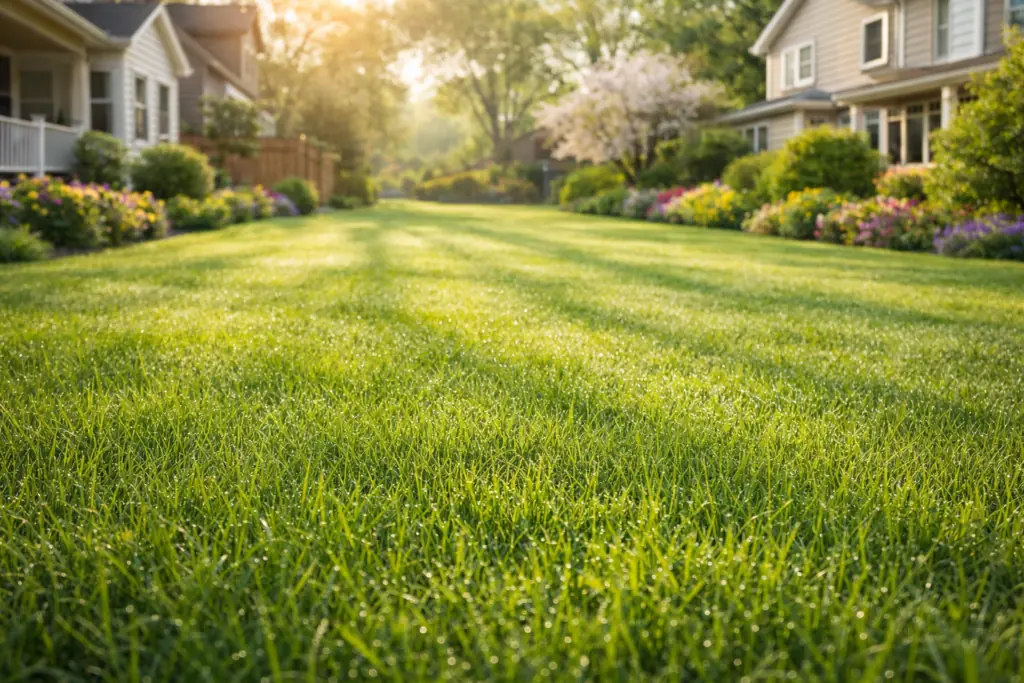
Spring Lawn Care in Reading, PA
Published:
Here is your complete spring lawn care guide for Reading, PA. In USDA zone 6a, spring is a critical time to keep your lawn healthy and looking its best. Follow these tasks and timing recommendations tailored to your area.
Key Lawn Care Dates for Reading
| Date | When | Why |
|---|---|---|
| Last frost date | March 30 | Soil safe for warm-season planting after this date |
| Mowing season | Late March through early november (216 growing days) | Cool-season grasses most active spring and fall |
| First mow | Around April 20 | When grass reaches 3 inches |
| Pre-emergent herbicide | Feb 16 – Mar 16 | Before soil hits 55°F |
| Spring fertilizer | Mar 30 – Apr 20 | After soil hits 55°F–65°F |
| Turn on sprinklers | Around April 13 | After last hard freeze risk passes |
What to do this spring
- 1
Dethatch
Remove the layer of dead grass and organic debris that built up over winter to allow water, air, and fertilizer to reach the soil beneath. In Reading, thatch builds fastest on Kentucky Bluegrass and Fine Fescue lawns — if your thatch layer exceeds 0.5 inches, spring dethatching is overdue. Dethatch when soil is moist but not wet, typically 2–3 weeks after March 30 once the ground has fully thawed. Always dethatch BEFORE applying fertilizer or pre-emergent herbicide so those products reach the soil where they work.
- 2
Fertilize (slow-release)
Apply a slow-release nitrogen fertilizer once soil temperature at 4-inch depth consistently reaches 55°F — for Reading this is typically 2–3 weeks after March 30. Applying fertilizer to cold soil means nutrients leach out before grass roots are active enough to absorb them — you’re feeding weeds, not grass. Use a slow-release formula that feeds steadily over 6–8 weeks and avoids the surge growth that stresses lawns heading into summer heat. A balanced 4-1-2 N-P-K ratio (e.g. 20-5-10) suits Kentucky Bluegrass and Tall Fescue.
- 3
Overseed bare patches
Overseed thin or bare areas left by winter damage while soil conditions are ideal for germination. Spring overseeding works best when soil temperatures are consistently above 50°F for Kentucky Bluegrass and Fescue — typically late April to mid-May in Reading. Aerate the target areas before seeding for best seed-to-soil contact. Spring overseeding is your backup option — fall is preferred for cool-season grasses because there is less heat stress and weed competition.
- 4
Apply pre-emergent weed control
Pre-emergent herbicide must be in the ground BEFORE crabgrass seeds germinate — that means applying when soil temperature at 2-inch depth is in the 50–55°F range for 4–5 consecutive days. In Reading, that window typically opens 4–6 weeks before March 30. Miss this window and pre-emergent cannot stop already-germinating seeds. Look for products containing prodiamine (Barricade) for best season-long residual, or dithiopyr (Dimension) if you may be slightly late. Never apply pre-emergent if you plan to overseed in the same season — it will block your grass seed too.
- 5
First mow of the season
Do not mow until your grass is actively growing and has reached at least 3 inches — not just showing green color, but visibly elongating. In Reading, Kentucky Bluegrass and Tall Fescue begin active growth when soil hits 50–55°F, typically 2–3 weeks after March 30. Set blade to 3–3.5 inches and never cut more than one-third of the blade in a single pass. The first mow is not about height — it is about removing winter-damaged tips and stimulating lateral growth. Bag the clippings on the first cut to remove dead material.
Best grass types for your zone
When to act in Reading
| Task | Typical Window | Notes |
|---|---|---|
| Pre-emergent herbicide | Feb - March | Before soil hits 55°F |
| Dethatch | March - April | After ground fully thaws |
| First fertilizer | March - April | After soil hits 55°F |
| First mow | March - May | When grass reaches 3 inches |
| Overseed bare patches | March - May | When nights stay above 50°F |
| Aeration (warm-season) | May - June | After full green-up |
| Turn on sprinklers | March - April | After last hard freeze |
Signs Your Lawn Needs Attention This Spring
Bare or thin patches from winter damage
Winter stress and cold damage can leave dead spots that need overseeding once soil warms up.
Excessive thatch layer (more than 0.5 inch)
Thick thatch blocks water and nutrients from reaching roots. Dethatch before spring fertilizing.
Soil compaction from winter foot traffic
Heavy use during dormancy compresses soil. Core aerate to restore airflow and drainage.
Crabgrass seedlings appearing in warm spots
Pre-emergent herbicide must go down before soil hits 55°F. Once you see crabgrass, it may be too late.
Yellowing from nitrogen deficiency after dormancy
Grass depletes stored nutrients over winter. A slow-release nitrogen fertilizer kick-starts spring growth.
About Reading's Lawn Care Climate
Reading, Pennsylvania sits in USDA hardiness zone 6a, which means residents enjoy a 7-month growing season with cold but manageable winters. Both cool and warm-season grasses can survive here with proper winterization. Homeowners in Reading should plan their spring lawn care around these local climate patterns for the best results.
More Lawn Care Guides for Reading
Frequently Asked Questions
When should I start mowing in Reading?
In Reading, start mowing in early spring once your grass begins actively growing and reaches about 3 inches tall. For most lawns this is mid-March to early April.
What's the best fertilizer for spring in Reading?
A slow-release nitrogen fertilizer works best for spring lawns in Reading. Apply it after soil temperatures consistently reach 55°F.
Should I overseed in spring or fall in Reading?
In Reading, fall is generally the best time to overseed cool-season grasses, but spring overseeding works well for patching bare spots. Warm-season grasses should be overseeded in late spring.
When should I apply pre-emergent in Reading?
In Reading, apply pre-emergent when soil temperature at 2-inch depth reaches 50–55°F for several consecutive days. This is typically 4–6 weeks before your last frost date. Apply before you see any crabgrass — once germination starts, pre-emergent cannot stop it.
When is the first mow of the year in Reading?
In Reading, plan your first mow once grass is actively growing and reaches about 3 inches tall — typically 2–3 weeks after the last frost date. Check for active growth (elongating blades) rather than just green color before mowing.