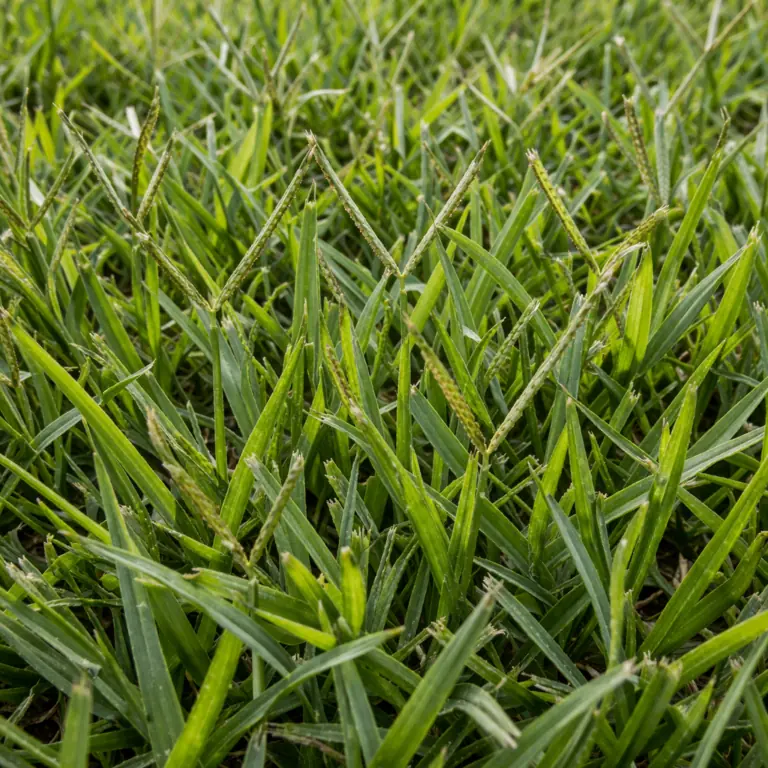
Bahiagrass in San Jose, CA: Care Guide
Is Bahiagrass Right for San Jose?
Bahiagrass is an excellent choice for USDA zone 9b, where winter temperatures rarely drop below 25-30°F. This hardy warm-season grass thrives in the zone's long, hot summers and tolerates the occasional light frost that characterizes this region. While bahiagrass offers exceptional drought tolerance and low maintenance requirements, it presents challenges including a coarse texture, slow establishment, and aggressive spreading habit that can invade flower beds. Its deep root system, extending 6-10 feet down, makes it incredibly resilient during dry spells but difficult to remove once established.
The seasonal performance cycle of bahiagrass in zone 9b begins with green-up when soil temperatures consistently reach 65-70°F, typically in mid to late March. Peak growth occurs from May through September when temperatures range from 80-95°F, during which the grass maintains its characteristic light green color and produces seed heads throughout the growing season. Unlike many warm-season grasses, bahiagrass in zone 9b may retain some green color well into December, only entering full dormancy when temperatures consistently drop below 50°F. The dormant period is relatively short, lasting from January through early March.
Bahiagrass performs best in sandy, well-draining soils with pH levels between 5.5-6.5, though it tolerates a wide range of soil conditions including poor, infertile ground where other grasses struggle. Water requirements are minimal once established, typically needing only 0.5-0.75 inches weekly during active growth, making it ideal for areas with inconsistent rainfall. Compared to alternatives like St. Augustinegrass or Zoysia, bahiagrass requires significantly less water and fertilizer but provides a much coarser appearance and lower density coverage.
Long-term maintenance expectations for bahiagrass in zone 9b are relatively low, requiring mowing every 2-3 weeks during peak season at heights of 2-4 inches. Annual fertilization needs are modest, typically requiring only 2-3 pounds of nitrogen per 1,000 square feet split between spring and mid-summer applications. The grass rarely requires irrigation, pest control, or overseeding, making it cost-effective over time. However, homeowners should expect to invest effort in edging and controlling its spread into unwanted areas, as bahiagrass produces both underground rhizomes and above-ground stolons that aggressively colonize adjacent spaces. Despite its maintenance challenges, bahiagrass remains an outstanding choice for large areas, roadsides, and low-maintenance landscapes in zone 9b.
How to Plant Bahiagrass in San Jose
Best Method
seeding
Best Time
April through June when soil temperatures reach 70°F
Establishment
6-8 weeks for initial establishment, 12-16 weeks for full coverage
Soil Preparation
Prepare seedbed by tilling 4-6 inches deep and incorporating organic matter. Ensure pH is between 5.5-6.5 and apply starter fertilizer at 1 lb phosphorus per 1000 sq ft.
Watering During Establishment
Water lightly twice daily for first 3 weeks to keep soil surface moist but not saturated. Gradually reduce frequency to deep watering 2-3 times weekly once seedlings are 2 inches tall.
Seed rate: 8-10 lbs per 1000 sq ft for new establishment, 4-5 lbs per 1000 sq ft for overseeding
Bahiagrass Care Calendar for San Jose
Apply pre-emergent herbicide if temperatures are expected to stay above 65°F for several days. Check for winter damage and plan spring overseeding if needed.
Begin soil preparation for spring planting by testing pH and adding lime if below 5.5. Remove winter debris and dead material.
Start active growing season care with first fertilization using 16-4-8 at 1 lb nitrogen per 1000 sq ft. Begin regular watering schedule as temperatures warm.
Prime planting time - establish new areas from seed or plugs. Apply post-emergent herbicide for winter weeds before they go to seed.
Begin regular mowing schedule, maintaining 3-4 inch height. Apply second fertilization and increase watering frequency as temperatures rise.
Monitor for chinch bugs and armyworms during peak growing season. Maintain consistent moisture with deep, infrequent watering.
Raise mowing height to 4-5 inches for summer stress tolerance. Apply third fertilization with reduced nitrogen to avoid heat stress.
Continue summer maintenance with higher mowing height and consistent watering. Watch for drought stress and fungal diseases.
Apply final fertilization of growing season with balanced fertilizer. Begin overseeding thin areas before temperatures drop.
Reduce watering frequency as growth slows and temperatures cool. Continue mowing as needed but less frequently.
Gradually reduce mowing frequency as grass enters dormancy. Clean and store equipment for winter maintenance.
Minimal maintenance required during dormant period. Plan next year's improvement projects and order supplies.
Apply pre-emergent herbicide if temperatures are expected to stay above 65°F for several days. Check for winter damage and plan spring overseeding if needed.
Begin soil preparation for spring planting by testing pH and adding lime if below 5.5. Remove winter debris and dead material.
Start active growing season care with first fertilization using 16-4-8 at 1 lb nitrogen per 1000 sq ft. Begin regular watering schedule as temperatures warm.
Prime planting time - establish new areas from seed or plugs. Apply post-emergent herbicide for winter weeds before they go to seed.
Begin regular mowing schedule, maintaining 3-4 inch height. Apply second fertilization and increase watering frequency as temperatures rise.
Monitor for chinch bugs and armyworms during peak growing season. Maintain consistent moisture with deep, infrequent watering.
Raise mowing height to 4-5 inches for summer stress tolerance. Apply third fertilization with reduced nitrogen to avoid heat stress.
Continue summer maintenance with higher mowing height and consistent watering. Watch for drought stress and fungal diseases.
Apply final fertilization of growing season with balanced fertilizer. Begin overseeding thin areas before temperatures drop.
Reduce watering frequency as growth slows and temperatures cool. Continue mowing as needed but less frequently.
Gradually reduce mowing frequency as grass enters dormancy. Clean and store equipment for winter maintenance.
Minimal maintenance required during dormant period. Plan next year's improvement projects and order supplies.
Mowing Bahiagrass in San Jose
Ideal Height
3-4 inches
Summer Height
4-5 inches
Frequency
every 7-10 days during active growth, every 2-3 weeks during slower periods
- • Never remove more than 1/3 of blade length in single mowing
- • Use sharp blades to prevent tearing and disease entry points
- • Mow when grass is dry to prevent clumping and uneven cuts
Common Bahiagrass Problems in San Jose
Chinch Bug Infestation
Symptoms: Yellowing patches that spread outward, stunted growth in sunny areas
Cause: Small insects feeding on grass stems during hot weather
Solution: Apply bifenthrin or carbaryl insecticide when temperatures are below 85°F
Brown Patch Fungus
Symptoms: Circular brown patches 1-3 feet diameter with dark outer rings
Cause: High humidity and temperatures above 80°F with excessive nitrogen
Solution: Improve air circulation, reduce watering frequency, apply fungicide containing propiconazole
Dollar Spot Disease
Symptoms: Small silver-dollar sized brown spots with bleached appearance
Cause: Low nitrogen fertility combined with high humidity and cool nights
Solution: Increase nitrogen fertilization and apply fungicide with thiophanate-methyl
Armyworm Damage
Symptoms: Large irregular brown areas appearing overnight, visible caterpillars at dawn
Cause: Caterpillar larvae feeding on grass blades during fall months
Solution: Apply Bacillus thuringiensis or spinosad insecticide in early evening
Iron Chlorosis
Symptoms: Yellow striping on leaves while veins remain green, especially in alkaline soils
Cause: Iron deficiency due to high soil pH above 7.0
Solution: Apply chelated iron sulfate at 2-4 oz per 1000 sq ft and lower soil pH with sulfur
Winter Care for Bahiagrass in San Jose
In zone 9b, Bahiagrass typically stays green through winter but growth slows significantly below 60°F. Reduce watering to monthly deep soakings and avoid fertilization after September to prevent cold sensitivity. No special winter protection needed as temperatures rarely drop below 25°F.
Frequently Asked Questions
Is Bahiagrass good for San Jose?
Bahiagrass is an excellent choice for San Jose (zone 9b) if you want a low-maintenance lawn that can handle drought, sandy soils, and minimal fertilizer. It is particularly dominant in Florida and coastal Gulf regions.
How do I control Bahiagrass seed heads in San Jose?
Bahiagrass produces tall Y-shaped seed stalks throughout summer in San Jose that grow faster than the blades. Mow every 5–7 days in peak summer to stay ahead of them, or use a plant growth regulator to slow seed head production.
Does Bahiagrass need a lot of fertilizer in San Jose?
Bahiagrass needs very little fertilizer compared to other warm-season grasses in San Jose. Apply 2–3 lbs of nitrogen per 1,000 sq ft per year, split into 2 applications (spring and midsummer). Over-fertilizing causes excessive thatch buildup.