
How to Grow and Care for Desert Rose
Published: November 11, 2025 · Updated:

Looking for lawn care advice for your city? Find your city's guide →
The Desert Rose (Adenium obesum) is one of the most striking plants you can grow. It has a thick, swollen trunk that stores water, shiny green leaves, and bright pink or red flowers that bloom like a tropical flame. This mix of toughness and beauty makes it a favorite among home gardeners and collectors.
Many people grow Desert Rose for its sculptural shape. Others love it for its long-lasting blooms that appear several times a year in warm weather. With proper care, the Desert Rose can live for decades, growing into a small tree or a living piece of art.
It’s perfect for hot, sunny regions like Florida and Australia , where it thrives in dry conditions and intense sunlight. Gardeners who learn how to care for Desert Rose in Florida often use it as a feature plant in pots or rock gardens. In cooler climates, it grows well indoors with bright light and good air circulation.
The Desert Rose is also a favorite among bonsai enthusiasts. Its thick caudex (the swollen base) makes it easy to shape and train, creating dramatic miniature trees. Whether grown in a container, on a sunny patio, or as a bonsai, it always draws attention.
Beyond its looks, the Desert Rose is low-maintenance. Once established, it needs little water and thrives on neglect — a true desert survivor. For many homeowners, it’s the ideal choice for a plant that’s both decorative and drought-tolerant.

Understanding the Desert Rose Plant
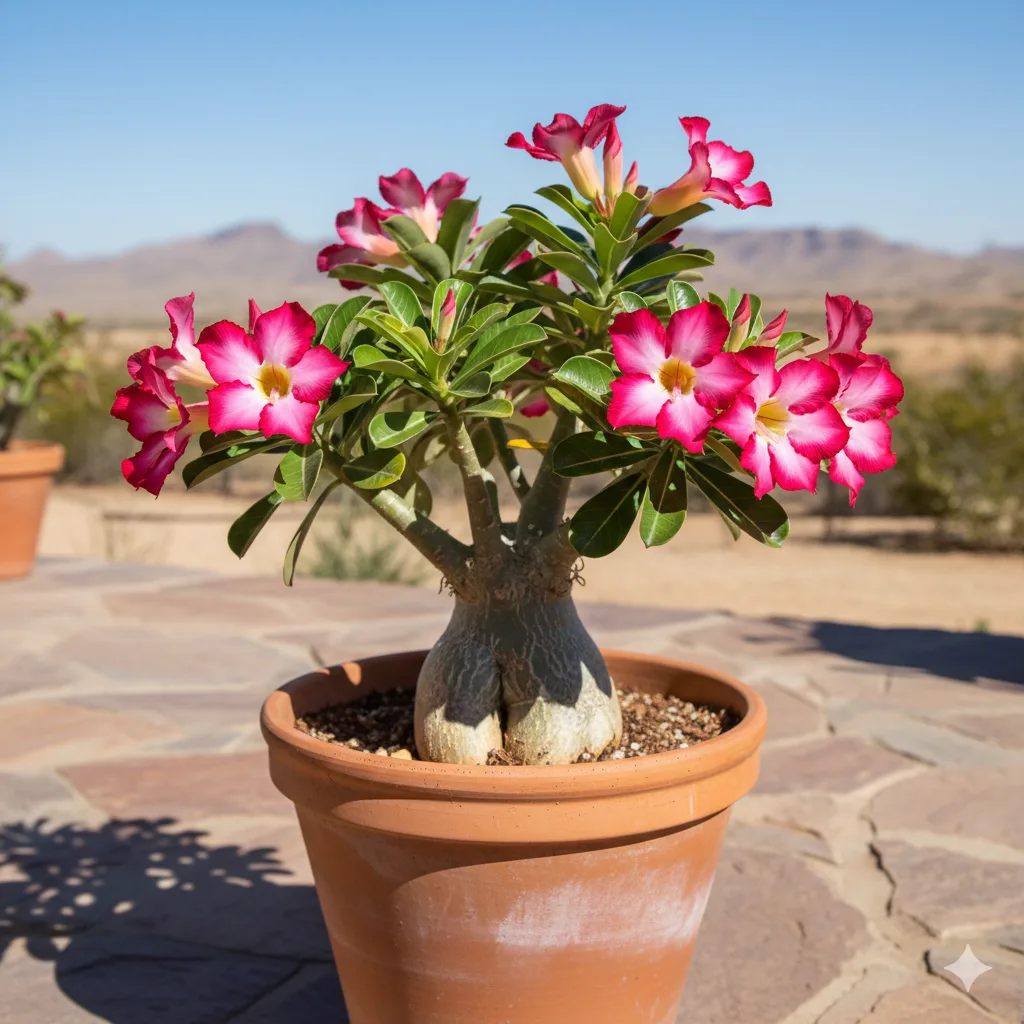
The Desert Rose (Adenium obesum) is a tropical succulent native to the dry regions of East Africa and the Arabian Peninsula. It evolved to survive in harsh conditions — long, hot days and very little rain. Its thick trunk, called a caudex , acts like a water tank, storing moisture during dry periods.
This swollen base is what gives the plant its signature look. Over time, it develops into unique shapes — rounded, twisted, or even tree-like — making each Desert Rose one of a kind. The trunk supports a small crown of glossy, dark green leaves that drop off during cold or dry seasons.
When the weather warms up, the Desert Rose bursts into color. Its flowers come in shades of pink, red, white, or a mix of these colors. The blooms last for weeks, especially in full sun and dry conditions. Many growers say that learning how to grow and care for Desert Rose is rewarding because its beauty increases with age.
This plant is popular in Florida , Australia , and other warm regions where gardeners use it in rock gardens, desert landscapes, or patio pots. It’s also a star in bonsai collections , prized for its sculptural caudex and ability to handle pruning and shaping.
Because it’s a true desert native, the Desert Rose dislikes too much water. Overwatering can quickly lead to root rot, one of the few problems this hardy plant faces. The key to success is understanding its natural rhythm — it grows actively in warm months and rests when temperatures drop.
According to horticultural research from the University of Arizona Cooperative Extension , desert-adapted plants like Adenium store water efficiently and need excellent drainage to prevent root diseases ( (1) ).
In short, the Desert Rose combines toughness with tropical beauty. With the right soil, sunlight, and watering habits, anyone can master care for Desert Rose plant — indoors or outdoors.
Ideal Growing Conditions
To grow a healthy Desert Rose , you need to mimic its natural desert environment — sunny, warm, and dry. It’s a plant that loves heat and dislikes sitting in water. Get these basics right, and your Desert Rose will reward you with strong growth and beautiful blooms year after year.
Light
Desert Rose thrives in full sunlight. Aim for at least 6 hours of direct sun each day. This helps the plant develop thick stems, bright flowers, and a compact shape.
If you live in Florida , Texas , or similar warm climates, place your Desert Rose outdoors in a sunny spot for most of the year. It’s one of the easiest plants to grow in these regions because it handles intense heat better than most flowering species.
In cooler areas or Australia’s southern zones , you can keep it outdoors during summer and move it indoors before temperatures drop below 55°F (13°C). Indoors, place it near a bright window where it can get strong sunlight or supplement with a grow light if necessary.
When learning how to care for Desert Rose in Florida or other hot regions, remember that sunlight is your friend. The more light it gets, the more flowers it produces.
Temperature
The Desert Rose prefers warm conditions year-round. It grows best between 65°F and 90°F (18°C–32°C). Once temperatures dip below 55°F, the plant slows its growth and may lose some leaves. This is normal — it’s entering dormancy.
If you live in a region with cold winters, move your Desert Rose indoors before the first frost. A sunny windowsill or sunroom is perfect. In places like Australia or southern Florida , it can stay outdoors all year as long as nights remain warm.
Soil
Good drainage is the secret to success. The Desert Rose needs soil that dries quickly after watering. Use a sandy, fast-draining mix , such as cactus or succulent soil. You can also make your own mix by combining:
- 50% coarse sand or perlite
- 25% potting soil
- 25% small gravel or pumice
Avoid using heavy garden soil, which holds too much moisture and can cause root rot.
When potting, choose a terracotta or clay pot with drainage holes — these materials let excess moisture escape and keep roots healthy.
Tip: If you notice slow growth or yellowing leaves, check the soil. Poor drainage or overwatering are the most common causes of problems when learning how to care for Desert Rose plant.
Watering and Feeding
Watering is the most important part of how to care for Desert Rose plant. It’s also where most gardeners go wrong. Desert Rose is a succulent, not a tropical plant — it likes water, but only in small doses and only when it truly needs it.
Watering
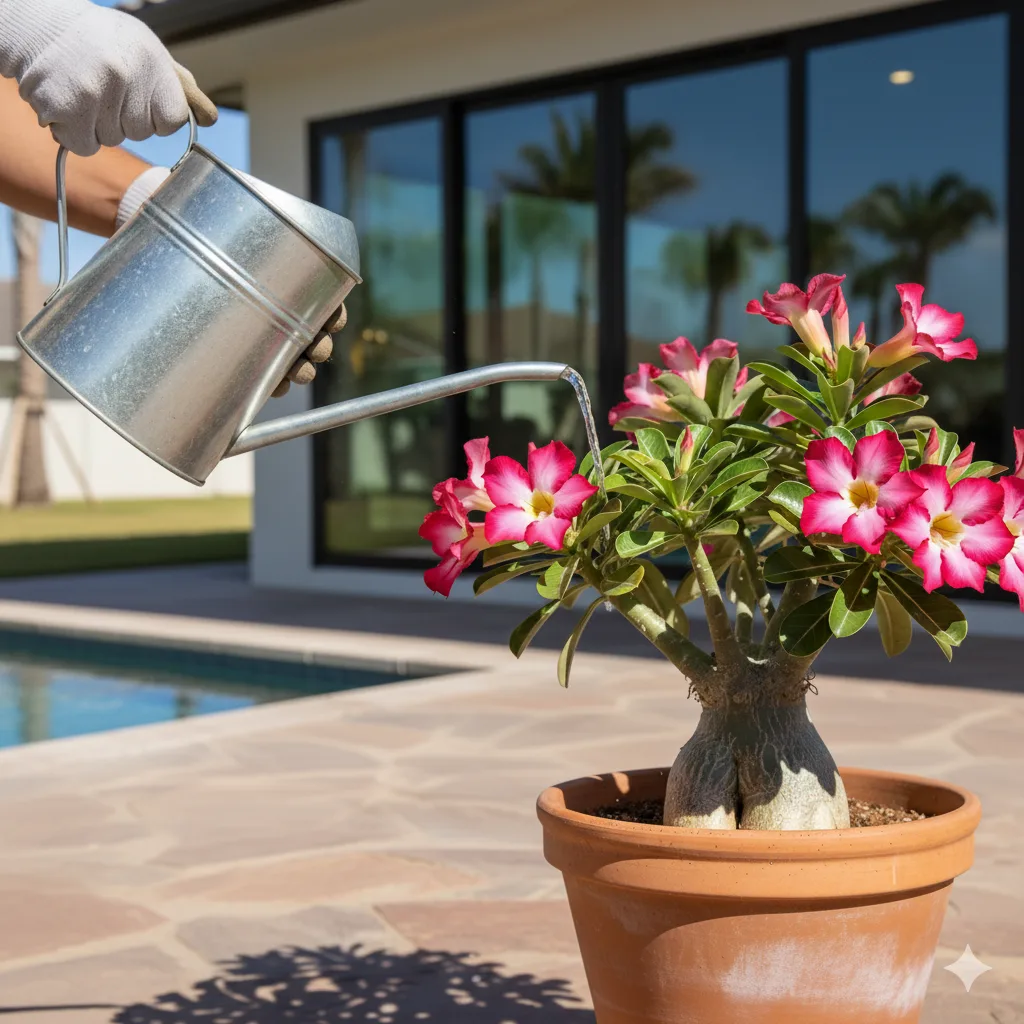
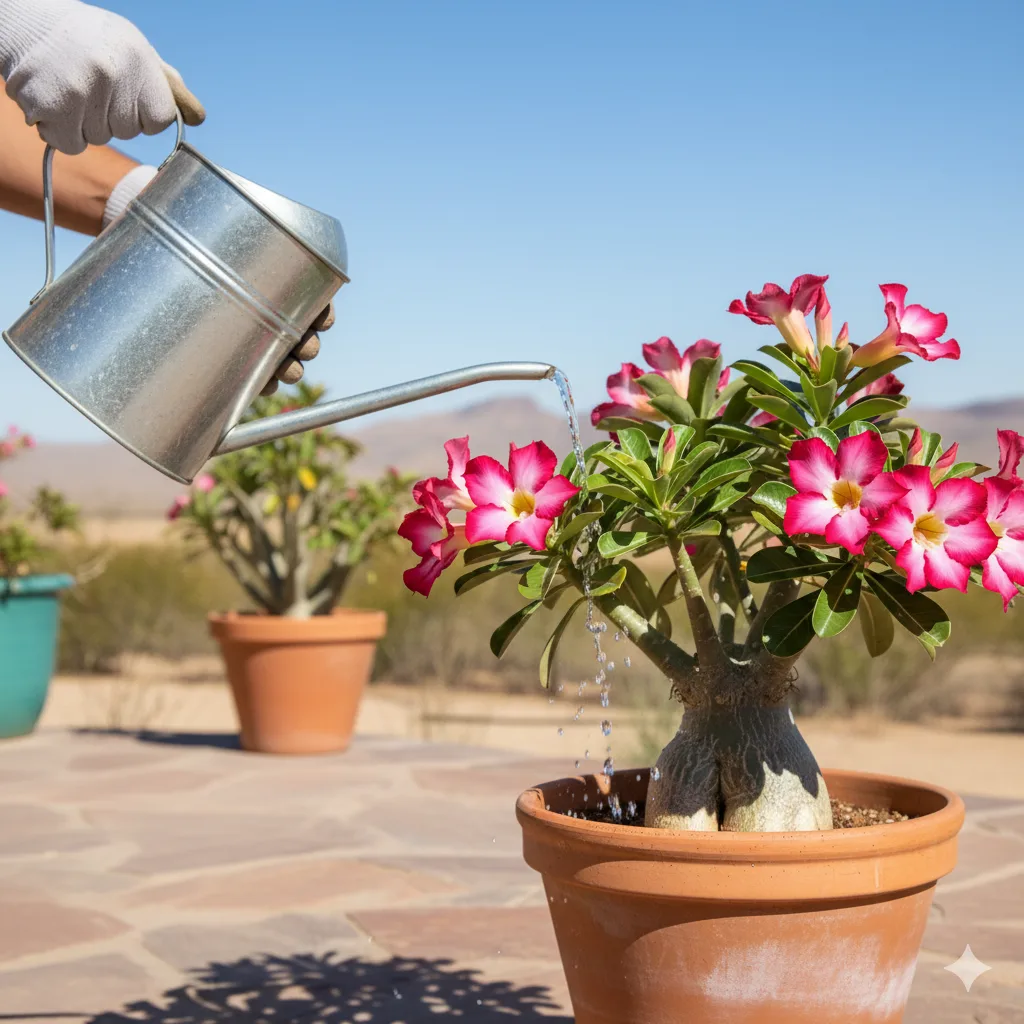
During the growing season (spring and summer), water your Desert Rose deeply but infrequently. Wait until the top 2 inches of soil feel completely dry before watering again. Then water thoroughly, letting the excess drain out of the bottom of the pot.
Never let the plant sit in water. Wet roots quickly lead to root rot , the biggest threat to Desert Rose health. The soil should dry between each watering.
If you’re growing Desert Rose in Florida , where humidity is high, reduce watering slightly. The air already holds moisture, so the soil dries more slowly. In humid climates, it’s safer to underwater than to overwater.
In cooler areas, especially during winter, Desert Rose enters a resting phase. It drops leaves and stops flowering. During this time, water sparingly — once every 3 to 4 weeks is enough. This is the key part of care for Desert Rose in winter. Keep it warm and dry, and it will wake up healthy when spring returns.
If you live in a region that experiences frost, make sure the soil stays dry before bringing the plant indoors. Damp soil and cold air can damage the roots quickly.
Feeding
Feeding Desert Rose is simple but effective when done right. During the active growing months, feed every 4 to 6 weeks using a balanced liquid fertilizer diluted to half strength. A formula such as 10-10-10 or 20-20-20 works well.
If your plant is in a container, flush the soil occasionally with plain water to prevent salt buildup from fertilizer.
For care for Desert Rose in Florida and other warm climates with long summers, you can fertilize lightly every month from March through September. Avoid feeding during the cold season, when the plant is resting.
If you’re growing it as a bonsai , use a slow-release fertilizer or specialized succulent feed to maintain compact growth. For young plants, such as care for Desert Rose seedlings , use a gentle, half-diluted solution once every six weeks.
Signs of Overfeeding or Overwatering
- Yellow leaves: too much water or fertilizer.
- Soft, mushy stems: root rot starting.
- Leaf drop: cold weather or poor drainage.
- No blooms: not enough sunlight or overwatering.
Remember: Desert Rose thrives on less water and less fertilizer. The goal is to mimic its desert environment — dry, sunny, and slightly hungry.
Growing Desert Rose Indoors
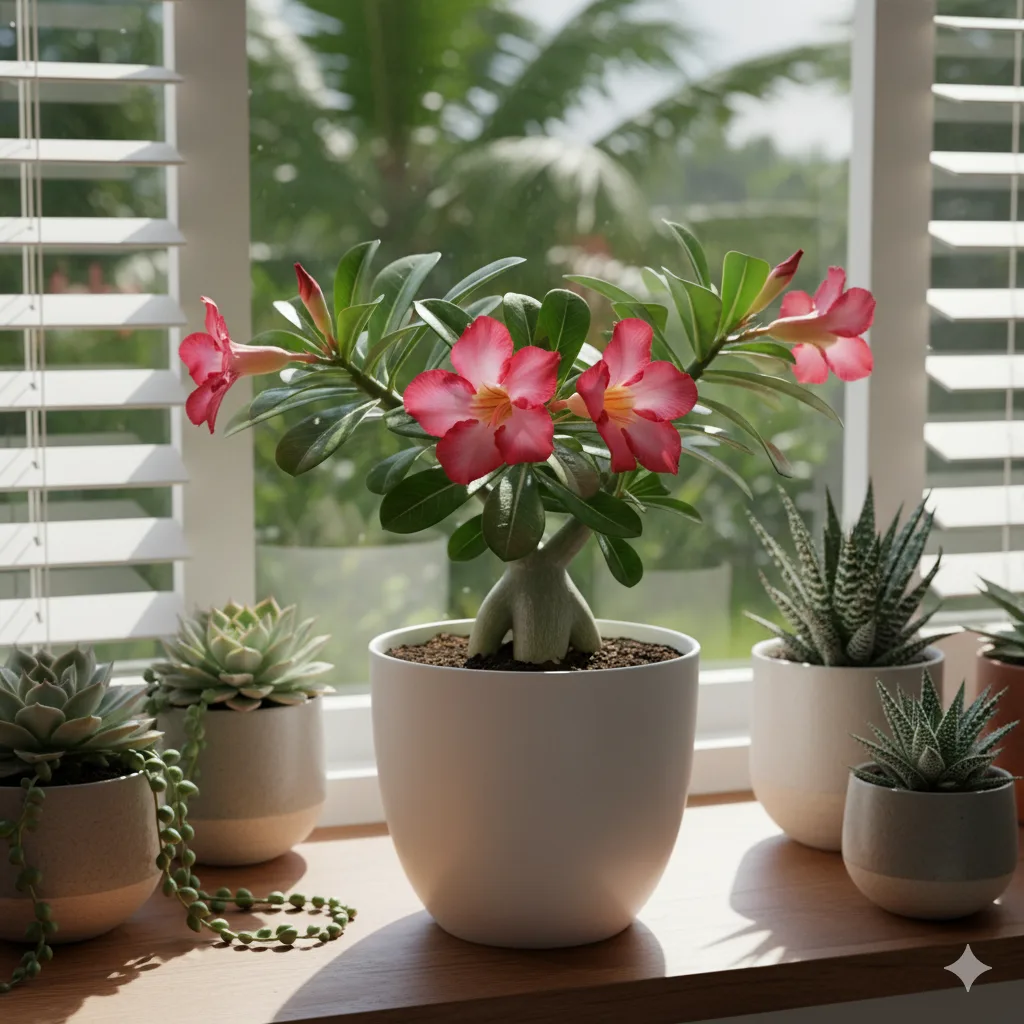
You can grow a Desert Rose indoors successfully if you give it the right light, warmth, and soil. Although it’s a desert plant, it adapts well to life inside — as long as you recreate its natural environment.
Light and Placement
Indoors, the Desert Rose still needs plenty of sunlight. Place it in the brightest spot you have — a south-facing window is ideal. The plant needs at least 6 hours of direct or bright indirect light each day to stay healthy and bloom regularly.
If your home doesn’t get enough sun, use a grow light for 10 to 12 hours daily. This helps maintain growth and flower production, especially in winter or apartments without bright windows.
Rotate the pot every few weeks to make sure all sides receive equal light. This keeps the plant symmetrical and prevents one-sided leaning.
Temperature and Air Circulation
The Desert Rose enjoys warm, dry air. Keep indoor temperatures between 65°F and 85°F (18°C–30°C) and avoid cold drafts or vents. It doesn’t like air conditioning blowing directly on it.
During colder months, keep it away from windows that get chilly at night. The plant’s thick base stores water, which can freeze or rot if exposed to cold air. This is especially important for how to care for Desert Rose indoors during winter.
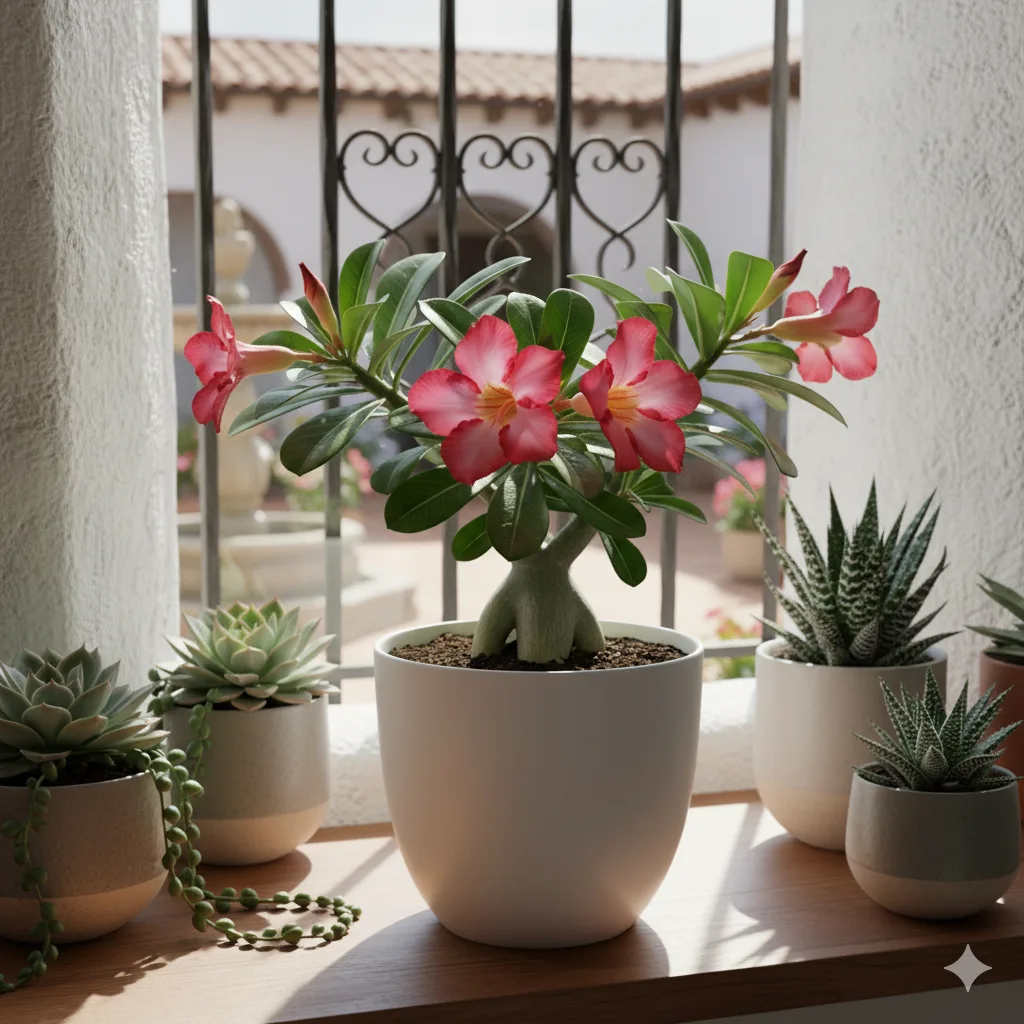
You can place your plant near other succulents or cacti to create a mini desert garden. This grouping also helps maintain low humidity around the plants — something Desert Rose prefers.
Watering Indoors
Indoor plants need less water than outdoor ones. Check the soil once a week, and only water when it’s completely dry. Overwatering is the most common problem when learning how to care for Desert Rose indoors.
If your plant drops leaves, don’t panic. It’s usually responding to lower light or temperature changes. Once spring arrives, new leaves will appear as the plant wakes up again.
Pot and Soil Choice
For indoor growing, use a terracotta or ceramic pot with drainage holes. These materials allow the soil to dry faster and prevent excess moisture. Avoid plastic pots, which hold water too long.
The best soil mix for indoor Desert Roses is half cactus mix and half coarse sand or perlite. This keeps the roots dry and oxygenated — exactly what the plant needs.
Tip: If you live in an area with short winters, like Florida or coastal Australia , you can keep your Desert Rose outside during warm months and move it indoors only when nights drop below 55°F.
Pruning, Repotting, and Bonsai Care
The Desert Rose responds well to pruning and repotting, which helps it stay healthy and attractive. Its thick, sculpted trunk and branching growth make it perfect for creative shaping — even as a bonsai.
Pruning the Desert Rose
Pruning is key to care for Desert Rose plant. It keeps the plant compact and encourages more branches — which means more flowers.
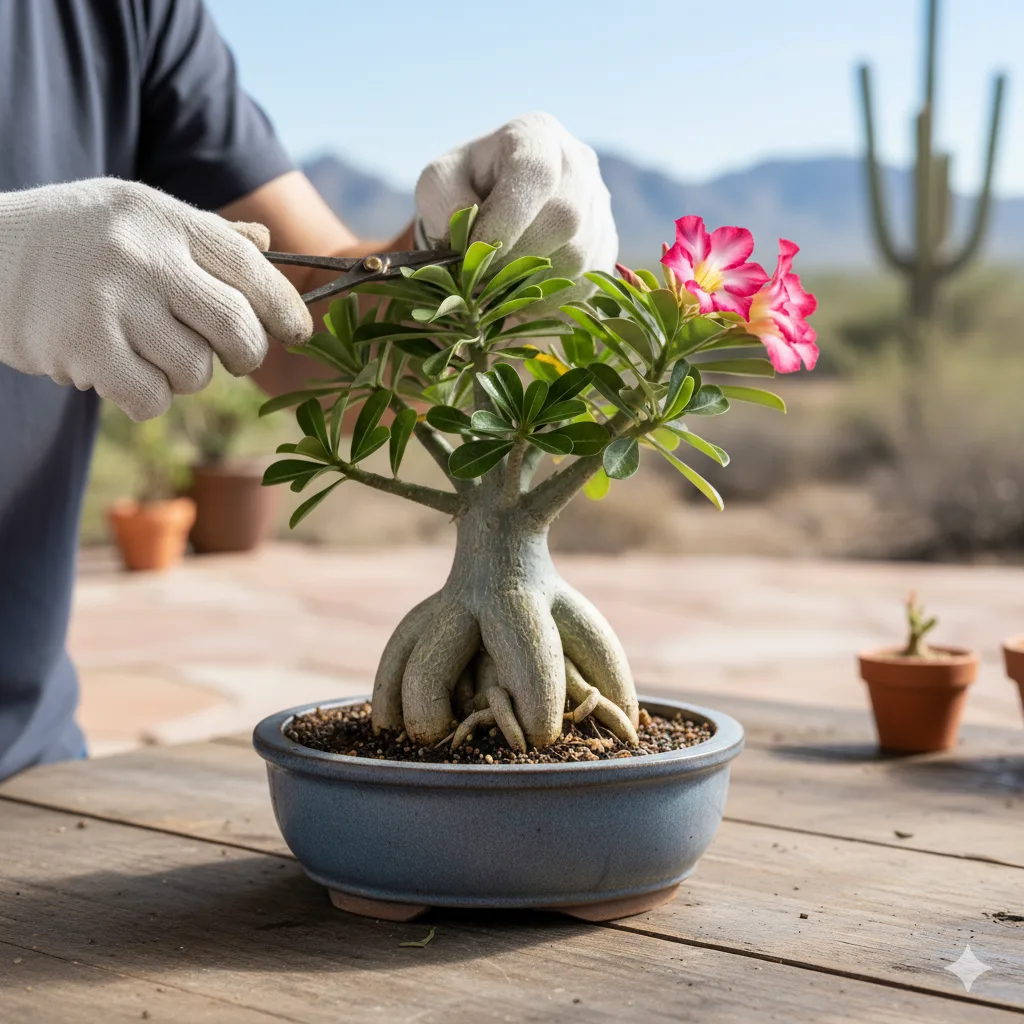
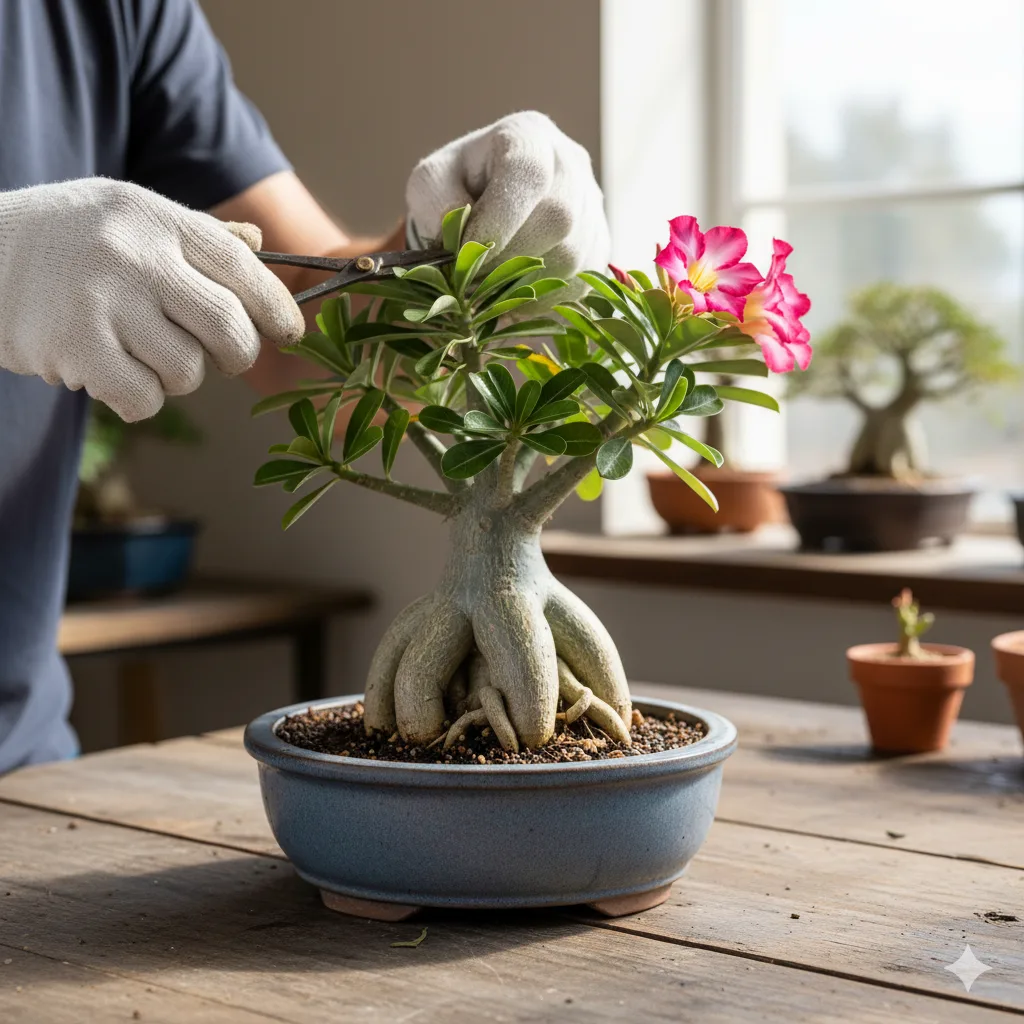
The best time to prune is in early spring , before new growth begins. Use clean, sharp shears and wear gloves, since the plant’s milky sap can be mildly toxic if it touches your skin or eyes.
Cut back leggy branches to shape the plant and remove any dead or soft stems. Make cuts just above a leaf node to encourage new shoots. Within a few weeks, fresh branches will appear, giving the plant a fuller, bushier look.
If you want your Desert Rose to bloom more often, light pruning after each flowering cycle also helps. Avoid heavy trimming during late fall or winter when the plant is dormant.
Repotting
Repot your Desert Rose every 2–3 years to refresh the soil and give the roots more room. The ideal time to repot is in spring or early summer , when the plant begins active growth.
Choose a slightly larger pot with good drainage — never more than 1 or 2 inches wider than the old one. Too much space encourages excess soil moisture, which can lead to root problems.
When repotting, gently remove the old soil, inspect roots for rot, and trim away any damaged parts. Let the roots dry for a day before placing them in the new pot. Fill around them with a fresh cactus or sandy succulent mix.
After repotting, wait about a week before watering. This helps the plant recover and prevents root rot.
Bonsai Care
Desert Rose bonsai are beautiful and surprisingly easy to maintain. The thick, swollen base — known as the caudex — is naturally suited for bonsai shaping.
For care for Desert Rose bonsai , prune regularly to maintain its miniature form and balance between roots and branches. Keep the plant in a shallow pot with excellent drainage and coarse soil. The roots should be slightly exposed above the soil line to highlight the plant’s unique trunk shape.
Water sparingly but consistently during the growing season, and reduce watering in winter. Feed lightly with diluted fertilizer every 6–8 weeks.
To shape your bonsai, you can gently wire branches in early spring. Be careful not to bend them too sharply, as the stems are brittle and can snap.
When done well, a Desert Rose bonsai looks like a living sculpture — compact, thick-trunked, and full of colorful blooms.
Seedling Care
For care for Desert Rose seedlings , keep them in a warm, bright location and use a shallow tray or small pots with sandy soil. Water lightly and frequently at first — the young plants dry out quickly. Once the seedlings are a few inches tall, reduce watering and move them into full sun gradually.
Feed with a very diluted fertilizer every two weeks during active growth. The goal is to help the young caudex develop slowly and evenly.
Common Problems and Solutions
The Desert Rose is a hardy plant, but it can show signs of stress if its growing conditions aren’t right. Most issues come from too much water, not enough sun, or cold weather. Once you recognize these signs, you can correct them easily.
Yellow Leaves
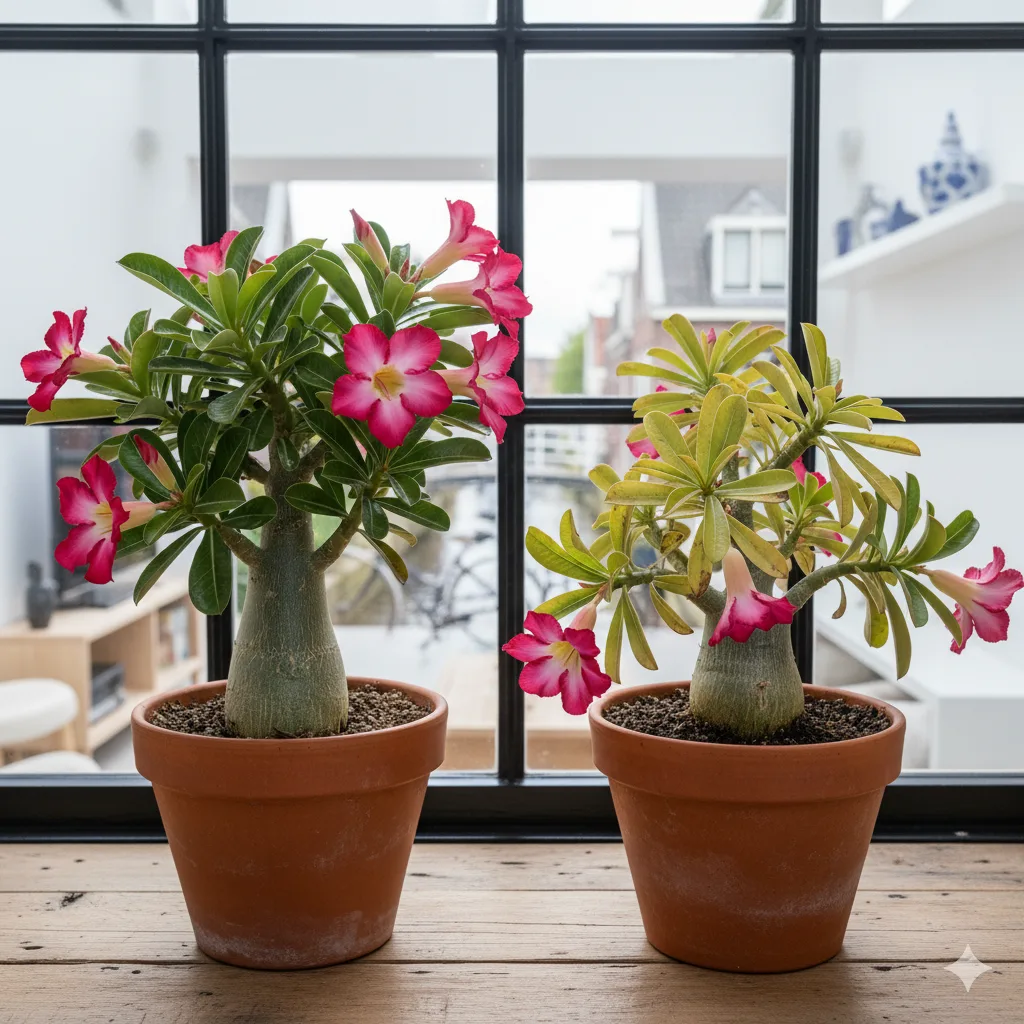
Yellow leaves are often the first sign of trouble. The main cause is overwatering. When the soil stays wet too long, the roots begin to rot, and the plant can’t absorb nutrients properly.
Solution:
- Check the soil — it should dry out between waterings.
- Improve drainage by adding sand or perlite to your soil mix.
- Move the plant to a sunnier spot to help dry the soil faster.
If you live in a humid area like Florida , you’ll need to water less often than in dry climates. For how to care for Desert Rose in Florida , focus on airflow and light to balance the humidity.
Soft or Mushy Stems
If the stems feel soft or mushy, root rot is likely. This usually happens when the plant sits in soggy soil or during cool, damp weather.
Solution:
- Remove the plant from its pot and cut away any black or soft roots.
- Let it dry for a full day before replanting in dry, fresh soil.
- Water only after a week.
In cold regions, this issue can also appear when the plant is exposed to temperatures below 55°F. For care for Desert Rose in winter , always move it indoors before cold nights and keep the soil mostly dry.
No Flowers
When a healthy Desert Rose fails to bloom, it’s usually because it’s not getting enough sunlight or nutrients.
Solution:
- Place it in full sun for at least six hours daily.
- Feed monthly during the growing season with a balanced, diluted fertilizer.
- Avoid overwatering — wet soil prevents blooming.
Plants grown indoors may bloom less, but how to care for Desert Rose indoors still follows the same principle: bright light, warmth, and dry conditions encourage flowering.
Pests
The most common pests are aphids , mealybugs , and spider mites. These tiny insects feed on leaves and stems, leaving sticky residue or yellow spots.
Solution:
- Wipe the leaves with a damp cloth or spray them with a mild mix of dish soap and water.
- For heavy infestations, use neem oil or an organic insecticidal soap.
- Always inspect new plants before bringing them indoors to prevent spreading pests.
Leaf Drop
Desert Rose naturally drops leaves during winter dormancy, so don’t panic if this happens. However, sudden leaf loss in summer often means too much water or sudden temperature change.
Solution:
- Adjust watering frequency and move the plant away from cold drafts.
- Ensure pots have proper drainage and never leave standing water.
For care instructions for Desert Rose plant in all regions, remember this rule: when in doubt, less water is better.
Flowering and Seasonal Care
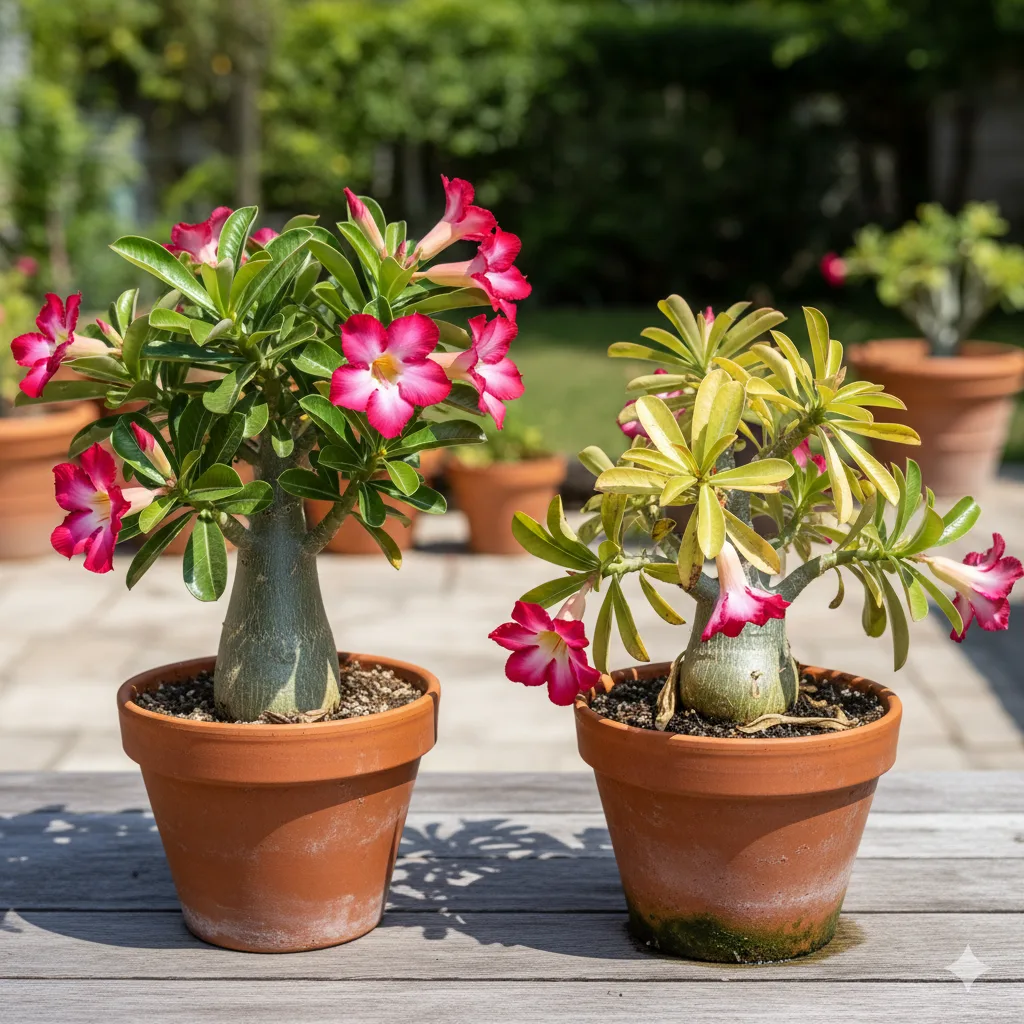
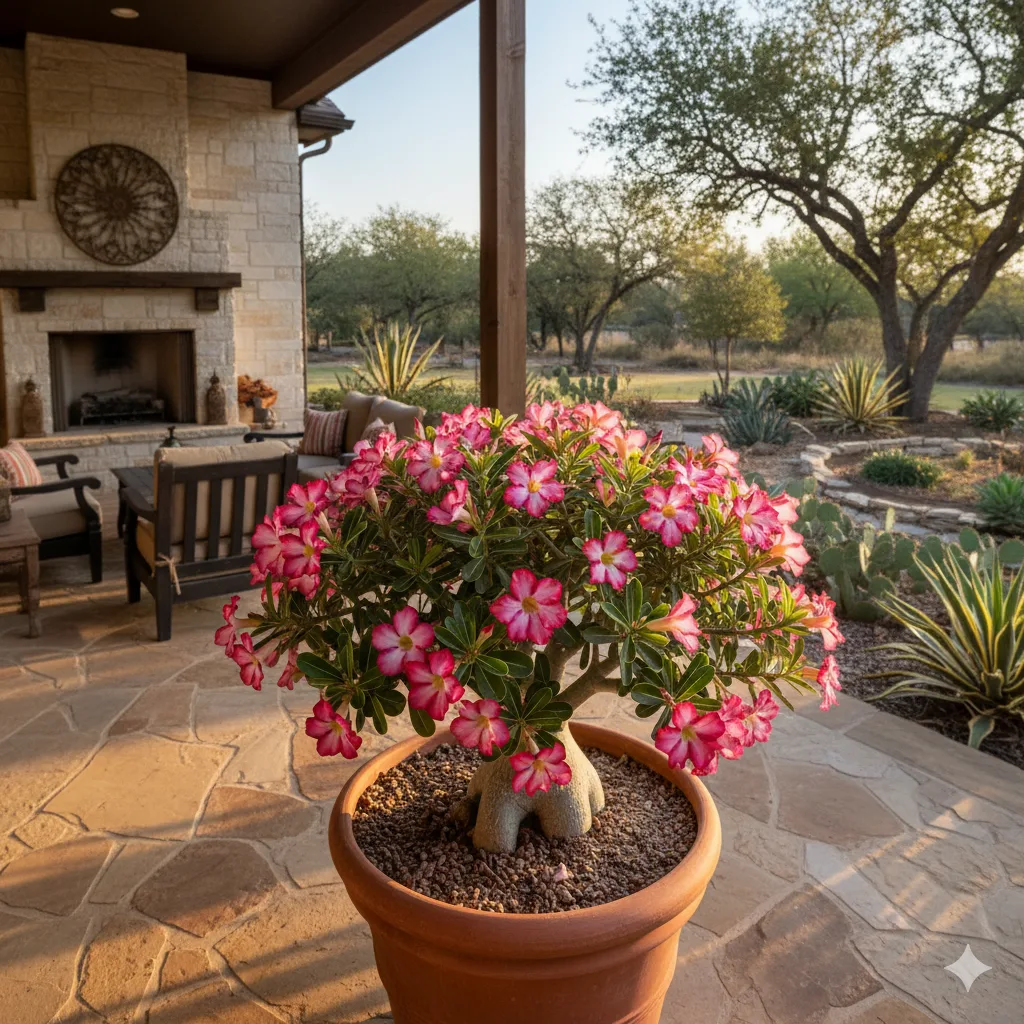
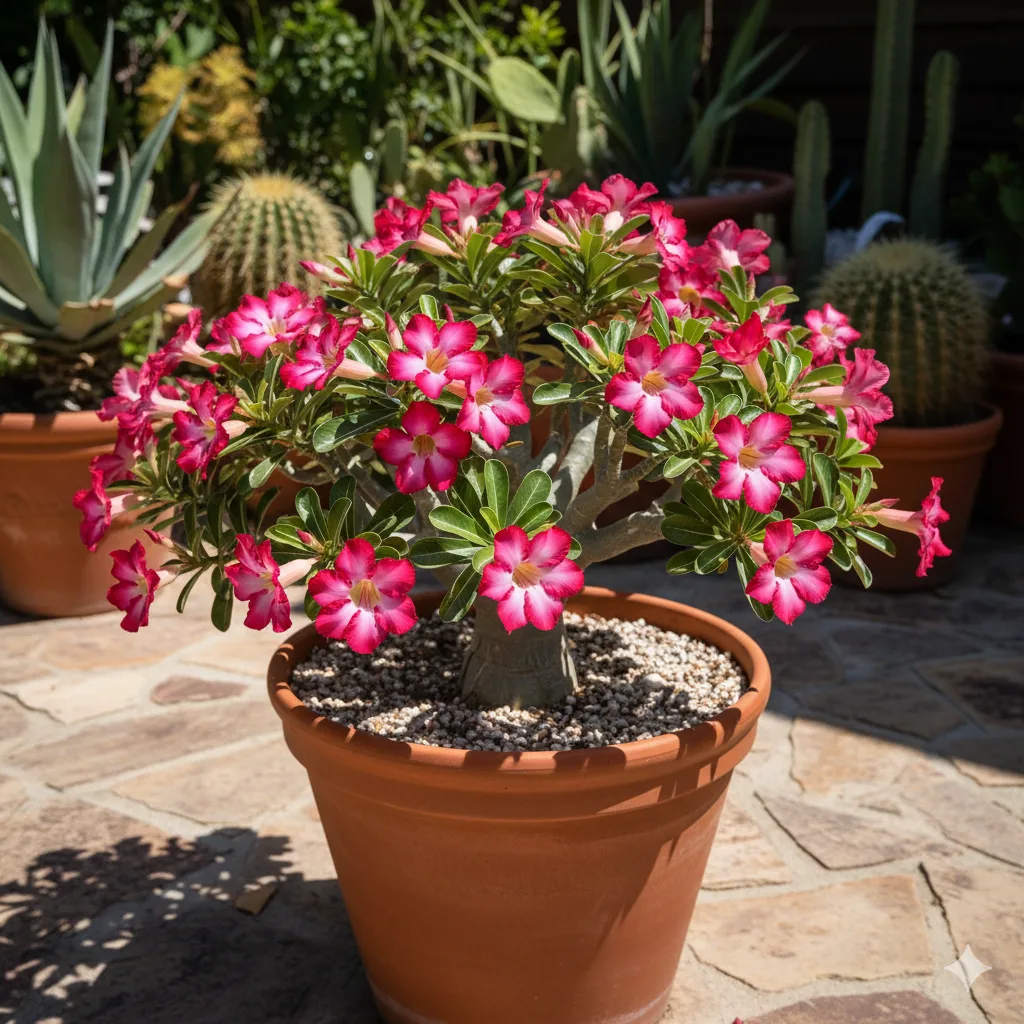
The Desert Rose is known for its brilliant flowers — shades of pink, red, and sometimes white that appear in clusters. When cared for correctly, it can bloom several times a year. The key to success is sunlight, warmth, and a light hand with water.
Encouraging Blooms
To help your plant flower, you need to recreate the warm, dry environment of its native desert. Desert Rose blooms best in full sunlight and well-drained soil. If the plant doesn’t get enough light, it will grow leaves but no flowers.
Feed it during spring and summer with a balanced fertilizer diluted to half strength every 4–6 weeks. Too much fertilizer or water encourages leaf growth instead of blooms.
Pruning also helps flowering. Lightly trim branches in early spring to stimulate new shoots — flowers often appear on this fresh growth.
In regions like Florida or Australia , where the climate is warm most of the year, the plant can bloom nearly year-round. For care for Desert Rose in Florida , just protect it from heavy rain and overwatering during the humid season.
When grown indoors, how to care for Desert Rose indoors for flowering means giving it as much light as possible — ideally, 6–8 hours of direct or bright light daily.
Seasonal Care
Desert Rose has two distinct growth phases: active (spring and summer) and dormant (fall and winter). Adjust your care routine with the seasons to keep it strong and blooming.
Spring and Summer:
- The plant grows quickly and blooms often.
- Water regularly but allow soil to dry between each watering.
- Fertilize once a month with a balanced feed.
- Rotate the pot for even sunlight exposure.
Fall and Winter:
- Growth slows down, and the plant may drop most of its leaves.
- Water lightly — once every 3–4 weeks.
- Stop fertilizing.
- Keep it warm and dry indoors, especially in regions that experience cold nights.
For how to care for Desert Rose in winter , aim to keep the temperature above 55°F (13°C). Avoid cold windows or damp basements. The plant rests during this time and prepares to bloom again once the weather warms up.
If you live in a frost-free climate, like much of southern Florida or northern Australia , your Desert Rose might stay semi-active year-round. Still, a short rest period helps it bloom more vigorously later.
Caring for Desert Rose Flowers
When your plant blooms, the flowers can last several weeks. To extend their life:
- Keep the plant in bright light.
- Avoid misting or wetting the flowers.
- Remove wilted blooms to encourage new ones.
If you notice buds dropping before opening, it usually means the plant is stressed from sudden temperature change, overwatering, or poor light. Adjust those factors, and flowering will resume.
FAQs: Common Questions About Desert Rose Care
How often should I water a Desert Rose?
Water deeply but infrequently. During the growing season (spring and summer), water when the top 2 inches of soil feel completely dry. In cooler months, especially during dormancy, water only once every 3–4 weeks.
For care for Desert Rose in Florida , reduce watering even further if humidity is high — the air already provides moisture.
How do I care for Desert Rose in winter?
Winter care is simple: keep your plant warm, dry, and protected from cold. Move it indoors if temperatures drop below 55°F (13°C). Water very lightly and stop fertilizing until spring. This rest period prevents root rot and prepares the plant for strong growth in the next season.
If you’re wondering how to care for Desert Rose in winter in colder regions, treat it like a dormant succulent — bright light, minimal water, and warmth are all it needs.
Can I grow Desert Rose indoors all year?
Yes, but it needs lots of light. For how to care for Desert Rose indoors , place it in a bright window with at least 6 hours of sunlight each day. Rotate it every few weeks for even growth. If sunlight is limited, use a grow light to keep it healthy.
Make sure the pot drains well, as indoor plants dry out more slowly. Overwatering is the most common issue indoors.
How do I care for Desert Rose bonsai?
For care for Desert Rose bonsai , prune regularly to maintain its shape and expose the caudex (the thick, water-storing base). Use a shallow bonsai pot with sandy, fast-draining soil.
Water sparingly, allowing the soil to dry completely before watering again. Feed lightly every 6–8 weeks during spring and summer.
Bonsai forms prefer warm, sunny spots and make excellent indoor centerpieces when placed near a bright window.
How can I care for Desert Rose seedlings?
For care for Desert Rose seedlings , keep them in bright light but not full sun for the first few weeks. Water lightly every few days to keep the top layer of soil slightly moist — never soggy. As they grow taller, gradually expose them to more sunlight and reduce watering.
When the seedlings are 2–3 inches tall, transplant them into small pots with sandy, well-draining soil. Start feeding with a very diluted fertilizer after six weeks. This helps them develop strong, thick trunks early on.
How do I keep my Desert Rose flowering?
To encourage blooms:
Place it in full sun (at least 6 hours daily).
Use a light, balanced fertilizer every 4–6 weeks in spring and summer.
Avoid overwatering and trim lightly after each flowering cycle.
Healthy, sun-fed plants often bloom multiple times a year, especially in warm regions like Florida or coastal Australia.
What is the best care for Desert Rose in pots?
For how to care for Desert Rose in pots , choose terracotta or clay pots with drainage holes. These materials allow excess water to escape, protecting roots from rot. Use sandy or cactus mix soil, and water only when completely dry.
Repot every 2–3 years to refresh the soil and encourage growth. Avoid very large pots — the soil will stay too wet.
Conclusion: A Living Jewel That Thrives on Simplicity
The Desert Rose is a perfect blend of beauty and toughness. It thrives in sunlight, handles dry conditions, and blooms in brilliant color with very little care.
Once you learn its rhythm — bright light, dry soil, and minimal water — it rewards you with sculptural growth and long-lasting flowers. Whether grown outdoors in warm climates or indoors as a bonsai, it brings elegance and character to any space.
Simple care. Stunning results. That’s the magic of the Desert Rose.
About the Author
Landscaping Expert & Writer · Raleigh, North Carolina · North Carolina State University
Jennifer Hall is a professional landscaper and lawn care writer based in Raleigh, North Carolina. She studied landscape horticulture at North Carolina State University, home to one of the country's leading turfgrass programs, and went on to build a specialized landscaping service serving the greater Raleigh-Durham region. Jennifer's expertise spans the Southeast and Mid-Atlantic transition zone, where she advises homeowners on warm-season grass selection, seasonal lawn care calendars, landscape design, and water-efficient gardening. Her writing brings together professional horticultural training and real-world experience in one of America's most challenging grass-growing climates.